
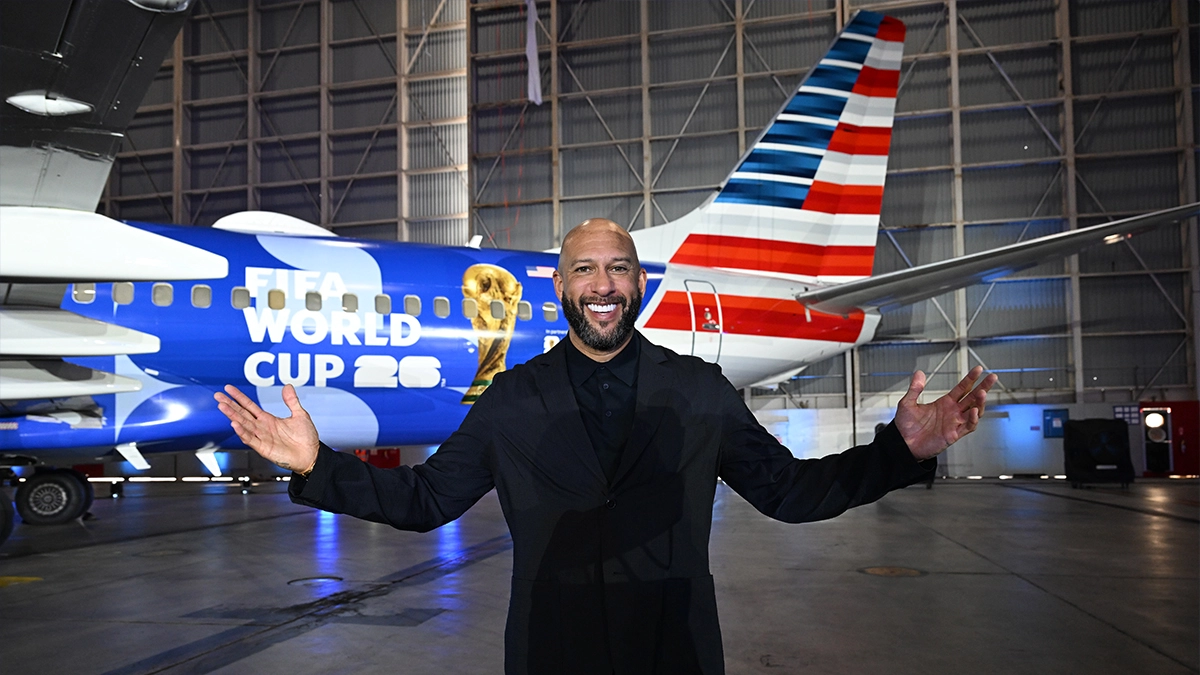
Airlines have long used the FIFA World Cup to decorate their aircraft with national colours and football imagery. The practice has grown in scale and sophistication with each tournament, culminating in Qatar Airways (QR) branding 120 aircraft for the 2022 edition and, most recently, American Airlines (AA) deploying more than 1,460 World Cup-decalled jets for the 2026 tournament across the United States, Canada, and Mexico.
This article traces the complete recorded history of World Cup aircraft liveries, from early promotional paint jobs through the landmark Qatar 2022 campaign, and into the multi-airline spectacle that defines the 2026 edition currently underway.
The Early Tradition of Football-Themed Aircraft Paint
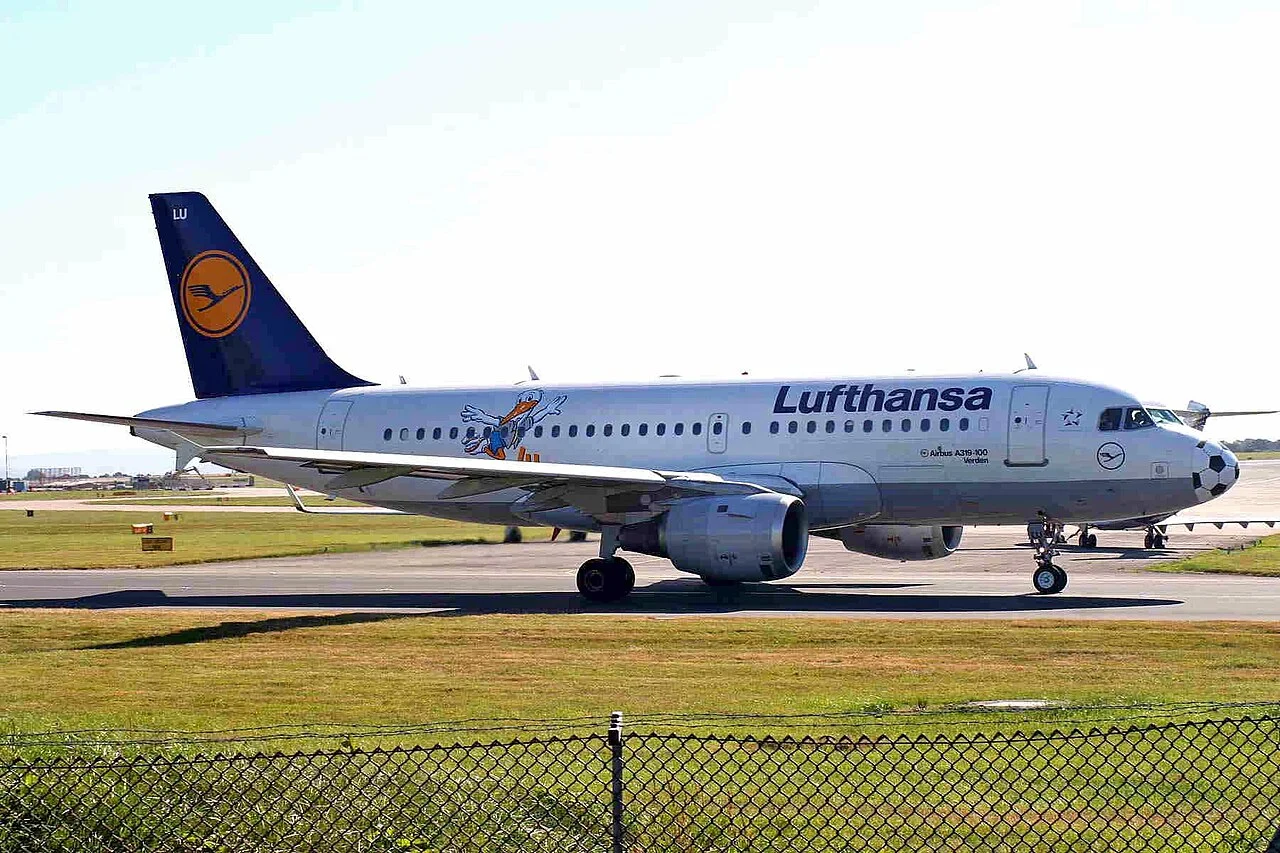
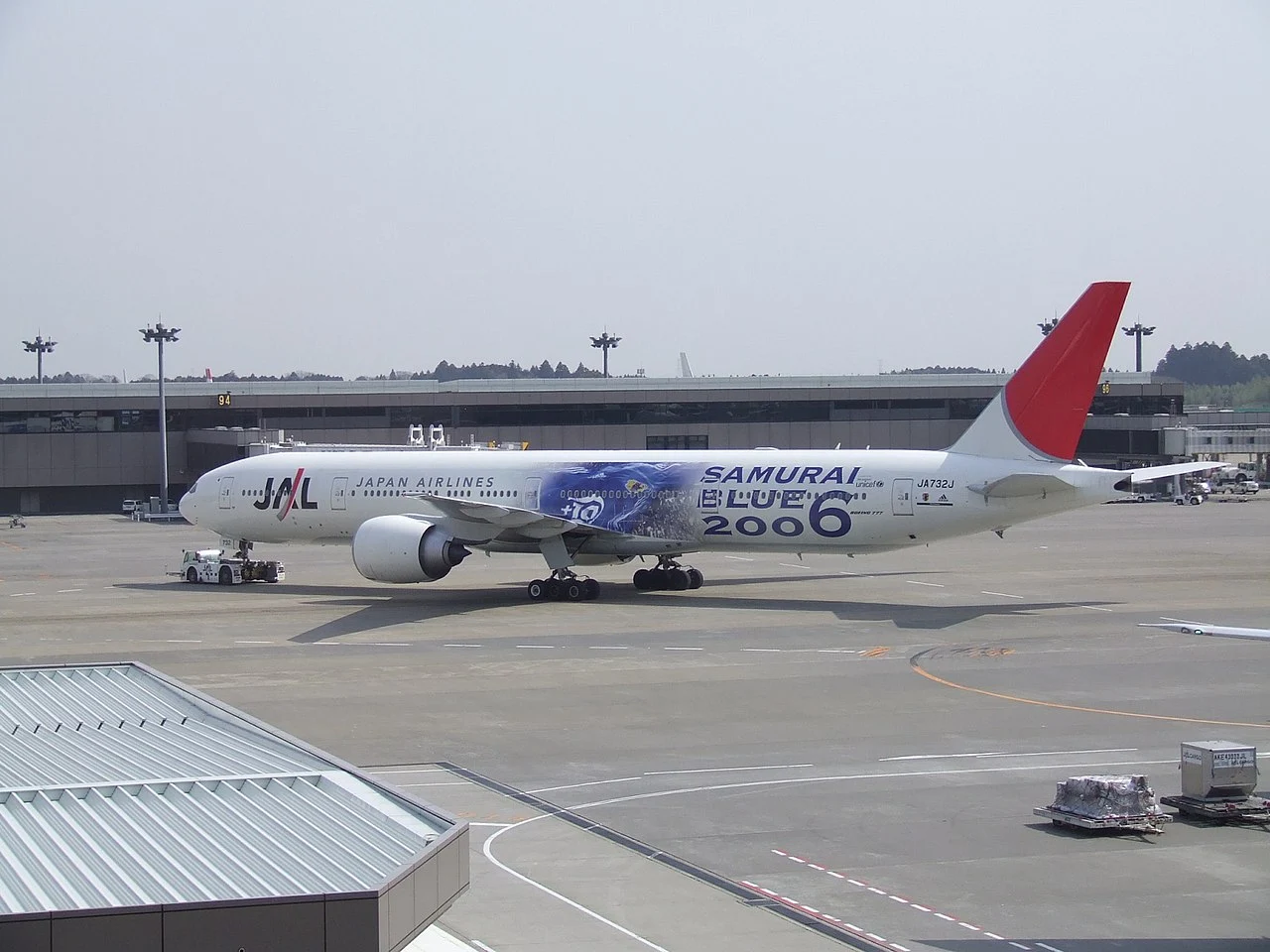
The recorded history of World Cup-specific aircraft liveries is closely associated with the period around the 2006 tournament in Germany. Lufthansa (LH), the German flag carrier, painted football motifs on the noses of select aircraft ahead of the 2006 FIFA World Cup, which Germany hosted. The designs were relatively restrained — football ball patterns applied to the nose sections — compared to the full-fuselage wraps that would follow in subsequent editions.
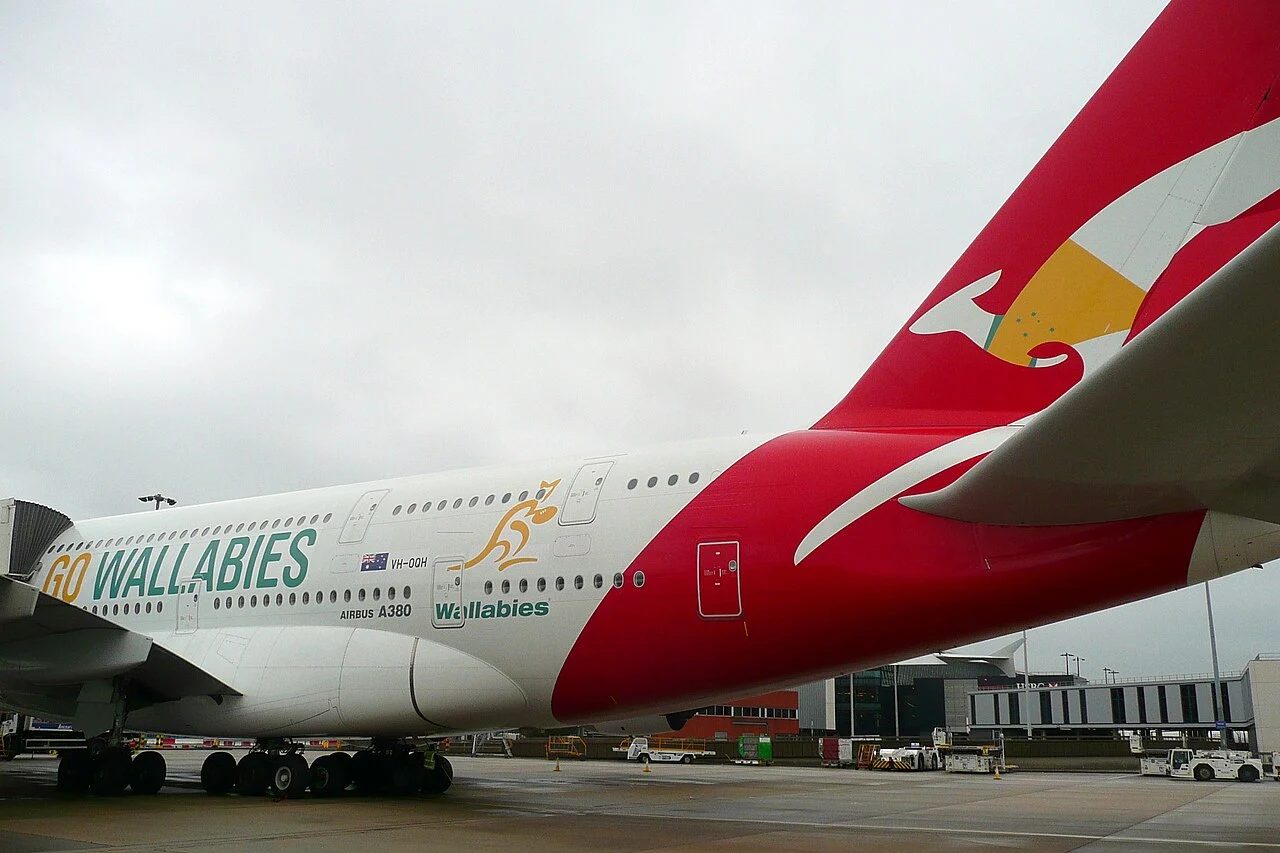
Qantas and the Socceroos Livery: Australia’s 2010 World Cup Boeing 747-400
Australia qualified for the FIFA World Cup for the first time in a generation at the 2006 tournament in Germany, reaching the round of 16. The Socceroos continued to qualify for the 2010 tournament in South Africa, and Qantas Airways (QF) marked the occasion with a special livery on one of its Boeing 747-400 aircraft.
The aircraft, registered VH-OJS, had been delivered to the Australian flag carrier in September 1999. Qantas applied the Socceroos livery in September 2009, one year before the South Africa tournament, and the paint scheme remained on the aircraft until August 2011.
The 747-400 was eventually retired by Qantas in February 2019. Unlike later campaigns from Brazilian and Argentine carriers, the Qantas Socceroos livery was a temporary paint scheme rather than a long-term decoration. The aircraft flew under that scheme for approximately two years.
Lufthansa’s Fanhansa: Germany’s 2014 World Cup Campaign in Brazil
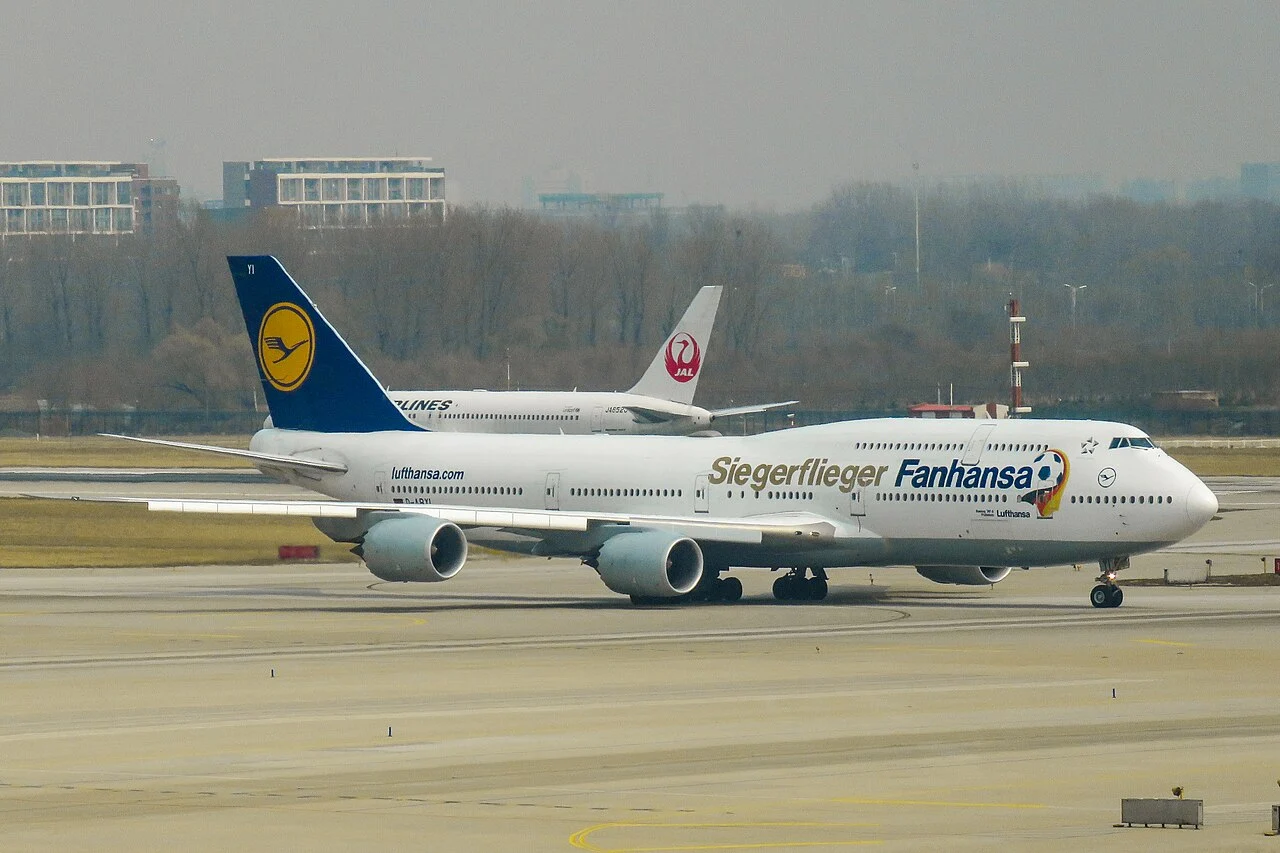
The 2014 FIFA World Cup in Brazil produced one of the most celebrated airline branding campaigns in aviation history. On 13 May 2014, Lufthansa announced it would rename eight aircraft with “Fanhansa” titles — a wordplay combining “fan” and “Lufthansa.” The airline described the move as the first time in its then-60-year operating history that it had changed the name on the fuselage of aircraft.
The eight aircraft included:
- One Airbus A321-200 (the first to debut the livery, flying Munich Airport (MUC) to Hamburg Airport (HAM) on 16 May 2014 as flight LH 2066)
- Two additional short-haul aircraft
- Five long-haul aircraft, including a Boeing 747-8 — then the world’s longest commercial aircraft
As Germany’s partner carrier and the transporter of the German national team to Brazil, Lufthansa also flew media representatives, fans, and officials. Germany won the 2014 World Cup, defeating Argentina 1-0 in the final after extra time. The 747-8 that brought the team home was labelled the “Siegerflieger” — German for “the victors’ airplane.” According to IBTimes, the Siegerflieger sticker was applied using a removable decal once the team had secured the title.
GOL Linhas Aéreas: Brazil’s Long-Running Football Livery Tradition
Brazil’s low-cost carrier GOL Linhas Aéreas (G3) occupies a unique place in the history of World Cup liveries. The airline’s very name references the sport — “gol” is the Portuguese word for “goal” — and it has maintained a World Cup-themed aircraft across multiple tournament cycles.
GOL’s first World Cup-themed Boeing 737-800, registered as PR-GUM, began flying in national team colours from June 2013, one year before Brazil hosted the 2014 tournament. The aircraft had been delivered to GOL in October 2011. Brazil reached the semi-finals of the 2014 tournament before a famous 7-1 defeat to Germany ended their campaign.
For the 2022 World Cup in Qatar, GOL painted a different Boeing 737-800, registered PR-GXB, in a new livery. According to Simple Flying, the aircraft’s key design elements included:
- The logo of the Brazilian Football Confederation and the phrase “GOL do Brasil” on the tail
- The word “Brasil” on the rear fuselage with jerseys numbered to represent each of Brazil’s five World Cup victories (1958, 1962, 1970, 1994, 2002)
- Engines painted green
- Overhead baggage compartments decorated with players’ jerseys
Iberia’s Cross-Tournament Partnership with the Spanish National Team
Spain’s flag carrier, Iberia (IB), has supported the Spanish national football team across multiple World Cups through dedicated aircraft liveries. Ahead of the 2014 FIFA World Cup in Brazil, Iberia painted its Airbus A330-302, registration EC-LYF, with a special scheme. The inscription on the aircraft translated as “carry the illusion of an entire country.” The A330 transported the Spanish team and football fans to Brazil, though Spain — defending champions — were eliminated in the group stage.
For the 2026 FIFA World Cup, Iberia again produced a dedicated livery. An Airbus A350-900 (registration EC-MYX) received a design featuring stickers of Spain’s national team players and the slogan “Despega un equipo, vuela un país” — translating as “A team takes off, a country flies.” The Aerospace Global News report noted the design incorporates imagery of team members embracing after a victory, the national crest, and a single star for Spain’s 2010 World Cup win.
Aerolíneas Argentinas Has a Recurring World Cup Tradition Centred on Lionel Messi
Argentina’s flag carrier, Aerolíneas Argentinas (AR), has produced World Cup-themed liveries for multiple tournaments. For the 2022 Qatar campaign, the airline placed Lionel Messi and two other team members on the tail of an Airbus A330-200, registration LV-FVH. The slogan read “Un equipo, un país, un sueño” — “One team, one country, one dream.” According to Airways Magazine, the 2022 livery closely echoed the design approach used by the airline at the 2014 tournament.
For the 2026 edition, the airline escalated the campaign. According to a report by ftnnews.com, Aerolíneas Argentinas christened the aircraft “#TheMostArgentinePlaneInTheWorld” and unveiled it on 21 May 2026 at Hangar 5 of Ezeiza International Airport (EZE), Buenos Aires. The jet, an Airbus A330-202 registered LV-KAN, carried the following design elements:
- Messi’s iconic number 10 jersey on the tail, in the blue and white Adidas-developed national team colours
- Three gold stars on the lower fuselage representing Argentina’s three World Cup titles (1978, 1986, 2022)
- The captain’s armband image applied on both engines
- A visual connection between the tail’s rudder and Messi’s leadership role

Qatar Airways and the Scale of 2022: 120 Aircraft, 14,000 Flights, Five Billion Fans
No airline has committed to World Cup branding at the scale that Qatar Airways achieved for the 2022 tournament, hosted in its home country. The airline had been a FIFA partner since 2017, and its status as the tournament’s official airline — and Qatar’s role as host nation — made the 2022 event uniquely significant.
Qatar Airways first unveiled a World Cup-branded aircraft on 21 November 2020, precisely two years before the planned tournament kick-off date. The aircraft was a Boeing 777-300ER, hand-painted in FIFA World Cup Qatar 2022 livery and entered service on the Doha–Zurich route (flights QR095/QR096).
The 2022 tournament attracted a wider field of carriers beyond the headline names. Brussels Airlines (SN) unveiled a refreshed special livery on an Airbus A320 supporting both Belgium’s men’s and women’s national football teams. Asiana Airlines applied a “Fly Korea” special livery to two aircraft — an Airbus A350 and an Airbus A321 — to support the South Korean team at the Qatar tournament. Flydubai partnered with the Argentine National Football Association, displaying Argentine team leaders on a Boeing 737 MAX 8.
American Airlines’ Historic First Sports Livery and Fleet-Scale Branding
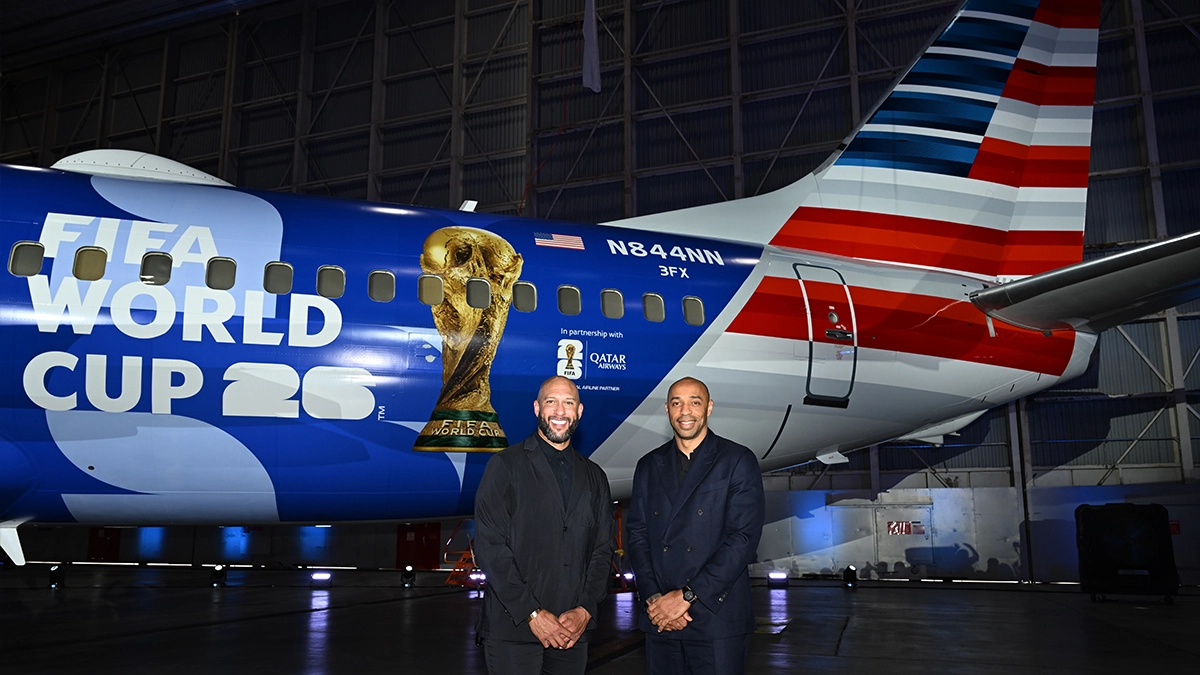
The 2026 FIFA World Cup, hosted across the United States, Canada, and Mexico, has prompted the largest domestic airline campaign in the tournament’s history. American Airlines (AA), acting as the Official North American Airline Supplier of the FIFA World Cup 26 in partnership with Qatar Airways, deployed a Boeing 737-800, registration N844NN, bearing the airline’s first-ever sports-themed special livery.
Alaska Airlines also unveiled a Seattle-themed World Cup livery on a Boeing 737-9 MAX, tail number 985AK, featuring the Seattle Host City logo and a football-in-motion graphic, Aerospace Global News reported. The airline incorporated its signature whale tail graphic into the design, linking the aircraft to the carrier’s own visual identity.
Qatar Airways in 2026
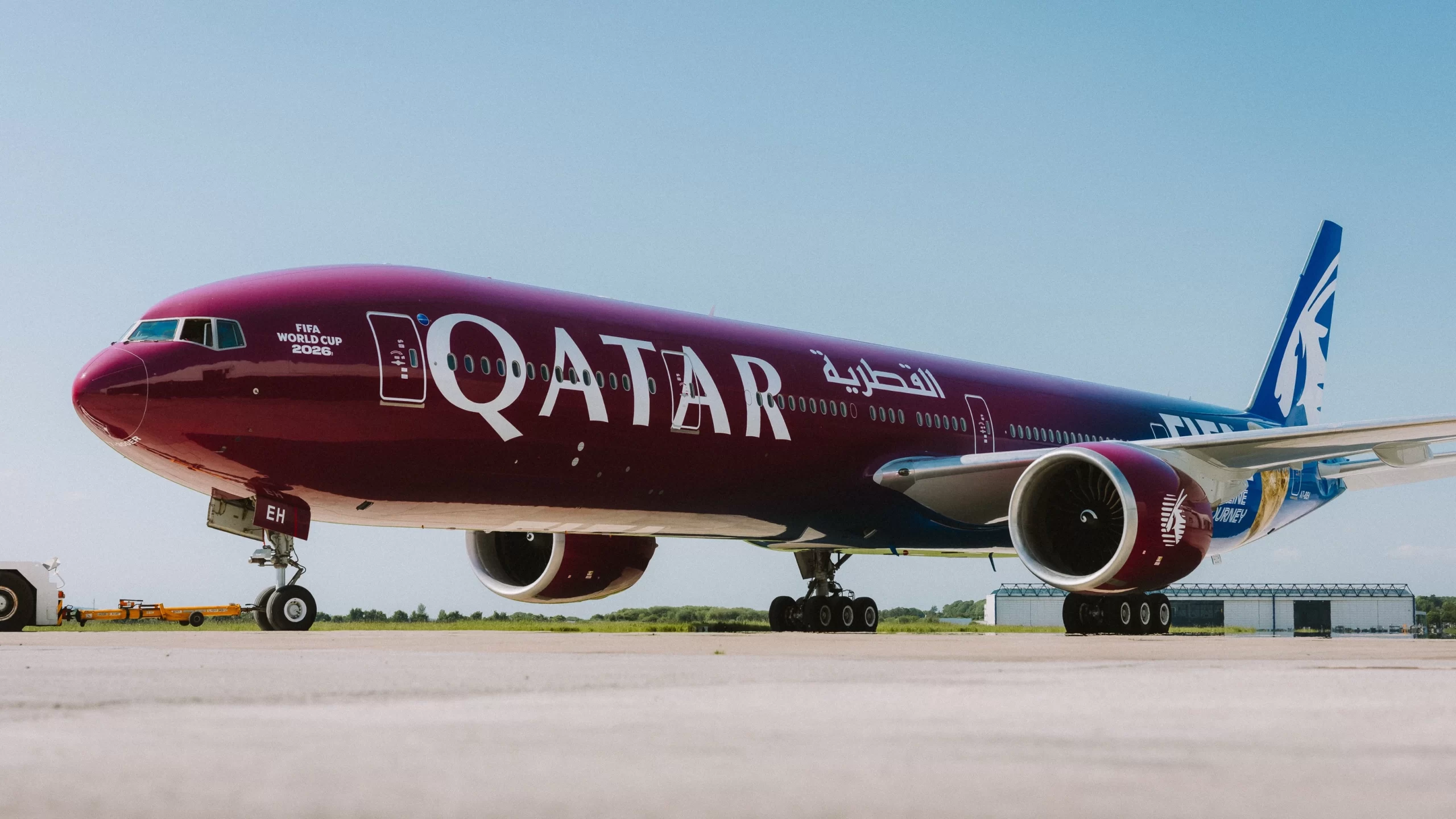
Qatar Airways has continued its FIFA partnership into the 2026 tournament, again as the Official Airline Partner. The airline unveiled a new special livery on a Boeing 777, registration A7-BEH, depicting the World Cup trophy against a background combining Qatar’s national colours with a blue section toward the tail. The airline’s official press release described the livery as reflecting “the next chapter in Qatar Airways’ journey with FIFA.” 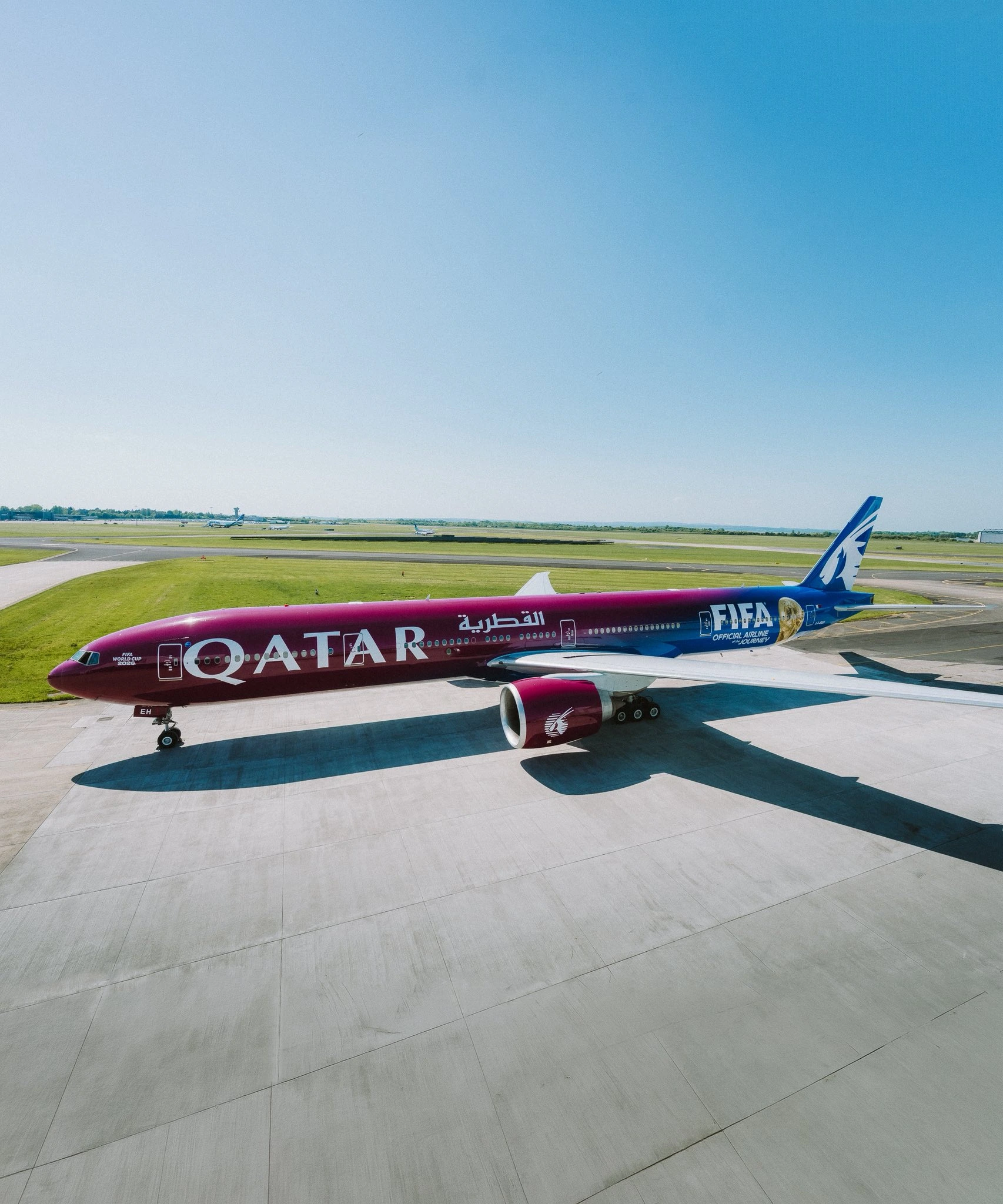
Photo: Qatar Airways
Other Carriers in the 2026 Field: Algeria, TAP, Avianca, and More
The 2026 tournament has drawn livery commitments from a diverse range of carriers beyond the headline names.
Air Algérie added a new Airbus A330-941, registered 7T-VLB, to its fleet in late May 2026 and ferried it from Lourdes Tarbes to Algiers on 1 June already wearing a livery reading “One Two Three Viva l’Algérie.” Flightradar24 noted the aircraft’s tail features a fennec fox — Algeria’s national animal and the nickname of the national team.
TAP Air Portugal decorated an Airbus A330-941, registration CS-TUM, with team stickers and the phrase “It’s Portugal time.” Cristiano Ronaldo shared an image of the Portuguese squad in front of the decorated aircraft before their departure for the United States. Avianca (AV), Colombia’s national carrier, painted an Airbus A320, registration N906AV, in a special livery for the Colombian national team and used it to fly the squad to San Diego International Airport (SAN) on 4 June. Copa Airlines and Divi Divi Air also joined the 2026 livery field, according to industry reporting.
Editorial Note
The 2026 tournament was still in early stages at time of publication; additional livery activations may have occurred after research was completed.
_MAN_15JUL06_(5800203039).jpg)
_@_LHR,_Oct_2015.jpg)
.jpg)
_-_Boeing_777-3DZER_-_43215_-_VGHS.jpg)

Leave a Reply