Thai Airways International (TG) took delivery of its first new GE-powered Boeing 787-9 Dreamliner on 23 June 2026, in a ceremony attended by representatives from Thai Airways, Boeing, GE Aerospace, and lessor AerCap Holdings N.V. at Boeing’s Delivery Center in Everett, Washington. The delivery, announced by AerCap through a formal press release, marks the entry of a factory-fresh, GEnx-2B-powered 787-9 into the Star Alliance carrier’s fleet — distinct from the pre-owned 787s the airline has operated since 2014. The aircraft supports Thai’s ongoing fleet renewal programme and will bolster long-haul capacity from Bangkok Suvarnabhumi Airport (BKK) at a time when the carrier is restoring suspended routes and opening new ones.
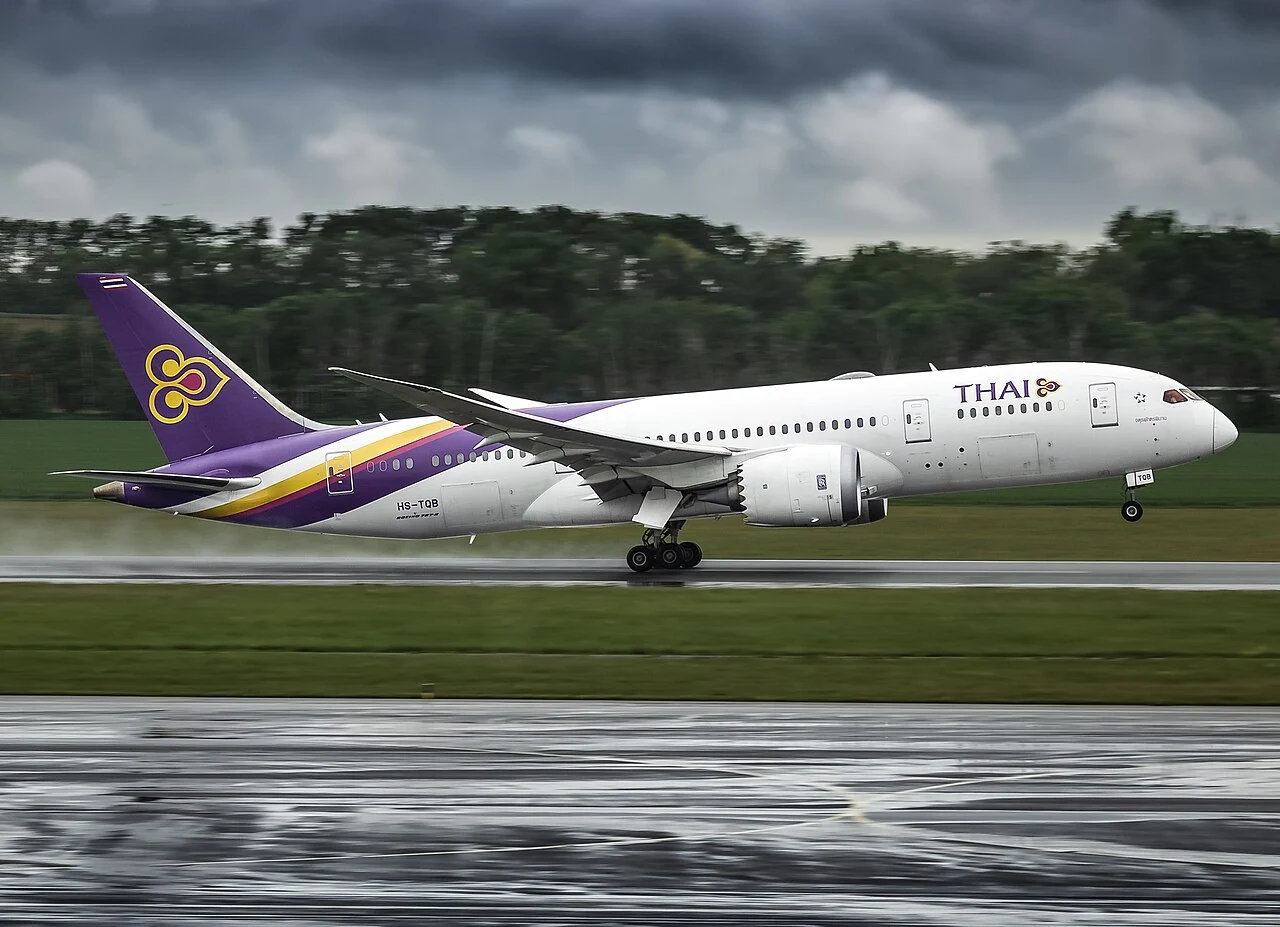
The delivery is a milestone for a carrier that has navigated one of Asia’s most complex airline restructurings. Thai Airways filed for bankruptcy protection in May 2020 and emerged from its court-supervised rehabilitation by mid-2025 with sharply reduced debt, positive shareholders’ equity, and a return to profitability. CEO Chai Eamsiri stated at the delivery ceremony: “We are delighted to welcome our first new GE-powered 787-9 to the fleet, another milestone that reflects our long partnership” with AerCap. The airline plans to receive three more 787-9s in 2026, alongside ten leased Boeing 787-8s from lessor Avolon, taking its widebody fleet to over 100 aircraft by year-end.

The AerCap Lease Agreement and What It Covers
The 23 June delivery stems from a lease agreement signed between AerCap and Thai Airways in February 2024, which covered seven widebody aircraft — four Airbus A350-900s and three Boeing 787-9s — along with ten Airbus A321neo narrowbodies. The deal was made as part of Thai Airways’ short-term fleet development strategy while it awaited its larger, long-term order of 45 Boeing 787-9s from Boeing, which are scheduled to begin delivery from 2028.
At the time of signing, AerCap’s Chief Commercial Officer Peter Anderson stated:
“AerCap is very pleased to announce this significant transaction with Thai Airways and to support them with both their widebody and narrowbody fleet modernization plan as they emerge from a very challenging period.”
Anderson added that AerCap’s business relationship with Thai Airways began in the mid-1990s with Boeing 737-400s and Airbus A330-300s, making the June 2026 delivery part of a decades-long commercial partnership.
Of the four A350s covered under that 2024 agreement, two had already been delivered before the announcement was made public, with the remaining two following in mid-2024. The three 787-9s were originally scheduled for delivery between the second quarter of 2024 and the fourth quarter of 2025, but the June 2026 delivery indicates a revised timeline, likely reflecting broader 787 production and certification scheduling at Boeing. Peter Anderson reaffirmed at the June 2026 delivery:
“Our relationship with THAI is decades long and this milestone delivery is a testament to our long-standing partnership. This aircraft will support THAI’s ongoing fleet renewal program, enhancing efficiency and sustainability across its operations.”
Boeing 787-9 Aircraft Specifications and Cabin Features
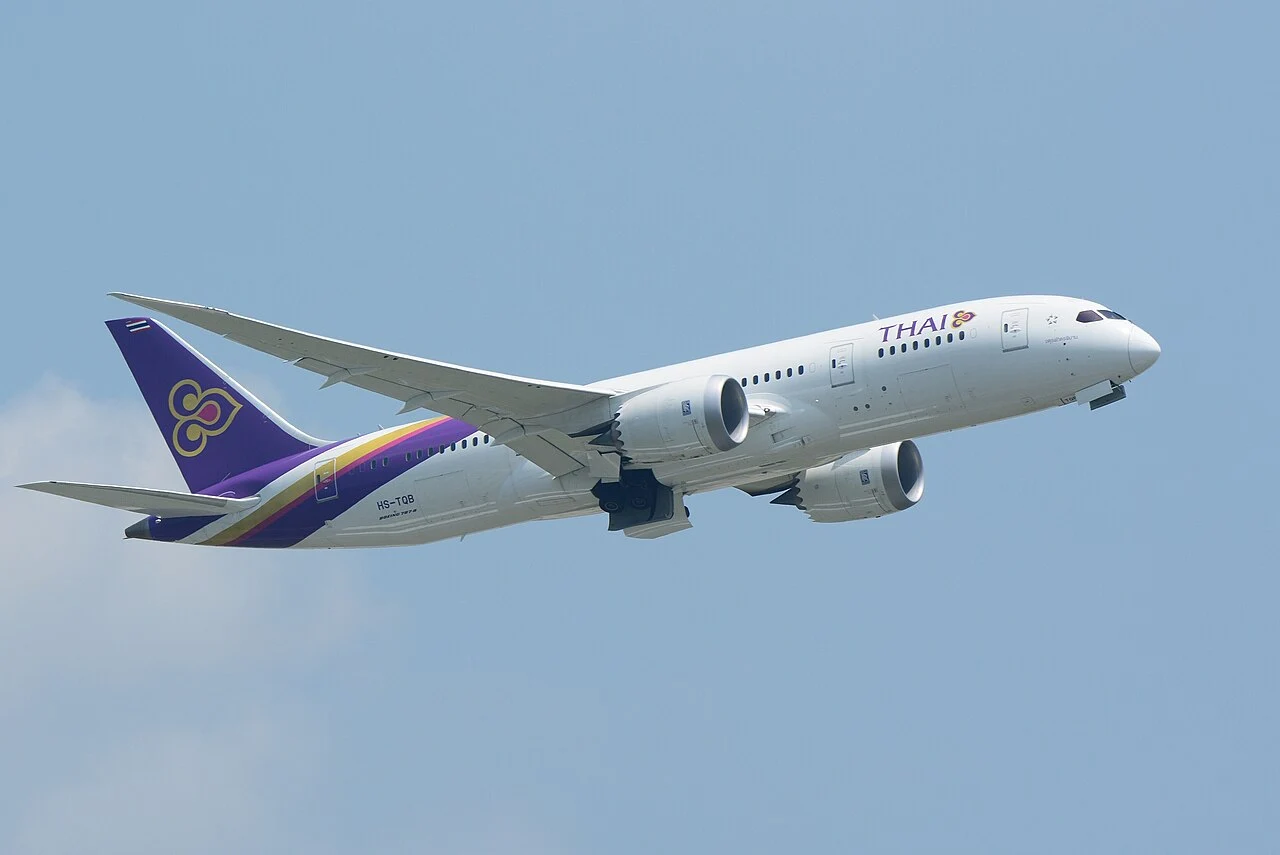
The Boeing 787-9 Dreamliner is the medium variant in the 787 family, sitting between the smaller -8 and the larger -10. It offers a longer fuselage and greater range than the -8, making it suitable for ultra-long-haul routes without a hub stop. Key technical specifications of the 787-9 include:
- Engines: Two GEnx-1B engines (GE Aerospace), offering improved fuel efficiency and lower noise output compared to prior generation widebody powerplants
- Range: Up to 7,565 nautical miles (14,010 km), enabling nonstop routes from Bangkok to destinations in Europe, Oceania, and the Americas
- Typical seating: 296 passengers in a two-class configuration; Thai’s existing 787-9s are configured with 30 Business Class seats and 262 or 268 Economy Class seats depending on variant
- Runway length required: 2,800 metres, allowing deployment at a wide range of airports
- Cruise speed: Mach 0.85
- Fuel efficiency: Approximately 20–25 percent more fuel-efficient per seat than the Boeing 767 it replaces on many routes
Thai Airways’ new-build 787-9s will be equipped with GEnx engines, which Boeing selected over Rolls-Royce Trent engines for Thai’s large order. This choice was partly driven by the pricing dispute between Airbus and Rolls-Royce that complicated the competing A350 bid. The GEnx powerplant also supports Thai’s stated goal of achieving carbon neutrality by 2050, by reducing fuel burn and emissions per available seat kilometre.
Passenger-facing cabin features on the 787-9, regardless of variant, include:
- Large windows: 47 by 28 cm, the largest of any commercial jetliner, with electrochromic dimming replacing traditional window shades
- Higher cabin pressure: Equivalent to 6,000 feet altitude instead of the 8,000 feet typical of older aircraft, reducing passenger fatigue on long flights
- Higher humidity: 15–16 percent humidity versus 4–5 percent on older jets, reducing dehydration
- Smoother air system: More efficient air circulation with HEPA filtration
- Reduced noise: Both at altitude and during takeoff
Thai’s existing 787-9 Business Class (Royal Silk) features 30 reverse-herringbone lie-flat seats in a 1-2-1 configuration with a 42-inch pitch, providing direct aisle access for every passenger. New-build aircraft in Thai’s incoming fleet will feature updated cabin interiors with privacy doors and upgraded seating, as CEO Chai Eamsiri confirmed in discussions with Airways Magazine.
Thai Airways’ 10 Leased Boeing 787-8s From Avolon
The AerCap 787-9 delivery runs alongside a separate, larger fleet transaction. Thai Airways confirmed plans to lease 10 Boeing 787-8 aircraft from Irish lessor Avolon, with the jets being previously operated by China Southern Airlines. Deliveries of these 787-8s are scheduled to begin in June 2026, providing immediate capacity uplift while the airline awaits its owned 787-9s from Boeing’s order backlog from 2028.
According to data from planespotters.net, Thai Airways currently operates nine 787-8s.
| Registration | Aircraft Type | Delivered to Thai Airways | Age |
|---|---|---|---|
| HS-TQA | Boeing 787-8 Dreamliner | Jul 2014 | 12 Years |
| HS-TQB | Boeing 787-8 Dreamliner | Sep 2014 | 11.8 Years |
| HS-TQC | Boeing 787-8 Dreamliner | Oct 2014 | 11.7 Years |
| HS-TQD | Boeing 787-8 Dreamliner | Dec 2014 | 11.6 Years |
| HS-TQE | Boeing 787-8 Dreamliner | Apr 2015 | 11.2 Years |
| HS-TQF | Boeing 787-8 Dreamliner | Aug 2015 | 10.9 Years |
| HS-TQH | Boeing 787-8 Dreamliner | Apr 2026 | 12.8 Years |
| HS-TQM | Boeing 787-8 Dreamliner | May 2026 | 12.9 Years |
| HS-TQO | Boeing 787-8 Dreamliner | Jun 2026 | 12.2 Years |
he ten additional leased examples are intended to directly replace retiring widebodies rather than add net new capacity. The carrier has a number of older widebodies — including Boeing 777-200ERs and Airbus A330-300s — exiting the fleet in 2026, and the 787-8 leases bridge the gap until the larger 787-9 order begins arriving. CEO Chai Eamsiri told reporters in January 2026 that discussions with lessors were expected to be finalised by mid-February, with deliveries beginning in June–July 2026.
The distinction between the two 787 variants matters operationally. The 787-8 carries approximately 242 passengers over a range of 7,355 nautical miles, while the 787-9 extends capacity and range. Thai’s strategy of combining both variants allows it to right-size aircraft by route length and demand profile.
Routes That the New 787-9s Will Support
The timing of the 787-9 delivery is directly linked to Thai’s most significant route restoration of 2026. Thai Airways will resume nonstop flights between Bangkok and Amsterdam Schiphol Airport (AMS) from 1 July 2026, restoring a European connection that has been absent for nearly three decades. Multiple sources including Travel and Tour World and The Traveler confirm the route will operate using Airbus A350-900 equipment on the BKK–AMS sector, with the timing calibrated to capture peak European summer leisure demand.
Beyond Amsterdam, the wider 2026 network expansion for Thai includes:
- Bangkok–Auckland (AKL): Daily service to Auckland International Airport is planned for relaunch in October 2026, utilising Boeing 787 Dreamliner aircraft. Auckland has historically carried a mix of leisure, visiting-friends-and-relatives, and education traffic between Thailand and New Zealand
- Bangkok–Changsha (CSX): New daily service launched 10 May 2026 using the Airbus A321neo, connecting BKK with China’s Hunan provincial capital
- Bangkok–Shenzhen (SZX): Planned for late 2026 using the A321neo, targeting China’s major tech hub
- Bangkok–Chongqing (CKG): Resumption scheduled for the second half of 2026
- India expansion: Weekly flights to India will increase from 78 to 100 services in late October 2026, with Amritsar Sri Guru Ram Dass Jee International Airport (ATQ), Jaipur International Airport (JAI), and Kochi Cochin International Airport (COK) joining the direct network
The 787-9 plays a central role in making long-haul routes like Auckland viable. Its range of 7,565 nautical miles comfortably covers the Bangkok–Auckland great-circle distance of approximately 5,700 nautical miles, and its fuel efficiency per seat makes the economics more defensible compared to older widebodies such as the Boeing 777-200ER or Airbus A330-300.
Thai Airways’ is Eyeing a Fleet of 150 Aircraft By 2033
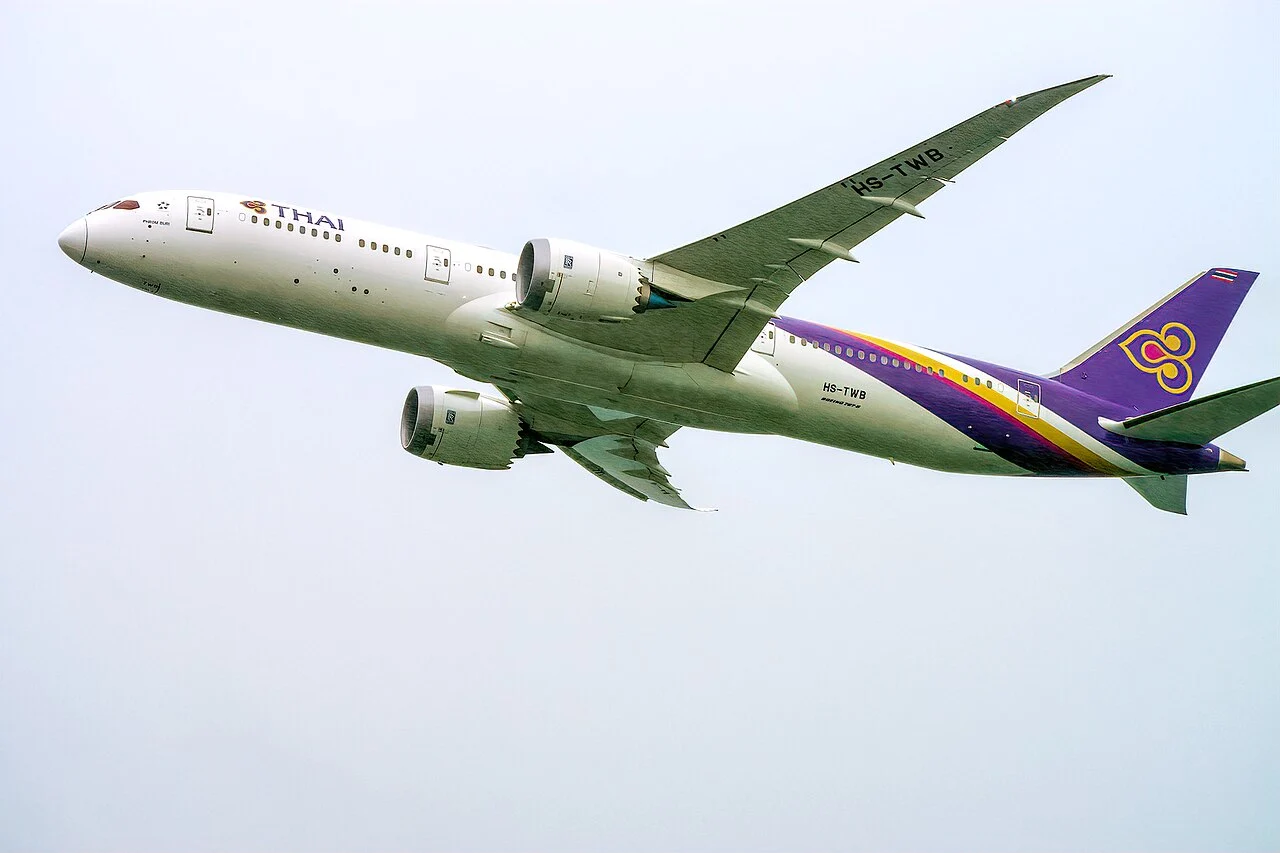
The 787-9 delivery is one data point in a larger fleet transformation story. As of early 2026, Thai Airways operated 79 aircraft — 59 widebodies and 20 narrowbodies — compared to over 100 aircraft before the pandemic. The carrier’s fleet plan targets 100 aircraft by the end of 2026, driven by the AerCap 787-9s, the Avolon 787-8s, and ongoing A321neo deliveries.
The longer-term ambition is more substantial. Thai Airways aims to operate 150 aircraft by 2033, reducing its aircraft model count from eight types to four and engine types from nine to five. This standardisation is expected to significantly lower maintenance and training costs, which were a persistent drag on profitability under the pre-restructuring fleet mix. The airline’s firm order for 45 Boeing 787-9s, announced at the Singapore Airshow in February 2024, is the backbone of that long-term vision, with deliveries expected from 2028. Options for an additional 35 aircraft, convertible to the larger 787-10 or Boeing 777X, provide further flexibility.
Narrowbody fleet growth runs in parallel. Thai took delivery of its first Airbus A321neo on 24 December 2025, with the aircraft registered HS-TOA and named “Boworrangsee.” Lease agreements with AerCap (ten aircraft), SMBC Aviation Capital (eight aircraft), and BOC Aviation (five aircraft) collectively point toward a total of 32 A321neos by 2028. The type made its commercial debut on the Bangkok–Singapore (SIN) route on 22 January 2026.
Thai Airways’ Rehabilitation and The Financial Foundation for Expansion
The confidence underpinning the 787-9 delivery and the 2026 route expansion would not exist without Thai’s successful exit from court-supervised rehabilitation. Thai Airways filed for bankruptcy protection in Bangkok in May 2020, with total debts of approximately Bt410 billion and a record net loss of Bt141 billion for 2020. The carrier reduced staff by approximately half, cut its fleet significantly, and restructured the debt under court supervision.
Thai Airways reported a net profit of Bt30.9 billion (approximately US$983 million) for 2025, with annual revenue increasing 1.2 percent to Bt190.2 billion. Full-year passenger traffic rose 8.3 percent, outpacing the 7.7 percent increase in capacity — a sign that load factors improved and demand exceeded supply additions. The airline’s EBITDA after aircraft lease payments reached Bt41.47 billion in 2024, more than double the Bt20 billion benchmark required to exit rehabilitation. Shareholders’ equity swung from negative Bt43 billion at the end of 2020 to positive Bt55.4 billion by March 2025.
Chai Eamsiri described the airline as now in its “takeoff” phase, focused on network expansion, fleet renewal, and service quality. At the restructuring exit, he stated the airline would move aggressively to strengthen its role as a network carrier connecting Asia with Europe and Australia. Thai is targeting a market share increase from 26 percent to 35 percent by 2029, with Bangkok Suvarnabhumi positioned as a premium connecting hub between Europe, South Asia, China, and Oceania.

Comparing This Delivery with Thai’s Broader 787 And Fleet Strategy
Thai Airways’ delivery of its first Airbus A321neo in December 2025 marked the carrier’s re-entry into modern narrowbody aircraft for regional routes. The 787-9 delivery represents the widebody parallel to that milestone. Together, the two aircraft types define the two-track approach Thai is pursuing: efficient narrowbodies for Asia-Pacific density routes, and the 787 family for long-haul network restoration.
The decision to choose Boeing’s 787-9 as the sole widebody in the long-term order, rather than splitting the purchase with Airbus, is significant. Thailand Business News reported that Airbus’ A350 bid was undermined by a pricing dispute with Rolls-Royce over Trent XWB engines, while Boeing offered the GEnx engine from GE Aerospace on preferential terms. The 787-9’s range also satisfied Thai’s requirement to open or restore routes to destinations including the US West Coast, which the shorter-range 787-8 cannot serve nonstop from Bangkok.
One important nuance is fleet consistency. Before the 2024 order, Thai Airways had operated exactly two 787-9s, a sub-fleet so small that it created scheduling inflexibility and was blamed for the airline’s reputation for aircraft swaps on long-haul routes. The combination of leased 787-9s arriving now and the large 787-9 order from 2028 onward will eliminate that problem, allowing Thai to build rosters, training programmes, and maintenance routines around a single widebody type at scale.
