On 1 June 2026, Lily Kahnerahtiio Dailleboust, a Kanien’kehá:ka (Mohawk) flight attendant employed by Air Canada (AC), gifted global music icon Rihanna a handmade beaded lanyard during a flight from Billy Bishop Toronto City Airport (YTZ) to Montréal–Pierre Elliott Trudeau International Airport (YUL). Rihanna, whose legal name is Robyn Rihanna Fenty, recorded a short video with Dailleboust during the flight. In the clip, later posted to Dailleboust’s Facebook page, Rihanna described the gift as something she would “never forget and never lose.” The video rapidly accumulated hundreds of thousands of views and drew widespread media coverage across Canada and internationally.
Dailleboust hails from Kahnawà:ke, a Kanien’kehá:ka territory on Montreal’s South Shore. She told Global News that the encounter was her first time meeting a global celebrity of Rihanna’s stature on a single-class regional aircraft with no separation between cabin crew and passengers. She added that the moment carried significance well beyond its immediate warmth — it represented an opportunity to share Mohawk heritage with someone she described as “an activist” and a figure she deeply respects.
A Dash-8 Q400 With No Business Class, Just One Famous Passenger
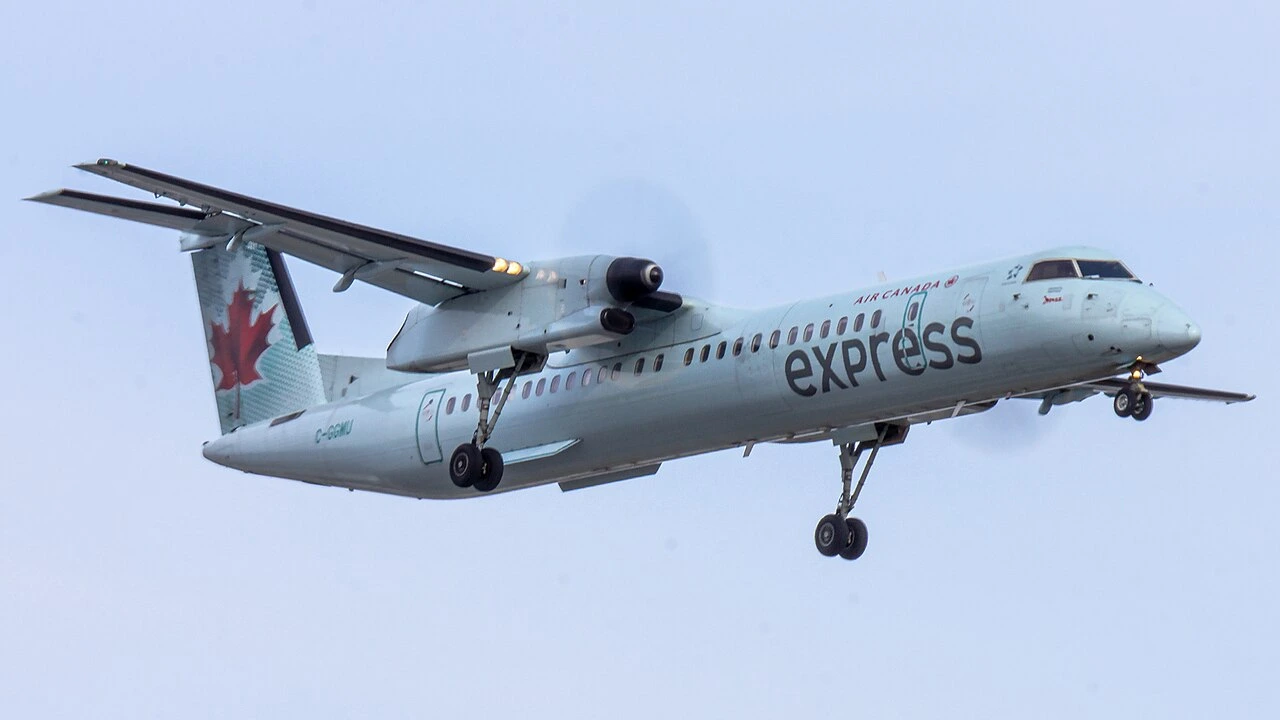
The flight in question operated under Air Canada Express, the carrier’s regional subsidiary, using a De Havilland Canada Dash 8-400 (Q400) turboprop. Air Canada Express flights between YTZ and YUL are operated by Jazz Aviation LP on behalf of Air Canada. As of January 2026, Air Canada increased this route to nine daily return flights, reflecting the corridor’s status as one of Canada’s most heavily trafficked business-travel routes.
The Q400 aircraft carries 78 passengers in a single-class configuration with no business class section. Rihanna was reportedly seated in the crew area at the back of the aircraft for privacy, with the flight crew accommodating her discretely. She was, according to Dailleboust, en route to attend an A$AP Rocky concert in Montreal. About the incident, Dailleboust told Global News that she didn’t “even know how to react because it’s not my first time having a VIP”:
“but on a small airplane from Billy Bishop, like the Dash-8 Q400, it’s just a regular aircraft, there’s no business class, there’s no separation.”
The aircraft type is currently undergoing a significant cabin modernization program. Air Canada announced in September 2025 that 25 Dash 8-400s operated for Air Canada Express by Jazz would receive:
- New ergonomic reclining seats from Expliseat, with seatback device holders and tray tables
- Redesigned interiors incorporating colours and textures drawn from Canadian nature
- Industry-first gate-to-gate Wi-Fi, delivered by Bell — the first time Wi-Fi has been made available on any Dash 8-400 aircraft anywhere in the world
- Complimentary premium snacks, beer, and wine for eligible customers
The seat installation programme has an expected completion date of mid-2026.
Rihana Was Presented a Beaded Lanyard from a Community Store
The object at the centre of this story is a beaded lanyard — Dailleboust’s own personal keychain, purchased from a store called “Traditions” in her community of Kahnawà:ke. The store displays and sells work by local Indigenous artists. Dailleboust told Global News that she approached Rihanna’s bodyguard mid-flight and asked for permission to offer the gift before presenting it.
“Before I started anything I just took out the lanyard and I just presented it to her and said, ‘Oh I just want to offer you a gift,'” Dailleboust recounted. “You know in my culture we’re very giving. When somebody or something is very significant or meaningful we want to offer you something so I gave it to her. She was so happy.”
Rihanna accepted the gift immediately and placed the lanyard on her purse. She then told Dailleboust she was the first Mohawk person she had ever met. Once the aircraft’s seatbelt sign was switched off, Rihanna offered to record a video and sign an autograph for Dailleboust. In the video that subsequently went viral, Dailleboust taught Rihanna how to say “thank you” in Kanien’kéha — the word is “Niá:wen“ — and Rihanna repeated it, with Dailleboust confirming her pronunciation was correct.
Rihanna said in the video:
“This sweet lady gifted me with something very special that I will never forget and I will never lose. Thank you so much.”
Cultural Significance of the Haudenosaunee Beadwork Gifted to Rihana
The viral moment drew attention not only to Dailleboust personally but to the broader cultural practice of Kanien’kehá:ka beadwork. In a follow-up report by Global News, community members in Kahnawà:ke described the significance of the craft and the mixed emotions the video’s global reach provoked.
Kenneth Deer, a Kahnawà:ke resident, explained that decorative beadwork in Haudenosaunee communities predates European colonization. “Before European contact, we would dress our leather with shells, porcupine quills and bone, and after contact we got beads,” he said. Tekaronhiahkhwa Margaret Standup, a local shop owner, noted that Kahnawà:ke is distinguished by its specific style:
“We do a specific kind of beadwork. We do a Haudenosaunee raised beadwork. It’s quite different from [other] communities.”
Deer also raised the uncomfortable history that surrounds the renewed global appreciation for Indigenous art forms, saying:
“They discarded our artwork before, and now our artwork is popular, and now the settlers are taking our symbols and art and they’re making money out of it,”
Dailleboust acknowledged the complexity:
“It makes you feel sad, it makes you feel proud, it makes you feel hurt because, you know, it took a lot for our people to get to where we are.”
She added that Rihanna’s own partial Indigenous heritage made the connection particularly meaningful. “She has Indigeneity in her as well, so just to be able to relate on that level I think is really amazing,” Dailleboust told Global News. Members of the Kanien’kehá:ka community subsequently sent Dailleboust messages expressing pride in her act of cultural sharing.
Cabin Crew as Cultural Ambassadors
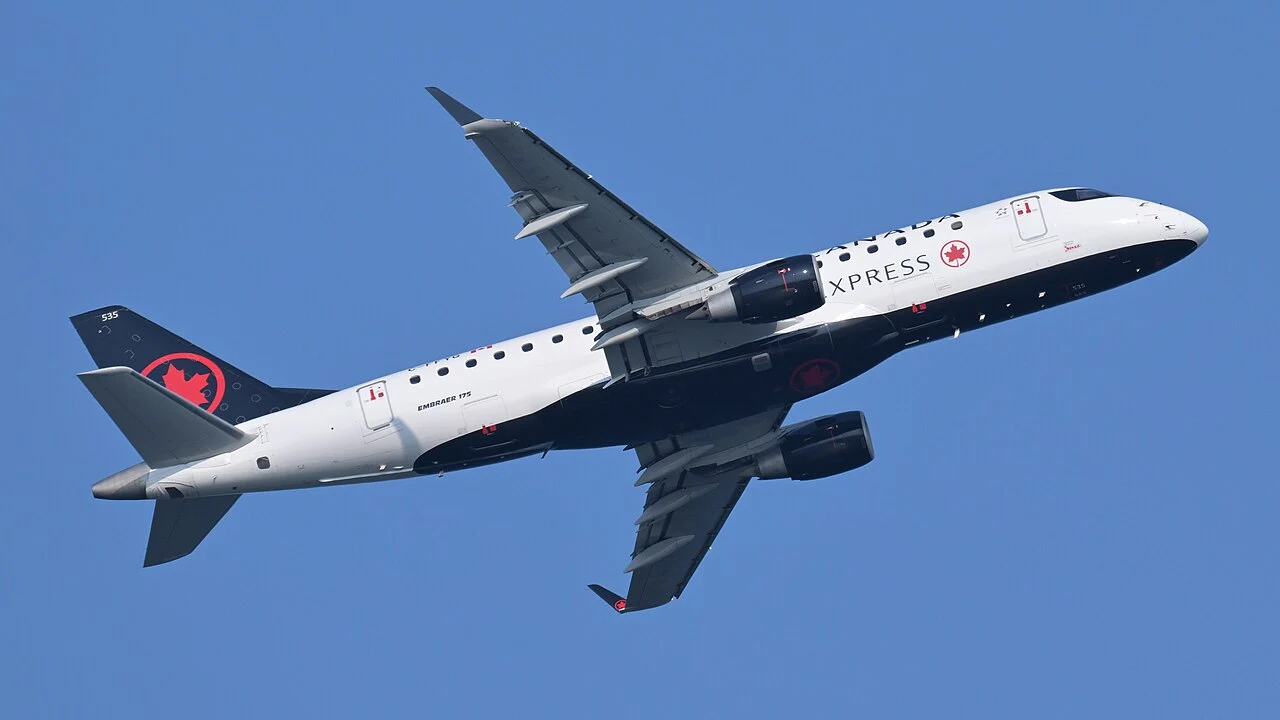
In 2025, Air Canada’s all-Indigenous flight AC34 drew national coverage and represented a deliberate, institutionally coordinated cultural statement — a crew assembled to honour reconciliation and professional achievement simultaneously. The Dailleboust moment was different in character: spontaneous, personal, and initiated by a single crew member acting on her own cultural instincts at 30,000 feet. Yet the two events speak to the same underlying reality: that Indigenous Canadians are present in aviation’s professional workforce in growing numbers, and that their presence carries cultural weight that extends well beyond any individual flight.
Dailleboust said she intends to continue sharing and highlighting Mohawk heritage wherever her work takes her. “(I wanted) to share my community, share my people and share our heritage and culture,” she told Global News. The video she recorded with Rihanna has already introduced the word “Niá:wen“ — and the community of Kahnawà:ke — to an audience of millions who might otherwise never have encountered either.