Germany and France formally terminated the crewed fighter jet component of the Future Combat Air System (FCAS) on June 8, 2026, ending what had been Europe’s most ambitious defense program since the Eurofighter. German Chancellor Friedrich Merz conveyed the decision to French President Emmanuel Macron on June 6, 2026, on the sidelines of the EU-Western Balkans Summit in Montenegro, according to German business daily Handelsblatt, citing the German federal government, AeroTime reported. Merz formally announced the decision to the public at the opening of the ILA Berlin Air Show, the same venue where the FCAS partnership was unveiled in 2018. The program, valued at approximately €100 billion, was designed to replace France’s Dassault Rafale and Germany’s Eurofighter Typhoon with a sixth-generation stealth combat aircraft by the early 2040s.
The collapse followed the failure of an industrial mediation process launched after a Macron-Merz dinner in Brussels on March 18, 2026. That mediation, assigned to a German mediator, concluded on April 18, 2026, with the finding that a jointly built crewed fighter was no longer feasible. Reuters, citing German officials, reported that both leaders concluded there was no realistic path to resolving the longstanding disagreements between industrial partners Dassault Aviation and Airbus Defence and Space. The cancellation does not wind down the FCAS program entirely as the development of the Combat Cloud, a digital network linking aircraft, drones, and sensors, will continue under a revised bilateral framework.
FCAS’ Decade of Disputes
FCAS was launched politically in July 2017 by President Macron and then-Chancellor Angela Merkel as a cornerstone of Franco-German defense cooperation and European strategic autonomy. Spain joined in 2019, and the formal partnership between Dassault and Airbus was unveiled at the ILA Berlin Air Show in 2018. From almost the beginning, the program was characterized by what a German Council on Foreign Relations study described as a persistent “lack of progress and cooperation.”
The central fault line was industrial control. Dassault CEO Éric Trappier argued that his company’s experience as a combat aircraft manufacturer justified a dominant role in the NGF’s development. Dassault advocated a “best-athlete” model, which would have concentrated design authority and a disproportionate workshare at the French firm.
In a March 2026 statement, Trappier insisted that the accusations directed at Dassault were false and framed the dispute as an attempt by Airbus to dilute the industrial leadership that partner governments had already formally assigned.
Airbus, representing German and Spanish interests, refused to accept a subordinate role. The German expectation was that Dassault honor existing agreements under which the companies would divide work equally. A critical subsidiary dispute concerned intellectual property: Reuters reported that the companies failed to reach agreement on how work under the program should be divided and, crucially, who would hold patent rights to the technologies being developed.
The operational requirements gap proved equally intractable. France insisted on an aircraft capable of carrying nuclear weapons and operating from aircraft carriers, reflecting its doctrine of independent nuclear deterrence and naval power projection. The German Bundeswehr has no requirement for either capability. Germany proposed developing two variants of the aircraft to reconcile these divergent requirements; France rejected the proposal. By February 2026, Chancellor Merz was publicly questioning whether France and Germany’s requirements could be satisfied by a single platform.
The Combat Cloud and Drone Programs of the FCAS Remain
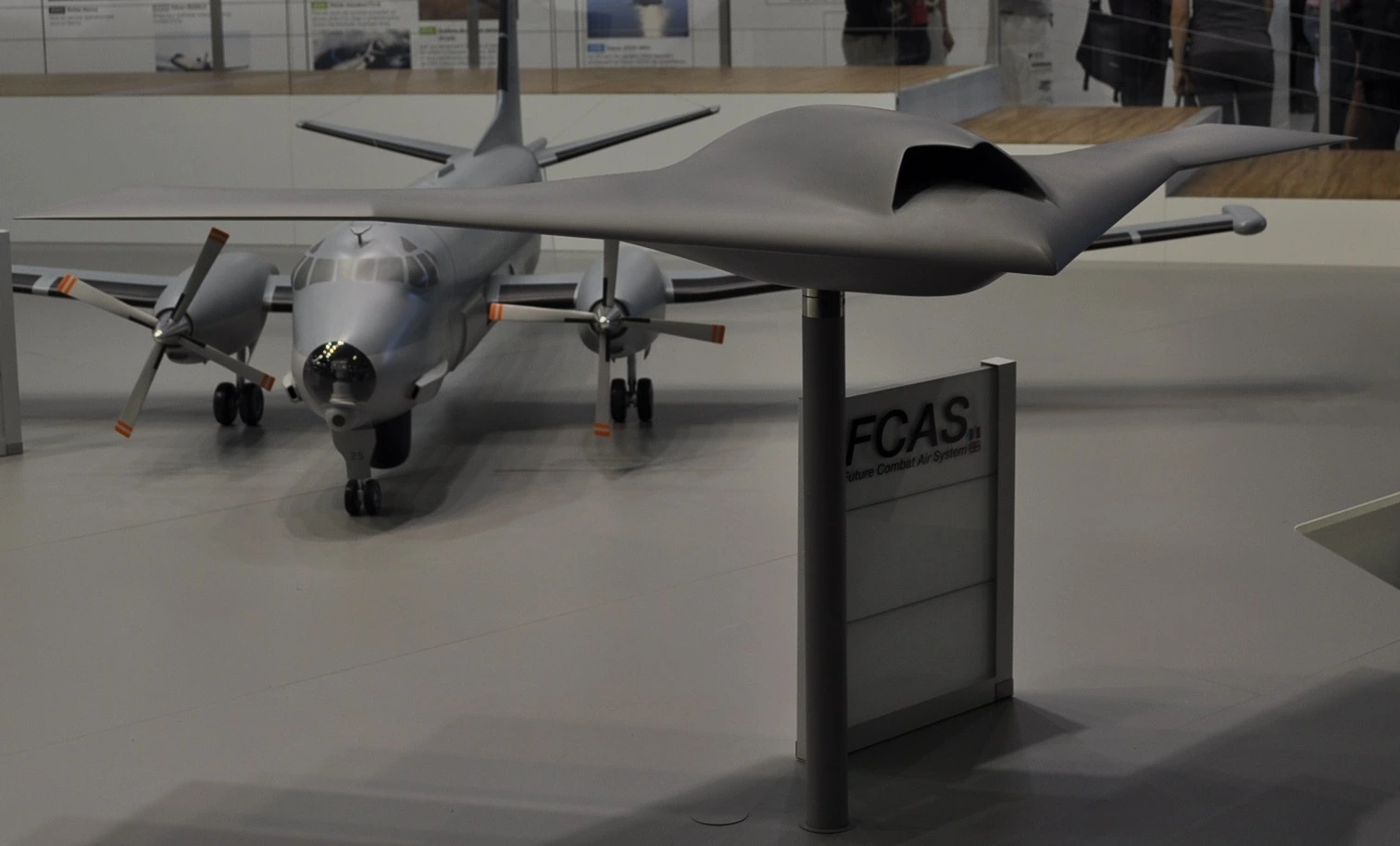
The cancellation of the NGF does not erase all FCAS-related cooperation between Paris and Berlin. Both governments have confirmed that work on the Combat Cloud — the networked digital architecture linking aircraft, drones, and sensors — will continue. The division of responsibilities for this remaining element is to be negotiated at the next Franco-German ministerial council, currently scheduled for July 17, 2026.
The Franco-German defense ministries are expected to draft a revised bilateral work plan, described by German officials as focused on “a few realistic and relevant projects,” at the forthcoming meeting.
Germany has also proposed maintaining trilateral cooperation with Spain on the remaining FCAS elements. The outcome of that discussion will determine whether Indra Sistemas retains a meaningful role in the surviving program architecture.
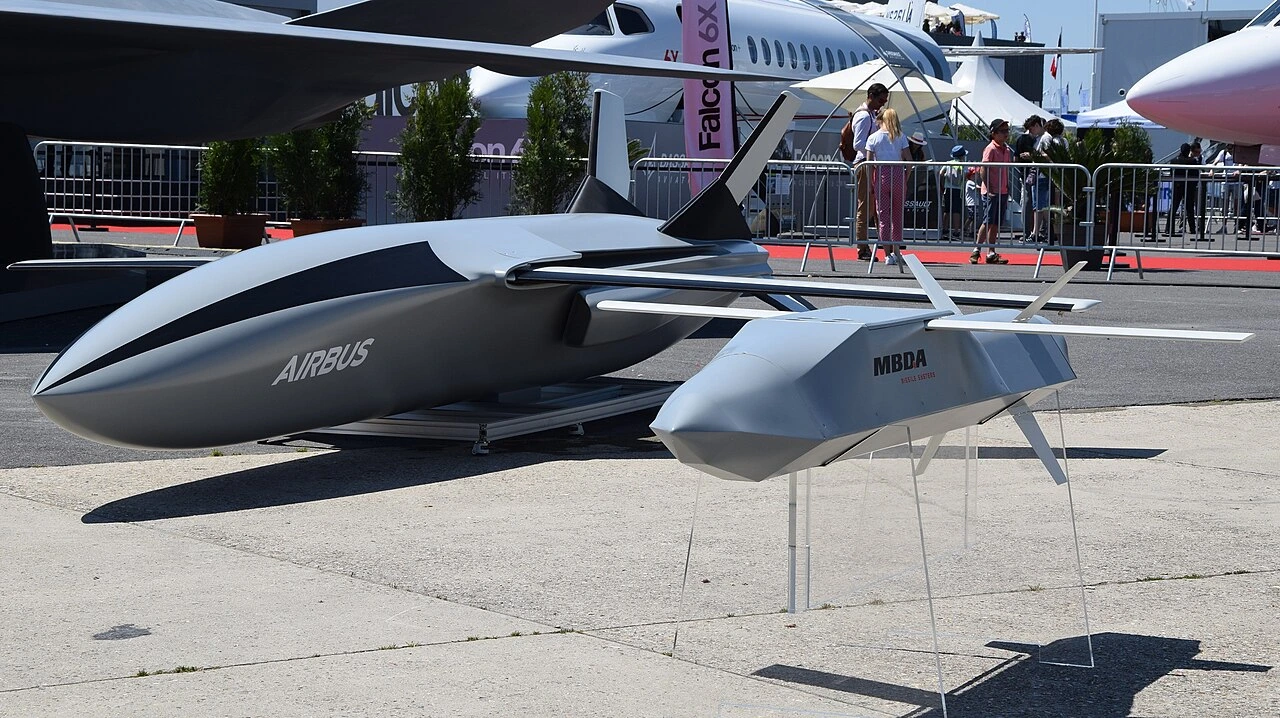
The Remote Carrier drone program, led by Airbus, could also continue independently of the manned fighter. Airbus retains the technical lead on both the Combat Cloud and Remote Carrier pillars, which are not contingent on the NGF proceeding.

Europe’s Air Sovereignty Problem
The cancellation arrives at a particularly fraught moment for European defense policy. The continent is accelerating rearmament in response to sustained Russian aggression against Ukraine, while simultaneously navigating increasing uncertainty about the depth of the US commitment to NATO’s Article 5 guarantees.
FCAS was explicitly conceived as a pillar of European strategic autonomy — an assertion that France and Germany could develop and sustain advanced combat air capabilities independent of Washington.
Germany purchased 35 Lockheed Martin F-35 fighter jets in 2022 as a fifth-generation stop-gap, and reports throughout 2025 suggested Berlin was considering procuring an additional 15 aircraft, despite Ministry of Defense denials. Without the NGF, Germany faces an extended dependency on US-origin combat aircraft that could last well into the 2050s.
As Euronews reported, the program was seen as “a key test of European efforts to work more closely on defence as they seek to present a united front in the face of a hostile Russia at a time of souring ties with the United States” — a test that the program has now unambiguously failed. For Airbus, the decision opens the door to new international partnerships, with Saab and potentially GCAP partners the most credible candidates. For Dassault, the path forward might be full sovereign responsibility for France’s next fighter, with no cost-sharing from Berlin or Madrid.