The Chaoyang District People’s Court in Beijing ordered Malaysia Airlines (MH) and its parent company, Malaysia Airlines Berhad, to pay more than 2.9 million yuan, about $410,000, to each of eight families of passengers who disappeared aboard Flight MH370. The court issued the ruling on December 5, 2025, and announced it publicly on December 8. The case closes out eight of the 78 lawsuits filed by families of the missing since 2016.
The Boeing 777-200ER vanished on March 8, 2014, less than an hour after leaving Kuala Lumpur International Airport (KUL) for Beijing Capital International Airport (PEK), carrying 227 passengers and 12 crew. Malaysia’s government declared the disappearance an accident on January 19, 2015, and presumed all 239 people aboard dead. No wreckage has ever been recovered, and the ruling gives eight families a legal and financial resolution more than eleven years after they lost contact with their relatives. The news comes in the month in which the search for this extraordinary disappearance of MH370 is set be revived.
What The Court Ordered
The eight cases decided this month all involved passengers who had already been legally declared dead, a separate procedural step some families delayed for years. Under the Montreal Convention and Chinese civil law, the court ordered Malaysia Airlines to pay compensation covering four categories:
- Death compensation for the loss of the passenger
- Funeral expenses
- Damages for emotional distress
- Other related losses and legal costs
Combined, these categories brought each award to just over 2.9 million yuan. Across the eight rulings, total payouts add up to roughly $3.3 million.
The court’s statement did not use the phrase “closure,” but it acknowledged that the compensation was meant to address more than financial loss alone, addressing the psychological toll on relatives who spent over a decade without confirmation of what happened to their family members.
How The Other 70 Cases Have Played Out
Of the original 78 lawsuits, 47 have already been resolved through mediation, with families reaching settlements directly with Malaysia Airlines and withdrawing their claims before trial. Those settlement terms have not been made public.
The remaining 23 cases are still working through the same procedural bottleneck that delayed this month’s rulings: the passengers involved have not yet been legally declared dead, or their families have not completed that declaration process. Chinese courts require that step before they can rule on death compensation, so those cases will move forward only as families complete the paperwork or the courts otherwise resolve the question.
Roughly two-thirds of MH370’s passengers were Chinese nationals, which explains why the bulk of the outstanding litigation is proceeding through courts in Beijing rather than Malaysia or elsewhere. The remaining passengers held Malaysian, Indonesian, Australian, Indian, American, French, Dutch, and other nationalities.
A Search That Is Restarting as the Cases Close
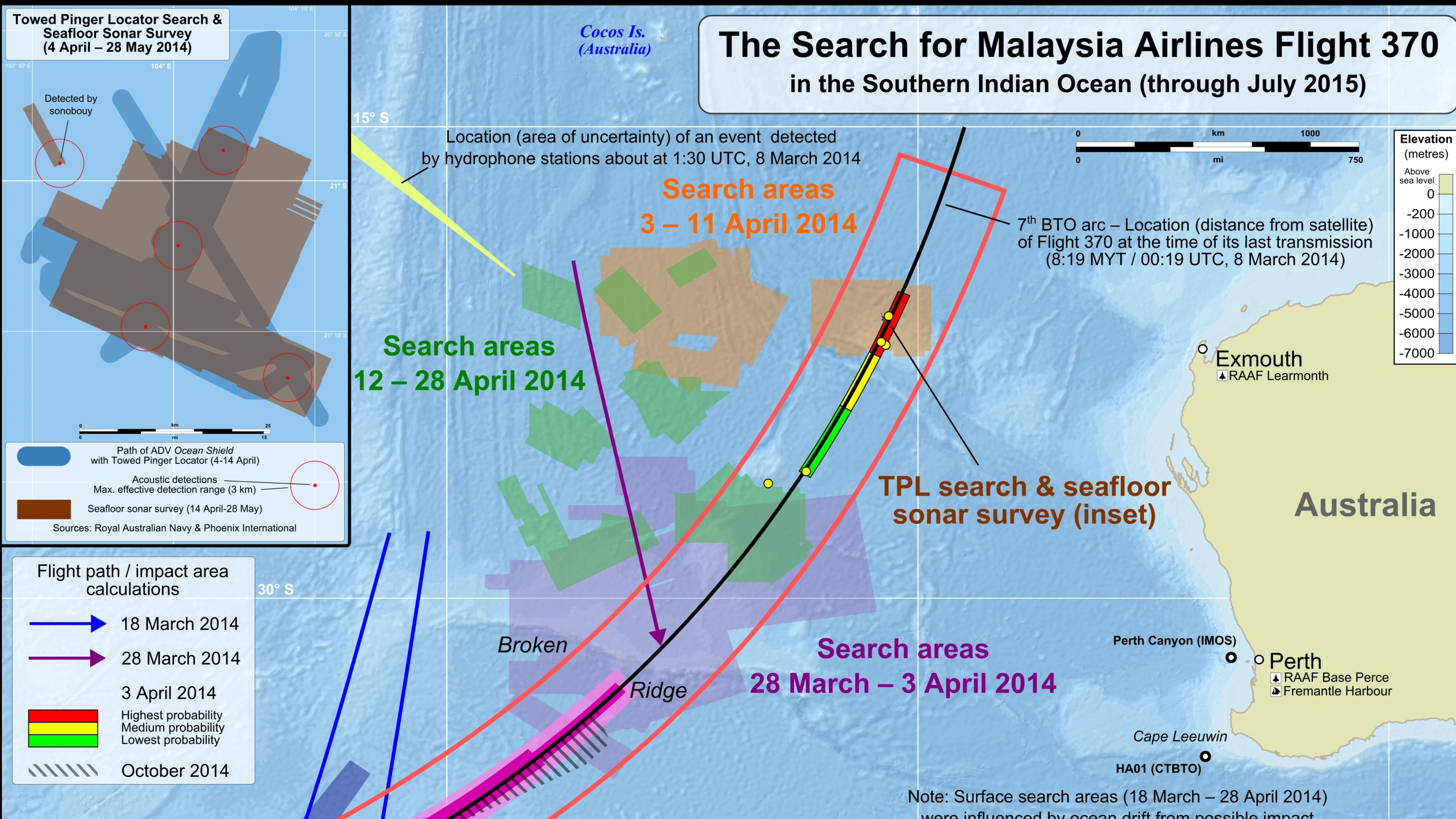
The compensation ruling landed within days of a separate announcement from Malaysia’s Ministry of Transport. On December 3, 2025, the ministry confirmed that the hunt for MH370’s wreckage would resume on December 30, more than a decade after the original multinational search was called off without result.
Marine robotics firm Ocean Infinity will lead the renewed effort, running seabed operations intermittently over 55 days in the area of the southern Indian Ocean judged most likely to contain the aircraft. The search follows the terms of a “no find, no fee” service agreement the company signed with Malaysia’s government on March 25, 2025.
For the families still waiting on their own cases, the timing links two long-running threads of the same story: financial recognition of their loss in Chinese courts, and a renewed, if uncertain, chance that searchers finally locate the aircraft itself.
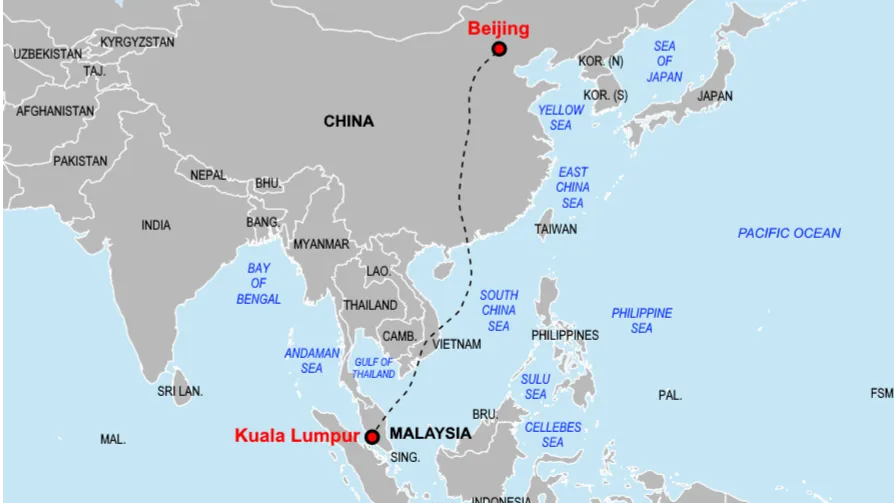
Photo: Weaveravel | Wikimedia Commons
MH370’s compensation process has moved unusually slowly, largely because no wreckage or black box data has ever confirmed what happened to the aircraft. That absence of physical evidence is unusual among major airline disasters and has complicated both the legal declarations of death and the underlying liability claims.
By contrast, Boeing agreed weeks earlier to pay roughly $28 million to the family of a United Nations environmental consultant killed aboard Ethiopian Airlines Flight 302, one of two 737 MAX crashes that grounded the aircraft type worldwide in 2019.

Why This Ruling Matters Now
The rulings give eight families a legal endpoint to a process that has run since 2016, even though the underlying mystery of MH370’s disappearance remains unsolved. With 23 cases still pending and a new search set to begin this month, both threads of the MH370 story, compensation and discovery, are moving again after years of limited progress.

.jpg)


