Ask five different sources what a Lufthansa captain earns and you’ll get five different answers. That’s not because anyone is lying — it’s because Lufthansa‘s pilot pay scales are set by collective bargaining agreements (Tarifverträge) between the airline and the pilots’ union, Vereinigung Cockpit, and those agreements are not published publicly. Every salary figure circulating online, including the ones below, is a reconstruction from job boards, union statements, and pilot-reported data — not a leaked pay table,
That opacity matters right now more than usual. According to airmappr.com, in February 2026, Lufthansa cockpit and cabin crews staged a simultaneous walkout over pension contributions — grounding roughly 800 flights and affecting around 100,000 passengers — after talks stalled over whether the company’s monthly pension contribution should rise from about €820 to the union’s ask of €2,400. So treat every number here as a well-sourced estimate, not gospel — and know that the ground underneath it is currently shifting.
With that caveat up front, here’s the clearest picture available.
The Money Offered to Lufthansa’s Pilots
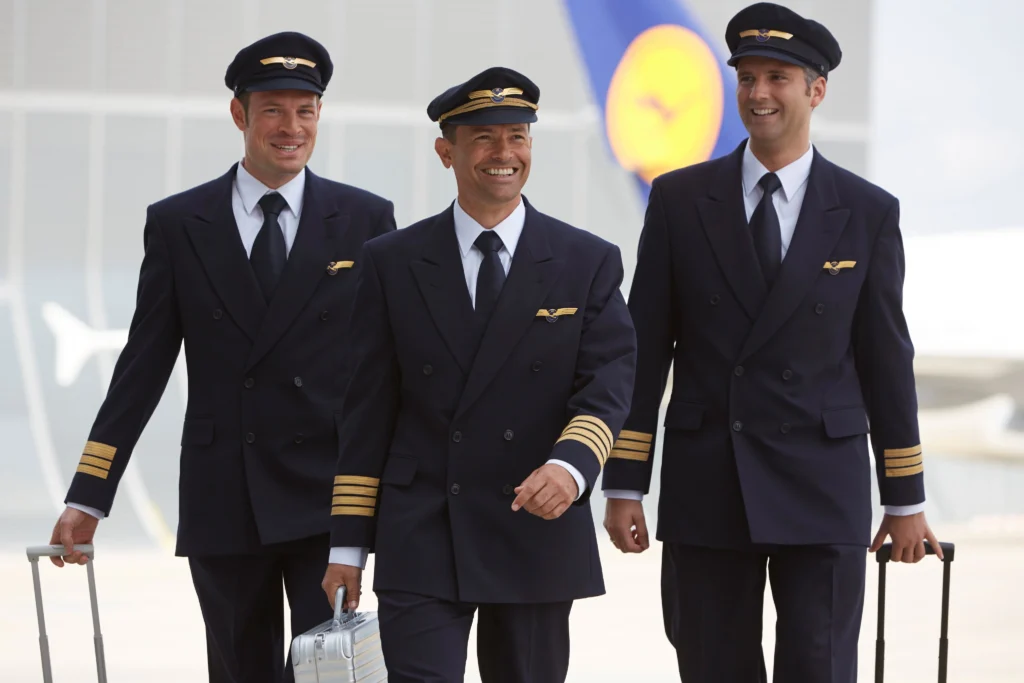
First Officers at Lufthansa mainline appear to earn somewhere in the €73,000–€175,000 range annually, depending on which stage of their career and which source you trust. One detailed 2026 breakdown puts starting pay around €83,000 gross (including the customary 13th-month payment common in German employment), climbing toward €171,000 for senior first officers. Another tracker converts this to roughly €5,800/month at entry, rising to around €12,000/month after about 12 years of seniority. A third source, more conservative, puts the range at €73,000 in year one rising to €120,000 by year ten.
Captains cluster more consistently around €150,000–€280,000 a year. The higher-end figures — €164,000 to €280,000 — come from a 2026 guide that describes this as the highest base pay of any European airline, while other estimates land closer to €155,000–€250,000 or €145,000–€251,000 in a slightly earlier snapshot. Converted to a monthly figure, one source pegs a narrow-body A320 captain at roughly €18,000–€22,000/month gross.
Why Pay Doesn’t Scale with Flight Hours
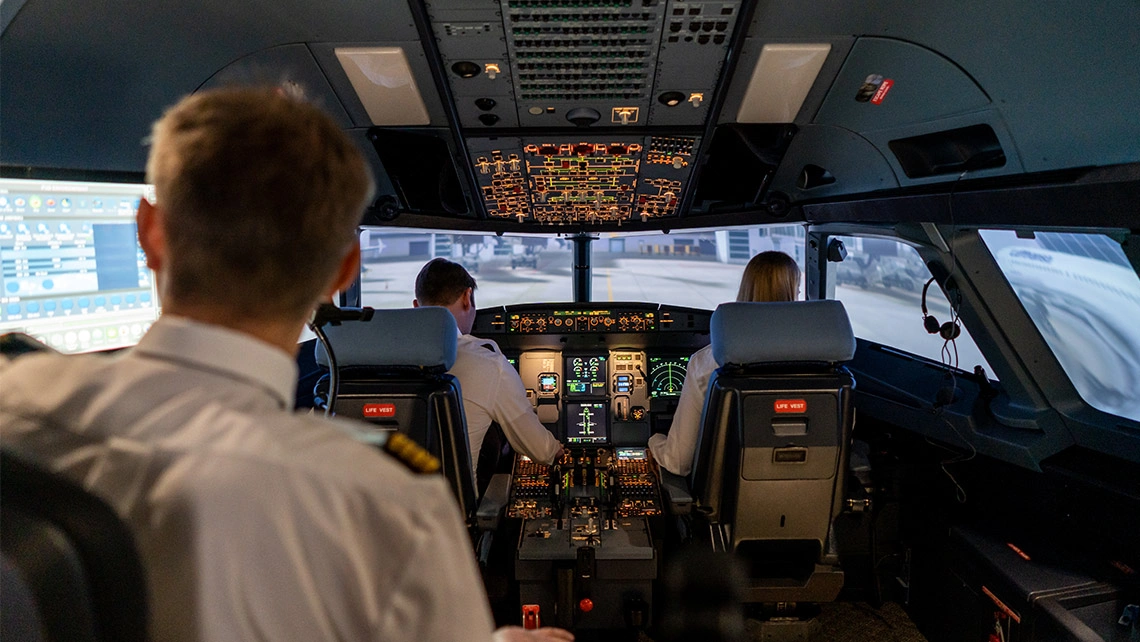
Unlike carriers where pay is largely a function of hours flown, Lufthansa runs a seniority-based salary structure: pay rises on a predictable annual schedule tied to years of service and rank, not primarily to how much a pilot flies in a given month. That predictability, backed by the VC collective agreement, is a large part of why Lufthansa mainline is often described as the “gold standard” of European pilot employment. The trade-off is speed: reaching command at Lufthansa mainline has historically taken somewhere in the range of 8–15 years, depending on which source and hiring era you look at, considerably longer than fast-track captain upgrades at low-cost carriers.
There’s also a quieter financial detail rarely mentioned in salary tables: long-haul crews collect tax-free per diems under German tax rules (Verpflegungsmehraufwand) — up to roughly €70/day internationally — which for a captain flying three to four international trips a month can add up to €12,000–€18,000 a year that never appears as taxable income. A separate estimate puts standard per diems closer to €50–€58/day for first officers and €53–€61/day for captains — again, a range rather than a fixed figure.
Two Roads into the Cockpit
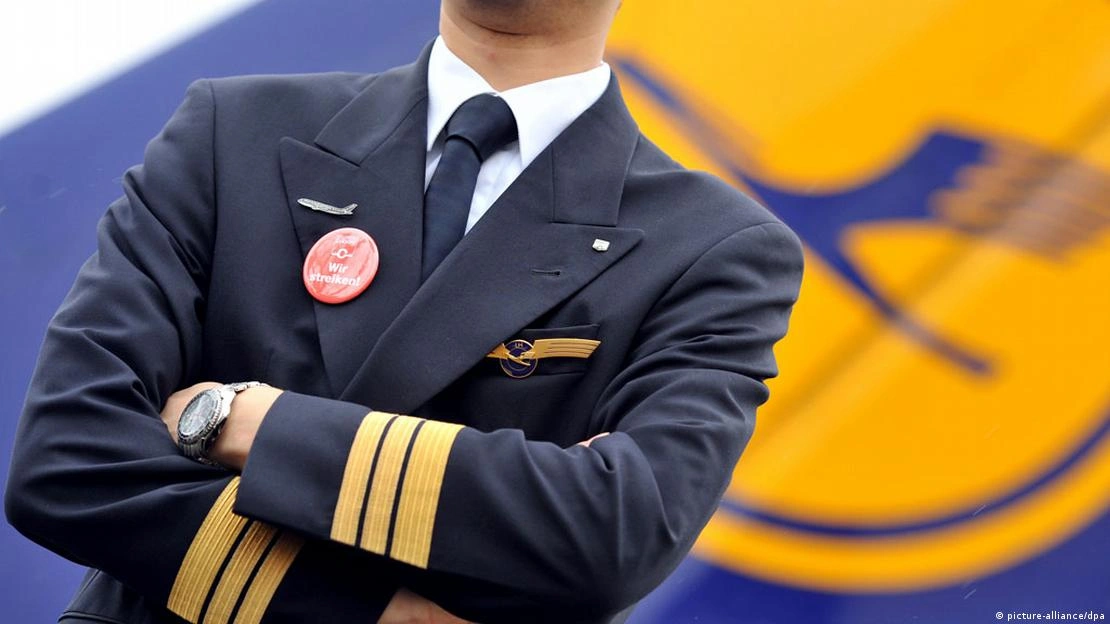
Lufthansa hires in two ways: ab-initio cadets with little or no flying experience, and direct-entry pilots who already hold a licence.
Cadets go through the European Flight Academy (EFA), Lufthansa Group’s own flight school, with campuses in Bremen, Rostock, Zurich, Grenchen, and Goodyear, Arizona. Training runs roughly 22–24 months and culminates in a frozen ATPL (a CPL(A)/IR). Recent estimates put the total cost around €120,000, with a company-arranged income-share loan and a “take-off promise” that refunds 50% of tuition if no cockpit job materializes within 24 months of graduating. Entry requires passing the DLR aptitude test at the German Aerospace Center in Hamburg before you can even apply.
For direct-entry first officers, requirements consistently cited across recent sources include:
- EASA CPL(A)/IR(A) with ATPL theory credit, or a completed MPL (Phase 4)
- EASA Class 1 medical certificate
- Advanced Upset Prevention and Recovery Training (UPRT)
- A general higher-education qualification (Abitur, Fachhochschulreife, or equivalent)
- EU citizenship or unrestricted right to work; a passport with unlimited validity
- ICAO English Language Proficiency Level 4 or higher, spoken and written
- German language skills are not formally mandatory for cockpit roles, but sources note they’ve become “strongly advantageous” for crew communication and union participation since around 2024.
For captains, the bar is understandably higher — a minimum of roughly 5,000 total flight hours on aircraft over 19.5 tonnes MTOM, including around 1,000 hours as pilot-in-command, alongside the same medical, language, and residency requirements as first officers.
The Selection Process for Becoming a Lufthansa Pilot
Recent applicant accounts describe a multi-stage funnel, broadly consistent across sources:
- Application — CVs, licences, medical certificates, and flight logs submitted through Lufthansa’s careers portal.
- DLR aptitude testing — cognitive, behavioural, and technical assessments run by the German Aerospace Center, widely described as one of the toughest selection gates in European aviation.
- Simulator assessment — typically on an Airbus A320 Level D full-flight simulator at Lufthansa’s Frankfurt or Munich training centre, lasting 60–90 minutes and testing handling, CRM, and SOP discipline.
- Technical and HR interviews — covering ATPL theory, aircraft systems, and scenario-based questions, including how candidates handle disagreement with a captain or criticism in front of passengers.
- Medical and background verification — final Class 1 medical, reference, and security checks before a contract offer.
Beyond the Salary Line
Reported benefits, drawn from multiple current sources, include:
- Travel privileges across Lufthansa Group airlines and the Star Alliance network for pilots and eligible family
- Profit-sharing tied to company performance
- Company pension contributions, currently the subject of the ongoing dispute with Vereinigung Cockpit noted above
- Comprehensive medical and insurance coverage, including care while abroad
- Tax-free per diems during layovers, as described earlier
- A professional development allowance, estimated around €1,800–€2,000 per year for ongoing training
- Union representation through Vereinigung Cockpit, which holds agreements at Lufthansa mainline, Lufthansa Cargo, CityLine, Eurowings, Condor, TUIfly, and Ryanair’s German subsidiary Malta Air
Frequently Answered Questions
How much do Lufthansa pilots earn per year?
Estimates converge on roughly €73,000–€175,000 for first officers and €150,000–€280,000 for captains, depending on seniority and fleet — though the underlying pay tables aren’t publicly published, so treat these as informed ranges.
Where are Lufthansa pilots based?
Primarily Frankfurt and Munich, Lufthansa’s two mainline hubs.
What aircraft do Lufthansa pilots fly?
The A319/A320/A321 family (including neo variants), A330, A340 (being retired), A350-900 (with the A350-1000 arriving from late 2026), A380, Boeing 747-400/-8I, Boeing 787-9, and eventually the Boeing 777-9 once delivery delays clear, expected from early 2027.
Is Lufthansa hiring in 2026?
Yes — through both direct-entry applications and the European Flight Academy cadet programme, though intake and placement guarantees vary by year and by which Lufthansa Group airline is recruiting.