Korean Air-Asiana Merger Sparks Online Suicide Flight Threat at Gimpo Airport: Police Investigate

South Korean law enforcement authorities initiated an aviation security investigation on January 19, 2026, after an anonymous online poster threatened to carry out a “suicide flight” at Gimpo International Airport (GMP), Seoul in explicit protest of the ongoing Korean Air–Asiana Airlines merger, Korean JoongAng Daily reported. The individual claimed to be an airline captain and allegedly marked a location on a map of the airport while also referencing violent acts intended to disrupt flight operations.

Police at Gimpo Airport, acting in coordination with Seoul’s Gangseo Police Station and national counter-terrorism units, are examining whether the original post reflects a real aviation insider or is a hoax.

Photo: Bill Abbott | Wikimedia Commons

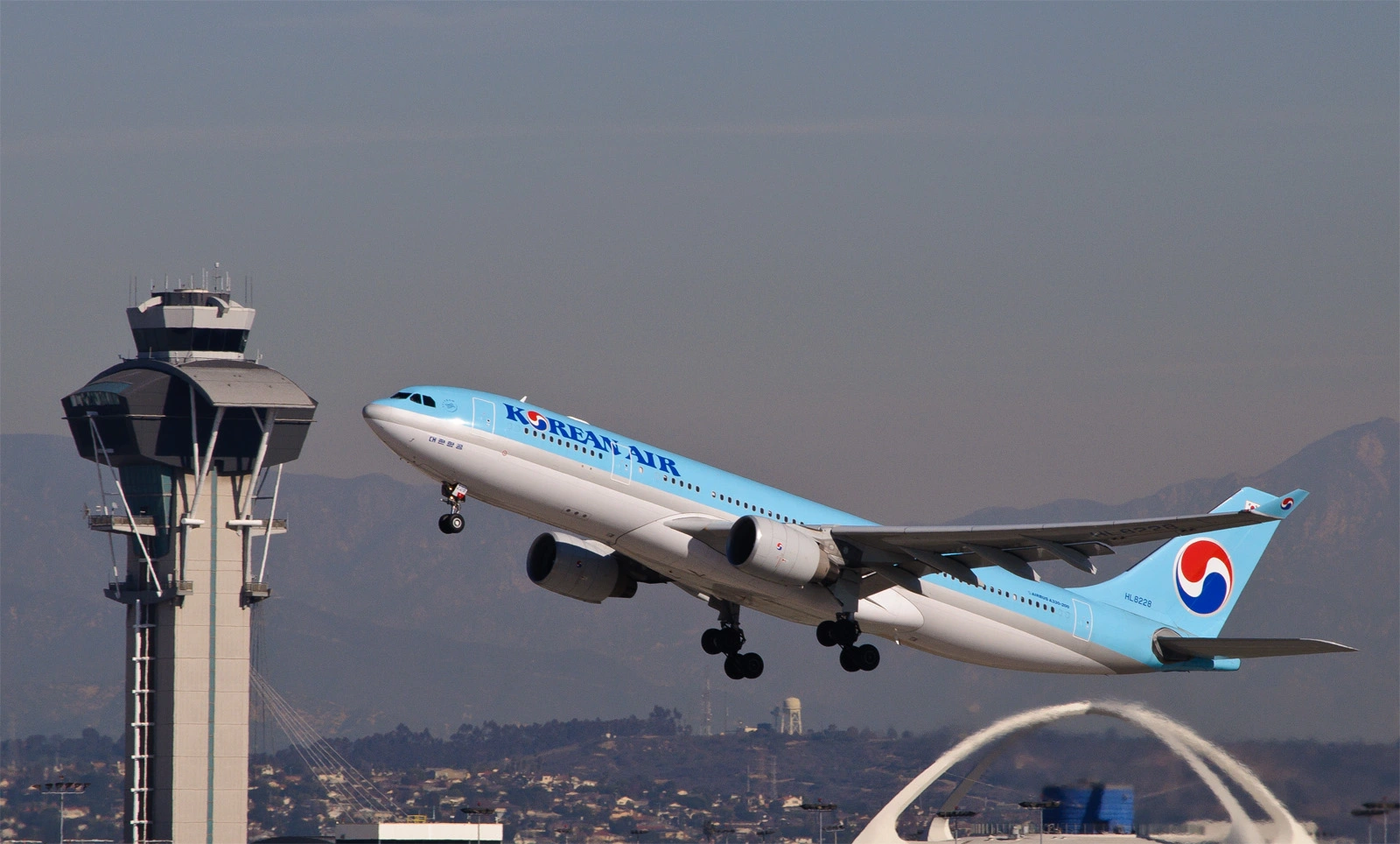
Gimpo International Airport (GMP), Seoul

Category Details
Official name Gimpo International Airport (GMP)
Location Gangseo District, Seoul, Republic of Korea
Operator Korea Airports Corporation
Primary role Major domestic airport; secondary international gateway for Seoul
Opened 1939
Elevation 58 feet (18 meters) above mean sea level
Runways 2 parallel runways
Main runway length 3,600 meters (11,811 feet)
Passenger traffic (pre-pandemic peak) ~25 million passengers annually
Key domestic routes Jeju (CJU), Busan (PUS), Gwangju (KWJ)
International destinations Tokyo-Haneda (HND), Osaka-Itami (ITM), Shanghai-Hongqiao (SHA), Beijing-Capital (PEK)
Primary airlines Korean Air (KE), Asiana Airlines (OZ), Jeju Air (7C), T’way Air (TW)
Terminal structure Separate domestic and international terminals
Security oversight Ministry of Land, Infrastructure and Transport (MOLIT)
Role in Seoul airport system Domestic hub complementing Incheon International Airport (ICN)
Strategic importance High-frequency shuttle traffic; proximity to central Seoul
Photo: Hyeonwoo Noh | Wikimedia Commons

President Lee Jae-myung Clashes With Incheon Airport Chief Over Book-Based Cash Smuggling Claims

Korean Air and Asiana Airlines merger tensionsLead to Suidice Flight Threats

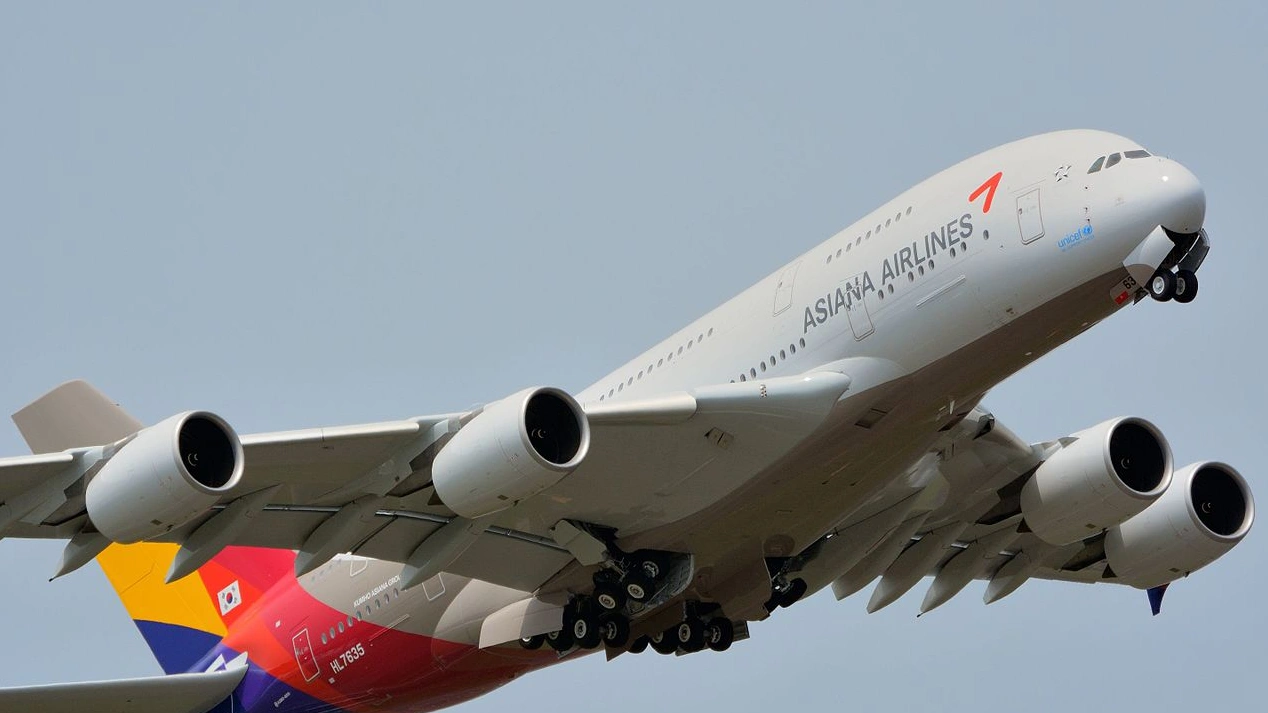
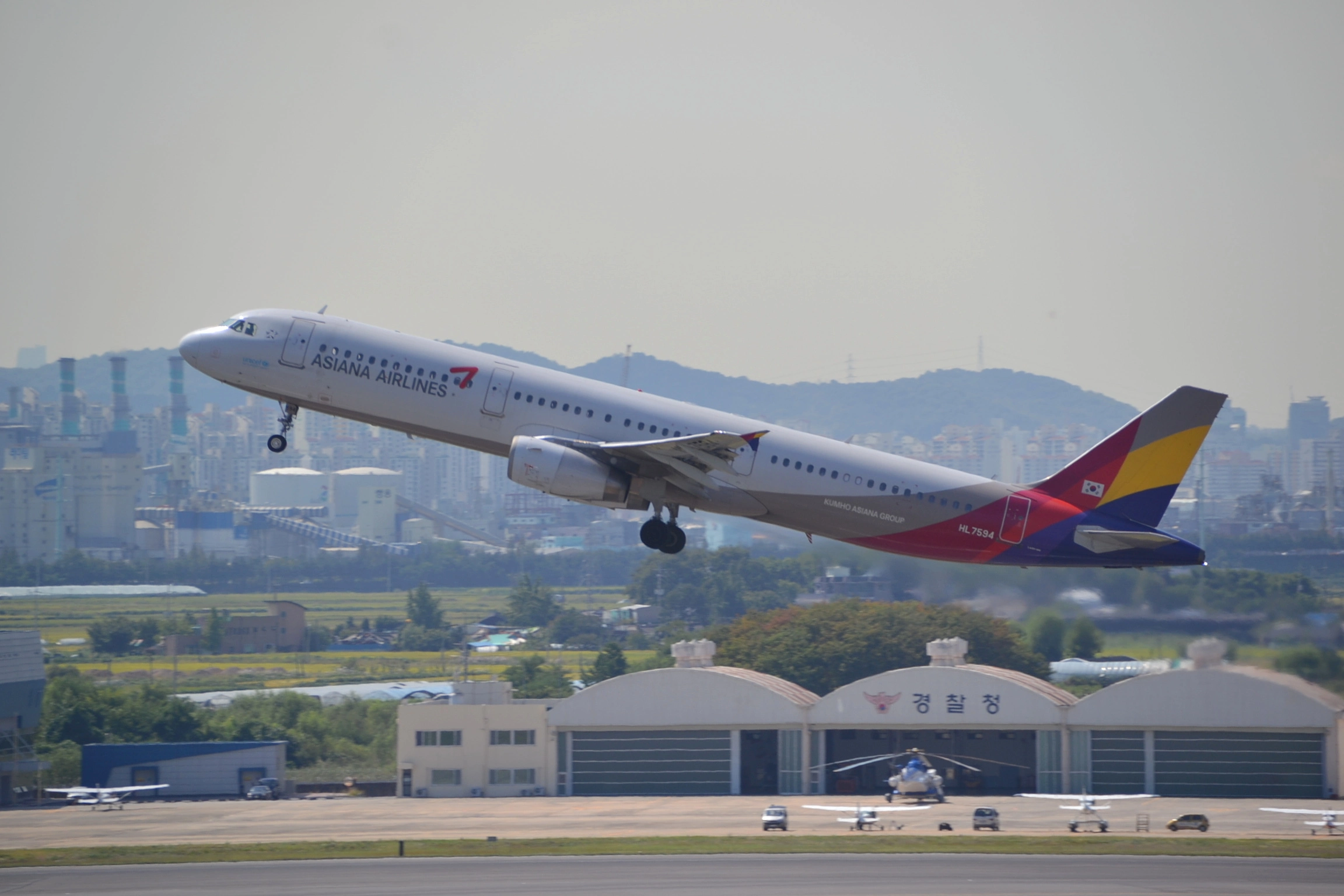
The threat emerged amid heightened employee and public tensions over the merger of South Korea’s two largest carriers, Korean Air and Asiana Airlines. The merger, first announced in 2020, was completed in December 2024, with Korean Air acquiring a 63.9 percent stake in Asiana, the carrier which once operated one of the shortest A380 flights, making the latter a subsidiary. The strategic integration, designed to create a consolidated national carrier with expanded global reach, has since encountered internal criticisms and regulatory conditions.

The following table gives us a cue of the merger:

Metric Value Notes
Ownership stake acquired 63.88% Asiana Airlines becomes a subsidiary of Korean Air
Number of shares acquired 131,578,947 shares Newly issued Asiana Airlines shares
Total acquisition value ₩1.5 trillion Aggregate transaction size
Deposit payment ₩300 billion Paid at earlier stage of transaction
Interim payment ₩400 billion Paid during acquisition process
Final balance payment ₩800 billion Paid one day before completion
Date acquisition completed December 12, 2024 Official closing date
Initial acquisition announcement November 2020 Start of merger process
Time from announcement to completion ~4 years Reflects regulatory and procedural timeline
Planned integration period Up to 2 years Operational and organizational integration
Extraordinary general meeting date (Asiana) January 16, 2025 Board and CEO appointments
Mileage program integration reporting deadline June 2025 Submission to Fair Trade Commission

Data: Business Korea

Photo: Masakatsu Ukon | Wikimedia Commons

Gimpo is one of the Republic of Korea’s busiest domestic airports and handles high frequency operations to major cities, including Jeju Island (CJU). The airport also serves regional international flights to destinations such as Tokyo and Beijing. Its dual function as a domestic and regional international hub underscores why security incidents there attract intense scrutiny.

According to Korean JoongAng Daily:

“The threat also included a stabbing attack…..”We have received a report of the incident and are checking the details,” said an official at Korea Airports Corporation, a state-run airport operator. Police at Gimpo Airport said they are investigating whether the person who wrote the post is actually a captain or an employee of either airline.”

Photo: InSapphoWeTrust | Wikimedia Commons

Aviation Security Laws Relevant to Threats like This

A few months ago, around 2000 protestors came to burn down Tribhuvan International Airport, the primary international airport of Nepal – the country that houses Lukla Airport, which is known as the most dangerous airport in the world. In extreme cases like these, it might be difficult to know which laws are applicable.

But according to Seoul Economic Daily, legal entities are already on the way to handle the situation

“After a report was filed Monday morning regarding the post, the Gimpo Airport Police and Seoul Gangseo Police Station began their investigation. For cases involving aviation security or terrorism concerns, relevant information is shared with related government agencies under the national counter-terrorism system. Police are reportedly reviewing whether to apply public threat charges against the author of the post”.

In this particular case, the supervising government body, is the The Ministry of Land, Infrastructure and Transport, which has claimed that “it will monitor the situation and await the results of the police investigation”. The post that saw the Korean law enforcers moving has since been deleted from the community.

Photo: Alec Wilson | Wikimedia Commons

Which are the busiest airports in the world in March 2025?

Asiana and Korean’s Merger isn’t without its Difficulties, though

Around the end of 2024, a report published in Korea Times claimed that despite “lingering concerns” over Asiana’s “weak financial structure“, it would merge with Korean given the latter’s cash assets and low debt ratio:

  • Asiana Airlines’ debt-to-equity ratio exceeded 1,400 percent in 2022 and 2023.

  • The airline posted a net loss of 66.1 billion won ($46 million) over the first three quarters of this year and is expected to remain unprofitable.

  • Its operating margin stands at just 4.1 percent, keeping overall performance in the red.

  • Korean Air reported a record operating profit of 2.88 trillion won in 2022, followed by a solid 1.58 trillion won in 2023.

  • The carrier has also strengthened its balance sheet, cutting its debt ratio from 813.9 percent in 2019 to 199 percent by the third quarter of 2024.

The following table provides an outline of the difficulties in the merger of the two:
Category Challenges / Details
Integration Complexity Combining Korea’s two largest carriers into one entity by December 2026; involves operational, cultural, and financial alignment.
Route Allocation KFTC requires transfer of traffic rights and slots on 34 routes to prevent monopoly; 18 pending, 10 unclaimed, creating regulatory and logistical issues.
Mileage Program Integration Frequent-flyer programs must be combined; KFTC issued two supplemental orders, additional measures needed this year.
Terminal Transfer & Facilities Asiana moving from Terminal 1 to Terminal 2 at Incheon Airport; coordination needed for lounges, ground ops, premium services, and first-class/Prestige lounge expansions.
Expense Risks Rising exchange rates, oil prices, and labor costs increase operational burden; fuel and lease costs are dollar-denominated; competition from LCCs and foreign airlines may pressure fares.
Passenger Demand Divergence International routes recovering to pre-pandemic levels, but domestic demand projected at 93% of pre-COVID; uneven growth affects revenue planning.
Premium Product Alignment Expansion of “premium” seating to meet growing demand; cabin products and pricing structures must be harmonized.
Cargo & Revenue Risks International air cargo demand above 2019 levels (106%), but global market volatility, fuel costs, and exchange rates remain challenges for integrated operations.
Photo: Brett Spangler | Wikimedia Commons

As the launch of the unified airline draws near, disagreements over staffing and office allocations persist. Since the restructuring revolves around Korean Air Lines, the majority of senior positions have been filled by Korean Air staff, while numerous Asiana Airlines employees have been reassigned to administrative duties.

According to Chosun:

  • Korean Air Lines staff have coined the phrase “Mang-siana living in a rented room,”
  • Asiana employees express, “To be honest, it’s scary, and it’s hard to come to work,”

The same source also quoted an official from Korean Air Lines union:

“We are asking management to ensure fair opportunities for Asiana Airlines employees while minimizing the relative sense of deprivation among Korean Air Lines employees even after integration.”

Leave a Comment

Your email address will not be published. Required fields are marked *

Scroll to Top