KLM Royal Dutch Airlines (KL) began offering free Wi-Fi on flights within Europe on January 22, 2026. The service lets passengers email, browse, listen to music, play games, and stream video for the duration of their flight. It applies to routes operated from KLM’s hub at Amsterdam Airport Schiphol (AMS), Amsterdam.
The airline says the move answers a long-standing customer request. Passengers must log in or register for a Flying Blue account to get online, and access is unlimited once connected. KLM is rolling the service out in phases, with half of its European fleet equipped at launch and full coverage expected over the next few years.

What KLM’s Free Wi-Fi Covers from January 22
Free Wi-Fi is available on roughly 50 percent of KLM’s European aircraft as of launch day. The airline says coverage will expand until every Airbus A321neo, every Embraer 195-E2, and a portion of its Boeing 737-800s carry the service. KLM’s European fleet has no seatback screens, so the internet connection effectively replaces in-flight entertainment on these routes.
Before this change, passengers paid up to 18 euros for internet access on a European flight. Removing that fee brings KLM in line with a wider industry shift, though the airline frames the decision around comfort rather than competition. The connectivity is supplied through a partnership with satellite provider Viasat.
How Passengers Log in Through Flying Blue
Getting online requires a Flying Blue account, which is free to create and can be done on board. Stephanie Putzeist, responsible for customer experience at KLM, said in the launch announcement that the airline had listened to what passengers wanted and that free internet had been “on their wish list for some time.”
Once logged in, the connection stays live gate to gate, with no data cap or time limit mentioned in the rollout details. This approach mirrors a pattern across the industry, where carriers increasingly tie free connectivity to loyalty programme sign-ins rather than a one-off payment, both to simplify onboard authentication and to build their membership numbers.
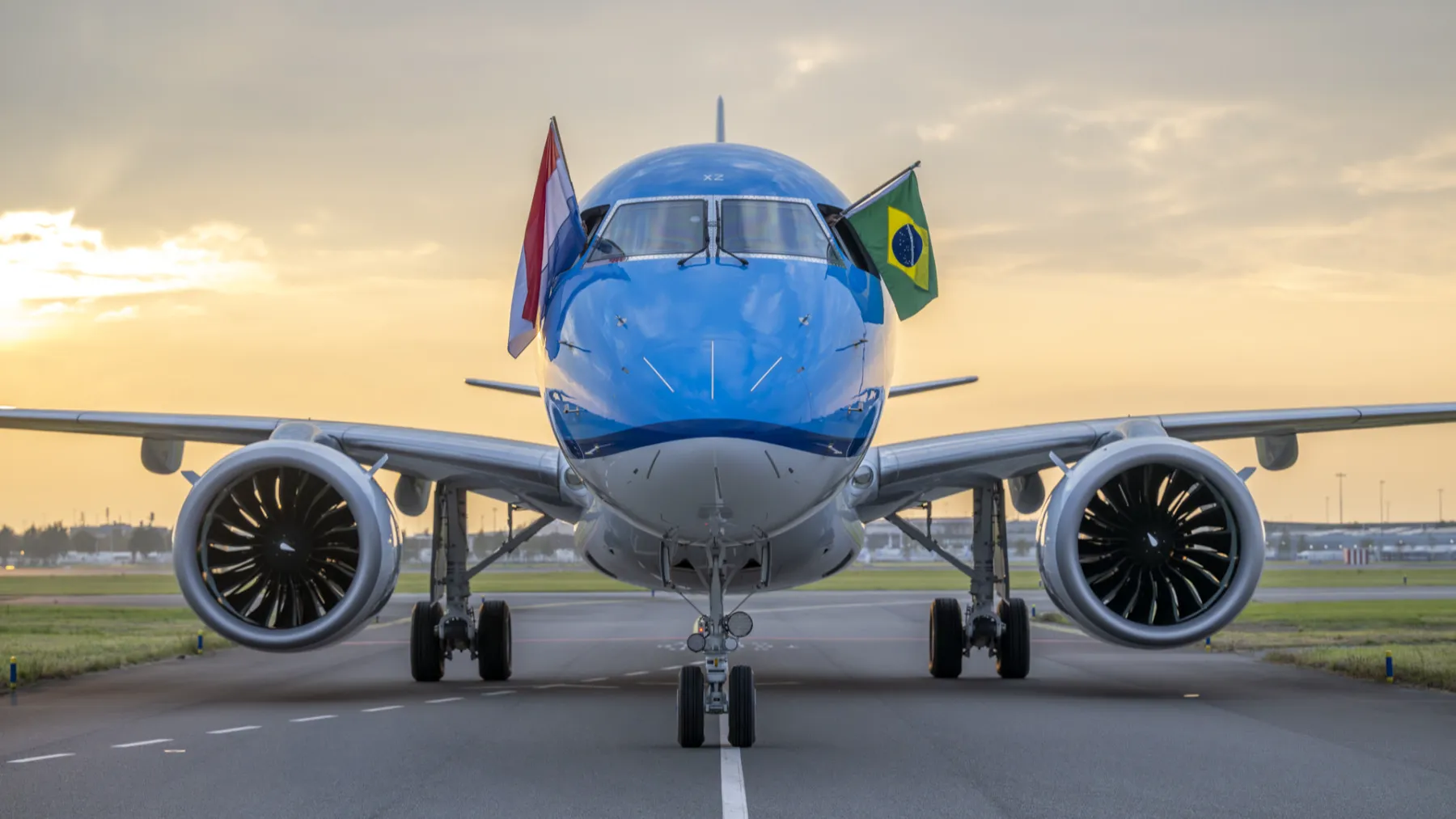
Photo: KLM
New Cabin Interiors Replace In-Flight Screens on the A321neo
KLM has added twelve new A321neo aircraft to its fleet since August 2025, and these jets carry both Wi-Fi and updated seating. The rollout sits inside a wider, €7 billion fleet renewal programme that is replacing KLM’s European Boeing 737 fleet with Airbus A320neo-family jets. The new aircraft carry more passengers per flight while burning less fuel than the 737s they replace.
The absence of seatback screens on these narrowbody jets makes the Wi-Fi launch more significant for KLM than for airlines that already offer entertainment systems. Without a screen in the seatback, a phone or tablet connected to free internet becomes the only source of onboard entertainment for most passengers. KLM has not said whether free Wi-Fi will extend to its long-haul, intercontinental network.
Key features of the rollout include:
- Unlimited free internet on eligible European flights from January 22, 2026
- Access to email, web browsing, music, gaming, and video streaming
- Login via a free Flying Blue account, registered in advance or on board
- Coverage on Airbus A321neo, Embraer 195-E2, and select Boeing 737-800 aircraft
- Connectivity supplied through a Viasat partnership
Why Free Wi-Fi Matters for Short-Haul Europe
Charging for Wi-Fi long served two purposes for airlines: it generated ancillary revenue, and it limited the number of passengers using bandwidth at once, which kept connections usable and controlled data costs. Removing that charge signals that KLM sees connectivity as central to passenger comfort rather than a revenue line, a shift already visible at rivals moving toward free access.
For an airline built around tight connecting banks through Amsterdam Schiphol, keeping short-haul passengers online may also reduce friction across a longer journey that continues onto a long-haul flight. KLM has not confirmed a date for extending free Wi-Fi beyond its European network, and its intercontinental fleet still uses a paid connectivity model for now.