JetBlue Airways (B6) will close its flight attendant base at Newark Liberty International Airport (EWR) and its technical operations bases at both EWR and New York LaGuardia Airport (LGA) this fall, the carrier confirmed to CNBC on June 17, 2026. According to View from the Wing, the airline stated that no employees will lose their jobs as a result of the closures, with affected workers offered the opportunity to bid or transfer to other bases. The decision marks a significant retreat for a carrier that is headquartered in New York and still calls the New York metro area its largest single market.
The move arrives as JetBlue aggressively shifts resources toward Fort Lauderdale-Hollywood International Airport (FLL), where it has become the dominant carrier following the collapse of Spirit Airlines (NK) on May 2, 2026. It also comes at a deeply uncertain financial moment for JetBlue, whose founder David Neeleman publicly warned in April 2026 that the airline’s debt could climb toward $9 billion and that it risked bankruptcy without a dramatic turnaround. JetBlue’s CEO Joanna Geraghty has ruled out a bankruptcy filing for 2026, but the broader financial pressure has accelerated every cost-cutting decision the airline is now making.
What JetBlue Is Closing and When
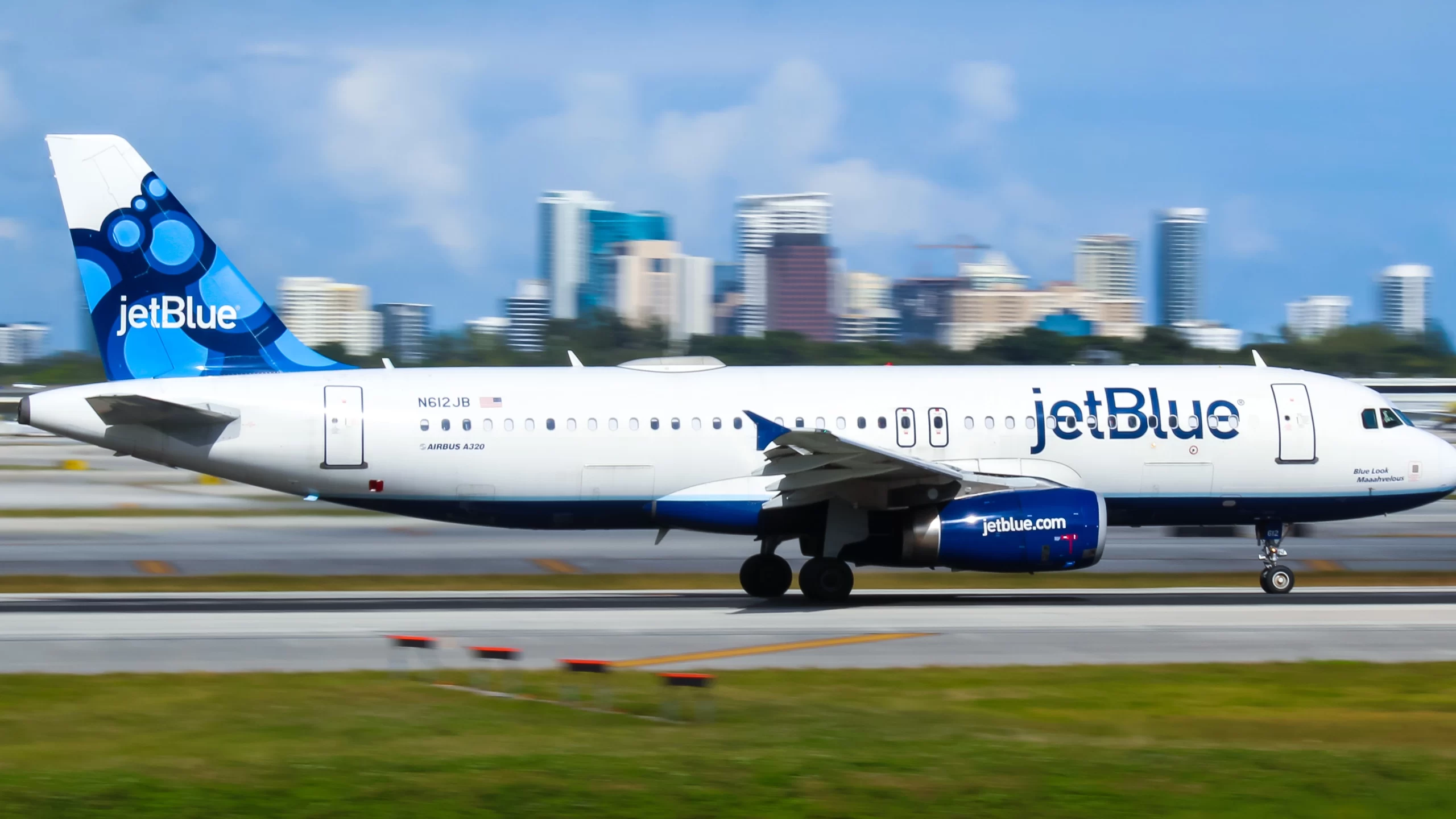
JetBlue confirmed three specific closures in its June 17 announcement. The airline will shut its flight attendant crew base at Newark Liberty International Airport, along with its Technical Operations (Tech Ops) maintenance bases at both Newark and LaGuardia Airport. All closures are scheduled for the fall of 2026.
The closures are not accompanied by any flight cuts at those airports on their own. JetBlue confirmed that flights will continue at both EWR and LGA. The airline frames the base closures as a reduction in the “operational footprint needed to support” its future presence at those airports.
Alongside the base closures, JetBlue also confirmed two route cancellations from Newark. It has already ended twice-daily service between EWR and Harry Reid International Airport (LAS) in Las Vegas, which ceased on June 10. Service between Newark and Los Angeles International Airport (LAX) will follow in early 2027. According to aviation analytics provider Cirium, the end of the Las Vegas route alone removed over 13,000 seats from the market compared to the prior month, Simple Flying reported.
LaGuardia’s $40-Per-Passenger Fee
JetBlue has been vocal about the economics of operating at LaGuardia for years, and the base closures now make the financial reality impossible to ignore.
LaGuardia Airport underwent a roughly $8 billion overhaul in recent years, dramatically improving its passenger facilities but driving up fees for airlines in the process. JetBlue President Marty St. George addressed the situation bluntly at a JPMorgan industry conference in March 2026.
As reported by CNBC, St. George said:
“We are much, much smaller at LaGuardia than we were four years ago because it’s a $40 [enplanement fee] airport for us. And the fountain is really pretty, but … I think people would rather have low fares than a really nice fountain.”
The reference to “the fountain” is a nod to the airport’s renovated Terminal B, which includes a 25-foot-tall water feature. JetBlue once operated as many as 50 daily flights from LaGuardia. By early 2026, that number had fallen to just 13.
The Port Authority of New York and New Jersey, which operates both LaGuardia and Newark airports, did not immediately comment on the closures.
Newark And the Unravelling of the Blue-Sky Promise
Newark was supposed to be a growth opportunity for JetBlue, not a casualty of its retreat. The story of Newark’s rise and fall inside JetBlue’s network is closely tied to the airline’s partnership with United Airlines (UA).
In 2025, JetBlue and United launched the Blue Sky partnership, a commercial collaboration that includes reciprocal loyalty earning and redemption between JetBlue’s TrueBlue and United’s MileagePlus programmes. As part of the deal, JetBlue agreed to provide United with access to up to seven daily round-trip slots at John F. Kennedy International Airport (JFK) from JetBlue’s Terminal 6, beginning as early as 2027. In exchange, United agreed to provide JetBlue with access to eight flight timings at Newark Liberty International Airport (EWR), United’s primary New York hub.
Newark was meant to be JetBlue’s compensation for giving United slots at JFK. The logic was that United’s global connectivity from EWR would make JetBlue flights into Newark more attractive to connecting travellers. The reality did not match the theory.
As View From The Wing reported, JetBlue’s union previously blasted the airline over crews paying “over $100” to ride-share from their JFK crew base out to Newark late at night, sitting on floors in cramped crew areas when airport operations melted down. JetBlue had established the Newark flight attendant base to fix exactly that problem. Now, it is shutting the base, signalling it no longer sees the scale of operations at EWR to justify it.
JetBlue executives told staff on June 17 that the Newark reductions also raise questions about LaGuardia’s future. As reported by CNBC, the airline said that any potential benefits from a future LaGuardia slot auction remain uncertain and could take considerable time to materialize. As a result, the carrier emphasized that its operational decisions must be based on its current network and known flying schedule rather than on possible future outcomes that may never occur.

JetBlue’s Position in New York is Still Large, but Narrowing
Despite the pullback, JetBlue insists it is not abandoning New York. The airline is headquartered in Long Island City and its most recent annual report showed the carrier held a 13% share of airline seats across five metro-area airports — JFK, Newark, LaGuardia, Westchester County Airport, and Long Island MacArthur Airport — at the end of 2025.
The numbers tell a more nuanced story. In 2025, JetBlue moved roughly 14.5 million passengers through John F. Kennedy International Airport (JFK), representing more than 23% of JFK’s total traffic. Newark and LaGuardia together account for a fraction of that volume. The carrier transported about 1.9 million passengers through EWR and 1.1 million through LGA, representing just 4% and 3.4% of those airports’ respective passenger totals.
JetBlue is simultaneously investing in JFK. In December 2025, the airline opened BlueHouse, its first airport lounge, at JFK. A second BlueHouse is expected to open inside Terminal C at Boston Logan International Airport (BOS) during the summer of 2026.
JetBlue’s Fort Lauderdale Pivot
The closure of the EWR and LGA bases is not simply a story of retreat. It is also a story of redeployment. The resources JetBlue frees from the New York pullback are being directed toward Fort Lauderdale-Hollywood International Airport (FLL), where the carrier is building what it calls a third base.
Spirit Airlines ceased all operations on May 2, 2026, stranding thousands of passengers and vacating enormous capacity at FLL, which had been Spirit’s primary hub. JetBlue moved quickly to absorb the opportunity. As JetBlue’s official press release stated:
“We continue to see significant opportunity to expand service in our Fort Lauderdale focus city, where customers know and love the JetBlue experience.”
JetBlue’s Fort Lauderdale expansion includes 11 new routes, announced in May 2026. Six are entirely new JetBlue cities from FLL: Barranquilla and Cali in Colombia, Baltimore, Charlotte, Columbus, and Indianapolis. Five additional routes connect FLL with cities already in JetBlue’s network but lacking nonstop FLL service, including Nashville, Detroit, Houston, Chicago, and Ponce in Puerto Rico.
JetBlue now plans to operate nearly 130 daily departures from FLL this summer, more than 75% above its 2025 levels and the largest schedule it has ever run from the airport. As Cirium data shows, JetBlue’s Fort Lauderdale market share by capacity has climbed to 36% in 2026, up from 24% a year earlier.
JetBlue is also expanding premium Mint service from FLL. It will launch daily Mint flights to San Diego International Airport (SAN) on November 19, 2026, after a 22-month hiatus on the route. It also plans to add up to eight daily Mint-equipped flights from FLL to Los Angeles and three a day to San Francisco. A new airport lounge at FLL is also under consideration.

Comparing This to JetBlue’s Other Recent New York-Area Network Cuts
The June 17 announcement is part of a consistent pattern of JetBlue pruning its Newark and secondary New York presence over the past several months.
As Avio Space reported in May 2026, JetBlue also announced the discontinuation of 10 routes across its network in the same period, including several serving Newark. These included EWR routes to Aruba, Cancun, Punta Cana, Santo Domingo, and Tampa. Those cuts took effect as of July 8, 2026.
JetBlue only expects to take delivery of 12 Airbus A220-300 aircraft in 2026, while it has deferred its Airbus A320neo-family deliveries until 2030 and beyond. Aircraft scarcity is forcing hard trade-offs. Every aircraft and crew base JetBlue removes from Newark or LaGuardia is one it can redeploy to Fort Lauderdale.
The cuts also echo a strategic comparison Live and Let’s Fly drew in June 2026: “Newark is not where JetBlue can win. Fort Lauderdale may be.” The blog noted that United Airlines had already made EWR a fortress hub, and JetBlue lacks the scale, revenue base, and network depth to compete there.

JetBlue’s Financial Backdrop
The Newark and LaGuardia base closures cannot be separated from JetBlue’s wider financial distress. The airline has not posted a profitable quarter for two years ago.
In April 2026, David Neeleman — JetBlue’s founder, who now leads rival Breeze Airways — warned in a leaked recording that a projected $1.3 billion loss for the year would push JetBlue’s total debt toward $9 billion. With hundreds of millions in annual interest payments on that debt and razor-thin airline margins, Neeleman called the risk of bankruptcy higher than ever.
Analysts at Simple Flying put JetBlue’s bankruptcy risk by 2027 at greater than 75%, while noting the airline is not facing an immediate liquidity crisis and finished Q1 2026 with approximately $2.4 billion in available liquidity.
JetBlue CEO Joanna Geraghty has formally ruled out a 2026 bankruptcy filing. However, as Live and Let’s Fly reported, she warned that “the decks are stacked” against smaller independent carriers like JetBlue in the current environment. JetBlue plans to pay down approximately $800 million in debt during 2026 while raising around $500 million through aircraft financing.
Earlier this year, JetBlue also flagged plans to slow hiring, cut capacity, and raise fares in response to soaring jet fuel costs driven by the ongoing conflict in Iran. The airline raised its checked baggage fees for many passengers as part of that cost response.