Air India (AI) is deploying more than 30 artificial intelligence initiatives across its operations in a bid to cut costs, improve operational precision, and redefine the passenger experience following its privatisation under the Tata Group in January 2022. According to a PTI report cited by multiple Indian media outlets such as ETV Bharat, the airline’s Chief Digital and Technology Officer, Dr. Satya Ramaswamy, confirmed in April 2026 that these AI use cases hold the potential to deliver annual savings in the region of ₹100 crore, with measurable efficiencies already documented across contact centre operations, engineering, employee support systems, and pilot scheduling compliance as reported by Economic Times.
The disclosure came as part of Air India’s broader communication around its ongoing multi-year transformation programme, which the Tata Group has anchored in technology as the primary vehicle for recovery after decades of government-era underinvestment. Ramaswamy told reporters that privatisation effectively provided the airline with a “blank slate” for technological innovation, an opportunity it seized by designing its AI architecture from the ground up rather than layering new tools onto legacy systems.
Inside Air India’s ₹100 Crore AI Savings Target
The ₹100 crore (approximately US $12 million) annual savings figure that Dr. Ramaswamy cited is a conservative, composite projection across departments. The airline has constructed over 30 in-house AI tools addressing everything from aircraft maintenance prediction to on-time performance improvement, with each tool yielding incremental savings that aggregate into the headline target.
Ramaswamy made clear that cost reduction is the explicit mandate from leadership: he told PTI that the airline worked extensively with all its senior executives to identify AI programmes of the highest priority to each department, and that many of those priorities centred specifically on departmental cost reduction.
The savings projection sits within a broader financial context that underscores why efficiency gains matter acutely for Air India right now. According to Singapore Airlines’ (SIA) annual financial statements, Air India recorded a loss of approximately SGD 3.56 billion (roughly ₹26,765 crore, or US $2.8 billion) for FY2025/26 — the largest annual loss since the Tata Group’s takeover.
Use of Predictive Maintenance and Engineering AI in Air India
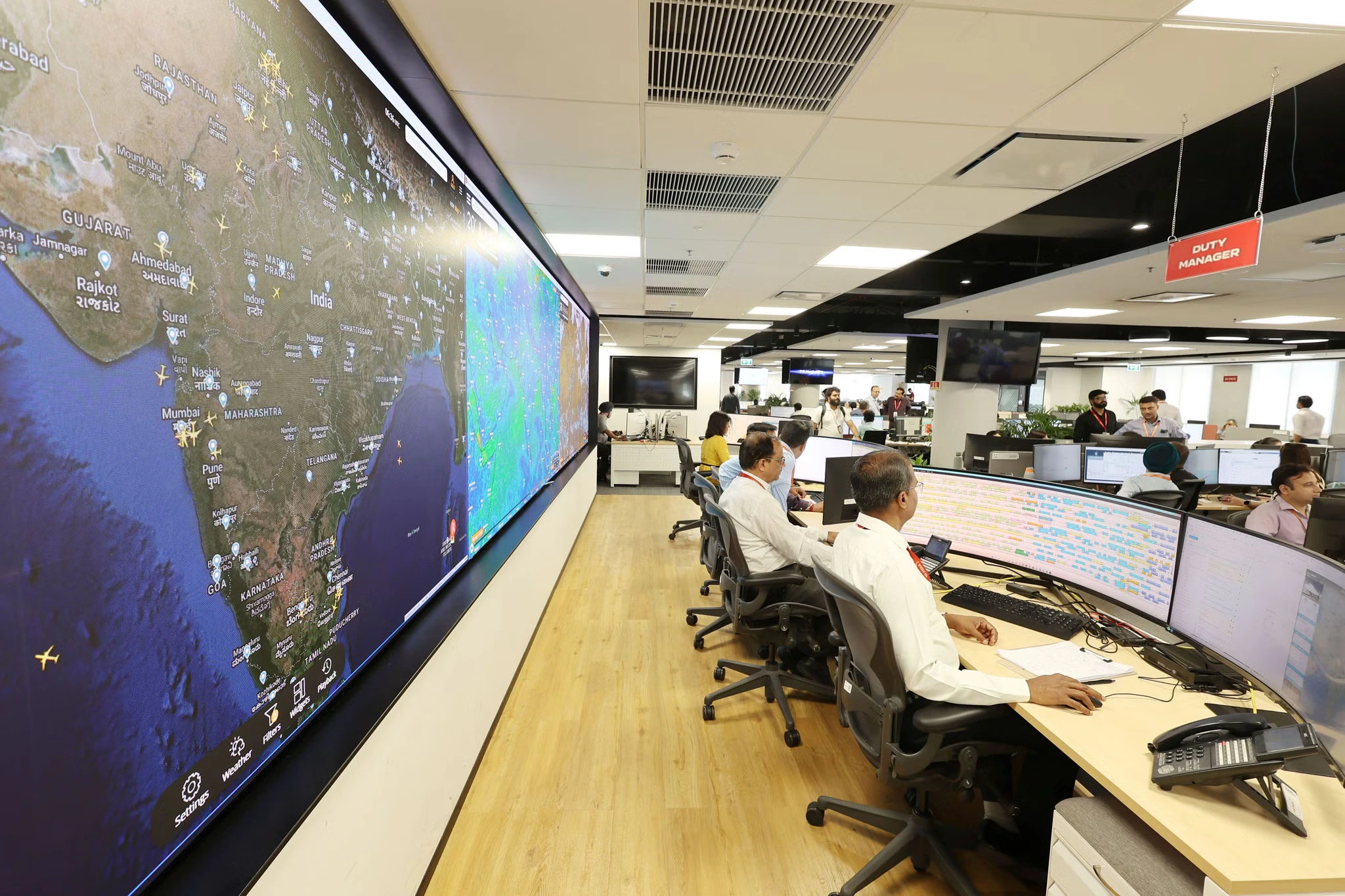
Beyond the customer-facing layer, Air India has deployed artificial intelligence in engineering and maintenance as well. According to the Air India newsroom, the airline’s engineering division “benefits from predictive maintenance and improved spare-parts planning, while upgraded operational control centres now provide real-time network visibility and faster decision-making during disruptions“.
The airline maintains a central Customer Data Platform housing over 80 million customer profiles, enabling data-driven insights to flow across all operational touchpoints — including in-flight, via crew iPads. Predictive analytics have strengthened planning across maintenance, network performance, and scheduling, representing what the airline describes as a structural shift from reactive management to anticipatory execution.
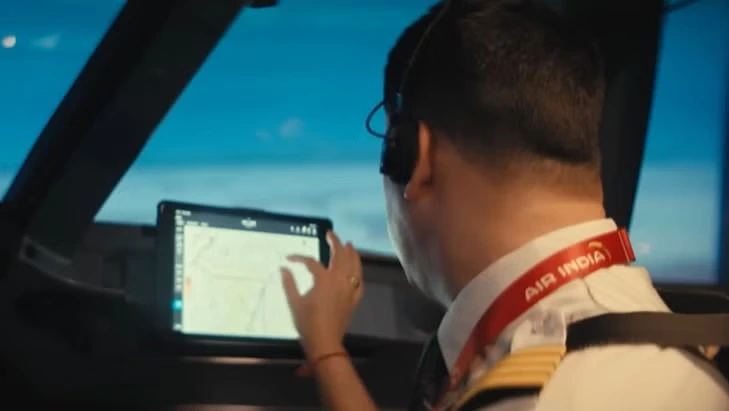
Ramaswamy also pointed to the deployment of AI tools for cabin supervisors and operations teams. Pilots use a tool called AI FlightPro as a digital operational companion, while cabin supervisors access CE Plus to manage onboard service in real time. Operations teams work through a unified platform called AI Smart, which provides a consolidated operational view across the network.
How Generative AI Validated Air India’s Pilot Safety Compliance
One of the most consequential and technically nuanced applications of AI at Air India involved the implementation of revised Flight Duty Time Limitations (FDTL) norms for pilots — a regulatory requirement issued by the Directorate General of Civil Aviation (DGCA).
The historical process for implementing DGCA rule changes was manual and susceptible to error: veteran pilots would codify regulatory requirements into internal operational specifications, which would then be manually translated into software. This multi-step human chain created meaningful risk of specification gaps or incorrect software implementation.
Air India used generative AI to validate the three-way mapping between:
- DGCA rules
- the airline’s internal specifications
- the final software implementation —
The DGCA had previously imposed an ₹80 lakh financial penalty on Air India in March 2024 for FDTL violations discovered during a spot audit, making the AI-based compliance validation process directly material to regulatory risk management.
Agentic Frontier of AI That Air India Is Now Entering
Air India’s AI architecture operates across three distinct and increasingly autonomous tiers: predictive AI, generative AI, and agentic AI. Ramaswamy has been explicit about the strategic sequence:
- predictive AI handles pattern recognition and forecasting in maintenance and scheduling
- generative AI enables conversational interfaces and document analysis
- agentic AI that allows software systems to orchestrate complex multi-step workflows autonomously, with minimal human intervention.
Ramaswamy told Financial Express that the airline is now exploring “agentic coding” to build software systems internally at pace, describing agentic AI as “a very transformative shift as it allows machines to integrate with humans, understand context and act autonomously in ways that were not possible earlier.”
The goal, he stated, is to become “the world’s most technologically advanced airline.” One near-term application under trial is an agentic AI system for refund processing that could compress timelines from weeks to hours by orchestrating workflows across multiple back-end systems without requiring manual handoffs between departments.
The airline has also integrated AI.g into WhatsApp, enabling passengers to access real-time flight updates, boarding passes, seat selection, and baggage information through a direct chat interface at any hour. AI.g communicates in four languages — Hindi, English, French, and German — and learns continuously from unanswered queries, expanding its knowledge base over time without requiring manual reprogramming.
All in All
The scope and pace of Air India’s AI programme carry implications that extend well beyond a single airline’s cost structure. Microsoft’s Judson Althoff publicly described Air India as the first airline to scale generative AI for customer service globally. In June 2025, Adobe’s AI and Digital Trends India snapshot cited Air India as a leader in AI-driven customer transformation, with Ramaswamy stating: “AI is no longer a futuristic concept at Air India — it’s the engine powering our customer-first transformation.“
On the question of workforce impact, Ramaswamy declined to predict reduced hiring, he stated unequivocally that “the nature of practically every role we have will change due to AI,” and that every employee would be empowered by AI tools. The airline’s 96% active daily usage rate across its seven employee-facing digital channels suggests that adoption has moved well beyond pilot testing into embedded operational practice.

.jpg)

