Qatar Airways (QR) Group announced on May 20, 2026, a post-tax profit of QAR 7.08 billion (US $1.94 billion) for the financial year 2025/26, demonstrating that the Doha-based flag carrier maintained remarkable financial discipline even as a geopolitical crisis — rooted in the US-Israel-Iran conflict — forced the closure of Qatari airspace in the final weeks of the fiscal period. The results were disclosed Doha, the city where Hamad International Airport (DOH), \the airline’s sole hub lies, and the results were accompanied by the simultaneous release of the Group’s 2026 Annual Report.
Underpinning the profit figure was an operating profit of QAR 15.2 billion (US $4.1 billion) — the highest in the Group’s history, achieved in a year that also saw the airline sign a $96 billion fleet expansion deal with Boeing and GE Aerospace, retain the Skytrax World’s Best Airline title for an unprecedented ninth consecutive time, and cement its position as the world’s dominant international air cargo carrier. The 57,800-strong workforce, spread across more than 90 countries, delivered these results while simultaneously managing one of the most acute operational disruptions in the carrier’s three-decade history.
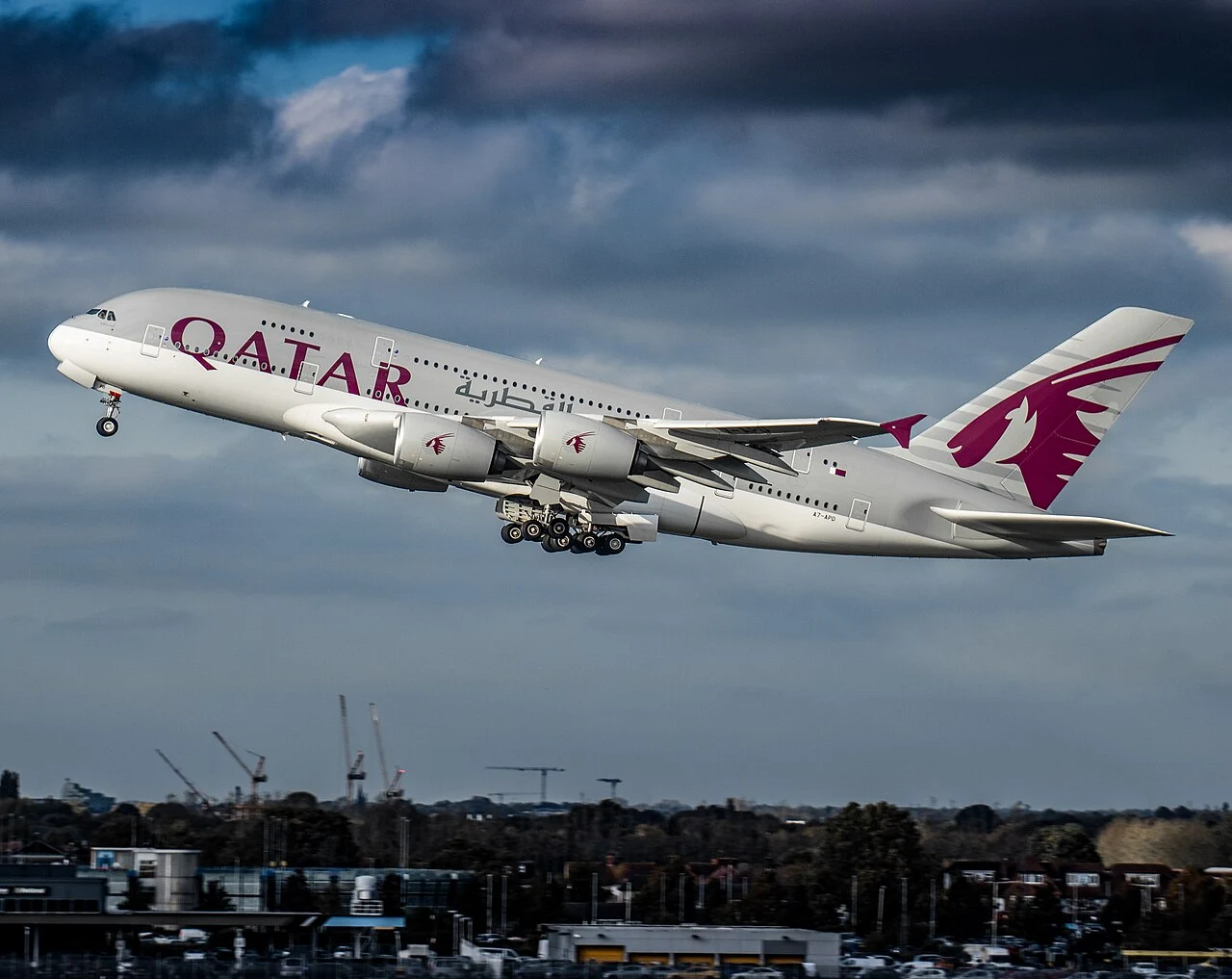
Qatar Airways’ Historic $1.94 Billion Profit
Qatar Airways Group’s post-tax profit of US $1.94 billion for FY2025/26 was driven by an operating revenue base that expanded 3.7% year-on-year, reaching QAR 15.2 billion (US $4.1 billion) in operating profit. The pre-tax profit for the year stood at QAR 7.8 billion (US $2.1 billion), with the post-tax figure reflecting Qatar’s implementation of the OECD Pillar Two global minimum corporate tax — a framework requiring large multinationals to pay an effective minimum rate of 15%.
One of the most consequential tailwinds behind the result was a pronounced decline in fuel expenditure. Qatar Airways paid 15.5% less for jet fuel in FY2025/26, with fuel costs falling from QAR 24.4 billion to QAR 20.6 billion year-on-year — a saving of approximately US $978 million. Jet fuel typically constitutes between 15% and 20% of an airline’s total operating costs, making this reduction a material contributor to the record operating profit margin.
The Group closed the fiscal year with a cash and short-term deposit position of QAR 32.7 billion (US $9 billion), though this represented a 22.9% decline from the prior period.
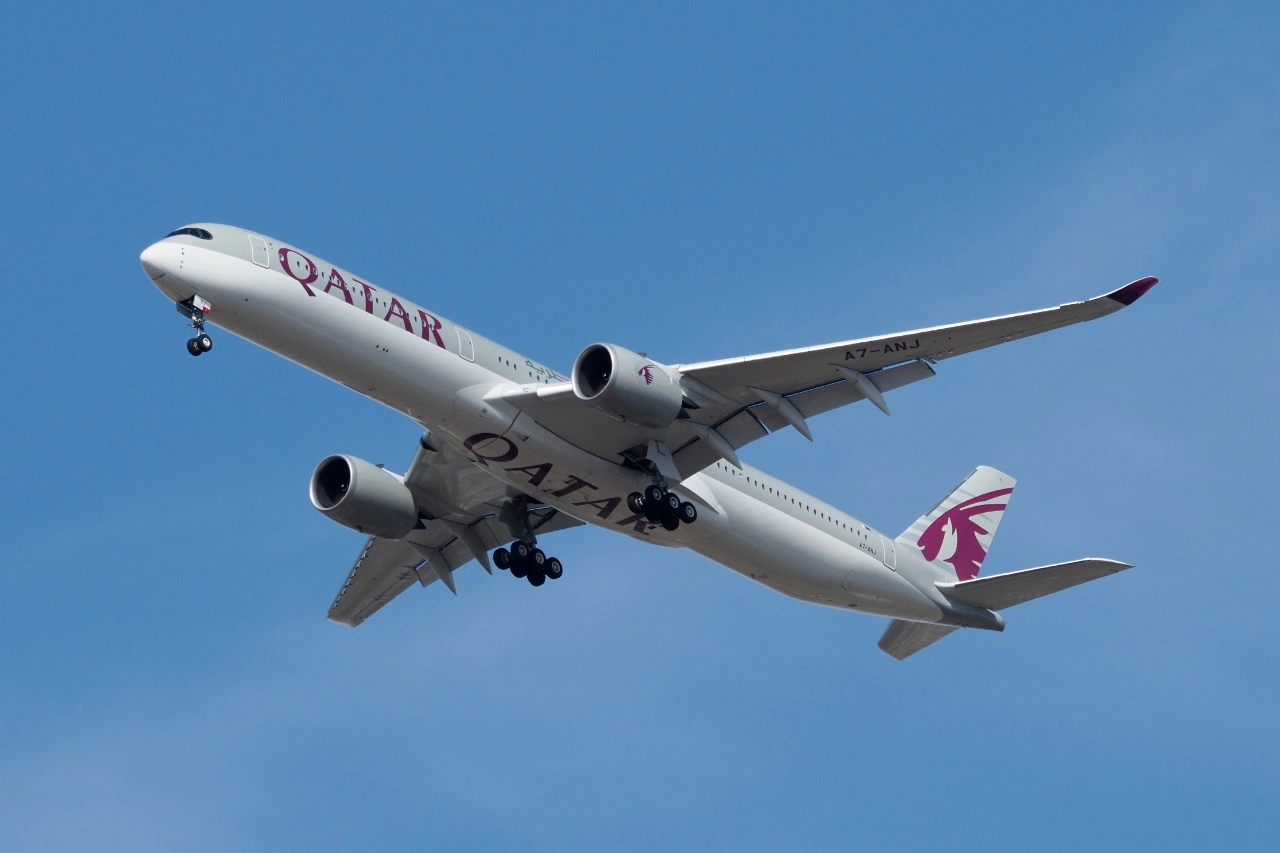
The Geopolitical Crisis That Threatened to Derail Qatar’s Profits
The final quarter of FY2025/26 subjected Qatar Airways to an operational test without modern precedent for a Gulf carrier. Qatari airspace closed on March 1, 2026, following large-scale US and Israeli strikes on Iranian military targets beginning February 28 and the subsequent Iranian retaliatory campaign across the Gulf region. Iranian missile strikes targeted Al Udeid Air Base near Doha, and Qatari officials confirmed the military thwarted multiple attacks specifically directed at civilian aviation infrastructure, including Hamad International Airport.
On March 14, 2026, the airline issued a “Network Realignment” announcement, suspending all scheduled commercial flights to and from Doha until March 28. Even Nepalese carrier, Nepal Airlines, announced that it would stops services to Doha.
The European Union Aviation Safety Agency extended its Conflict Zone Information Bulletin for the Middle East and Persian Gulf, compelling Lufthansa, KLM, British Airways, United Airlines, and Air Canada to suspend regional services as well. Qatar Airways, by virtue of operating its entire global network from a single hub in the heart of the conflict zone, absorbed the most concentrated disruption of any carrier.
Qatar Airways was operating approximately 80 daily flights as of April 2026 — a fraction of its pre-crisis capacity — while simultaneously managing passenger repatriation through limited safe corridors approved by the Qatar Civil Aviation Authority (QCAA). The airline now targets more than 160 destinations by summer 2026 as it rebuilds its network in earnest.

How Qatar Airways Still Carried 41.8 Million Passengers Despite the Disruption
Despite the airspace closure consuming the final weeks of the fiscal year, Qatar Airways transported more than 41.8 million passengers across FY2025/26. This figure nonetheless represents a 3% decline compared to the 43.1 million passengers carried in FY2024/25 — a year-on-year contraction directly attributable to the conflict-related suspension of services in the final quarter.
Qatar Airways maintained an 86% on-time performance rate across the year, placing it among the top five most punctual carriers globally and earning the Cirium Platinum Award for Operational Excellence — the most authoritative benchmark in aviation operations performance.
This punctuality figure is particularly striking given that it was measured across a full fiscal year that included several weeks of forced operational suspension. The airline maintains Hamad International Airport as its sole operational hub, and the airport itself earned the Skytrax Best Airport in the Middle East title for the 11th consecutive year.

Qatar Airways Cargo Commands 12% of the Global Air Freight Market
The cargo division was among the most decisive contributors to the Group’s financial performance. Qatar Airways Cargo transported more than 1.43 million tonnes of chargeable weight during FY2025/26, maintaining a commanding 12% share of the global air freight market — a figure that no other single carrier approaches. Cargo revenue for FY2026 stood at US $4.45 billion, compared to US $4.92 billion in FY2025.
The total volume of cargo moved by the Group across the full financial year reached more than 2.8 million tonnes, with belly capacity from passenger flights combined with dedicated freighter operations sustaining throughput across major global trade lanes. Air Cargo Week noted that CEO Hamad Al-Khater confirmed the disruption’s consequences remained active as the annual report was published, meaning the cargo division’s full recovery is still in progress as the new fiscal year begins.
The $96 Billion Boeing and GE Aerospace Deal
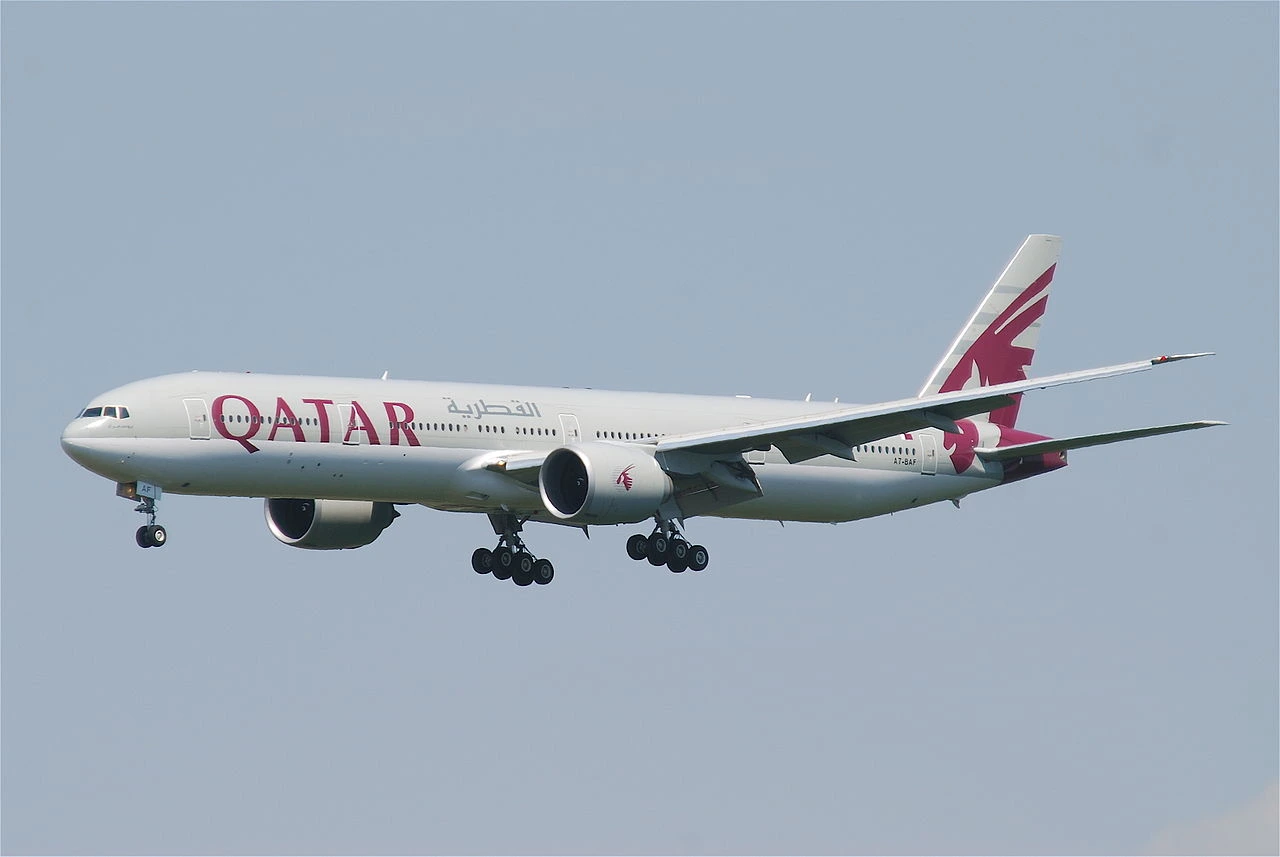
During US President Donald Trump’s state visit to Doha on May 14, 2025 (within the same fiscal year now under review) Qatar Airways signed what became the defining strategic commitment of FY2025/26. The airline placed the largest aircraft order in its history with Boeing, agreeing to acquire up to 210 widebody jets:
- 130 Boeing 787 Dreamliners
- 30 Boeing 777-9 aircraft
- 50 additional aircraft.
The White House valued the combined agreements at $96 billion. Simultaneously, Qatar Airways signed a deal with GE Aerospace for more than 400 engines — including 60 GE9X units for the 777-9 fleet and 260 GEnx engines for the 787 Dreamliners, along with additional options and spares. This became the largest widebody engine purchase in GE Aerospace’s history.
GE Aerospace Chairman and CEO H. Lawrence Culp Jr. said at the signing:
“We are extremely honored to deepen our relationship with Qatar Airways and grateful to them for placing their trust in us with our largest ever widebody engine deal.”
Then-CEO Engr. Badr Mohammed Al-Meer stated at the time:
“We are happy to announce our agreement with Boeing and our partnership in the largest widebody aircraft order in Boeing’s history and the biggest aircraft order in our history. This is a critical step in our strategy to ensure our fleet remains modern and efficient.”

Skytrax, Starlink, And the Product Investments Driving Premium Yield
The financial performance of FY2025/26 rests partly on the sustained premium pricing power that Qatar Airways commands through its product leadership. In June 2025, Skytrax named Qatar Airways the World’s Best Airline for a record ninth time, adding to wins in World’s Best Business Class and Best Business Class Airline Lounge. Skytrax CEO Edward Plaisted said:
“It is a fabulous achievement for Qatar Airways to win the World’s Best Airline title for 2025, the ninth time they have triumphed in the awards history.”
Qatar Airways also accelerated its Starlink in-flight connectivity programme across FY2025/26. By January 2026, nearly 120 widebody aircraft — representing over 58% of its widebody fleet — were equipped with Starlink, delivering speeds of up to 500 Mbps to passengers. The airline became the first carrier globally to activate Starlink on the Boeing 787-8 Dreamliner and completed the full Airbus A350 fleet installation in just eight months. Of the 21 million passengers Starlink connected across all airlines globally in 2025, nearly half — over 10 million — flew with Qatar Airways.
Comparing FY2025/26 Against Qatar Airways’ Recent Financial Trajectory
The FY2025/26 result requires scrutiny in the context of the year immediately preceding it. In FY2024/25, Qatar Airways Group posted a net profit of QAR 7.85 billion (US $2.15 billion) — described at the time as the strongest financial results in the Group’s history. The FY2025/26 net profit of US $1.94 billion therefore represents a year-on-year decline of approximately 9.9%, as confirmed by Aerotime Hub’s analysis.
However, the operating profit tells a more nuanced story. Operating profit rose from QAR 14.7 billion to QAR 15.2 billion year-on-year — a 3.7% improvement — meaning the Group’s core commercial operations actually strengthened despite the crisis. The decline in net profit relative to FY2024/25 is therefore substantially explained by the higher tax burden introduced through Pillar Two implementation, rather than by any deterioration in underlying business performance.
Simple Flying noted that rising Brent crude oil prices — which reached US $138 per barrel at their peak on April 7, 2026, according to the US Energy Information Administration — began eroding the fuel cost advantage that had cushioned earlier quarters. The airspace closure’s suppression of passenger volumes in the final quarter compounds this picture, confirming that the FY2025/26 profit, while substantial, reflects a business that absorbed a material shock in its closing weeks and emerged with its fundamentals intact.

What Qatar’s CEO Said and What It Means for Qatar Airways Going Forward
Group CEO Hamad Al-Khater, who succeeded Engr. Badr Mohammed Al-Meer in the role during the fiscal year, addressed the results with conspicuous directness in the official press release. He said:
“It is not often that a single financial year asks an organisation to demonstrate both the best of what it can achieve and the depth of what it can withstand. The 2025/26 financial year did both, and the Qatar Airways Group rose to each in turn.”
Al-Khater also highlighted the human dimension of the recovery effort:
“Behind every result are 57,800 people, working across more than 90 countries. In the final weeks of the financial year, many of them were managing an active crisis with a standard of professionalism that defines this organisation as much as any financial metric.”
On the Group’s forward trajectory, he stated:
“We are actively rebuilding our global network with the confidence that comes from a balance sheet that has never been stronger, partnerships that proved their depth when we needed them most, and an organisation that has demonstrated, under genuine pressure, exactly what it is capable of.”
Qatar Airways’ network rebuild targets more than 160 destinations by summer 2026, supported by the gradual restoration of Qatari airspace under QCAA-approved safe corridor protocols. With a cash and deposits position of US $9 billion, a $96 billion fleet commitment already in place, and the world’s most awarded airline product, the Group enters FY2026/27 from a position of structural strength — irrespective of the geopolitical turbulence that continues to test Gulf aviation at large.
Qatar Airways’ network expansion to Red Sea International Airport (RSI) in Saudi Arabia, inaugurated in October 2025, exemplifies the kind of incremental route development that will continue as the rebuilding effort gains pace.