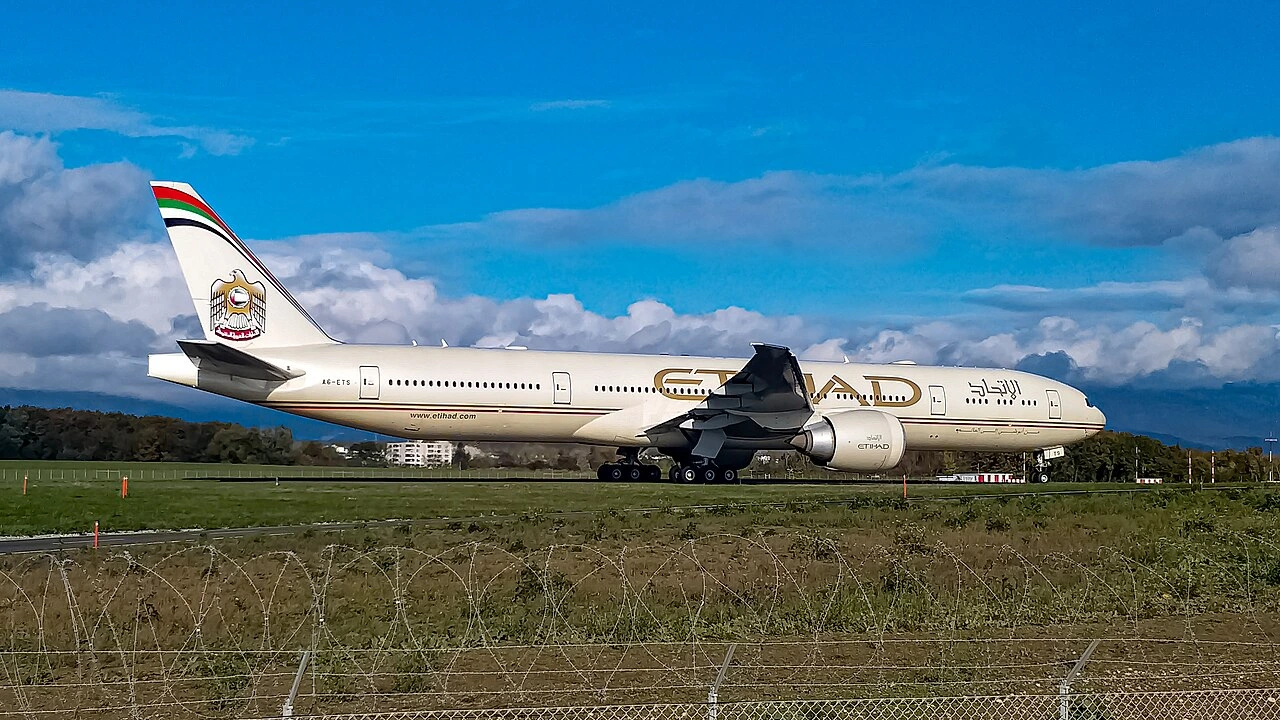
Etihad Airways (EY), the national airline of the United Arab Emirates, is operating its largest summer season on record in 2026. The carrier is running more than 300 daily flights from Zayed International Airport (AUH), Abu Dhabi, with load factors close to 90% and nine new or returning destinations launched within days.
The milestone builds on a rapid growth trajectory that has seen summer capacity rise 10% year-on-year, supported by a fleet that has grown by 23 aircraft compared with the same period last year. Between 11 and 14 June 2026, Etihad launched four new routes in four consecutive days, connecting Abu Dhabi with Kraków, Palma de Mallorca, Damascus and Zanzibar.

Etihad Launches Four New Routes Launched in Four Days
Between 11 and 14 June 2026, Etihad added four new points to its global map in an unusually compressed launch window. Each route targets a distinct travel segment, from European cultural tourism to Indian Ocean leisure.
Kraków, Poland launched on 11 June, operating three times weekly using the Airbus A321LR. The service makes Etihad the only airline offering a First cabin between Kraków International Airport (KRK) and the Gulf region. The city is Etihad’s second destination in Poland, following the launch of Warsaw Chopin Airport (WAW) services in June 2025.
Palma de Mallorca Airport (PMI) followed on 12 June, also on the A321LR with three weekly frequencies. Etihad positioned the route as the only direct connection between Asia and Palma de Mallorca, opening a gateway to Ibiza and the wider Balearic Islands. Flight EY115 departs Abu Dhabi at 02:55 and arrives in Palma at 08:55 local time on Tuesdays, Fridays and Sundays.
Damascus International Airport (DAM) joined the network between 11 and 14 June with four weekly services, reinforcing Abu Dhabi’s connectivity to the Levant region. Zanzibar’s Abeid Amani Karume International Airport (ZNZ) launched on 14 June, operating four times weekly using the Airbus A320neo through 6 September 2026. The island destination adds one of the Indian Ocean’s most sought-after leisure markets to Etihad’s portfolio.

Etihad’s Five Seasonal Favorites Return
Alongside the four new routes, Etihad resumed five popular seasonal destinations within the same week. The returning routes span Southern Europe and North Africa.
- Mykonos Island National Airport (JMK) — Resumed 15 June, operating twice weekly via Athens International Airport (ATH)
- Málaga–Costa del Sol Airport (AGP) — Resumed 15 June, operating three weekly flights with a fourth frequency added between 29 June and 31 August to meet peak summer demand
- Santorini Thira Airport (JTR) — Resumed 16 June, operating twice weekly via Athens
- Nice Côte d’Azur Airport (NCE) — Resumed 19 June, operating two weekly services
- El Alamein International Airport (DBB) — Returns from 16 July 2026
The Greek Island routes operate via Athens, allowing Etihad to serve two island markets efficiently from a single aircraft rotation. Malaga’s additional peak-summer frequency reflects strong leisure demand on the Spain corridor.
Antonoaldo Neves, Chief Executive Officer of Etihad Airways, commented on the scale of the summer operation. In a statement published on 15 June 2026, Neves said:
“Today, Etihad is flying more guests to more destinations than ever before. We are operating more than 300 flights a day, carrying near-record loads and connecting Abu Dhabi with more destinations than ever before.”
He added:
“This week alone we have launched four new destinations and welcomed back five seasonal routes, demonstrating both the strength of demand across our network and the pace of our growth. As we enter the peak summer travel period, we are delivering our most ambitious summer programme yet. Supported by 23 additional aircraft and strong demand from across the world, we continue to grow with confidence, expanding our network, increasing capacity and bringing more visitors to Abu Dhabi.”
The Airbus A321LR Might be the Aircraft Behind Etihad’s New European Routes
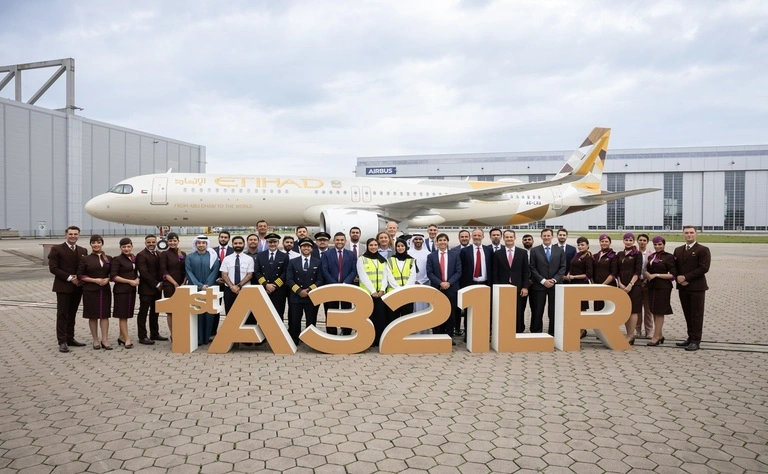
Several of the new routes rely on Etihad’s Airbus A321LR, a long-range narrowbody that entered service with the airline on 1 August 2025 on the Abu Dhabi–Phuket route. The aircraft carries 160 passengers across three cabins and brings widebody-style comfort to single-aisle operations.
The A321LR’s cabin configuration includes:
- First Class: 2 suites in a 1-1 arrangement, featuring sliding privacy doors, lie-flat beds, 20-inch 4K entertainment screens, Bluetooth pairing and wireless charging. This makes Etihad the only airline operating a First cabin on a narrowbody aircraft
- Business Class: 14 seats in a 1-1 herringbone layout with 78-inch lie-flat beds, 17.3-inch 4K screens, Bluetooth pairing and wireless charging
- Economy Class: 144 seats in a 3-3 configuration, each 18.4 inches wide — among the widest on any Airbus narrowbody — with 13.3-inch 4K screens, USB-A and USB-C ports and up to 5 inches of recline
- Connectivity: Viasat satellite Wi-Fi capable of streaming-quality connections across all cabins
The A321LR offers up to 6,300 kilometres of maximum range and at least a 20% reduction in fuel burn compared with earlier-generation narrowbodies. Etihad currently plans 22 A321LR-operated routes from AUH in 2026, with that number expected to grow. As of early 2026, the airline had taken delivery of its first A321LR fleet and was set to receive nine more aircraft through the year.
.jpg)
Etihad’s Summer 2026 Season Compared with Its Broader 2026 Expansion
The summer 2026 push is part of a wider year-round expansion programme that has accelerated throughout 2025 and into 2026. A closer look at Etihad’s parallel moves in the same period shows the breadth of the strategy.
On long-haul routes, Etihad deployed its Airbus A380 superjumbo to Tokyo Narita International Airport (NRT) from 16 June 2026, adding its eighth A380 back into commercial service. The A380 already serves London, Paris, Toronto and Singapore, with Tokyo marking a capacity upgrade driven by strong business travel demand between the UAE and Japan.
In South Asia, Etihad resumed widebody Boeing 777 services to Hazrat Shahjalal International Airport (DAC), Dhaka from 26 June 2026 with four weekly flights, targeting expatriate and trade demand. In Africa, the carrier announced six entirely new destinations — Accra, Kinshasa, Lagos, Harare, Lubumbashi and Asmara — to be phased in from November 2026 through March 2027. Looking further ahead, CEO Neves has said the airline may multiply its China capacity by five within a single year, citing a joint venture with China Eastern Airlines as a key enabler.
The financial backdrop underscores why the airline is pressing forward. Etihad recorded a post-tax profit of $698 million in 2025, carrying 22.4 million passengers — a 21% year-on-year increase. The nine-month 2025 load factor of 88% is consistent with the near-90% summer 2026 figures now being reported.

Free Medical Insurance for International Visitors: A New Stopover Incentive
Alongside the network expansion, Etihad has launched a new initiative to support inbound visitor confidence. In partnership with the Department of Culture and Tourism — Abu Dhabi (DCT Abu Dhabi), the airline has introduced complimentary medical travel insurance for eligible international visitors flying to or through Abu Dhabi on Etihad-operated services.
The insurance is underwritten and administered by The National Insurance Company — Daman, part of PureHealth, and covers eligible visitors for up to 15 days in the UAE. The programme runs from July to December 2026. To be eligible, a passenger’s point of origin and point of sale must both be outside the UAE.
A key feature of the programme is automatic activation — no separate application is required. Cover is embedded directly into the qualifying ticket at the point of purchase. Travellers using Etihad’s complimentary Stopover Programme in Abu Dhabi are also covered for the duration of their stay.
Neves commented on the initiative, saying:
“Abu Dhabi is one of the most captivating destinations in the world, and our job is to make both getting here and being here as seamless as possible. Giving comprehensive medical insurance with every eligible Etihad ticket means our guests can focus entirely on experiencing the extraordinary Emirati hospitality Abu Dhabi has to offer.”

What This Means for Abu Dhabi’s Aviation Ambitions
The summer 2026 programme places Etihad firmly in the middle of Abu Dhabi’s broader ambition to consolidate its position as a premium global transit hub. AUH already accounts for a significant share of UAE aviation growth, with Etihad driving nearly 45% of the country’s total aviation expansion in 2025 according to earlier Gulf News reporting.
The combination of 300+ daily flights, 90% load factors, a 23-aircraft fleet addition and nine new or returning summer destinations represents a step-change from prior years. Etihad’s Journey 2030 strategy targets 38 million passengers annually by the end of the decade. The 2026 summer season is an early indicator of how rapidly that target is being approached.
The airline’s expansion also continues to drive competition across Gulf carriers. Emirates and Qatar Airways have both been scaling their European leisure networks in summer 2026, but Etihad’s use of the A321LR allows it to serve thinner routes profitably that widebody-only competitors cannot justify. Palma de Mallorca and Kraków are examples of markets that would have been uneconomical with the 787 or A380 but become viable with a 160-seat narrowbody configured with premium cabins.