Ethiopian Airlines (ET) is considering launching direct flights to Allama Iqbal International Airport (LHE) as part of broader efforts to strengthen trade and connectivity between Pakistan and Africa. The proposal emerged during recent diplomatic engagements between Ethiopian and Pakistani officials focused on expanding economic cooperation, Business Recorder reported.
The planned route would link Lahore with Addis Ababa Bole International Airport (ADD), the airline’s primary hub, enabling access to one of Africa’s largest aviation networks. While no official launch timeline has been confirmed, discussions indicate a strategic push to deepen bilateral trade, business mobility, and cultural exchange.
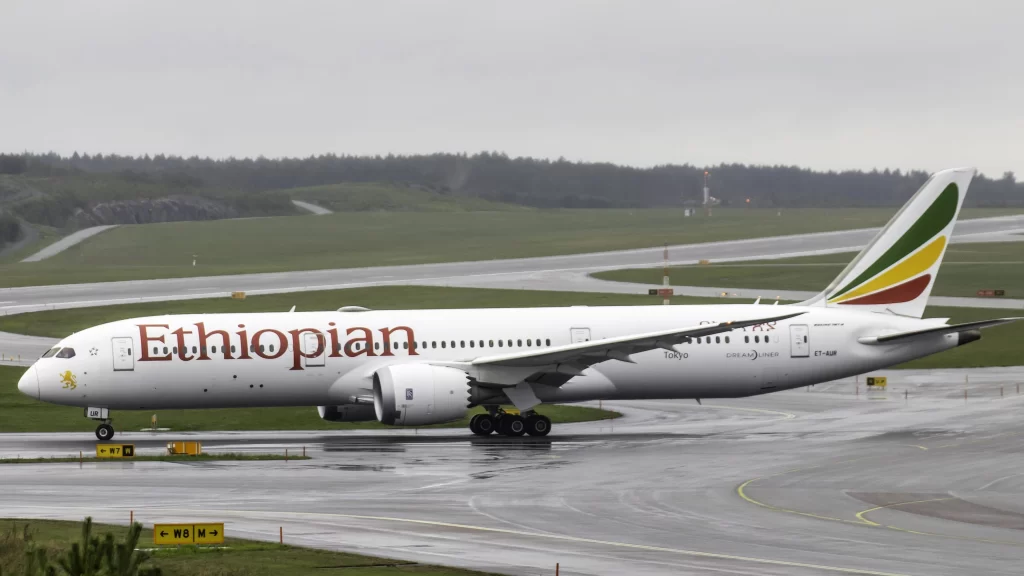
Ethiopian Airlines Lahore Route Plans
Ethiopian Airlines has not issued a formal press release confirming the route, but a senior official was quoted in Business Recorder as stating that the initiative would “enhance business-to-business (B2B) linkages, improve connectivity, and promote cultural exchange between the two countries.”
The airline already operates flights to Karachi and has historically explored expanding its footprint in Pakistan. Adding Lahore would significantly broaden its reach in the country’s northern and central regions.
The same source also claimed that the proposal emerged from discussions between Federal Minister for Commerce Jam Kamal Khan and Ethiopian Ambassador Dr. Oumer Hussein Oba, where both sides examined opportunities to deepen bilateral trade, enhance industrial cooperation, and improve regional connectivity, with a clear emphasis on expanding Pakistan’s engagement across African markets.
Ethiopian Airlines operates a fleet of narrowbody and widebody planes but it is not clear which aircraft the carrier will deploy on this route/ Let’s have a look at the carrier’s fleet as outlined by planespotters.net :
| Aircraft Type | In Service | Parked | Total | Avg. Age |
|---|---|---|---|---|
| Airbus A350 XWB | 26 | – | 26 | 5.8 Years |
| Boeing 737 | 37 | 2 | 39 | 9.2 Years |
| Boeing 767 | 2 | 2 | 4 | 12.8 Years |
| Boeing 777 | 21 | 2 | 23 | 10.3 Years |
| Boeing 787 Dreamliner | 28 | 2 | 30 | 9.8 Years |
| De Havilland Canada DHC-8 Dash 8 | 28 | 1 | 29 | 10.2 Years |
| Total | 142 | 9 | 151 | 9.2 Years |
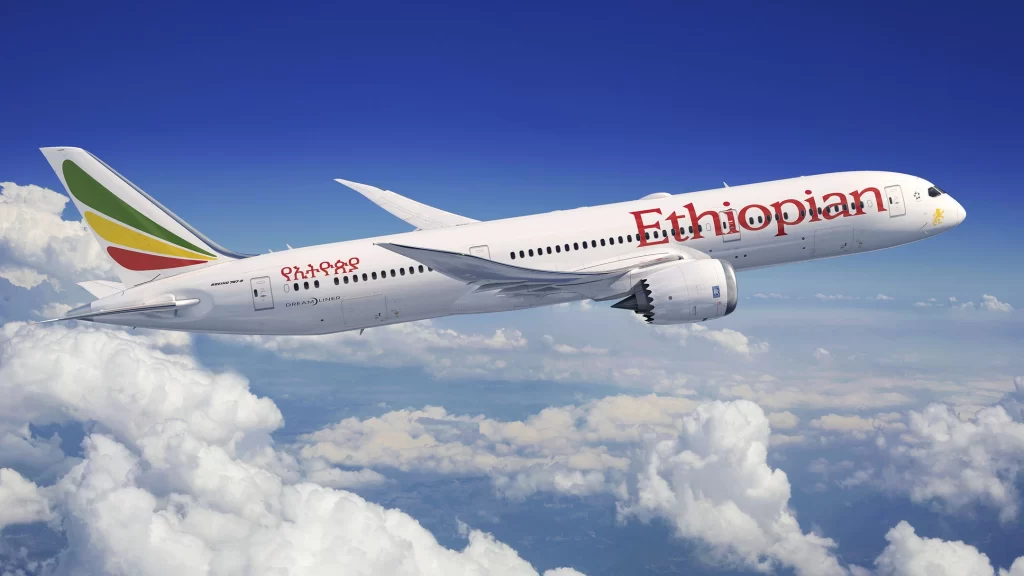
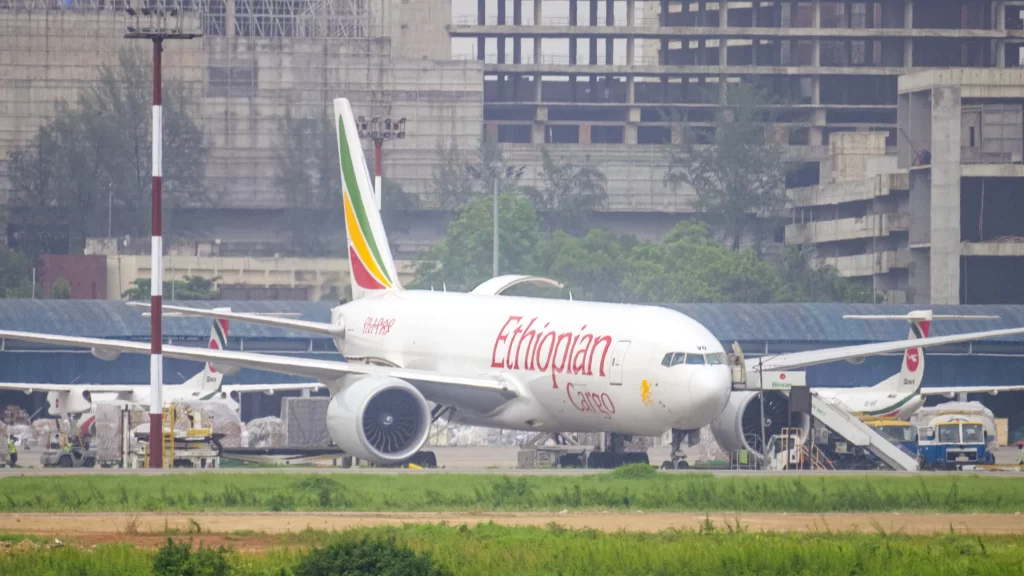
It might be safe to assume that DHC-* Dash * will be used on this route as this aircraft is operated in smaller rotues, as is the flight between Kathmandu and the most dangerous airport in the world- Lukla. The Airbus A350 is the aircraft type that is used on the longest flights in the world, and the route might not necessitate the use of this aircraft. Ethiopian Airlines deploys its 777s on the its route to Pakistan’s rival nation- India, and this might be the aircraft type that Ethiopia will be used in Pakistan.
Lahore Airport Expansion and Readiness
Allama Iqbal International Airport (LHE), Lahore, has undergone infrastructure upgrades in recent years, positioning it to handle increased international traffic. The airport’s expanded capacity and improved passenger facilities make it a viable candidate for new long-haul routes.
LHE serves as a key gateway for Punjab, Pakistan’s most populous province and a major economic hub. Direct connectivity to Africa could facilitate trade flows in sectors such as textiles, agriculture, and light manufacturing.
| Category | Details |
|---|---|
| Airport Name | Allama Iqbal International Airport |
| IATA / ICAO Code | LHE / OPLA |
| Location | Lahore, Punjab, Pakistan |
| Operator | Pakistan Civil Aviation Authority |
| Airport Type | Public (Domestic & International) |
| Distance from City | ~15 km from Lahore city center |
| Elevation | 698 ft (213 m) |
| Number of Runways | 2 parallel runways |
| Longest Runway | 3,360 meters (Concrete) |
| Passenger Traffic | ~6.04 million annually (2024–2025) |
| Aircraft Movements | 36,023 annually |
| Cargo Throughput | 114,882 metric tons annually |
| Terminals | Passenger, Hajj, and Cargo terminals |
| Ranking in Pakistan | Third-busiest airport by traffic |
| Opening Year | 1962 |
Aviation analysts suggest that improved airport readiness strengthens the case for new international services, particularly from airlines seeking to tap underserved markets.
Pakistan-Africa Trade Connectivity Will be Strengthened with the LHE-ADD route
The proposed Lahore–Addis Ababa route reflects a broader geopolitical and economic trend. Pakistan is actively seeking to expand trade ties with African nations under its “Engage Africa” policy framework.
Ethiopian Airlines, with its extensive network spanning over 60 African destinations, is well positioned to act as a bridge between the two regions. By routing traffic through Addis Ababa, the airline can offer seamless onward connections across the continent.
Industry observers note that such routes are not solely passenger-driven. They also support cargo movement, which is critical for trade expansion between emerging markets. According to Dr Oumer Hussein Oba, Ambassador of Ethiopia, the following strengths of Pakistan might help in the opening up the new route between Lahore and Addis Ababa:
- Strong SME sector can expand exports of engineering goods, appliances, and consumer products into African markets
- Agricultural and tractor manufacturing expertise can drive machinery exports and technical partnerships, boosting industrial output
- Growing cosmetics and personal care industry creates opportunities for joint ventures and access to new consumer bases.
- Sialkot’s export-driven model showcases Pakistan’s ability to scale high-value manufacturing and increase foreign exchange earnings.
- Karachi’s strategic position strengthens its role as a regional gateway connecting Africa with Central Asia trade corridors.
Industrial cooperation across sectors such as engineering and agriculture can unlock long-term export growth and manufacturing scale. Direct maritime links to Africa can sharply reduce transit time, lowering logistics costs and improving trade competitiveness.

Lahore-Addis Ababa: Aviation Strategy and Network Expansion
Ethiopian Airlines has consistently pursued an aggressive expansion strategy, focusing on underserved and high-growth markets. The airline has built a reputation for linking secondary cities to its Addis Ababa hub, thereby capturing traffic flows that larger carriers often overlook.
The potential Lahore route fits within this model, offering both point-to-point demand and connecting traffic opportunities. It also complements the airline’s broader objective of strengthening South Asia–Africa connectivity.
According to Minister Jam Kamal Khan, the need to strengthen direct connectivity and cut dependence on intermediary transshipment hubs such as Jebel Ali Port. He proposed expanding direct maritime routes through feeder vessels to African ports, which could reduce transit times significantly from around 10–12 days to just 2–3 days:
He further highlighted Pakistan’s geographic advantage, particularly Karachi, as a gateway for African exports to Central Asia through regional maritime corridors, including Djibouti Port. The minister also highlighted the immense tourism potential in both countries, stating that Ethiopia’s natural beauty and climate are “truly amazing,” while Pakistan remains a “sleeping giant” in tourism.
However, the absence of a formal announcement means the plan remains at an exploratory stage. Route viability will depend on regulatory approvals, bilateral agreements, and commercial considerations.
Bottom line
The Ethiopian delegation praised Pakistan’s economic momentum, highlighting its skilled workforce and well-established hospitality sector as key strengths. Pakistan is championing the ceasefire agreement to end the War in Iran- which has already claimed the loss of an F-15 as well as an A-10 warhog.
Dr. Oumer Hussein Oba stressed that human capital is the most vital asset and called for enhanced collaboration in education, skills development, and institutional capacity building.
During the talks, Dr. Oba also informed the minister that Ethiopia plans to host a Single Country Exhibition in Islamabad later this year, building on the success of a similar event previously held in Ethiopia. Federal Minister Jam Kamal welcomed the proposal and described the earlier exhibition as a meaningful step toward deepening bilateral trade relations.


_Boeing_777-F60_VGHS.jpg)
.jpg)
