Embraer has secured simultaneous certification for its next-generation Praetor 600E business jet from Brazil’s ANAC, the U.S. Federal Aviation Administration (FAA), and Europe’s EASA, the company confirmed on April 30, 2026, in Melbourne, Florida. The milestone validates the aircraft’s compliance with global safety and performance standards while accelerating its entry into service.
The certification follows the jet’s unveiling in February 2026 and underscores Embraer’s strategy to strengthen its position in the super-midsize segment through advanced cabin technology, extended range, and enhanced operational capability.

Embraer, which canceled its next-generation turboprop, stated that the triple certification from Agência Nacional de Aviação Civil (ANAC), the Federal Aviation Administration (FAA), and the European Union Aviation Safety Agency (EASA) confirms the Praetor 600E’s readiness for worldwide operations.
According to the official press release, the aircraft meets stringent regulatory requirements across three major aviation jurisdictions, enabling operators to deploy the jet seamlessly across international markets.
Michael Amalfitano, President and CEO of Embraer Executive Jets, emphasized the importance of the milestone, stating: “Achieving triple certification from ANAC, FAA, and EASA is an important milestone for the Praetor 600E”:
“Since announcing the aircraft in February, new customer sales and market feedback have been exceptionally strong. This triple certification is a clear validation of Embraer’s engineering excellence and accelerates our path to entry into service for customers worldwide.”
He added that strong market response since the aircraft’s February unveiling has reinforced Embraer’s confidence in the platform’s commercial prospects. The certification also aligns with Embraer’s broader effort to streamline entry-into-service timelines, particularly for high-net-worth operators and fleet customers seeking immediate global operability.
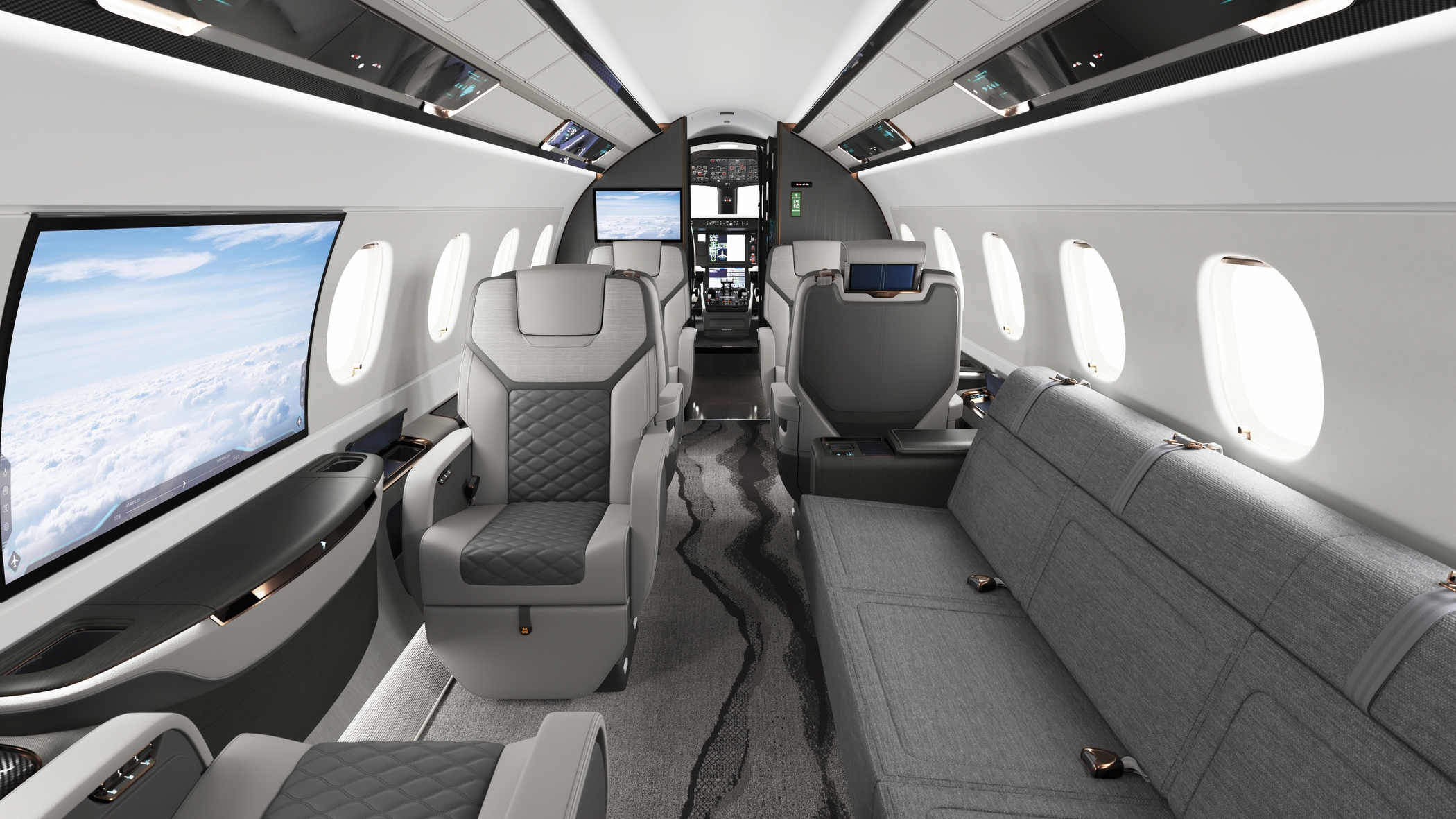
Smart Window and Next-Generation Cabin Redefine Passenger Experience
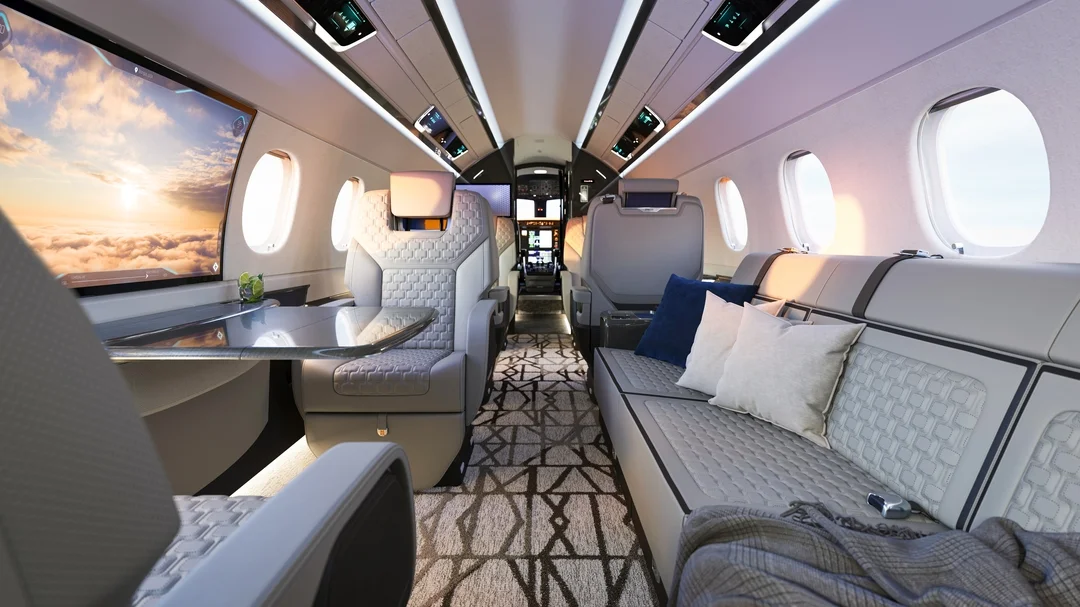
A defining feature of the Praetor 600E is Embraer’s Smart Window™, a 42-inch 4K OLED touchscreen that introduces a new layer of cabin interactivity and immersion.
The system enables video conferencing, high-definition streaming, and real-time external views through integrated cameras, effectively transforming the cabin into a multifunctional workspace and entertainment zone.
Embraer noted that the aircraft also features a redesigned Cabin Management System (CMS), offering intuitive control over lighting, temperature, and connectivity.
Additional enhancements include:
- Voice-command integration for cabin controls
- Bluetooth audio connectivity
- Wireless charging interfaces
- RGB mood lighting customization
The redesigned seating architecture improves ergonomics and introduces electric-assist adjustments, while the optional divan configuration allows flexible cabin layouts tailored for meetings or long-haul relaxation.
Performance, Avionics and Operational Capability Improvements on the Praetor 600E
The Praetor 600E retains its position as one of the longest-range aircraft in the super-midsize category, offering an intercontinental range of 4,018 nautical miles (7,441 km) with four passengers and NBAA IFR reserves.
This enables nonstop routes such as London–New York and São Paulo–Miami, reinforcing its utility for transatlantic and high-demand business corridors.
The aircraft is powered by two Honeywell HTF7500E engines and incorporates advanced avionics, including:
- Full fly-by-wire technology with active turbulence reduction
- Embraer Enhanced Vision System (E2VS)
- Runway Overrun Awareness and Alerting System (ROAAS)
Embraer stated that these systems reduce pilot workload while enhancing situational awareness and operational flexibility, particularly at challenging airports. The jet’s ability to operate from shorter runways further expands its accessibility to secondary and constrained airports.
A look at Praetor’s Honeywell HTF7500 Engines
The Honeywell HTF7000 engine family has accumulated more than seven million flight hours, establishing a strong track record in reliability and lifecycle cost efficiency. Its architecture prioritizes “on-condition” maintenance, allowing most inspections and servicing to be completed without removing the engine from the aircraft. This approach significantly reduces downtime and improves aircraft availability for operators.
The engine’s design also reflects increasing environmental scrutiny in aviation. Emissions are kept well within limits defined by ICAO’s Committee on Aviation Environmental Protection (CAEP), while noise output is minimized through advanced aerodynamic and combustion technologies.
Design Philosophy and Efficiency Enhancements
The HTF7000 integrates multiple engineering innovations aimed at improving fuel burn and operational performance. These include aerodynamic refinements and advanced materials that collectively enhance thermodynamic efficiency.
Key design elements include:
- Wide-chord, damperless fan for improved airflow stability
- Single-stage low-emissions (SLE) compressor airfoil technology
- Effusion-cooled combustor to reduce emissions
- Transpiration-cooled high-pressure turbine (HPT) blades
- Dual-channel Full Authority Digital Engine Control (FADEC)
The engine can also be configured with a full nacelle and thrust reverser. Honeywell supports the HTF7000 through an extensive global network of more than 40 service centers. Operators can also enroll in Maintenance Service Plan (MSP) programs, which offer predictable cost structures and improved operational reliability.
The company’s propulsion division draws on decades of experience, with over 65,000 engines in service and more than 241 million accumulated flight hours, reinforcing its capability to support long-term fleet operations.
HTF7500E Engine Specifications
| Parameter | Value |
|---|---|
| Thrust | 6,500–7,500 lbf |
| Flat Rating | ISA +15°C (86°F) |
| Fan Diameter | 34.2 in |
| Dry Weight | 618.7 kg (1,364 lbs) |
| Bypass Ratio | 4.2 |

Delivery Timeline and Market Outlook for the Preator 600E
Embraer confirmed that deliveries of the Praetor 600E will begin in 2029, alongside the Praetor 500E, as part of a coordinated production ramp-up. The company expects strong demand from:
- Corporate operators
- Charter providers
- Fractional ownership programs, particularly in North America and Europe.
With increasing emphasis on productivity and connectivity in business aviation, Embraer’s Smart Window™ and enhanced cabin ecosystem could serve as differentiators in a competitive marketplace.
According to AeroTime, customers will not see their 600E “until the first quarter of 2029“:
“Embraer has cited its record backlog as the reason for the delivery gap, with fractional operator Flexjet’s $7 billion February 2025 order for Embraer business jets accounting for a substantial portion of forward production slots. Embraer surpassed 2,000 cumulative business jet deliveries in August 2025.”