
Whether one agrees to Air New Zealand’s assessment that buying a red-eye flight that gives you an option of buying blocks of seats is the best way to shorten a long-haul flight while flying in economy: “Imagine a row of Economy seats that can be turned into a couch after takeoff. So you and your friend or family member can stretch out. Clever, right? Comfy, too“, is a good one or not, it does give you a food for thought.
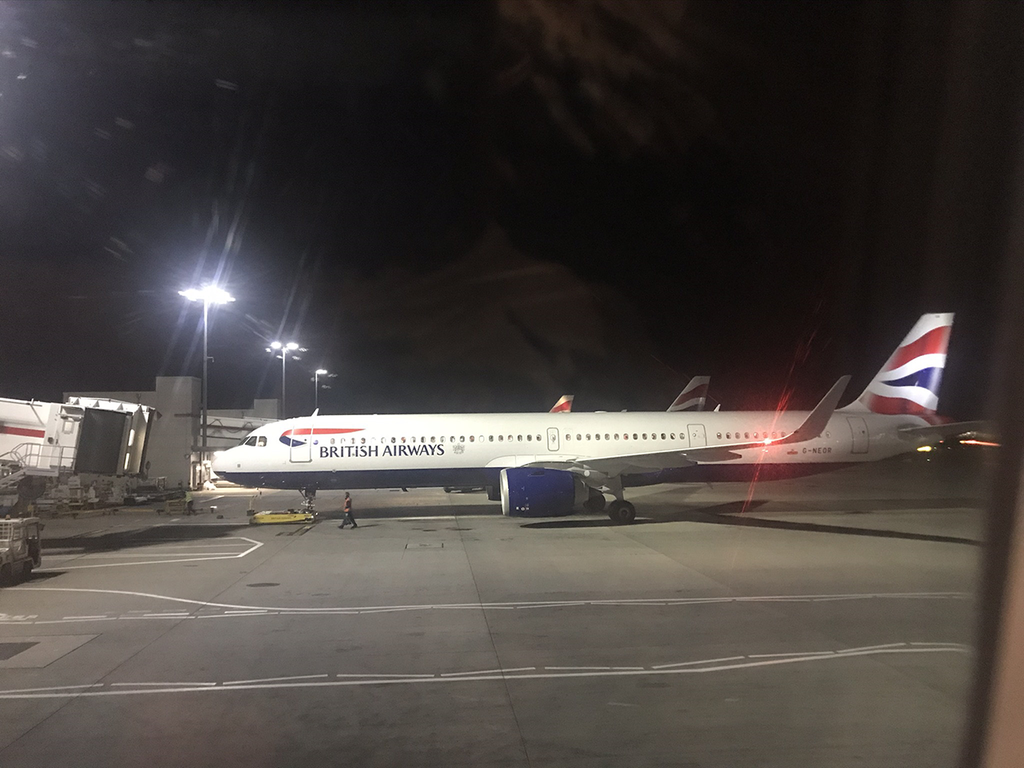
Photo: Aimee Knight |Wikimedia Commons

Sure, a red eye flight, i.e., a flight that departs at night and lands in the morning, is bound to generate some form of nostalgia, as was expressed by Jeffery McDaniel, in his poem “Air Empathy”:
On the red-eye from Seattle, a two-year-old
in the seat behind me screeches
his miniature guts out. Instead of dreaming
of stuffing a wad of duct tape into his mouth,
I envy him, how he lets his pain spurt
into the open…
But the probability of an absence of sleep is also bound to make the eyes red. And make you feel irritable the next day, or perhaps another unless the sleep debt is paid off.
Tracking the origins of red-eye flights
In the early years of aviation, aircraft lacked the capabilities of night-time operations. According to Aercorner, the earliest records of red-eye flights date back around the time when the modern laws related to seatbelts in aircraft were put into effect– in the years almost touching the 1970s. In 1969, American Airlines offered a red-eye flight.
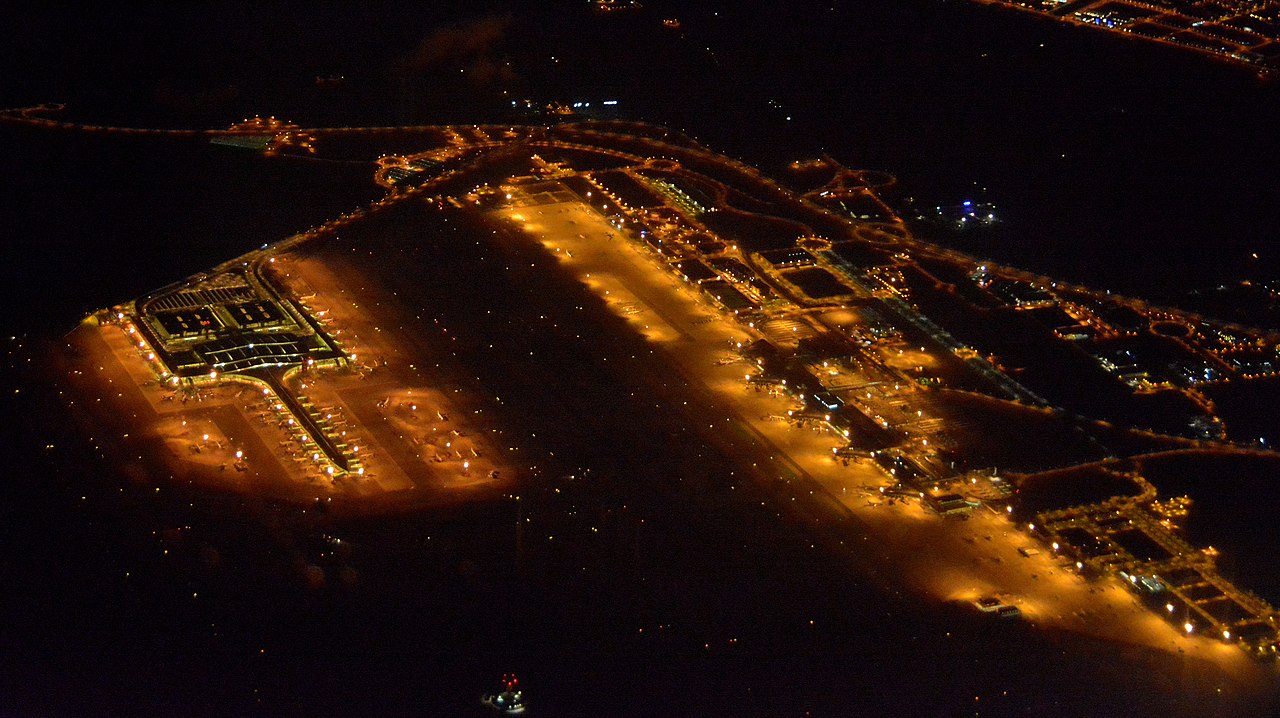
Photo: Mike McBey | Wikimedia Commons
.jpg)
However, another of the big three airlines of the US, Delta Air Lines, is said to have pioneered red-eye flights as the executives believed that they could utilize the fleet that would have been idly-resting at the airport.
Countries that have no red-eye flights
Various nations around the world don’t have red-eye flights. One of them is Nepal, which houses the most dangerous airport in the world i.e., Lukla Airport. This Short Takeoff and Landing (STOLport) barely sees operations after 5 pm, let alone during the night. This is because landings and takeoffs here are performed purely under visual flight rules. Further, there are no domestic flights that take place during the night-time. This is because of the fact that vast swathes of the nation are still tuned to the circadian rhythm dictated by the Sun. A major part of the capital city is asleep by 10 pm.
A few examples of red-eye flights
In 2021, red-eye flights in Europe soared, perhaps because people’s pockets had been thinned following the pandemic. Between September and December 2021, there were 307 bookable red-eye routes in Europe, with flights having a median block time of 3.5 hours median length of 1,466 miles. Here are the statistics:
- North America, on average, sees 100 domestic flights departing between 00:01 and 02:00 and arriving between 03:00 and 06:00.
- 109 US domestic flights (14 of which were operated by Delta) across 16 airport pairs. These flights “departed between 00:00 and 03:00 and landed between 03:00 and 06:00 local time”.


According to data related to red-eye flights in the United States, these flights takeoff somewhere between 23:00 hours and 01:00 hours local time, and between 05:00 hours and 06:00 hours local time.
| Airline | Departure Time | Arrival Time | Route |
| Alaska Airlines | 00:30 | 05:00 | Anchorage – Seattle |
| Frontier | 00:58 | 04:34 | San Francisco – Denver |
| Frontier | 00:59 | 03:56 | Las Vegas – Denver |
| Frontier | 00:59 | 04:23 | Ontario – Denver |
| Frontier | 00:59 | 04:37 | Portland (OR) – Denver |
According to Aero Corner, there are more than 25 red-eye flights from Los Angeles to New York, making it the busiest flight of this type. Let’s take a look at Wizz Air’s red-eye routes, as written in Simple Flying:
| Departure Time | Arrival Time | Route |
| 22:00 | 04:05+1 | London Gatwick – Istanbul |
| 23:05 | 04:50+1 | Budapest – Baku |
| 23:15 | 05:25+1 | Milan Malpensa – Yerevan |
| 23:25 | 04:05+1 | Malaga – Sofia |
| 23:45 | 05:45+1 | Keflavik – Warsaw Chopin |
Pros and Cons of Red-Eye Flights
| Pros of Red-Eye Flights | Cons of Red-Eye Flights |
| Typically lower ticket prices | Sleeping on board can be uncomfortable due to engine noise |
| Less crowded cabins | Greater risk of jet lag, especially on eastbound routes |
| Faster check-in, security, and boarding | Limited availability since not all airlines operate red-eye services |
| Better chance of choosing preferred seats | Challenging for families traveling with children |
| More overhead bin space | Potential health impacts with frequent travel (fatigue, weakened immunity, slower metabolism) |


Some of the other advantages of a red-eye flight include:
- Departures before morning rush reduce chance of delays
- Baggage claim is usually quicker
- Higher likelihood of having an empty seat nearby
- Saves on hotel costs and maximizes daytime productivity
Guidelines for coping well with red-eye flights
- Hydration: Refrain from consuming alcohol before or during the flight, as it bound to make you feel parched. Opt instead for water. Some might recommend fruit juices, but there’s evidence to suggest that fruit juice tend to increase the level of blood sugar. Whole fruits would be much better.
- Seating: Choosing a window seat in your red-eye flight will minimize any disturbances that might come from other passengers moving about the cabin.
- Neck Support: If you’re not a night owl, please carry a neck pillow, preferably with memory foam. This will help reduce the risk of neck strain and improve rest during the flight.
- Clothing and Circulation: Loose, comfortable clothing will help you get a proper sleep. Also, compression socks will aid circulation and reduce the likelihood of numbness, in case your flights are longer than five hours.
- Sleep Preparation: You must abstain from sleeping medication. You can adjust your sleep pattern in the days prior to travel to align with the destination’s time zone.
- Light Control: Use an eye mask to block light and support natural sleep patterns.
- Noise Reduction: Noise-canceling headphones are highly effective, especially when you’re headed out on long flights and are seated near the engines or wings.
- Flight Timing: When possible, book the final departure of the evening to increase the likelihood of sleeping soon after boarding.
Do red-eye flights affect a passenger’s health?
There are conflicting reports about whether red-eye flights affect passengers’ health or not. According to Aero Corner, “research has shown that frequent travelers who travel via red-eye flights are at an increased risk of depression, heart diseases, and lower metabolism levels along with disturbed sleeping patterns due to the nature of red-eye flights”.
However, Simple Flying reports that “If you can catch up on sleep the next night, or take a nap in the afternoon, and grab a coffee in the morning, you should not feel the effects of a red-eye flight beyond the first 24 hours”. The same publication quoted a study conducted by the Department of Psychobiology of the Federal University of São Paulo (Unifesp), which found the following:
- Cockpit crew at the helm of aircraft operations are more prone to making a serious mistake when working from midnight to 06:00 in the morning. The chances of making a mistake are increased by 50%.
- “For every 100 hours of flying conducted during this period, captains make, on average, 9.5 mistakes of the level three type, which is the most dangerous for the aircraft’s safety”.
Are red-eye flights worth it?
Alan Watts, the great philosopher, had a wonderful take on what real travel meant: “Real travel requires a maximum of unscheduled wandering, for there is no other way of discovering surprises and marvels, which, as I see it, is the only good reason for not staying at home”. One of the lesser talked about benefits of a red-eye travel is that you can spend more time exploring the place you’re visiting, instead of spending a part of the day on air travel. Besides, the airports aren’t as busy, and the chances of cancelations of flights are slimmer.
You also have to note that getting a red-eye flight will necessitate you to request checking in earlier than hotels would be open to. Hotels generally are open to check-in between 11 am and 4 pm. You might also need to arrange for transportation at off-the-beat hours. These might help unravel surprises and marvels, and take you on a path of unscheduled wanderings- the way of being engaged in “real travel”, as Alan Watts says. Such are the perks discovered by the poet we quotes previously,
How many
whimpers before another passengerjoined in? Soon the stewardess
hunched over the drink cart, the pilotgushing into the controls, the entire plane:
an arrow of grief quivering through the sky.
Note that the savings on a red-eye flight might be negligible
According to maphappy.org, one might save $60-$100 on a red-eye flight. However, factor in that there might be limited options for drinks and food on the flight. In addition, the absence of public transport in the wee hours of the morning means that you have to pay extra for a cab:
“The only other alternative is to guilt-trip a loving friend into giving you a ride. The thing is, don’t forget this applies to your ride to and from the airport, since you’re also likely to arrive in the wee morning hours. At any rate, the savings you just snagged are likely going to disappear into transportation pretty soon. To make matters worse, if it’s anything I’ve learned, it’s that I tend to spend more money or do idiotic things—like leave my wallet behind in a taxi—when I’m that tired just to make the problem go away.”
If the red-eye flight is long enough to give you a proper amount of uninterrupted sleep that your body requires, you might be able to squeeze in more experiences in the city that you are traveling to. If not, you’ll feel drowsy, and might need to ingest coffee to feel alert.
Flying on economy vs business class on a red-eye flight
Although airlines offer amenities like as blankets, pillows, and eye masks, when you are on a red-eye flight in economy class, the lack of space (example: cramped legroom) and comfort (narrower seats) can make catching a breath (and sleep) discomforting. But this is not the case with business class where seats often recline into fully flat beds. Passengers in business class can access amenities that are not present in economy class:
- Noise-cancelling headphones
- Luxury bedding
- Personal entertainment screens
Business class passengers might also be served gourmet meals and complimentary alcoholic beverages.


How to find red-eye flights?
One can find red-eye flights using either of the following ways:
| Method | Platforms | How to Find Red-Eye Flights | Example |
| Airline Websites | Airline websites (e.g., Delta Air Lines) | Search for flights departing late at night (after 9 PM) and arriving early morning (before 7 AM) | New York → Los Angeles on Delta: search departures after 9 PM, arrivals before 7 AM |
| Online Travel Agencies (OTAs) | Expedia, Kayak, Orbitz | Use filters for departure/arrival times (e.g., “Late Night” or “Early Morning”) | On Expedia, select “Late Night” or “Early Morning” as departure time |
| Metasearch Engines | Skyscanner, Google Flights | Compare flights across airlines; filter for late-night or early-morning departures | On Skyscanner, select “Overnight” as departure time |
All in all
Taking a red-eye flight during peak travel season might cost more than the prices of a red-eye flight in ordinary seasons. If you’re traveling on a red-eye flight in budget airline, please be ntoed that you might have to pay extra for seat selection, baggage, and even boarding passes. After all, these are some of the ways budget airlines keep their prices low.
A night owl might relish the opportunity of traveling in a red-eye flight but this is not the case for everyone. Maybe you’ll know if a red-eye flight is worth it, if you take a chance and experience things.