Delta Air Lines (DL) is expanding aggressively at Los Angeles International Airport (LAX), Los Angeles, positioning the airport as its next major growth market after New York. The airline has already become the largest carrier at LAX by flights and seats, and it is now adding nonstop routes into cities where United Airlines (UA) or American Airlines (AA) hold dominant positions, including Newark, Philadelphia and Washington Dulles. Industry analysts, along with Delta itself, say the expansion is driven less by simple route competition and more by a bigger prize: American Express (Amex) cobrand credit card spend, the airline’s highest-margin revenue stream.
Delta confirmed in 2026 that it will launch Los Angeles-Newark Liberty International Airport (EWR) flights on April 12, 2027, directly challenging United’s home turf at Newark, according to aviation blog View from the Wing. The carrier has also told the U.S. Department of Transportation it wants to fly to Manila, and industry sources point to Philadelphia International Airport and Washington Dulles International Airport (IAD) as likely next additions.
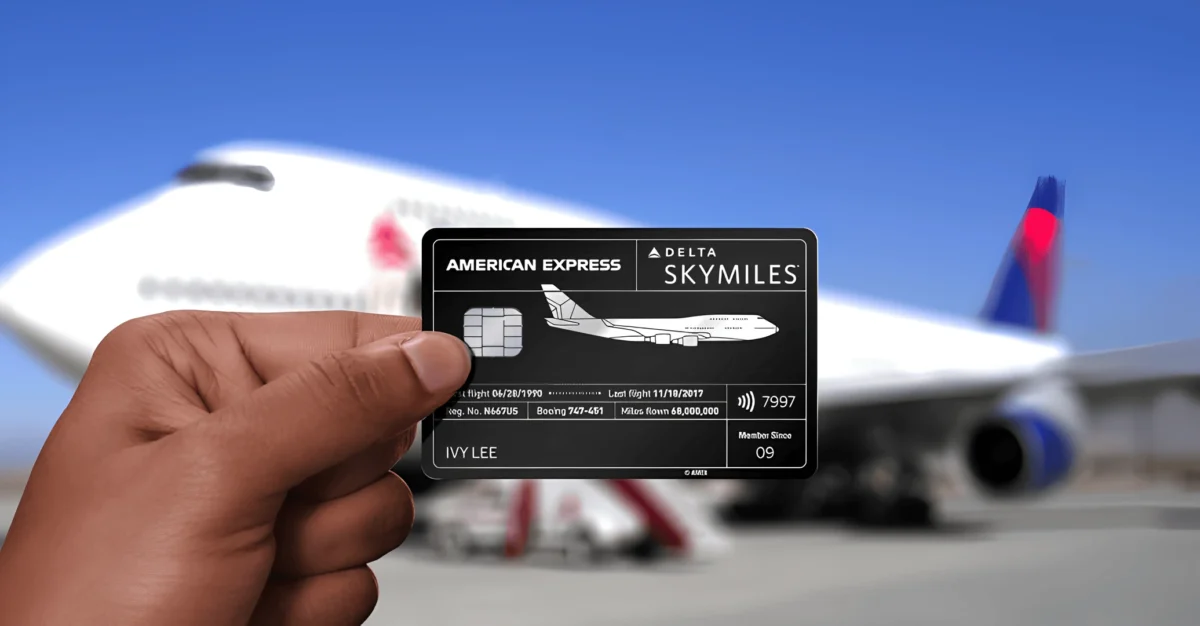
Delta Becomes the Biggest Airline at LAX By Flights and Seats
Data from aviation analytics company Cirium, cited by View from the Wing, shows Delta leads all carriers at LAX for July 2026 in both flights and seats, ahead of American and United:
- Delta: 9,512 flights, 1,529,742 seats
- American: 8,941 flights, 1,360,346 seats
- United: 8,696 flights, 1,451,910 seats
- Southwest: 4,626 flights, 750,118 seats
- Alaska: 3,728 flights, 565,516 seats
- JetBlue: 1,507 flights, 240,031 seats
United still leads on available seat miles, at just over 2.85 billion, ahead of American’s 2.72 billion and Delta’s 2.68 billion, reflecting United’s heavier long-haul international schedule from LAX. Delta has recently added Chicago O’Hare International Airport (ORD) and Hong Kong International Airport (HKG) nonstop service from LAX, and it opened its second Delta One business class lounge at LAX’s Terminal 2 on July 1, 2026, its 60th lounge worldwide.

Why United’s Long-Haul Network Worries Delta More Than American
Aviation industry insider JonNYC, whose analysis was published by View from the Wing, said United, not American, is the carrier Delta is watching most closely at LAX. “Although there are multiple reasons, the main reason UA is viewed as the threat in LA is their international network,” the analysis said, noting American’s international schedule from LAX is limited mainly to London, Tokyo Haneda and Sydney.
United, by contrast, operates widebody service from LAX to London Heathrow, Tokyo Haneda, Tokyo Narita, Sydney, Melbourne, Shanghai, Beijing and twice-daily Hong Kong, giving it a far larger Pacific and long-haul footprint at the airport. The same analysis argued Delta’s West Coast options are narrowing elsewhere: “Alaska isn’t going anywhere in Seattle… so DL’s only hope is to try to build out LAX and make it into their Pacific gateway.” Aviation commentator Tim Dunn, responding in the same discussion, pushed back on the idea that Delta is retreating from Seattle, arguing the airline has always run a dual West Coast strategy across both cities.

Delta’s Amex Card Business Generated $8.2 Billion In 2025
The commercial logic behind Delta’s LAX push centers on its cobrand credit card partnership with American Express. Delta’s own year-end results confirm that American Express remuneration grew 11 percent to $8.2 billion in 2025, according to the airline’s fourth-quarter earnings release. That figure now equals roughly 10 percent of Delta’s total revenue and, carries a margin near 40 percent, making it the airline’s most profitable revenue line by far.
Delta counts roughly 9 million Amex cardholders, and CEO Ed Bastian has said their combined spending approaches 1 percent of U.S. GDP, according to reporting by Fortune. Bastian described the relationship as central to Delta’s brand positioning: “As Delta’s brand started to move and people started to see it as a premium brand, as a differentiated experience, Amex was critical to that.” Even so, card growth has slowed relative to inflation-adjusted targets set under the current Amex agreement, which runs through 2029, and Delta is reportedly working to widen its pool of new cardholder prospects.

New LAX Lounge and Terminal Investment Support the Premium Push
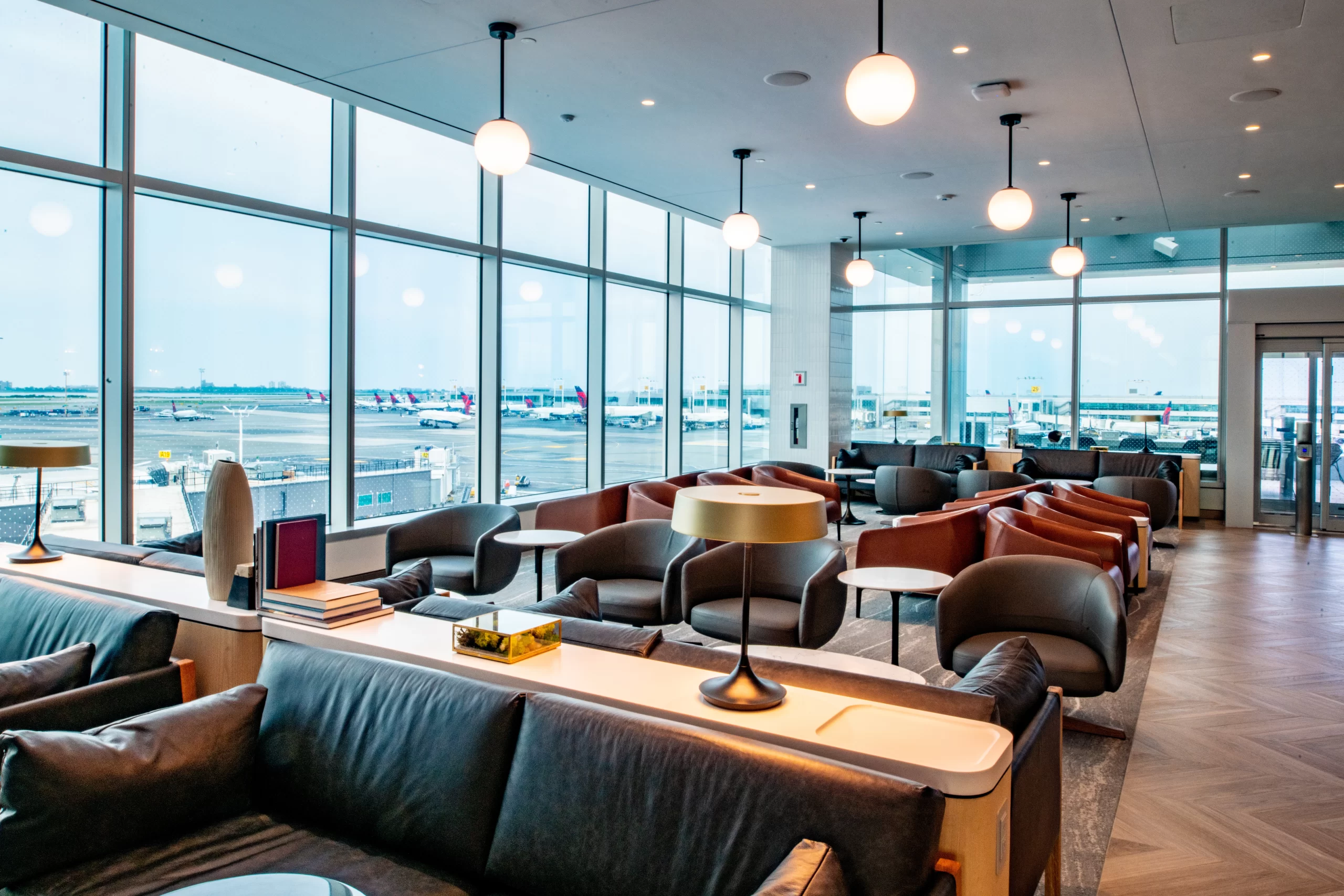
Delta’s physical investment at LAX mirrors its financial priorities. The airline’s new Terminal 2 Delta One Lounge, which opened July 1, 2026, spans roughly 4,000 square feet and serves about 75 guests at a time with table service and private shower suites, according to Nomad Lawyer. Delta plans a second phase, an 11,000-square-foot Sky Club in the same terminal, before the 2028 Los Angeles Olympics.
That timeline lines up closely with Delta’s proposed Philadelphia and Washington Dulles launches, both reportedly targeted for 2028. Delta’s Newark flights, confirmed for April 2027, will use standard Airbus A321neo aircraft with recliner first class rather than lie-flat seats, a reflection of ongoing delays in the airline’s premium seat certification process rather than a deliberate downgrade for the competitive route.
How Delta’s LAX Strategy Compares with United and American
American Airlines has taken a more cautious approach at LAX in 2026, suspending four nonstop routes — to Washington Dulles, Cleveland, Columbus and Pittsburgh — between August and October due to elevated jet fuel costs, even after expanding the same routes only months earlie. United Airlines (UA), meanwhile, has focused its own 2026 LAX growth on mid-sized domestic markets such as Columbus and Pittsburgh that had lacked direct Los Angeles service, rather than matching Delta flight-for-flight on premium transcontinental routes.

