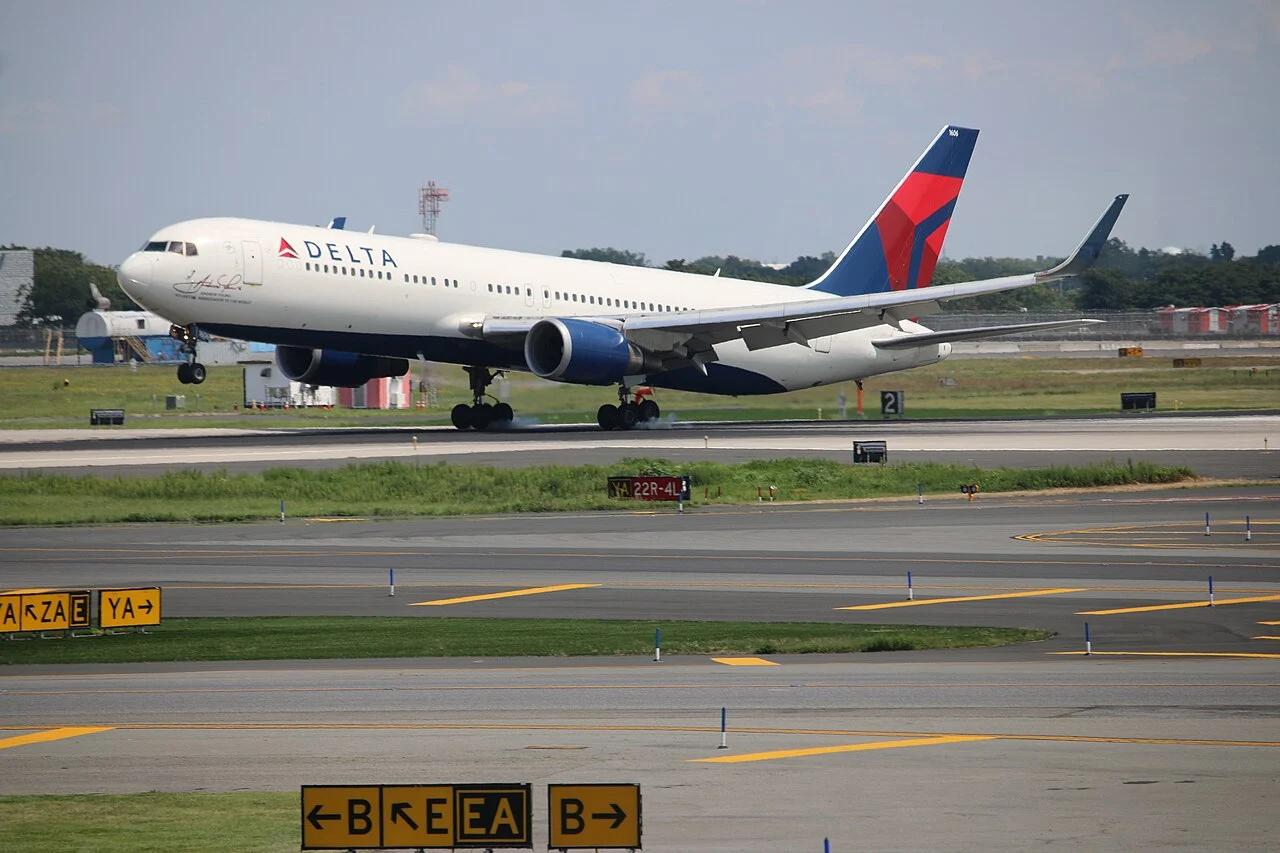
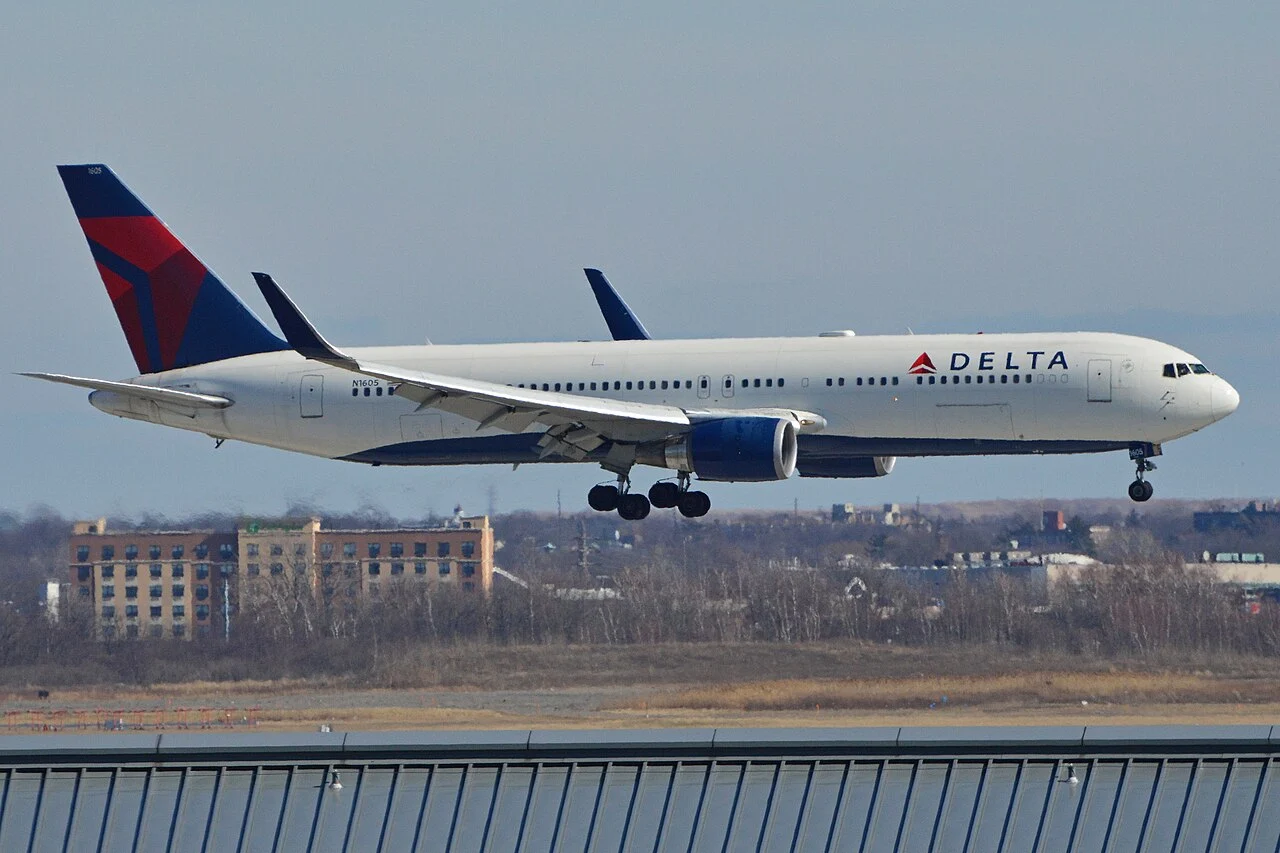
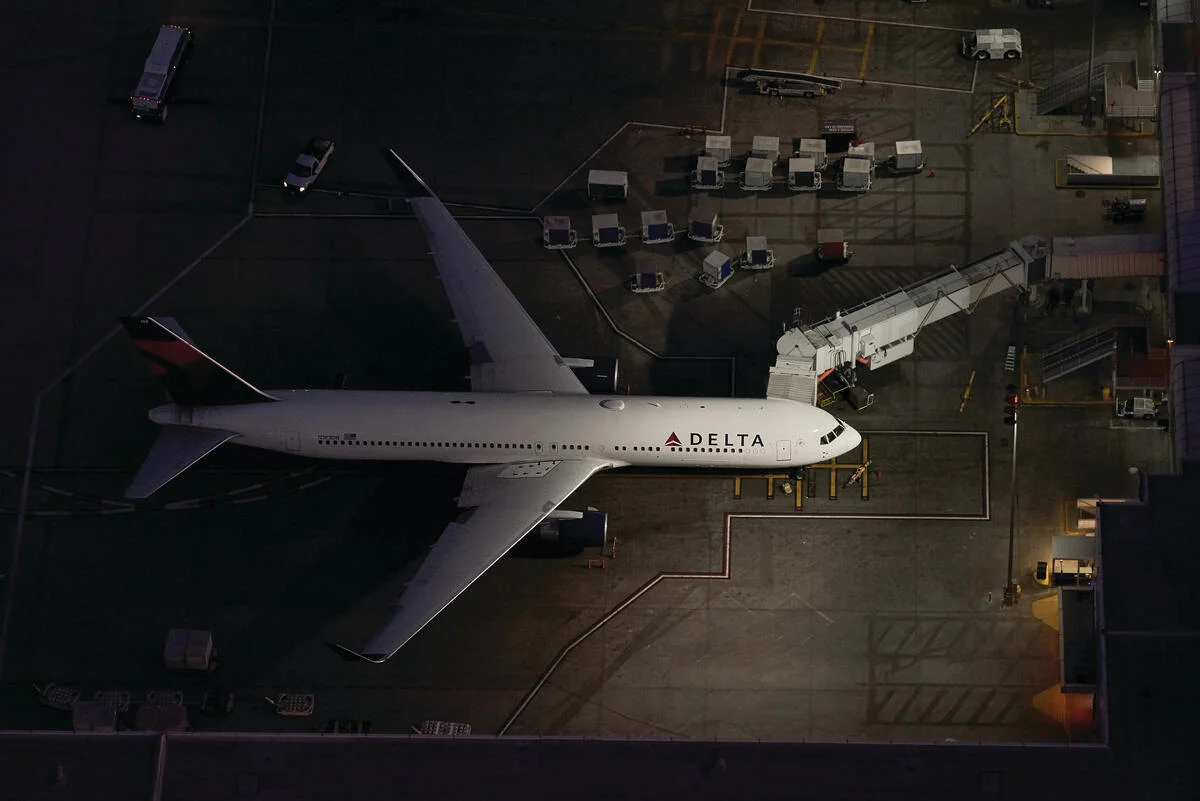
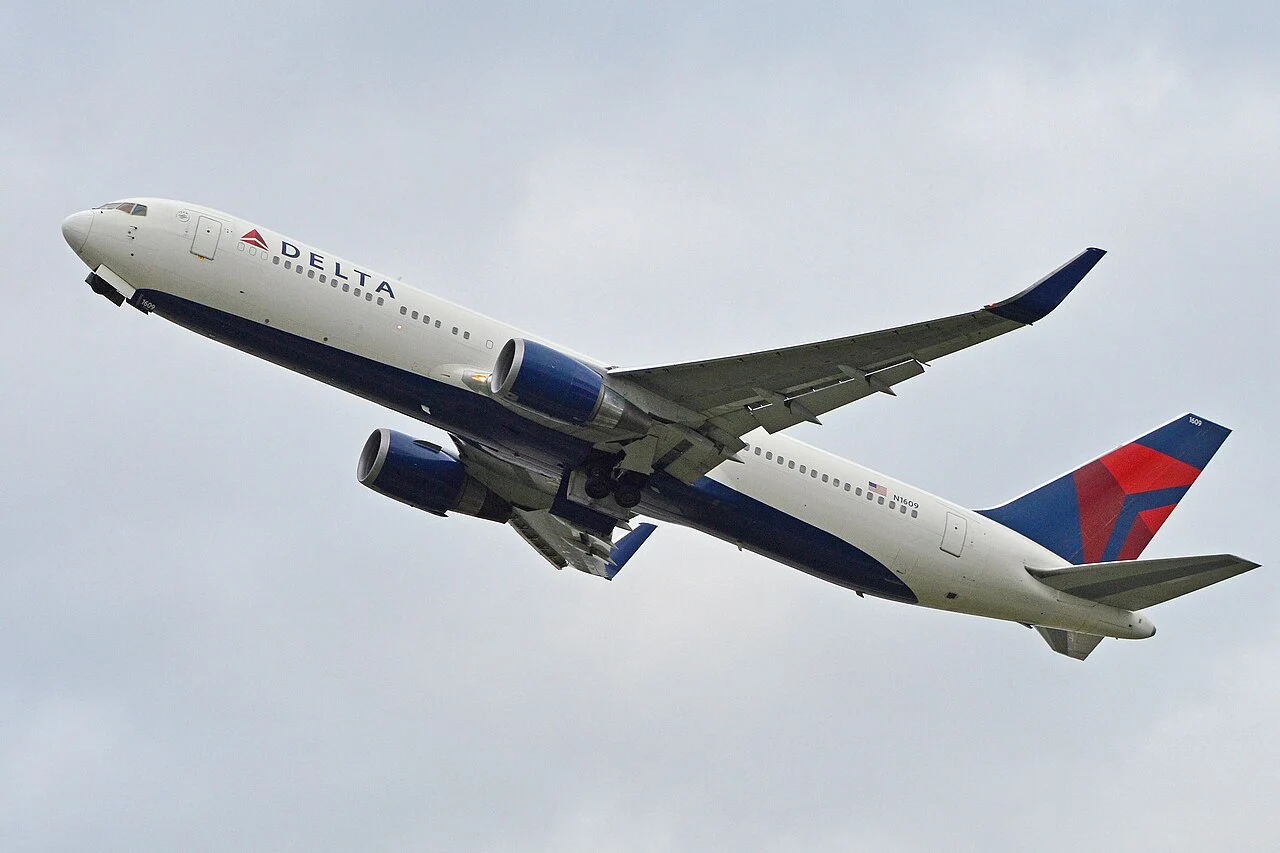
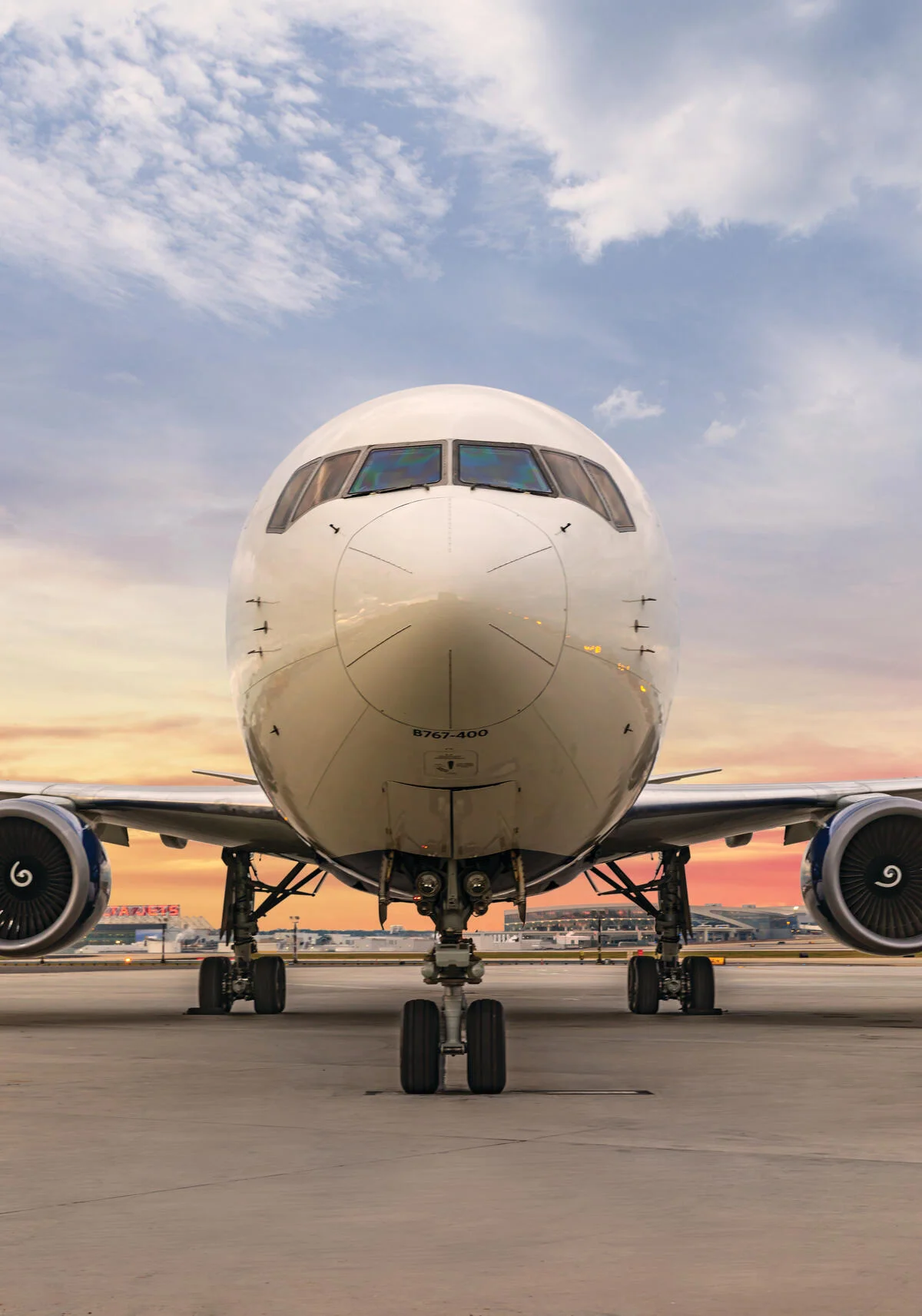
A Delta Air Lines (DL) Boeing 767-400 departing New York John F. Kennedy International Airport (JFK) for Nice Côte d’Azur Airport (NCE) aborted its takeoff after the flight crew detected an abnormality during the departure roll.
What initially appeared to be either a blown tire or compressor stall quickly escalated after another aircraft reported flames from the jet’s left engine. Emergency responders subsequently discovered a significant fuel leak, forcing the aircraft to remain on the runway before being towed back to the terminal.
Loud Bang Forces Crew to Abort Departure
The incident occurred on June 29 as Delta Flight DL28 accelerated for departure from runway 13R at JFK.
Operating the service was a Boeing 767-400ER, registered N831MH, carrying 232 passengers and 12 crew members to Nice, France.
Shortly after beginning the takeoff roll, the pilots experienced what they described as a sudden surge accompanied by a loud popping noise. Unsure whether the source was a tire failure or an engine compressor stall, the crew immediately rejected the takeoff and advised air traffic controllers they were stopping on the runway.
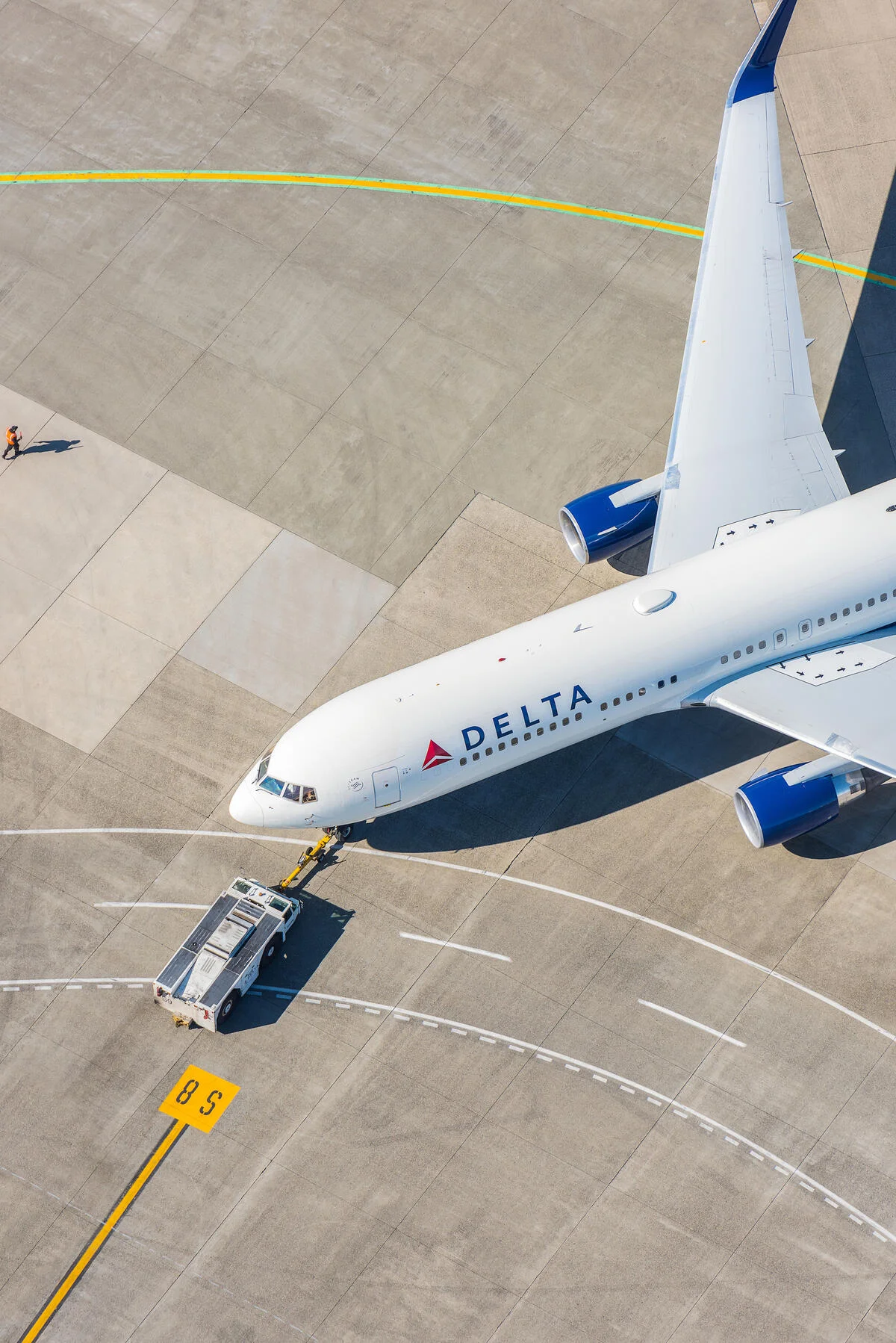
Controllers responded by dispatching airport rescue vehicles while temporarily suspending runway operations. Here’s a breakdown of the conversations:
| Time | Speaker | Transcript |
|---|---|---|
| 0:10 | Kennedy Tower | Delta 28 Heavy, traffic short final runway 22L, runway 22L is in effect, wind 210 at 9. Runway 13R, cleared for takeoff. |
| 0:17 | Delta 28 | 13R cleared for takeoff, Delta 28 Heavy. |
| 0:27 | Delta 28 | Tower, Delta 28 Heavy, we’re aborting on the runway, please hold the truck. |
| 0:33 | Kennedy Tower | Delta 28 Heavy, no problem. |
| 0:37 | Kennedy Tower | Delta 28 Heavy, do you have the nature of the emergency? |
| 0:40 | Delta 28 | Negative. We had a full acceleration on one side and it sounded like a pop, so we expect either a blown tire or a potential compressor stall. |
| 0:48 | Kennedy Tower | Delta 28 Heavy, no problem, you can hold your position there. We’re rolling the truck. |
| 1:03 | Kennedy Tower | Okay, Delta 28 Heavy, did you copy that? |
| 1:05 | Delta 28 | 28 Heavy, copy. We had a full acceleration on one, appreciate it. Thank you. |
| 1:13 | Kennedy Tower | Delta 28 Heavy, assistance is on the way. |
| 1:15 | Delta 28 | 28 Heavy, roger. |
| 2:00 | Kennedy Tower | Delta 28 Heavy, the truck is on this frequency. If you want to talk to him, it’s truck number 2. |
| 2:03 | Delta 28 | Copy. Truck 2, Delta 28, on the short takeoff we had a loud pop, and the jet behind us reported flames out the left engine. Both engines are running, parking brake set. |
| 2:17 | Rescue 2 | Roger. Delta from Rescue 2. |
| 2:21 | Delta 28 | Go ahead. |
| 2:23 | Rescue 2 | We’re just going to circle around and see if we see anything from our vantage point, okay? |
| 2:29 | Delta 28 | Thank you. |
| 2:37 | Rescue 2 | Roger, I don’t see any indication of fire, but on your number 1 engine it looks like fuel is probably leaking. The ground is wet. There’s definitely something leaking from your engine. |
| 2:49 | Delta 28 | Okay, we have a reverser indication that it’s stuck out as well. And that’s the number 1 engine? |
| 2:56 | Rescue 2 | That’s correct, your left side, number 1. |
| 2:59 | Delta 28 | Okay, we’re going to go ahead and cut that off. |
| 3:04 | Rescue 2 | You can smell the fuel as well. |
| 3:06 | Delta 28 | Okay, copy, thank you. |
| 3:15 | Kennedy Tower | Truck 2, you can come up on 121.65 to continue talking to Delta. |
| 3:25 | Kennedy Tower | And Delta 28 Heavy, same for you, switch to 121.65. |
| 3:29 | Delta 28 | 28 Heavy, switching. |
| 3:44 | Delta 28 | Yeah, we’ve cut that left engine off. Does it look like we’re still leaking fuel? |
| 3:48 | Rescue 2 | That’s confirmed, it’s coming out at a rapid rate. |
| 3:52 | Delta 28 | Okay, we’re showing no indications up here. It’s possible it’s oil, not fuel. |
| 4:08 | Rescue 2 | It smells like fuel. |
| 4:19 | Rescue 2 | Yeah, Delta, it looks like fuel, it doesn’t look like oil. |
| 4:22 | Delta 28 | Okay, we have no indications up here. What do you suggest, taxi back? |
| 4:29 | Rescue 2 | Yeah, we could follow you back. |
| 4:31 | Delta 28 | Okay, that sounds good, we’ll get a clearance here in a second. |
| 4:37 | Kennedy Ground | Delta 28 Heavy, Kennedy Ground on 121.65, just let me know when you’re ready to move on this frequency. |
| 4:48 | Kennedy Ground | Copy, and just let me know where your gate’s going to be. |
| 4:52 | Delta 28 | Copy, we’ll try to get clear of the runway, thank you. |
| 4:55 | Kennedy Ground | Just to be honest with you, since they’re going to have to clean up, I’ll probably leave you on 13R and send you down toward Kilo Echo. If they’re doing a cleanup, I’d rather it be on that runway than the taxiways, since we’re changing runways anyway. |
| 5:10 | Delta 28 | Okay, thank you. |
| 5:18 | Rescue 2 | It looks like it stopped leaking at this time. |
| 5:21 | Delta 28 | Okay, we’re going to call for taxi in about one minute. |
| 5:27 | Delta 28 | Ground, Delta 28, we’d like to give it a shot and taxi in on the other engine whenever you’re good. |
| 5:34 | Kennedy Ground | All right, Delta 28 Heavy, taxi down 13R and hold short of Kilo Echo for now. |
| 5:39 | Delta 28 | Taxi down 13R, short of Kilo Echo, Delta 28 Heavy. |
| 6:12 | Kennedy Ground | Delta 28 Heavy, you can start your taxi, short of Kilo Echo. |
| 6:15 | Delta 28 | Taxi in, short of Kilo Echo, Delta 28 Heavy, thanks. |
| 6:28 | Delta 28 | All right Ground, Delta 28 Heavy, looks like that’s going to be a no-go for us. The other reverser is stuck out and we’re unable to get it cycled, so it looks like we’re going to need a tow. |
| 6:40 | Kennedy Ground | Delta 28 Heavy, copy that. Stay here, you’re going to need a tow. |
| 7:13 | Kennedy Ground | And Delta 28 Heavy, confirm brakes set so the vehicles can approach. |
| 7:18 | Delta 28 | Brakes are set. |
| 7:20 | Kennedy Ground | Copy. Are you going to shut down completely? |
| 7:22 | Delta 28 | We can, we’ll wait for the tug. |
| 7:50 | Kennedy Ground | Car 99, are you still in the vicinity of where the aircraft initially stopped? |
| 7:54 | Car 99 | That’s affirmative. |
| 7:57 | Kennedy Ground | Any report on what the liquid actually was? |
| 8:02 | Car 99 | Yeah, it’s fuel. |
| 8:05 | Car 99 | We’re going to do a quick cleanup, and as soon as I can get it back to you, I will. |
| 8:09 | Kennedy Ground | Okay, you can take your time, because we did change runways, we’re on 22 now. |
| 8:14 | Car 99 | Copy that, thank you. |
Following Aircraft Reports Flames
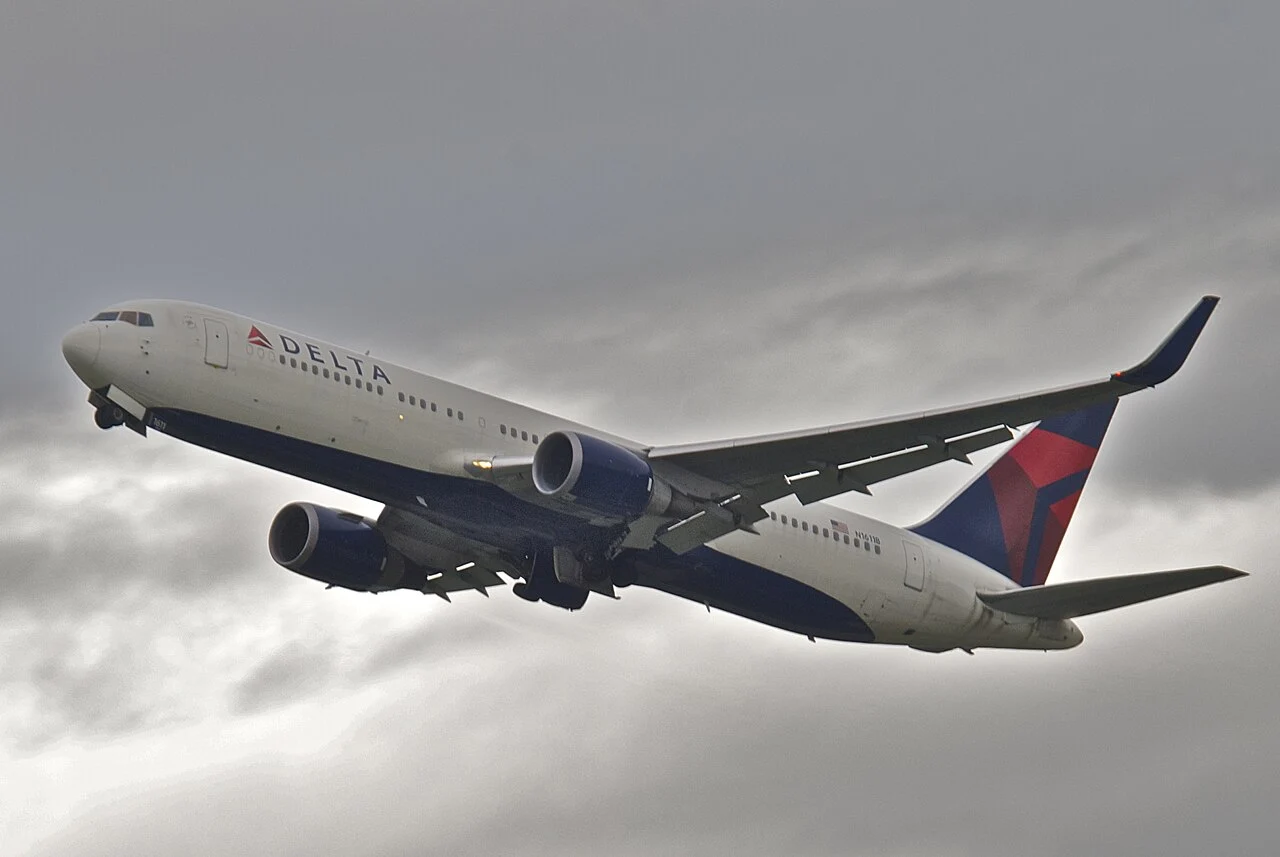
While emergency vehicles were en route, another flight waiting behind Delta 28 informed controllers that flames had briefly emerged from the aircraft’s left engine.
Despite the report, the Delta crew confirmed both engines remained operational and elected to hold their position with the parking brake applied while firefighters carried out an external inspection.
The initial inspection found no active fire. However, rescue personnel quickly noticed fluid collecting beneath the aircraft’s No. 1 engine.
Fuel Leak Confirmed During Inspection
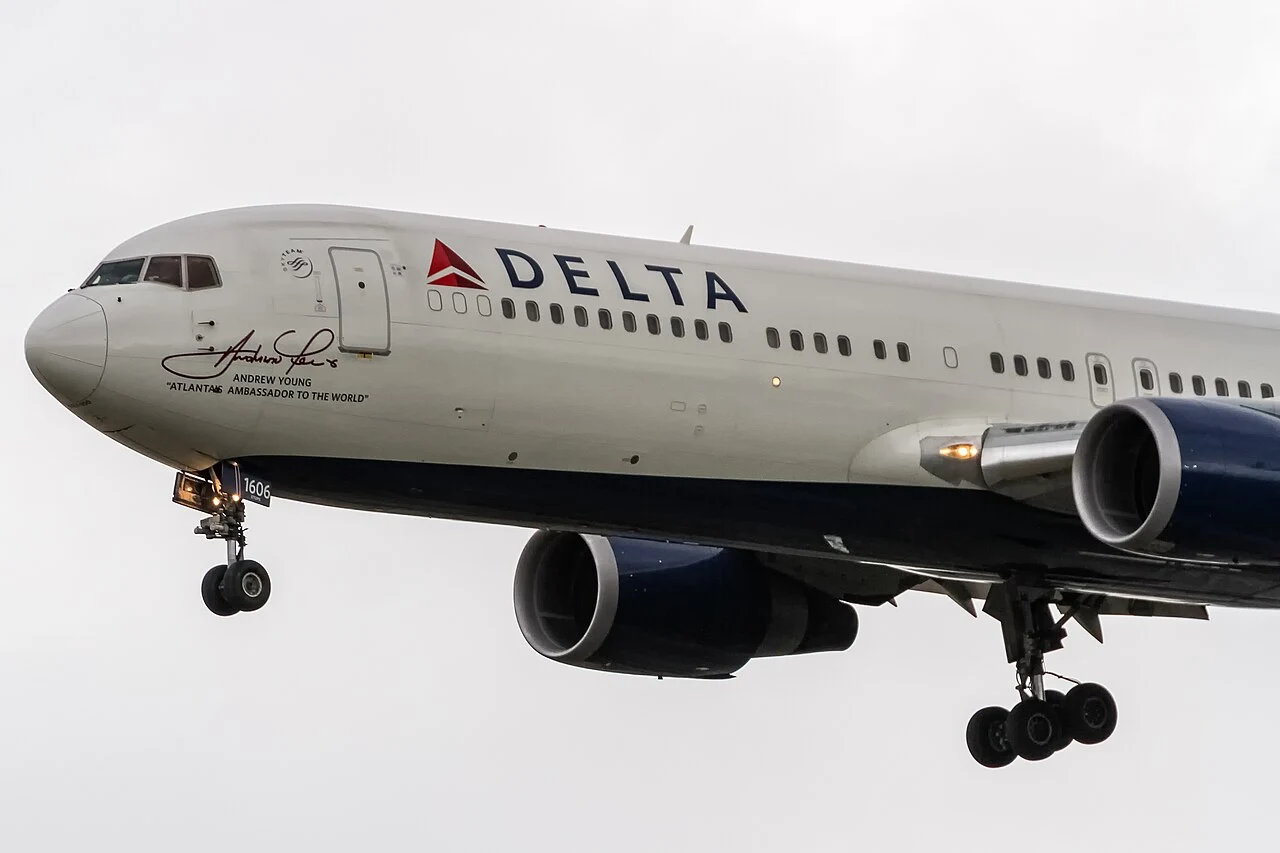
Emergency responders initially informed the pilots that liquid was leaking from the left engine, although it was not immediately clear whether it was fuel or oil.
The flight crew advised they were also receiving an indication that the left engine’s thrust reverser had failed to fully stow following the rejected takeoff.
As firefighters moved closer, they confirmed the leak was substantial and detected a strong smell of jet fuel. Acting on those reports, the pilots shut down the left engine to prevent further leakage.
A short time later, emergency crews confirmed the flow had stopped.
Aircraft Unable to Taxi Back
After the leak appeared contained, Delta requested permission to taxi back to the terminal using the remaining engine.
Air traffic control, meanwhile, kept the aircraft on runway 13R while airport crews prepared to clean spilled fuel. Since JFK was simultaneously changing its active runway configuration, controllers decided leaving the aircraft on the departure runway would minimize further operational disruption.
The airport transitioned arrivals and departures to runway 22 during the response.
Although the crew attempted to move the aircraft, the thrust reverser remained locked in the deployed position, preventing the Boeing 767 from taxiing safely under its own power.
Unable to resolve the malfunction, the pilots requested a tug, and the aircraft was ultimately towed back to the gate.
Ground personnel later confirmed the spilled liquid on the runway was fuel before completing cleanup operations.
Air Traffic Control Audio Reveals Crew Response
Radio communications from the incident provide insight into how the situation unfolded.
After informing Kennedy Tower they were rejecting the takeoff, the pilots explained they had experienced strong acceleration on one side followed by a loud pop, leading them to suspect either a tire failure or compressor stall.
Moments later, the crew of another aircraft advised controllers they had observed flames coming from Delta’s left engine.
As rescue personnel inspected the aircraft, they informed the cockpit that fuel appeared to be leaking rapidly from the No. 1 engine. Although cockpit indications did not immediately confirm a fuel leak, the crew relied on reports from firefighters before shutting down the engine.
When firefighters later reported the leak had ceased, Delta attempted to taxi clear of the runway. However, the crew soon advised ground control that the thrust reverser could not be retracted, making a tow back to the terminal necessary.
Flight Resumed After Aircraft Change
Delta Air Lines later confirmed that an engine-related issue caused the rejected takeoff.
The temporary runway closure disrupted airport operations, with FlightAware showing approximately 200 delayed flights at JFK that day. According to The Travel, around 40 of those delays involved Delta services.
Passengers on Flight DL28 were transferred to another Boeing 767-400ER, registered N828MH, which departed for Nice roughly five and a half hours later.
The original aircraft, N831MH, remained on the ground for inspection before returning to commercial service approximately 30 hours after the incident.

.jpg)
.jpg)

_%E2%80%98N1605%E2%80%99_Delta_(25673168602).jpg)
_%27N1609%27_Delta_(21301617813).jpg)