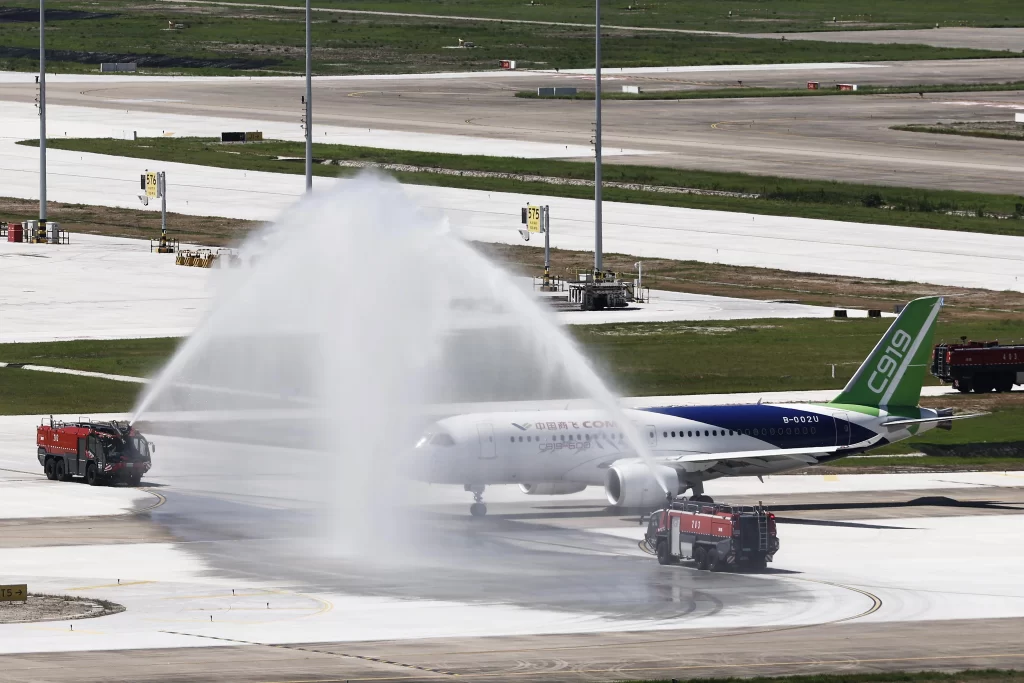
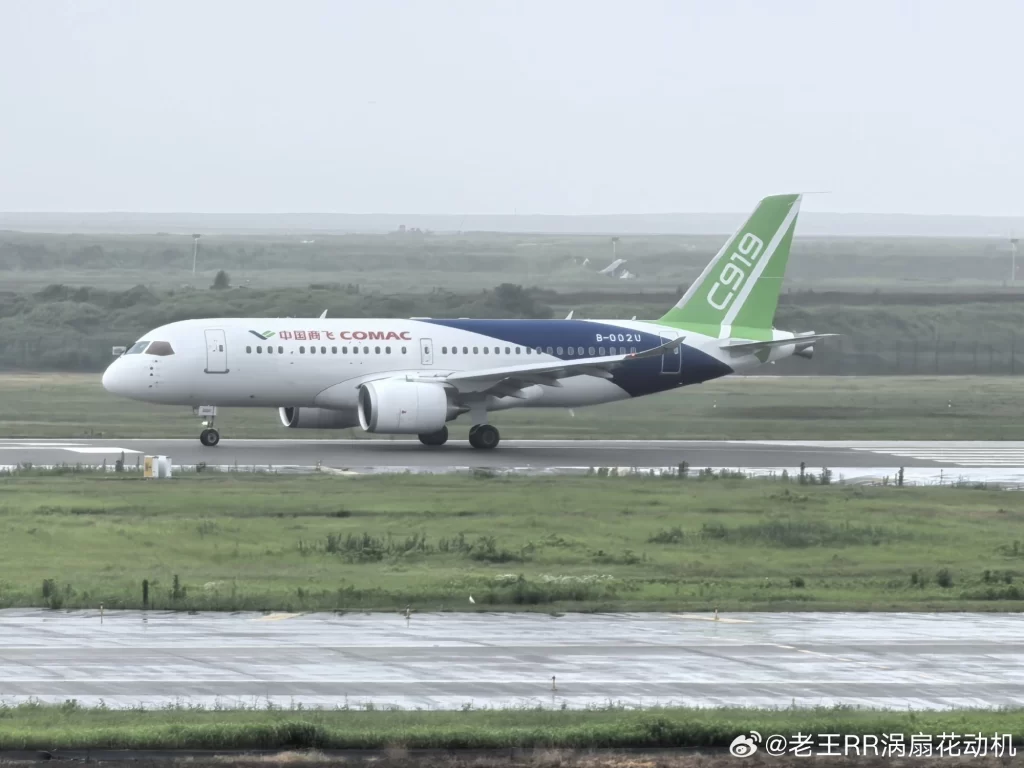
The first high-altitude variant of the Commercial Aircraft Corporation of China (COMAC) C919 completed its maiden flight on July 29, 2026, at Shanghai Pudong International Airport (PVG). The aircraft stayed airborne for one hour and 59 minutes and completed every planned test item, according to CGTN. The flight marks the first time the shortened jet, built specifically for airports on the Tibetan Plateau and in China’s western provinces, has left the ground.
The variant is based on the standard C919 but carries a shortened fuselage and upgraded onboard systems built to handle thinner air and reduced engine performance at elevation. COMAC has not yet confirmed a certification or entry-into-service date for the aircraft, though Xizang Airlines (TV) finalized an order for 40 C919-600 aircraft, along with 10 C909 regional jets, at the Singapore Airshow in February 2024, becoming the launch customer under its former name, Tibet Airlines.
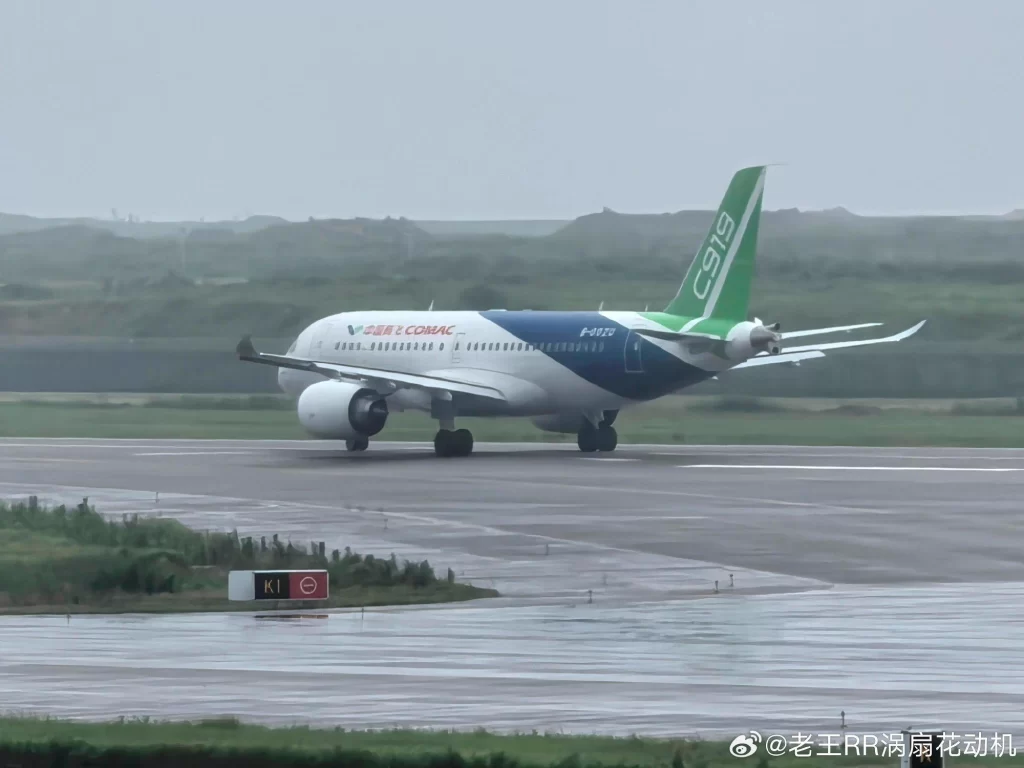
Plateau Variant Completes Nearly Two-Hour Test Flight from Shanghai
Wednesday’s flight departed from and returned to Shanghai Pudong, the same airport where the original C919 made its own maiden flight on May 5, 2017. A clean first outing like this one is a standard early assessment of basic airworthiness before a longer flight-test campaign begins.
The high-elevation modifications are aimed squarely at “hot and high” conditions, where thinner air reduces both engine thrust and aerodynamic lift. Engineers shortened the fuselage and adjusted onboard systems to compensate for that performance loss, rather than simply relying on a more powerful engine variant.
COMAC had previously indicated a 2027 target for the variant’s first flight, which means Wednesday’s test arrived well ahead of at least one earlier internal estimate, though the company has not explained what allowed the schedule to move up.
| X User
What Makes the C919-600 Different from The Standard Narrowbody
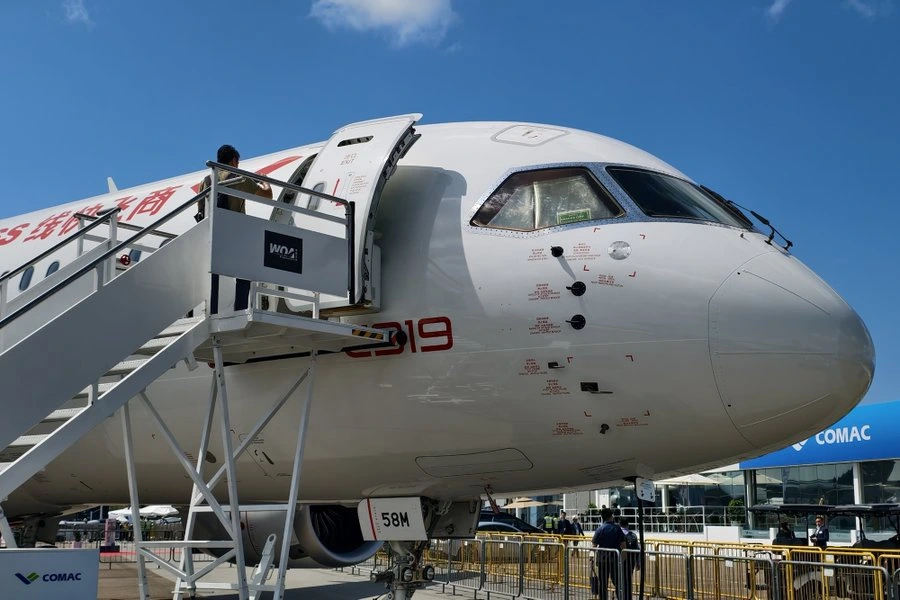
The standard C919 seats between 158 and 192 passengers and flies up to 5,555 kilometers, positioning it against the Airbus A320neo and the Boeing 737 MAX. The high-altitude variant, known internally as the C919-600, is a different aircraft entirely in terms of mission. Its shortened body measures roughly 34 meters, against 38.9 meters for the standard jet, and it seats between 138 and 160 passengers depending on configuration.
The specifications place the C919-600 in a narrower, less crowded market segment than its larger sibling, one defined less by passenger capacity than by the ability to operate safely from airports where standard narrowbody jets already struggle.
Fahad Naim | X User
Xizang Airlines Is the Launch Customer For 40 Plateau Jets
COMAC and the carrier, then still branded Tibet Airlines, signed a cooperation agreement in 2023 to jointly develop the high-altitude variant. The airline changed its English-language name to Xizang Airlines in February 2026, though its IATA code and Mandarin name stayed the same. It already operates specially modified Airbus A319 aircraft out of Lhasa Gonggar Airport, which sits 3,570 meters above sea level, and flies to airports as high as Qamdo, at 4,311 meters.
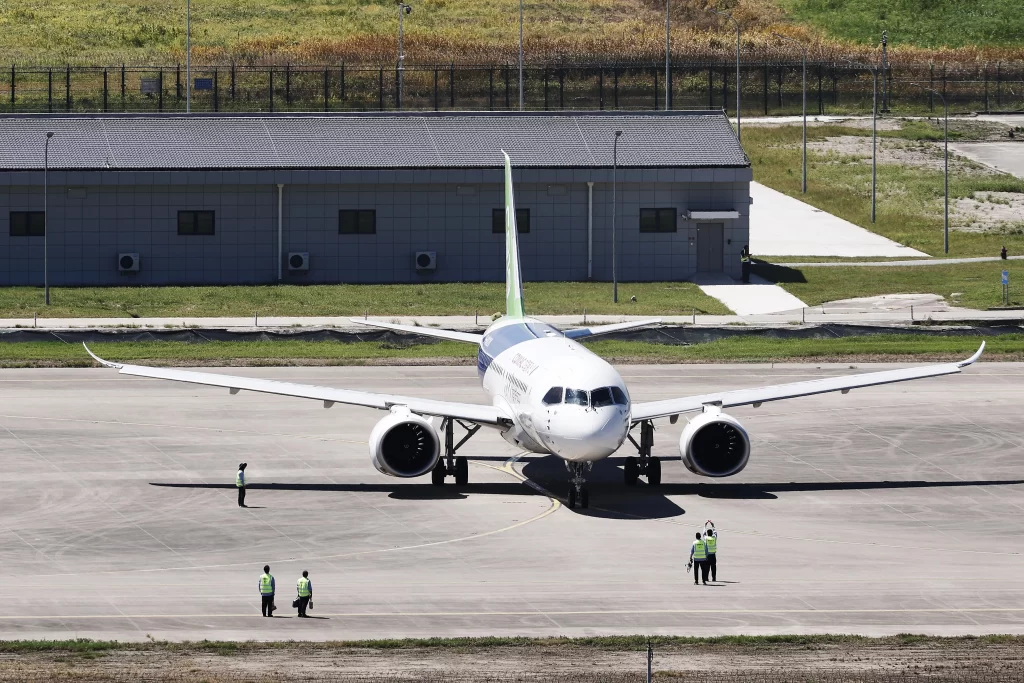
China is home to the world’s highest commercial airport, Daocheng Yading in Sichuan province, which sits at 4,411 meters above sea level. Airports at that elevation require longer runways and impose stricter payload limits on conventional aircraft, a gap the C919-600 is designed to close. A standard-body C919 already flew evaluation flights out of Lhasa Gonggar in September 2024 to test aircraft systems under real plateau conditions, giving COMAC engineering data before the new jet’s own test campaign began.
China’s High-Altitude Airport Network Needs a Purpose-Built Jet
The plateau variant did not emerge from a marketing exercise. China operated 270 certified transport airports by the end of 2025, and its national carriers collectively handled nearly 1.53 billion passenger trips that year. A meaningful share of that airport network sits at elevations that push standard narrowbody jets to their operational limits, forcing airlines serving western China to lean on a small pool of specially modified aircraft.
That dependence has largely meant the Airbus A319neo, which remains the dominant type on China’s highest-altitude routes. A domestically built alternative would reduce reliance on a single foreign supplier for an entire category of routes, a consideration that matters more given how exposed the wider C919 program has already proven to external supply chains.
Fahad Naim | X User
The C919 Family’s Broader Certification and Delivery Struggles
The plateau variant’s arrival comes as COMAC continues to work through delivery shortfalls on the standard C919. The manufacturer delivered only 15 aircraft in 2025, well short of a target that had already been cut from 75 to 25 during the year. A five-week suspension of US export licenses for the CFM International LEAP-1C engine in mid-2025 stalled production entirely before Washington lifted the restriction in July of that year.
China has since moved to insulate the program from a repeat disruption. Domestic firms have built out maintenance and overhaul capacity for both the C919 and the smaller C909 regional jet, including a Sichuan-based joint venture between Air China and CFM International that became the country’s first Premier MRO provider for LEAP engines. None of that infrastructure eliminates the underlying dependence on a Franco-American engine, but it does shorten how long a grounded jet has to wait for parts or servicing.