
While explaining the difference between a piece of fine art and science, Niel Degrasse Tyson, a great expositor of black holes and astronomy, said that if Einstein hadn’t come up with the idea of General Relativity(that would define Black Holes, and act as a great impediment for their study too, for General Relativity has no idea what to make of the singularity present at the center of this great guzzler of galaxies), scientists would eventually have stepped into this great theory anyhow. However, reasoned Tyson, if Van Gogh hadn’t made the “Starry Night” or had Rafael not made “The School of Athens”, no one probably would have.
At the heart of the almost-improbability of the existence of any painting is encoded another brilliant idea that the Germans call “Elementargedanken”, the elementary thoughts of humankind. After all, paintings across various epochs have a sort of universal appeal to them, irrespective of where they were created. They have elements of supranational strewn across them – much like how stories about shattered hopes, fallen villains, and conquering heroes are not particular to one nation:
“…. evidence that fairy tales did not originate in any single country, or even in several countries, but came from the human mind and are manifestations of a store of basic motifs that are the built-in “elementary thoughts” of the human race: Ekmentargedanken…… whenever you do encounter one of the great primordial themes of initiation, spiritual voyage, transformation, and integration, pay particular attention to the form of the Elementargedanken as they manifest in your dreams and thoughts, for these elementary ideas convey something personal…”
-Howard Rheingold
The image of a “wise old man”, or lores about going from “rags to riches”, etc., are rife not only in literature but in the world of painting too. One couldn’t say that such archetypal ideas have been used while painting an aircraft, though. When the celebrated club from Paris- Paris Saint-Germain – won the Champions League last year, its airline partner, Qatar Airways, rolled out the club’s Boeing 777 in the hues of the Champions League. Air New Zealand has chosen to paint some of its aircraft in the Lord of the Rings theme, as this multiple-Oscar-winning movie was shot in this nation that made it to the list of the top 5 nations to visit in 2025. If there’s a sense of universality, an archetypal quality, to the way aircraft are painted, perhaps it is the overarching figure of the white color that has been adopted in most carriers around the world.
Aircraft Painting: Why are Aircraft Painted White and (Exceptions)
But there is a special sort of painting that used to exist in the aircraft of the years gone by. What we call the “nose” of the aircraft (as we think of the expression “nosedive” of a plane), used to contain paintings, which aren’t in par with Van Gogh but did share some corpuscles of the elementargedanken: pin-up girls, mockery of the enemies, cartoons, and fiery animals.
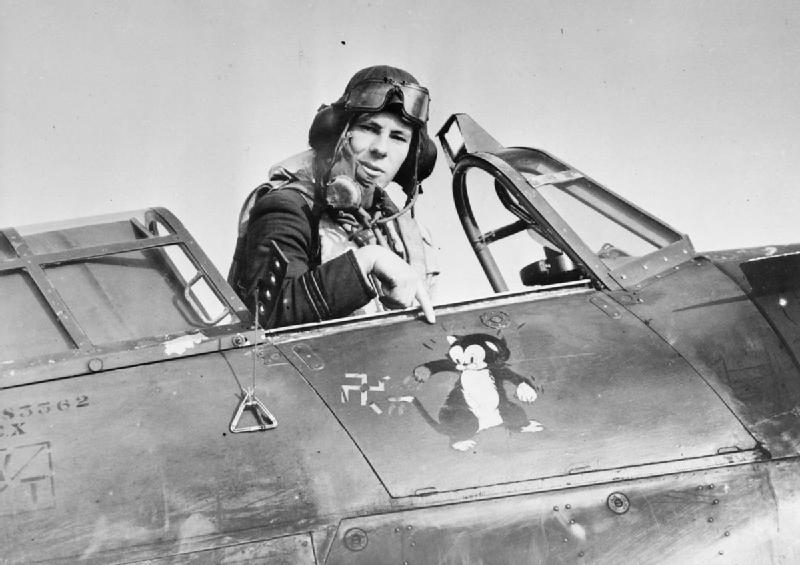

When did nose art begin? And why?
Daily Art Magazine defines Nose Art as “a type of art that gives each plane a personality, thus setting it apart from all the other crafts that came down the same assembly line.” This definition is far too vague, and might allow readers to draw a conclusion that every Airbus A380 needs to have its own nose art, lest the individual double-decker and largest passenger plane ever lose its “personality”.
One of the modern airlines that uses Nose Art is Virgin Atlantic. Here’s a sample of its Airbus A340-600.

Photo: Simon_sees | Wikimedia Commons

Virgin Altantic’s fleet comprises 29 historical Airbus A340s. Although the carrier operates a total of 80 aircraft (including Airbus A330, 787 Dreamliner, among others), its Airbus A350 has the same nose art as its historical A340. The same is true of its Airbus A330. Under such scrutiny, one would find that Virgin’s Dreamliner has a different nose art than others. Here’s a sample:
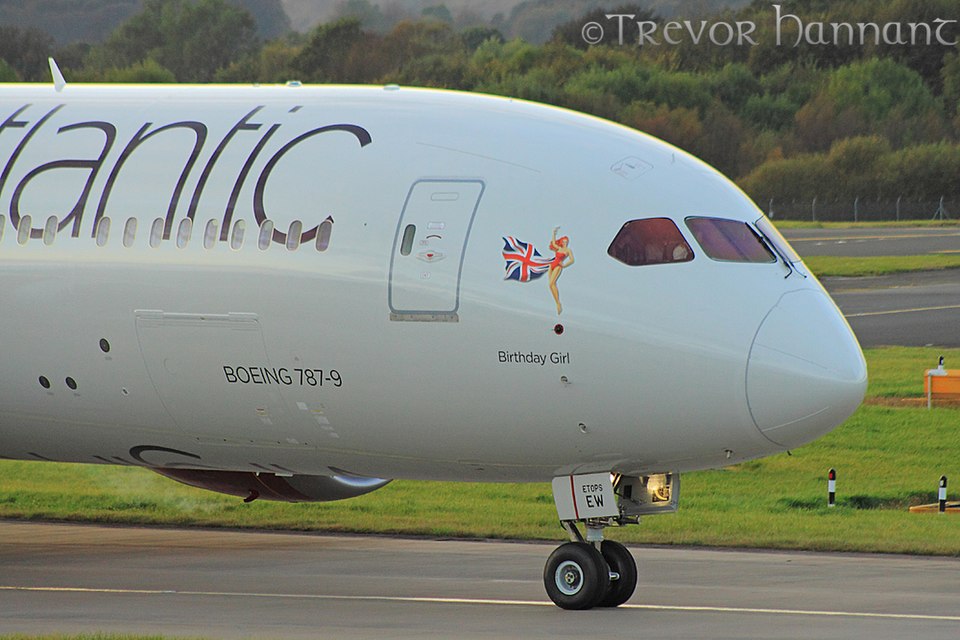
Photo: Trevor Hannant | Wikimedia Commons
.jpg)
One thing we have to note is that Nose Art isn’t a regular part of modern airliners. One might think of the example of Airbus Beluga, the supertranporters that was build to carry Airbus’ aircraft parts from one facility to another, but its resemblance to a mammal isn’t simply down to the eyes or what appear to be its lips.
The Beluga’s design mimics a whale in its entirety:

Photo: MarcelX42 | Wikimedia Commons
.jpg)
Nose Art is an anachronistic form of aircraft painting that almost doesn’t find its way in modern aircraft. We also have to note that nose art was typical of military aircraft. While one might find the afore-quoted definition of nose art (from Daily Art Magazine) to be missing the point, it would be difficult to quarrel with the following observations the magazine made:
-
- Nose art was rife with political meaning, a propaganda purpose, or mocked the enemy.
- “By the beginning of 1941, it took the name Nose Art for the simple reason that it was the only position on the aircraft where they could paint without interfering with markings, identification, or serial number.”
Whether or not the magazine’s claim that “the plane was a kind of woman who temporarily replaced their wife at home, and so they treated the plane as their “lady” is true is something that not a lot of pilots of those times would be able to attest anyhow.
The Beginning of the nose art
Jack Prelutsky, in his famous poem “Be Glad Your Nose is on Your Face” asks us to be grateful for the fact that our noses are where they are, for they were otherwise, horrors would follow:
Imagine if your precious nose
were sandwiched in between your toes,
that clearly would not be a treat,
for you’d be forced to smell your feet.
If nose were placed at our feet, perhaps “nose art” would not be visible to the flying pilots of other aircraft anyhow. Earliest aircraft were devoid of aircraft paint. After all, not a lot of research had been done about this. But a lack of colored body would be a problem for military aircraft. After all, how were fighter pilots able to discern enemy planes? The first nation to use aircraft in wars was Italy, as it deployed planes to Tripoli in 1912, and by 1913:
“ … a number of squadrons were using unit and identification markings. A Nieuport-Macchi of the Italian Navy, serial number M 13041, was painted like a sea monster with a facc. teeth. eyes, and large ears, behi nd which the number 20 was painted in large black numerals. In addition, the Italians marked the aircraft with I x5 in. white wound stripes for each bullet hole received in combat. ”
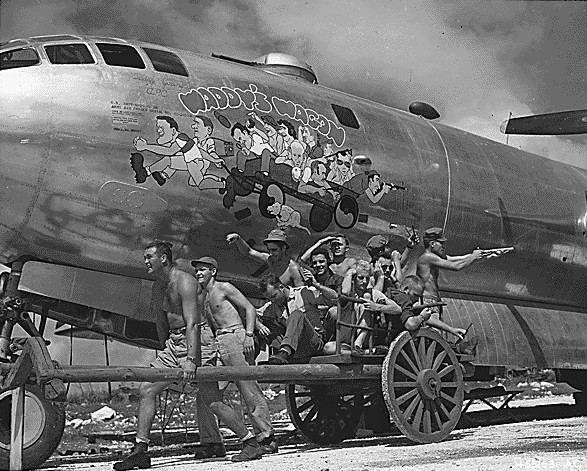

This move was to change aircraft painting forever, and introduce the possibility of nose art, write Jeffery Ethell and Clarence Simonsen in their history of nose art (the quote above is from the same book, too):
“With the introduction of the synchronized machine gun and true fighter aircraft, thi ngs changed rapidly. Since deadly German Fokker E-Iype monoplanes were similar in appearance 10 French Morane Type N machines, by early 1916 French and British sq uadrons started painting the cowlings, cabane struts, undercarriage, legs, and wheel covers a bright red as an ID marking. Later in the year, all sides were introducing camounage paint and unit markings.”
Stylized identification, which was a glorious part of nose art, was first depicted in either sides of French motor transport units. These included:
- Cartoon characters
- Animals
- Nurses,
- Indian heads
Taking a page out of their books, aircraft squadrons would also apply similar motifs on the aircraft they operated, and voila, nose art breathed into existence.
A few common themes behind the nose art: Pin Up Girls, Animals, and More
We have no idea about the amount of outrage that would have been expressed if a nose art like the following would be a part of airlines operating today. 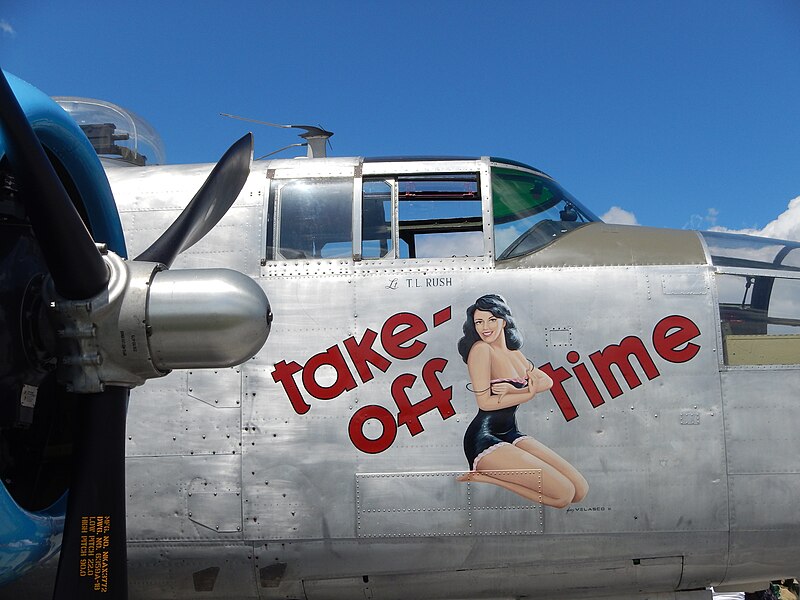
Photo: Surfsupusa | Wikimedia Commons

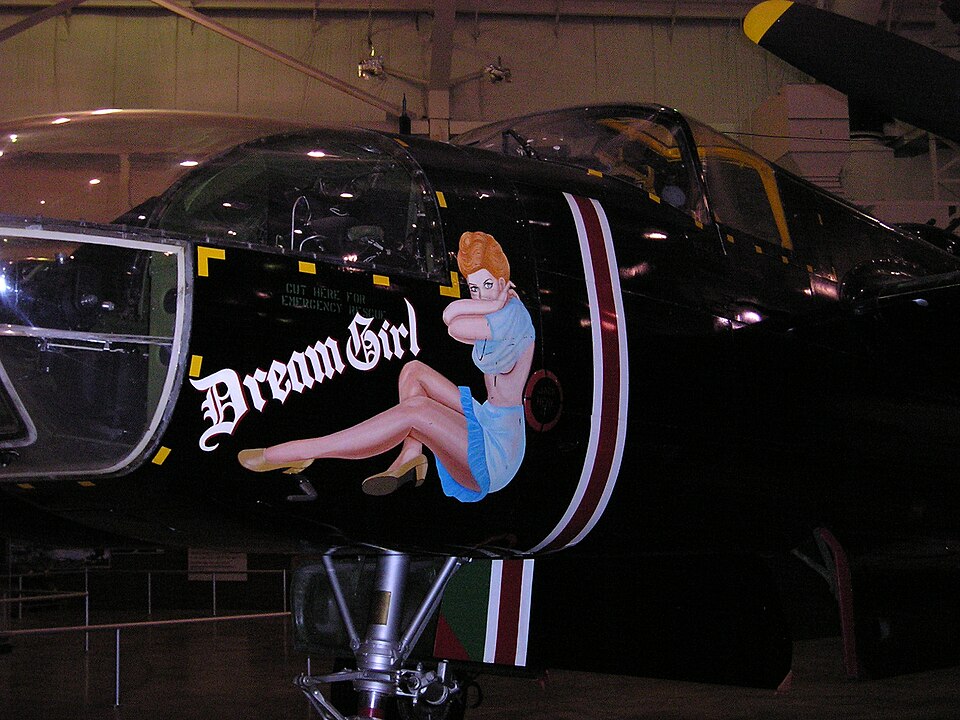
George Kalre, a veteran of World War II, reviewed over a thousand examples of nose art in the great war he participateed in and found that about 55 percent were female figures- a fourth of these female figures were nude, and most of the rest were partially clothed. Another review of 769 samples of nose art showed that 57 percent involved female figures and more than 11 percent male figures. Strikingly, the latter of the reviews also revealed that 7% were neutral i.e., neither male nor female nor animal. What goes without saying is that the nude female figurines in the form of pin-up girls made up a heavy chunk of nose art.
Pin-Up Girls
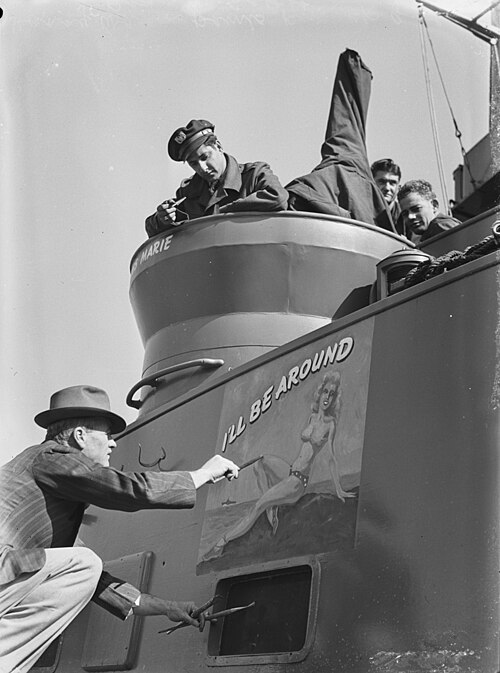
Pin Up girls was attested to the official English vernacular in the 1940s. It made it as a social phenomenon in 1943 after G.I.’s [G.I is an informal term referring to “a soldier in the United States armed forces, especially in the U.S. Army“] requested magazines such as Life to send them “illustrated” or “Hollywood” pin-up girls alongside, pin-ups of “everyday women”. Into the final two years of WWII, pin-up girls were “increasingly represented by the girlfriends, wives, and even children of homesick soldiers needing a boost in morale”.

But what did the word pin-up girl really mean? Here’s what the October 24, 1943 issue of the New York Times had to say:
“pin-up girl is crisp, evocative and native to the times and the circumstances. It began presumably with the pin-up girl whose picture decorates the walls of ten thousand tents, barrack rooms, bunks, tanks and planes. The word is turning up in other fields as the synonym for favorite, choice, tops. Ultimately we shall get very tired of pin-up and drop it; but until then it is a pleasant addition to our limited stock of half a million English words.”
There’s even a study on the “representations of body and face in the pin-up girl imagery of nose art, as desired by World War II soldiers”. The research analyzes faces and body shapes of thirteen famous pin-up Hollywood stars such as Betty Grable, Bettie Page, Dorothy Lamour, Rita Hayworth, Jane Russell, Marilyn Monroe, among others. According to the author, “the common traits of nose art pin-up girls were designed to project an idealized version of feminine beauty, emphasizing physical allure—particularly in terms of body lines and facial features—while maintaining a playful and suggestive demeanor”. Here’s what the results were:
.jpg)
| Average birth year | 1917.15±8.48 |
| death year | 1917.15±8.48 |
| mean lifespan | 70.08±21.33 years |
| mean heights | 163.23±7.11 cm |
| Mean weight | 53.54±4.82 kg |
| mean bust size | 35.69±1.38 cm |
| Mean Waist size | 23.85±0.80 cm |
| Mean hip size | 35.54±0.97 cm |
| mean chest-waist ratio | 1.50±0.07 |
| Mean waist-hip ratio | 0.67±0.02 |
| BMI | 19.98±1.16 kg/m2 |
The largest nose art featured an animal
The Consolidated Aircraft B-24 Heavy Bomber, also known as the B-24 Liberator featured a prominent artwork known as “The Dragon and his Tail”.
Top 5: Facts About The Consolidated B-24 Liberator Heavy Bomber
This nose art that also features a pin-up girl runs along the length of the fuselage and has been quotes as “the largest known artwork featured on a WWII-era aircraft”.
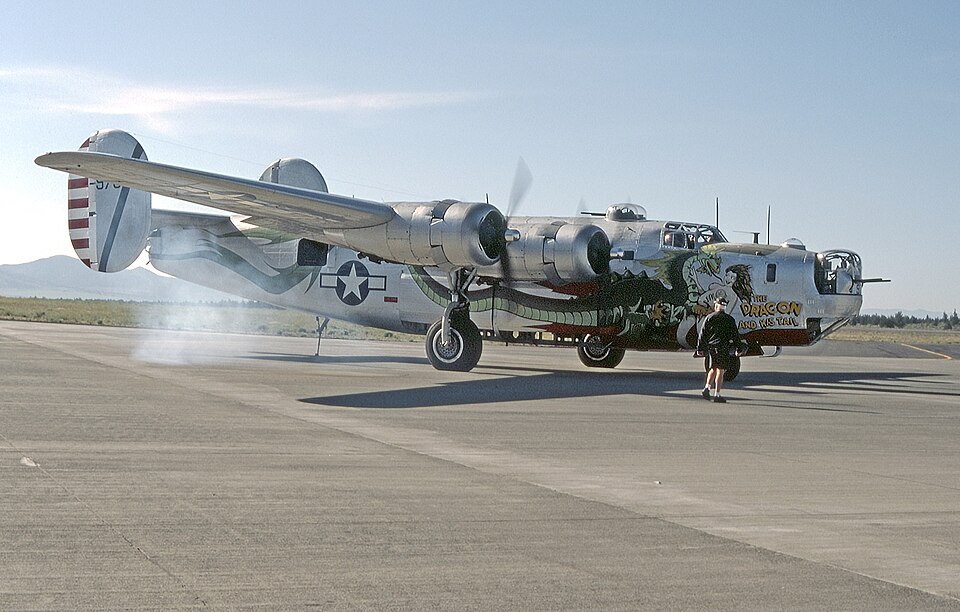
Photo: Tequask | Wikimedia Commons

After the war, this battle-fatigued aircraft was sent to the USA for scrapping. The USAAF Nose Art Research Project says that the aircraft “languished in the desert sand, devoid of its engines and thus tail-heavy with its nose in the air”. In 1946, around $2000 would have sufficed for procuring the aircraft (and saving the artwork) it but there were no buyers. However, at the end of the 80s, its fortunes changed:
“ In 1989 The Collins Foundation acquired and undertook a multi-million dollar restoration of the only flyable B24J left in the world. In doing so, they afforded the ultimate honour to Sgt Bartigian and to the men of the Pacific-based USAAFs by having the aircraft painted as The Dragon and His Tail (It’s first restored paint job had been as 15AF’s “All American”). Although it was repainted again some years later in another guise, the “Dragon” took to the air once again and flew across the USA at many air shows to the delight of tens of thousands of onlookers and enthusiasts.”
Insects, birds, and four-legged animals made up about 15 percent of the nose art in World War.
What animals did nations depict in their nose art?
It has been said that the nose art in aircraft operated by US troops in areas such as the Pacific were a tad too racy, or too extreme, for these were shielded from the civil population [A survey cited by nationalww2museum.org revealed that 43 percent of nose art in the European depicted women, while this figure was 66 percent in the Pacific]. Aircraft in Europe, however, had to tone down the risque-ness of nose art, for these were always amidst the public eye. Italy’s top fighter ace of World War I, Francesco Baracca, wore an emblem of a black horse. Enzo Ferrari, a racecar driver who would eventually introduce “Ferrari” to the world, used Baracca’s insignia on his racing cars.

Photo: Wikimedia Commons

During World War I. aircraft operated by German fighters painting the aircraft in an all-red hue. One of the most famous operators of such German fighter planes was Baron Manfred von Richthofen, who is also known as the “Red Baron”. In the next great war, German fighter pilots (aka Abbeville Boys), deluged the noses of their German fighters in bright yellow. German fighter pilots also painted their aircraft in rainbow colors, almost daring the Allied pilots to have a go at them. The following is a replica of Richthofen’s red-colored triplane.
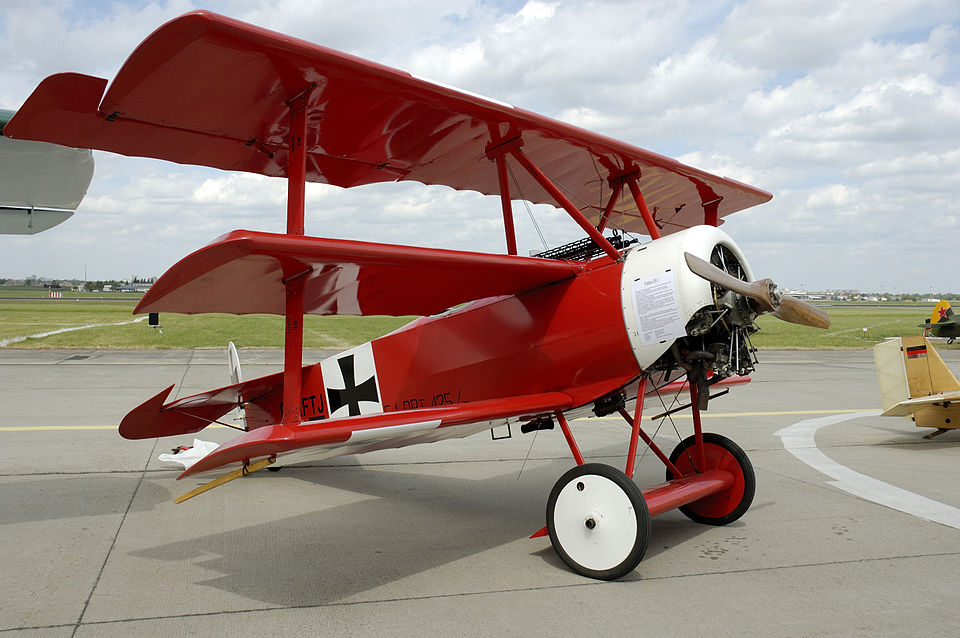
Photo: User:Entity999, Foto von Oliver Thiele | Wikimedia Commons

During the two wars, the continent of Europe was a specter of death. Wilfred Owen, one of the greatest World War poets pens his experience of serving as a soldier:
“…through wounds; not on the cess of war.
Foreheads of men have bled where no wounds were.
I am the enemy you killed, my friend.
I knew you in this dark; for so you frowned
Yesterday through me as you jabbed and killed…”
One could hear the echo of the poem in the following example of the nose art in French WWI ace Charles Nungesser’s Nieuport XXIII.
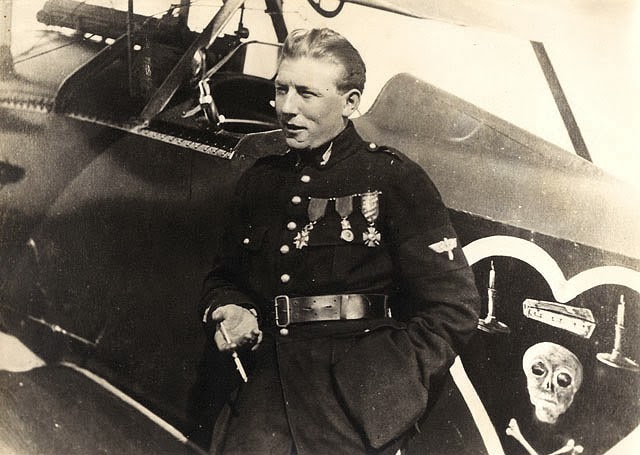
Photo: National Air and Space Museum Archives | Wikimedia Commons

American Flying Tigers became famous for their nose art depicting a shark’s mouth. These tigers embarked on their raids on the American Curtiss P-40 aircraft, which were painted with shark’s teeth. The following image gives us an idea of how these Tigers lined up in the battlefields.
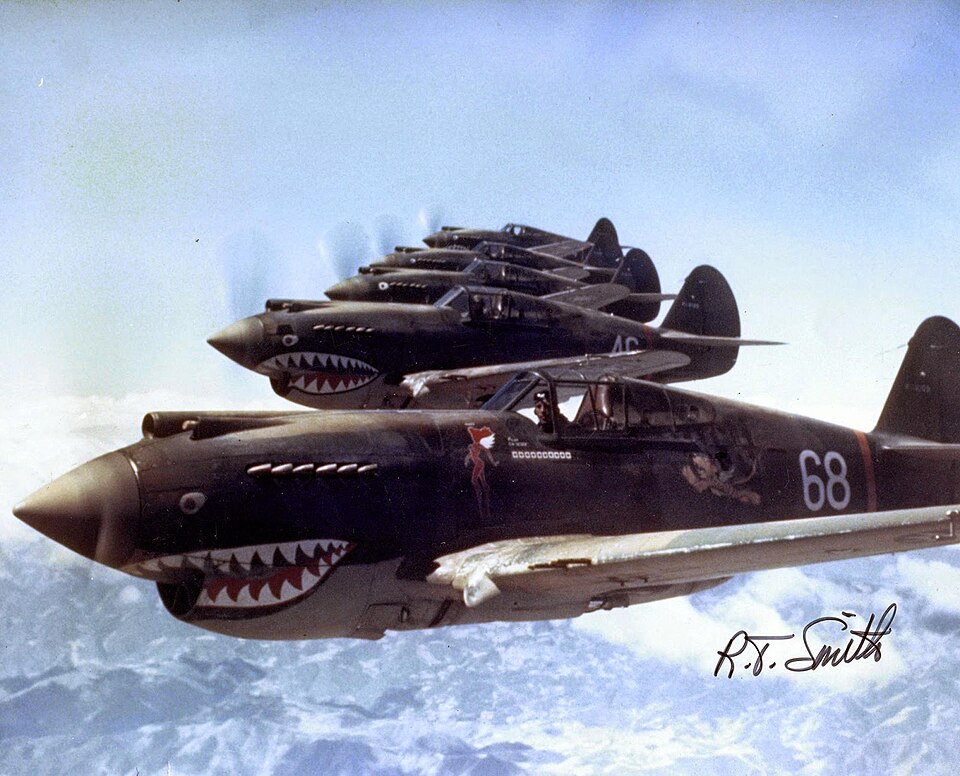
Photo: World War II in View | Wikimedia Commons

However, it was the Germans who had come up with the idea of the shark mouth design. An article titled “The Origins of Shark Mouth Nose Art” written by Nic Johnson for Aircorps Art helps trace the origins of the art depicted in the picture above.
“In the Sept. 2019 issue of WARBIRDS (Vol 42/No.6), Doug Revell gave a very concise and thorough answer to the trivia question: “Identify the Origin of the famous Shark mouth nose art used by the American Volunteer Group (AVG) of the Chinese Air Force in 1941-42”. He began by writing, “The first noted mouth was on a World War I German Roland C.II.” (Revell) With a little research, we were able to find a number of photographs with the reconnaissance aircraft commonly referred to as the Walfisch (or Whale)….”
Almost a third of World War nose art involved varied subjects like cartoon characters
Other subjects such as babies, children, astrological signs, devils, gremlins, etc., also made their way into the aircraft nose art. And so did cartoon characters. What’s more, for cartoon characters, it is not a catastrophe when their noses are within their ears, nor does the following apply, if that were the case:
for when you were obliged to sneeze,
your brain would rattle from the breeze.
They tend to collect back their brains and lego it together, anyhow. Nose art featuring Mickey Mouse did not appear only in aircraft serving World War II but also in the Spanish Civil War. Another popular charcater was Sad Sack, a soldier who served in the lower ranks of the army.
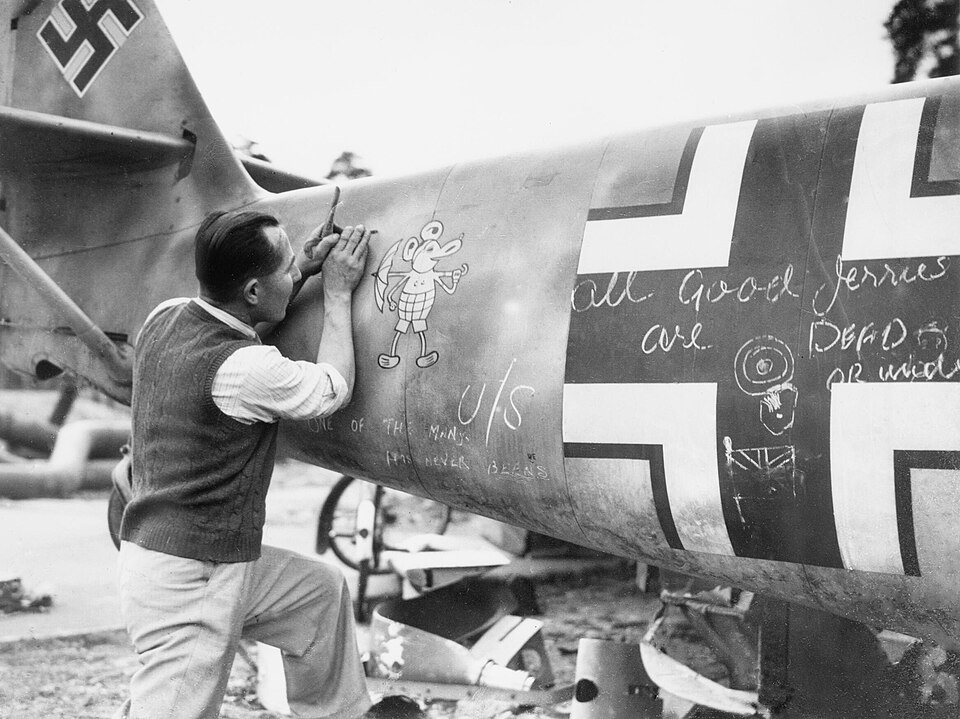
Photo: Imperial War Museum | Wikimedia Commons

Another prominent Nose Art of World War is titled “Medicine Hat”. This features Goofy on the fuselage of the aircraft. One of the more noticeable traits of nose arts is that almost a third of these were done by people with a natural proclivity towards it, although Walt Disney voluntarily had stationed five artists who dedicated all their time to nose art. Medicine Hat was carved up by a ground crew who chose to depict Goofy dropping bombs.
Nose Art beyond World War
The evolution of aviation during World War meant that by the time the two wars wrapped up, fighter aircraft had become much sleeker.
From Wright Brothers to Jet Age: Evolution of Aviation History
This meant that jet-powered fighter jets didn’t have as much surface for elaborate paintings. Nonetheless, Lockheed AC-130 gunships of the U.S. Air Force Special Operations Squadrons often had nose art that were given names such as:
- Azrael – Angel of Death
- Ghost Rider
- Thor
- War Lord
- The Arbitrator
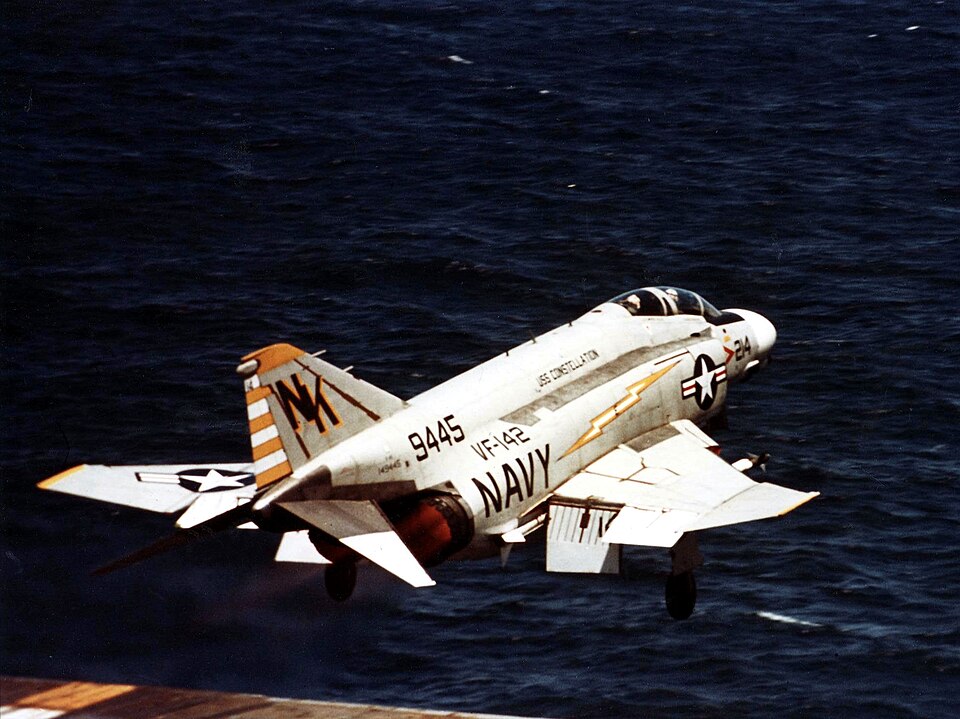
Photo: PH1c A. Phillipi, U.S. Navy | Wikimedia Commons
_c1968.jpg)
In recent times, the penchant for nose art has almost dwindled. Gary Velasco, an author and pioneer in reproducing WWII aviation nose art, was quoted in Simple Flying about why nose art isn’t a part of modern aviation:
“Nose art saw a decline when Political Correctness took its toll and today, art is still being done, however, mostly as a decal or chalk and crayon so it can be easily removed. This is highly regulated and all designs must be approved through the proper channels and top brass. The female pinup form is now prohibited but privately-owned warbirds are not regulated and are at the discretion of its owner.”
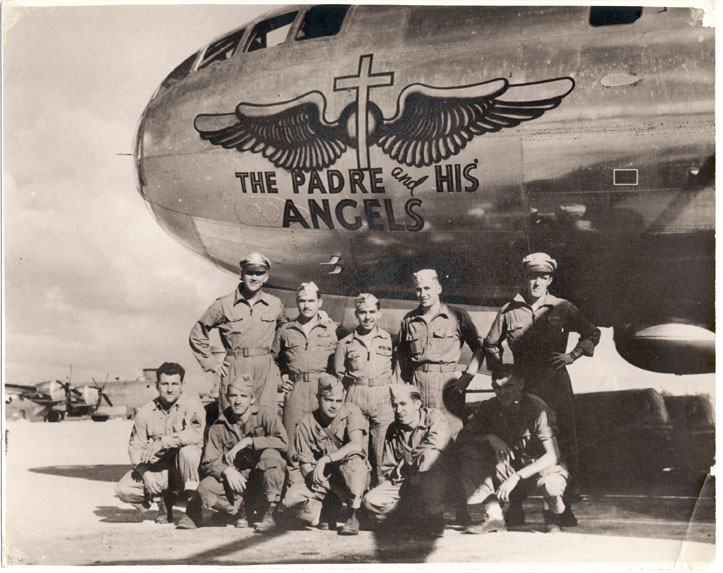

Circling back to Niel’s point about the improbability of the existence of a painting like the Starry might, where would nose art be without the movement that led to pin-up girls? Where would it be without two of the bloodiest wars in Europe? Richard Dawkins gives talks about the improbability of a human life in his ravishing introduction to “Unweaving the Rainbow”:
The potential people who could have been here in my place but who will in fact never see the light of day outnumber the sand grains of Arabia. Certainly those unborn ghosts include greater poets than Keats, scientists greater than Newton. We know this because the set of possible people allowed by our DNA so massively exceeds the set of actual people. In the teeth of these stupefying odds it is you and I, in our ordinariness, that are here.
The same stupefying odds, perhaps magnified, would extend to nose art too.