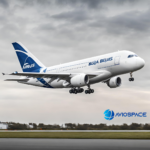
American Airlines (AA) is overhauling the wine offering aboard its premium cabins, introducing four new California selections across its Flagship® First and Flagship® Business Class services effective 13 May 2026. The carrier confirmed the move through an official press release published on 7 May, describing the rollout as the inaugural phase of a wider beverage programme refresh guided by customer feedback and designed to complement its chef-curated centennial inflight menus.
The four labels — two Chardonnays and two Cabernet Sauvignons — are sourced from distinguished California appellations including Carneros (Napa Valley), the Alexander Valley, the Sonoma Coast, and Paso Robles. Their retail prices range from approximately $24 to $44 per bottle. American has stated that further additions to the program will be announced later in the summer.
The Four New Wines: Varietals, Appellations, And What to Expect Onboard
The selection is bifurcated by route type. Passengers travelling in Flagship® First and Flagship® Business on international long-haul flights will be served
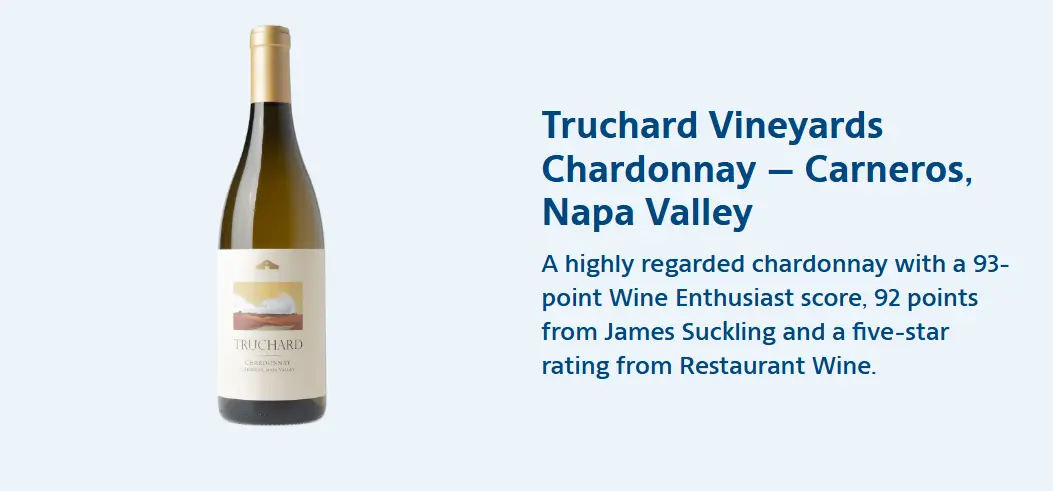
- Truchard Vineyards Chardonnay from Carneros
- Napa Valley
- the Decoy Cabernet Sauvignon from Alexander Valley
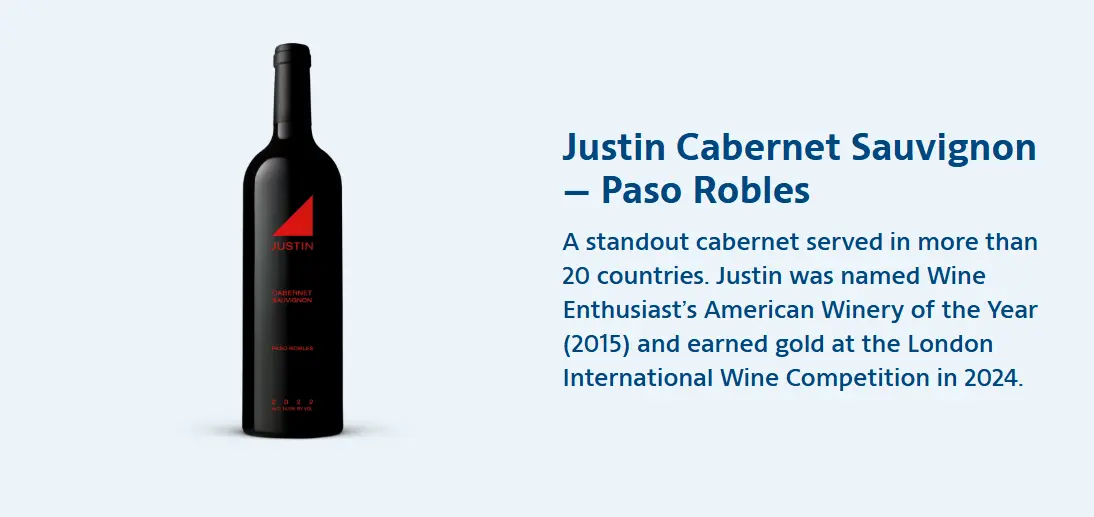
Those aboard premium transcontinental routes — most notably New York John F. Kennedy International Airport (JFK) to Los Angeles International Airport (LAX) — will find the Migration Chardonnay from Sonoma Coast and the Justin Cabernet Sauvignon from Paso Robles.
Travel expert and aviation commentator Gary Leff noted in his analysis for View from the Wing, Truchard Vineyards Chardonnay is a bottle exhibiting “ripe fruit, oak spice and firm acidity” — a profile that performs reasonably well in the pressurised, low-humidity environment of a commercial aircraft cabin. He cautioned, however, that the wine benefits from warming slightly if served directly from cold storage.
The Decoy Cabernet Sauvignon, produced in the Alexander Valley is served in more than 50 countries. Leff describes its profile as “plush, dark-fruited, soft-tannin, and full-bodied,” with prominent notes of blackberry, blueberry, and vanilla oak — characteristics that tend to survive cabin conditions more gracefully than highly tannic, austere reds.
Somewhat counterintuitively, the most expensive bottle among the four appears on transcontinental rather than long-haul services. The Migration Chardonnay from the Sonoma Coast retails at approximately $44. Its combination of body, oak, malolactic texture, and acidity makes it well-suited to the altitude. Expected tasting notes include pear, apple, lemon custard, brioche, and hazelnut.
Rounding out the quartet, the Justin Cabernet Sauvignon retails between $24 and $30 and represents a broad-appeal choice for the high-volume transcon market.
The following table compares these four:
| Wine | Region | Key Ratings & Awards | Notable Details |
|---|---|---|---|
| Truchard Vineyards Chardonnay | Napa Valley | 93 points — Wine Enthusiast 92 points — James Suckling Five-Star designation — Restaurant Wine |
Premium California Chardonnay with strong critic recognition across multiple publications |
| Decoy Cabernet Sauvignon | Alexander Valley | 94 points — Wine Enthusiast | Named the exclusive wine partner for the 77th Emmy Awards season |
| Migration Chardonnay | Sonoma Coast | 93 points — James Suckling 92 points — Wine Enthusiast |
Retails at approximately $44 |
| JUSTIN Cabernet Sauvignon | Paso Robles | Wine Enthusiast American Winery of the Year (2015) Gold — London International Wine Competition (2024) |
Award-winning Paso Robles Cabernet label with international recognition |
How American’s New Wine Selection Compares with Its U.S. And Global Rivals
The context of American’s wine upgrade is rendered sharper when measured against competitors who have invested in their beverage programmes for considerably longer. Writing in View from the Wing, Leff characterised American’s previous non-champagne wine offering as “arguably among the worst in the airline industry” and noted that even the sub-$6 retail selections had drawn sustained criticism.
He identified Emirates and Singapore Airlines as the clearest benchmarks for excellence in inflight wine curation globally, with Qatar Airways also consistently well-regarded. Qantas receives praise for its deliberate championing of Australian producers, particularly when operating services to and from Australia — a regional alignment approach that American has not yet adopted.
Among U.S. carriers, the picture has shifted considerably in recent years. United Airlines has built what Leff now considers to be among the stronger inflight wine programmes of the three legacy U.S. carriers, a development that surprised many industry observers given the airline’s historically underwhelming beverage record. American’s adoption of Bollinger answers United’s Taittinger and Delta’s Laurent-Perrier in the champagne tier — a direct competitive response that the new California still wine selections now extend further down the menu.
However, at $30 to $44 retail, American’s new bottles remain modest compared with the prestige labels Emirates routinely pours in its First Class. The bottles represent, as Leff concisely assessed, “a huge improvement over what American was pouring” while stopping short of the curatorial ambition displayed by the world’s leading premium programmes.
Leff also noted a specific deficiency that American has yet to address: the absence of a single Australian wine option on its Sydney-departing services — a conspicuous gap he described as particularly galling, given that passengers boarding a Sydney–Los Angeles flight might reasonably expect to find at least one label from one of the world’s most celebrated wine-producing nations.
The current announcement does not address regional curation of this kind, though American’s press release explicitly describes this rollout as “the first phase,” with further programme enhancements to follow in the summer.

All in All
American’s press release states that additional wine programme enhancements will be announced later in the summer. The airline has also signalled intent to expand the Flagship Suite product to Boeing 777-200 and 777-300 aircraft through 2026, extend premium seating to its Airbus A319 and A320 domestic fleet, and deploy the Airbus A321XLR — the world’s first narrowbody with three fully defined cabin classes — across both transatlantic and transcontinental routes.