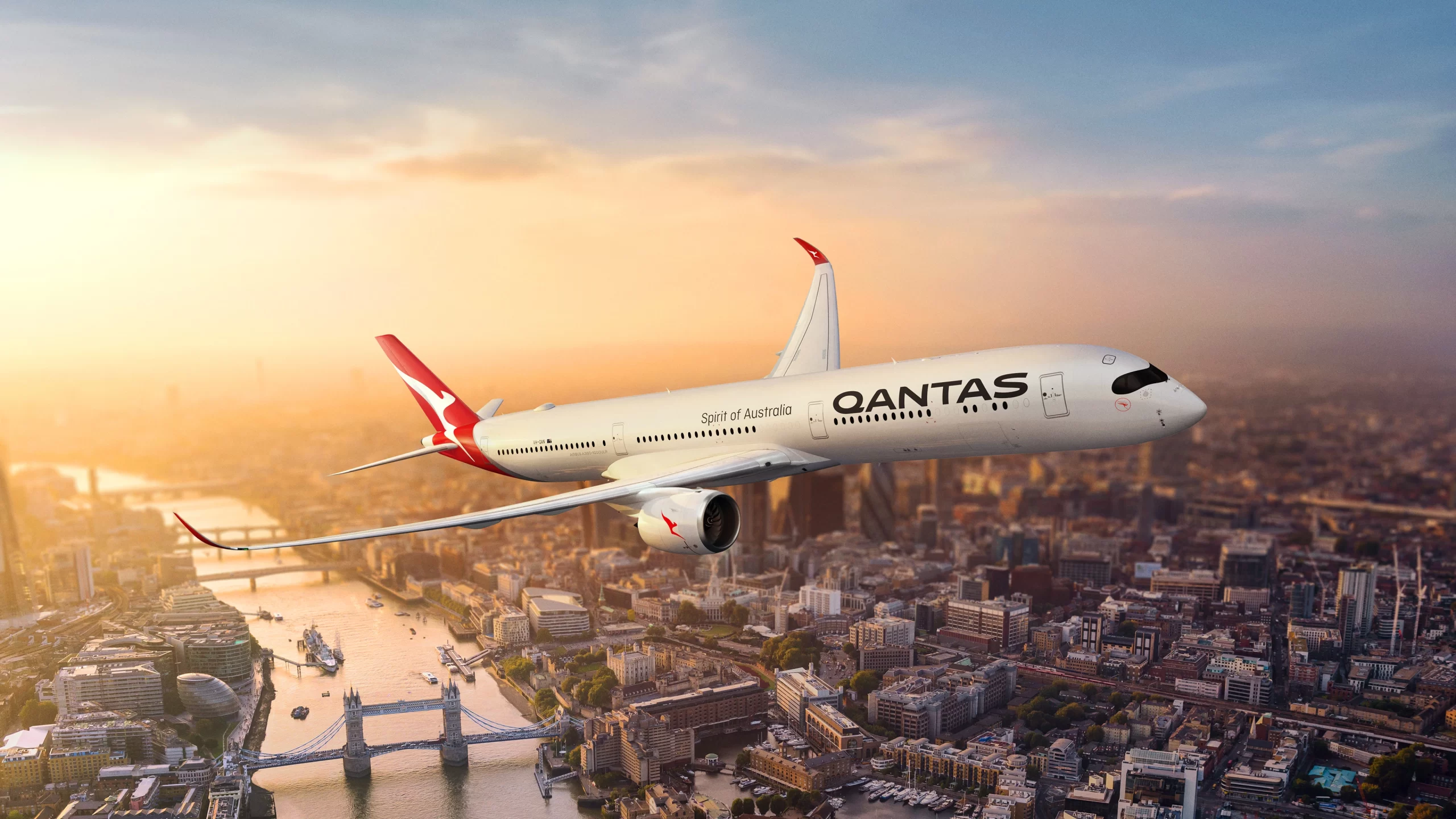
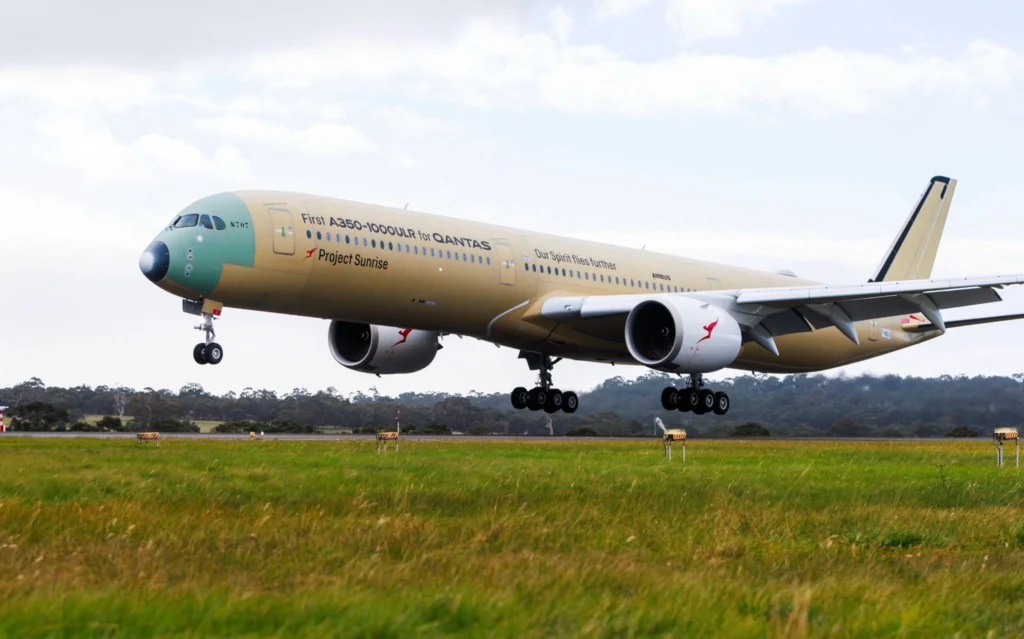
Airbus is getting ready to fly its new A350-1000ULR on an ultra-long test flight to Australia in about a week’s time. Airbus has not confirmed the exact route, but the aircraft will operate to Australia, according to the airframer. The flight forms part of the certification campaign for Qantas Airways (QF), the Australian carrier that ordered the aircraft for its Project Sunrise plan.
According to Flight Global’s reporting, Airbus indicates the flight will take place in the latter part of next week. The mission matters because a single test flight of around 22 hours will account for roughly a quarter of the 75-80 flight hours required for certification. The programme supports Qantas’s goal of flying nonstop from Sydney to London, a route the airline plans to launch in October 2027.
Test Flight Adds a Quarter of Certification Hours in One Sortie
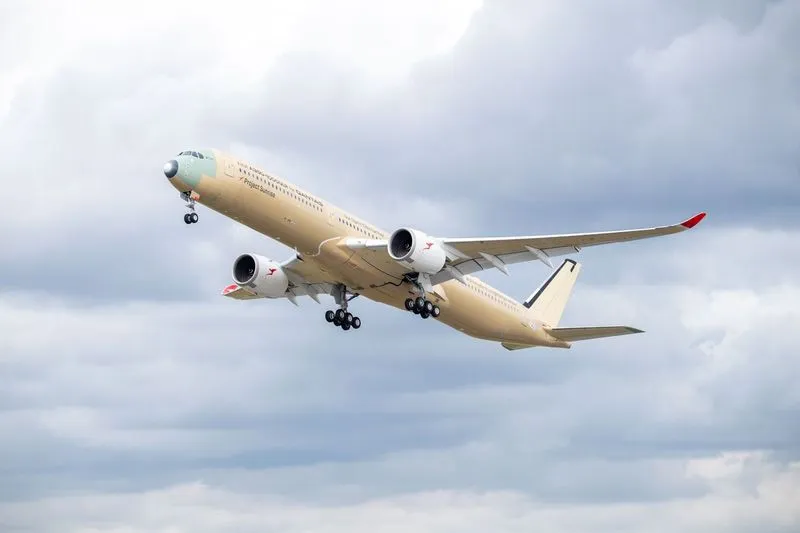
Flight testing of the first A350-1000ULR, registered MSN707, began on 2 June. That maiden sortie lasted far less than the upcoming test. The aircraft flew for 3 hours and 43 minutes from Toulouse, cruising at 41,000 feet over the Bay of Biscay, with six crew on board.
The scale of the upcoming flight stands out against that short debut. European aviation authorities require Airbus to certify that the aircraft can exceed the longest scheduled flight time, with a safety margin built in for delays near the end of the journey. The critical test flight could run past 23 hours, close to a full day in the air.
Qantas has stayed quiet on specifics. The airline has not disclosed further details beyond confirming that the aircraft is being flown to Australia as part of the test programme.
Project Sunrise Needs This Data Before Sydney-London Nonstop Launch
The test flight exists because of one goal: linking eastern Australia to Europe and North America without a stop. Qantas has ordered 12 of the modified A350-1000ULRs for its Project Sunrise initiative, aimed at offering services from the east coast to cities previously unreachable without a stopover.
The aircraft’s maximum weight grew during development to support that range target. Airbus initially pitched Qantas a modified A350-1000 with a 319-tonne maximum take-off weight, before adjusting the design to reach 322 tonnes, and the final Project Sunrise variant benefits from a further increase to 324 tonnes.
Qantas chief financial officer Rob Marcolina has described the scale of the undertaking in blunt terms. He calls the A350-1000ULR programme an “absolute moonshot” for the airline and for Airbus. Sydney was chosen to launch the service, though Marcolina has said Melbourne remains a strong candidate for future ultra-long-range routes.
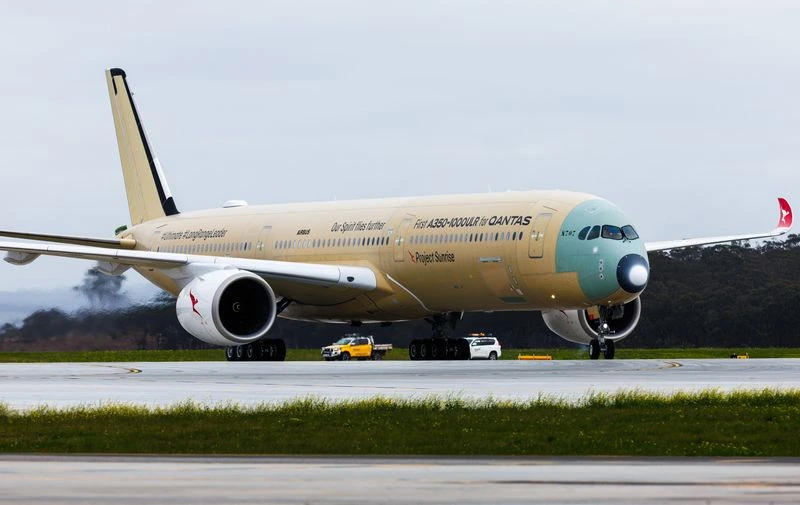
Aircraft Carries a New Fuel Tank and Cabin Cooling System
The A350-1000ULR differs from the standard A350-1000 in several engineered ways. The main change is a new 20,000-litre rear centre fuel tank, which increases operational range by roughly 1,000 nautical miles to a total of about 9,700 nautical miles.
Key features of the variant include:
- An additional rear centre tank built into the aircraft structure, which raises the aircraft’s range by around 1,000 nautical miles
- A new galley air cooling system designed for long-duration flights, featuring lighter and more efficient refrigeration appliances
- A localised refrigeration architecture called the New Generation Air Chiller, which replaces the centralised system on the baseline A350 and cools each galley individually
- Typical seating for 238 passengers across a four-class configuration
- A cabin with six enclosed first-class suites, 52 business suites, and 40 seats in an eight-abreast premium-economy cabin, designed by Caon Design Office
Qantas expects an 85% load factor in the premium cabin on the Sydney-London route, supporting a higher premium mix than the airline’s Boeing 787 or Airbus A380 fleet.
Sensors And Passenger Dummies Track Cabin Performance in Flight
Because MSN707 is a production aircraft rather than a dedicated test airframe, Airbus faced a unique engineering challenge. Engineers needed a non-invasive way to gather flight data without damaging the finished cabin that will later carry paying passengers.
Airbus began planning the flight-test instrumentation in 2023, eventually installing around five tonnes of monitoring equipment, with about 80% of it, including more than a thousand purpose-built sensors, integrated during production. The equipment tracks fuel flow, cabin pressure, temperature, ventilation, and structural behaviour throughout each flight.
Heat-generating dummies play a central role in validating the cabin. These devices generate the same thermal load as real travellers, letting engineers study how heat builds up inside a fully loaded cabin and confirm that temperatures stay within comfort limits. Airbus test flight engineer Laurent Rossignol has spoken about the pressure of testing a future commercial cabin mid-flight. He says flight testing a production aircraft adds “a layer of extra pressure” because engineers are working inside the actual product Qantas will fly. Every switch and manoeuvre, he adds, has to account for both passenger experience and operational reliability.
This kind of cabin trial is not new for Airbus. The company’s A321XLR test aircraft previously flew an 11-hour sortie carrying 162 passenger dummies to simulate a realistic airline load, a similar approach now scaled up for the A350-1000ULR.

What Happens After the Test Flight Lands
Once the certification campaign finishes, MSN707 will be reconfigured with a Qantas passenger cabin before eventual delivery to the airline. That delivery will not be the first Project Sunrise aircraft to reach Qantas, however. A second A350-1000ULR is scheduled for handover to the carrier in April 2027, later than the airline’s original end-2026 target, and that aircraft is already at an advanced stage of final assembly.
The full flight-test campaign for the A350-1000ULR is expected to run for around two months following the first flight in June, after which the aircraft will be prepared for commercial service. Once certification closes out, Qantas can move toward its planned October 2027 launch of nonstop Sydney-London flights, service the airline has long framed as ending decades of routine stopovers on the route between Australia and Europe.