
In November 2025, The Boeing Company delivered 44 commercial jets — a 17% drop from October’s 53 — placing it significantly behind Airbus (the aircraft manufacturer which produced a helicopter that could land at the top of Everest), which delivered 72 aircraft in the same month, according to a report published by Reuters.
The shortfall reflects persistent production and supply-chain headwinds at Boeing, even as the company booked 164 new orders (net 126 after 38 cancellations) in November — underscoring the contrast between strong demand and sluggish delivery execution.

.jpg)
Boeing — Company at a Glance
| Attribute | Details |
|---|---|
| Company name | The Boeing Company |
| Headquarters | Arlington, Virginia, USA (Crystal City, Arlington) |
| Founded / Origin | 15 July 1916; originally founded as “Pacific Aero Products Co.” by William E. Boeing in Seattle. |
| Business segments | Commercial Airplanes; Defense, Space & Security; Global Services (plus other defense/ space/ support segments) |
| Main commercial aircraft families in production | 737, 767, 777, 787 — representing narrow-body and wide-body jets for passenger and cargo use
[Note that all of the names of passenger aircraft of Boeing start and end with number 7. ] |
| Number of global employees (2024) | ≈ 172,000 |
| Global reach | Customers in ~150 countries; operations and supplier networks in more than 65 countries worldwide |
| Status in global aerospace industry | Among the world’s largest aerospace & defence manufacturers; largest U.S. exporter by dollar value; leading commercial jet maker alongside its main rival Airbus. |


November 2025: Delivery Breakdown for Boeing
Boeing’s November deliveries consisted of multiple aircraft types, reflecting a mixed narrow-body and wide-body output:
-
32 units of 737 MAX delivered.
-
6 units of 787 Dreamliners, including two 787-10s
-
2 units of 777 freighters
-
4 units of 767 aircraft.
This output underscores that while narrow-body production (737 MAX) remains the backbone, Boeing continues to deliver a blend of wide-body and freighter jets — though not at a pace sufficient to challenge Airbus in November.

_(cropped).jpg)
Let’s breakdown the numbers by carriers:
Boeing November Deliveries — Updated Table
| Customer Name | Country | Region | Model Series | Engine | Quantity |
|---|---|---|---|---|---|
| AerCap | Ireland | Europe | 737 MAX | CF | 2 |
| Aerotranscargo (EZE) | United Arab Emirates | Middle East | 777F | GE | 1 |
| Air Lease Corporation | USA | North America | 737 MAX | CF | 1 |
| Alaska Airlines (via ALC) | USA | North America | 787-10 | GE | 1 |
| American Airlines | USA | North America | 737 MAX | CF | 2 |
| American Airlines | USA | North America | 737 MAX | CF | 3 |
| American Airlines | USA | North America | 787-9 | GE | 1 |
| BOC Aviation Limited | Singapore | Southeast Asia | 737 MAX | CF | 2 |
| CDB Leasing | Hong Kong | East Asia | 737 MAX | CF | 2 |
| flydubai | United Arab Emirates | Middle East | 737 MAX | CF | 1 |
| China Southern Airlines | China | East Asia | 737 MAX | CF | 1 |
| Copa Airlines | Panama | Central America & Mexico | 737 MAX | CF | 1 |
| Dubai Aerospace Enterprise | United Arab Emirates | Middle East | 737 MAX | CF | 2 |
| FedEx Express | USA | North America | 767-300F | GE | 1 |
| GOL Linhas Aéreas | Brazil | South America | 737 MAX | CF | 1 |
| Greater Bay Airlines | Hong Kong | East Asia | 737 MAX | CF | 1 |
| Lufthansa | Germany | Europe | 787-9 | KR | 1 |
| Minsheng Financial Leasing | China | East Asia | 737 MAX | CF | 2 |
| Oman Air (SAOC) | Oman | Middle East | 787-9 | GE | 1 |
| Ryanair | Ireland | Europe | 737 MAX | CF | 1 |
| Southwest Airlines | USA | North America | 737 MAX | CF | 5 |
| TAAG Angola Airlines | Angola | Africa | 787-10 | GE | 2 |
| Turkish Airlines | Türkiye | Europe | 777-8 | GE | 1 |
| United Airlines | USA | North America | 737 MAX | CF | 2 |
| UPS | USA | North America | 767-300F | GE | 1 |
| USAF Tanker Program | USA | North America | 767-20 | PW | 2 |
| VietJet Air | Vietnam | Southeast Asia | 737 MAX | CF | 2 |
| Xiamen Airlines | China | East Asia | 737 MAX | CF | 1 |
Data: Boeing

_-_China_Eastern_Airlines_panorama_LGW_120225.jpg)
China and US Lawmakers Hint Multi-Billion 500 Boeing Aircraft Agreement
What does Boeing’s November slump Means
According to Benzinga, deliveries of aircraft (in aviation) serve as the primary trigger for final payments and revenue recognition, implying that a downturn can compress near-term cash flow and delay revenue realization.
Boeing’s lower deliveries than Airbus in the month of November can also rattle Investor confidence, especially given the fact that only a week ago, Boeing’s CFO said a week ago that the company would be increasing the production of the 737s and 787s in 2026 that led to Boeing’s share increasing by 5%.
According to Business Times Online, there are various production hurdles that Boeing has encountered, not least the following:
| Category | Details |
|---|---|
| 737 MAX Production Rate | 32 aircraft produced in November 2025 |
| Approved FAA Production Target | 42 aircraft per month |
| Gap vs. Target | 10 aircraft short of FAA-approved rate |
| Reason for Slower Production | Boeing still evaluating manufacturing consistency before increasing output |
| Quality Control Issues | Ongoing need to ensure manufacturing stability and supply chain reliability |
| Impact on Deliveries | Slower production contributed to only 44 aircraft delivered in November vs. 53 in October |
| Supply Chain Challenges | Issues tied to Spirit AeroSystems (fuselages, structures), prompting Boeing’s acquisition |
| 777X Program Delays | Further delays pushing first delivery to 2027 |
| Financial Impact of 777X Delays | Estimated $5 billion charge impacting future free cash flow |
| Short-Term Market Impact | Investor concern due to slower deliveries and production issues, contributing to a 2.5%–3% stock drop |
The same publication also noted that Boeing secured 164 new orders, which was more than double Airbus’s 75 orders for the month:
“This included a significant commitment from Emirates for 65 of the advanced 777X jets. Boeing’s year-to-date orders reached an impressive 1,000, and its backlog expanded to a staggering 6,616 unfilled planes, underscoring robust long-term demand for its products. Conversely, November also saw 38 order cancellations, notably from Etihad Airways, which rescinded orders for 15 777X and 7 787 Dreamliners, highlighting the dynamic nature of airline fleet planning.”
How Airbus fared in November 2025
By contrast, Airbus delivered 72 commercial aircraft in November, comfortably outpacing Boeing. However, 72 commercial jets delivered, means that the numbers were down 14% from November 2024 (12 fewer aircraft).
Airbus has delivered 657 aircraft delivered over 11 months, up from 643 in the same period of 2024. Airbus aims for 790 deliveries in 2025, requiring 147 jets in December.
One of the most notable things about Airbus was the A320 family impacted by fuselage panel quality issues, affecting overall delivery targets. 10 units of the Airbus A220-300 were delivered in November, up from 4 in October. Here are a few other pertinent numbers highlighted by AirDataNews:
-
A320neo Family: 54 deliveries, down 10 from October and 12 from November 2024.
-
A330/A350 Deliveries: Both A330neo and A350 series delivered 4 aircraft each; a rare A330-800 went to a private customer (only 12 firm orders exist).
-
Year-to-Date Growth Leaders:
-
A319neo: +117% (13 vs 6)
-
A220-300: +26% (72 vs 53)
-
A350-1000: +22% (11 vs 9)
-
-
Year-to-Date Declines:
-
A220-100: -50%
-
A320neo: -12% (175 vs 198)
-
A350-900: -3% (one aircraft fewer)
-

.jpg)
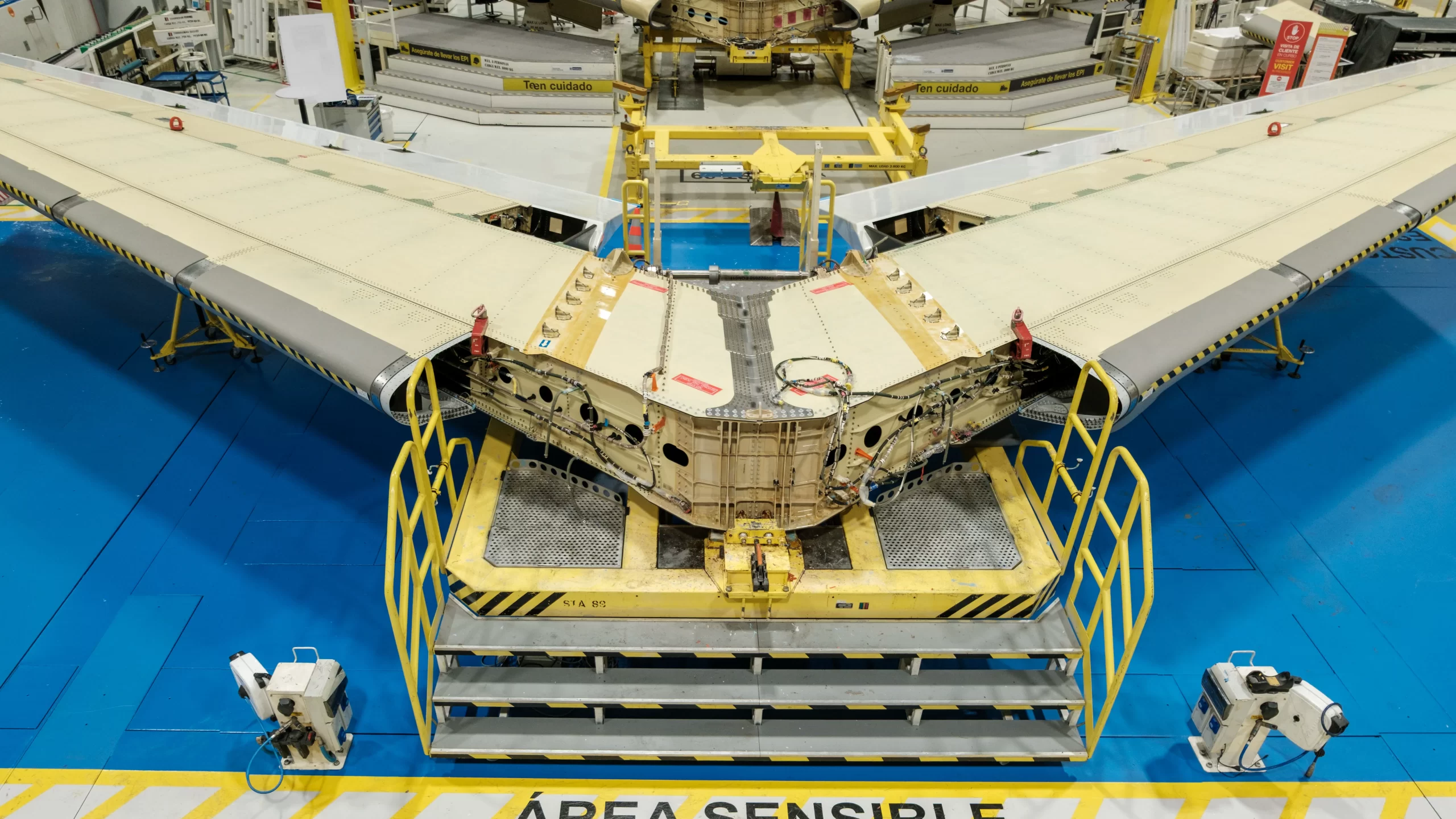
Airbus A350F Approaches Final Assembly: Inside the Specs, Orders & Market Impact
Let’s breakdown Airbus’s deliveries by the carriers:
| Customer | Region | Date (Nov 2025) | Units Delivered |
|---|---|---|---|
| Air France | E | 4-Nov | 1 |
| Breeze Airways | N | 4-Nov | 1 |
| Wizz Air (JetSmart Chile) | E | 4-Nov | 1 |
| Korean Air | A | 5-Nov | 1 |
| Air China | A | 6-Nov | 1 |
| Cebu Pacific | A | 6-Nov | 1 |
| IndiGo | A | 6-Nov | 1 |
| AerCap (Qatar Airways) | E | 7-Nov | 1 |
| Air France | E | 7-Nov | 1 |
| Wizz Air (JetSmart Chile) | E | 7-Nov | 1 |
| China Eastern Airlines | A | 10-Nov | 1 |
| Delta Air Lines | N | 10-Nov | 1 |
| Air Algérie | F | 12-Nov | 1 |
| Air China | A | 12-Nov | 1 |
| China Eastern Airlines | A | 12-Nov | 1 |
| Frontier Airlines | N | 12-Nov | 1 |
| JetSmart (Chile) | L | 12-Nov | 1 |
| NAS Aviation Services (Etihad Airways) | N | 12-Nov | 1 |
| Qatar Airways | M | 12-Nov | 1 |
| Air Canada | N | 13-Nov | 1 |
| Delta Air Lines | N | 13-Nov | 1 |
| Frontier Airlines | N | 13-Nov | 1 |
| United Airlines | N | 13-Nov | 2 |
| Aviation Capital Group (ITA Airways) | N | 14-Nov | 1 |
| Avolon (Malaysia Airlines) | E | 14-Nov | 1 |
| BOCOM Leasing (China Southern Airlines) | A | 14-Nov | 1 |
| Iberia | E | 14-Nov | 1 |
| Qantas (National Jet Systems) | A | 14-Nov | 1 |
| VietJet Air | A | 14-Nov | 1 |
| Accipiter (LATAM Airlines Group) | E | 17-Nov | 1 |
| Shenzhen Airlines | A | 17-Nov | 1 |
| Air China | A | 18-Nov | 1 |
| AirAsia | A | 18-Nov | 1 |
| CALC (United Airlines) | A | 18-Nov | 1 |
| Cathay Pacific Aircraft Services (HK Express) | A | 18-Nov | 1 |
| JetBlue Airways | N | 18-Nov | 1 |
| AerCap (Etihad Airways) | E | 19-Nov | 1 |
| Avianca | L | 19-Nov | 1 |
| Iberia | E | 19-Nov | 1 |
| ICBC Leasing (Jet2.com) | A | 19-Nov | 1 |
| Turkish Airlines | E | 19-Nov | 1 |
| BOCOM Leasing (Turkish Airlines) | A | 20-Nov | 1 |
| Wizz Air | E | 20-Nov | 1 |
| Air Arabia | M | 21-Nov | 1 |
| CALC (China Southern Airlines) | A | 21-Nov | 1 |
| IndiGo | A | 21-Nov | 1 |
| NAS Aviation Services (Qatar Airways) | N | 21-Nov | 1 |
| United Airlines | N | 21-Nov | 1 |
| AerCap (Etihad Airways) | E | 24-Nov | 1 |
| AerCap (Qatar Airways) | E | 24-Nov | 1 |
| Air France | E | 24-Nov | 1 |
| Avolon (Hainan Airlines) | E | 24-Nov | 1 |
| BOCOM Leasing (China Southern Airlines) | A | 24-Nov | 1 |
| Lufthansa (City Airlines) | E | 24-Nov | 1 |
| SMBC Aviation Capital (Turkish Airlines) | E | 24-Nov | 1 |
| All Nippon Airways (Peach) | A | 25-Nov | 1 |
| China Southern Airlines | A | 25-Nov | 1 |
| Frontier Airlines | N | 25-Nov | 1 |
| IndiGo | A | 25-Nov | 1 |
| United Airlines | N | 25-Nov | 1 |
| Volaris | L | 25-Nov | 1 |
| Wizz Air | E | 25-Nov | 1 |
| ITA Airways | E | 26-Nov | 1 |
| Shenzhen Airlines | A | 26-Nov | 1 |
| KLM Royal Dutch Airlines | E | 27-Nov | 1 |
| Accipiter (LATAM Airlines Group) | E | 28-Nov | 1 |
| Breeze Airways | N | 28-Nov | 1 |
| Private Customer | — | 28-Nov | 1 |
| Qatar Airways | M | 29-Nov | 1 |
| Xiamen Airlines | A | 29-Nov | 1 |
| Macquarie AirFinance Holdings (airBaltic) | E | 30-Nov | 1 |
Data: Airbus

Broader Implications for the Commercial Aviation Industry
The contrast between Boeing’s delivery slump and Airbus’s panel-quality issues shows that even leading OEMs remain subject to disruptions from supplier performance and complex assembly-line logistics.
Only yesterday, IATA highlighted the supply chain constraints that hinder airlines’ ability “to meet consumer demand for air transport“:
“While some improvements are expected in 2026, the backlog in aircraft orders is expected to continue to grow. High load factors and yield stability are partially attributable to supply chain issues. However, the growth-constraining impact of supply chain challenges remains a drag on airline profitability. Even as aircraft deliveries are projected to increase significantly in 2026, the pace of new orders is outstripping production, causing the backlog to reach new highs and signaling that supply constraints, and their financial impact, will persist well beyond the near term.”
As a lot of airlines are now evaluating fleet renewals (not least for aviation sustainability or meeting the objectives of net zero carbon emission by 2050) or expansion, disparities in delivery reliability may influence procurement decisions, tilting some demand toward the OEM showing steadier output.

.jpg)
What to Expect in December 2025 and beyond?
Boeing has pointed to structural initiatives aimed at stabilizing output: some analysts note the company’s recently completed acquisition of a key fuselage/wing supplier (Spirit AeroSystems for $4.7 billion, or $8.3 billion including debt assumption) as a long-term strategic move to regain tighter control over manufacturing and supply-chain reliability, reported WRAL News:
“……enhancing production efficiency, and improving quality control, especially for the 737 MAX. While this acquisition is widely viewed by analysts as a substantial long-term positive for Boeing’s operational reliability and margins, its benefits are expected to materialize over the medium to long term, offering little immediate relief to the stock on delivery news”.
Airbus publicly acknowledged supply-chain difficulties, specifically the fuselage-panel issue for its A320-family jets, as the reason for revising down its 2025 delivery target from 820 to 790.
Addison Schonland, partner at US-based AirInsight, was quoted in The National and suggested that while Airbus currently holds the delivery lead, the upcoming December push will test the resilience of both manufacturers, as December has historically been the busiest month for handovers in the commercial aviation industry:
Historical data from AirInsight over the past five years shows the date of the highest delivery for Airbus, Boeing, Embraer and Comac was in December, or close to it. The December delivery surge is a structural pattern, not a one-off phenomenon…Plane makers’ stock prices “often react to the final delivery tally, and this helps explain why December pressure is extraordinary – it’s not just about hitting targets, it’s about earnings optics”.
As 2025 draws to a close, all eyes will be on December’s delivery numbers — traditionally the busiest month for aircraft handovers. For Boeing, a strong December performance could help narrow the gap and restore some investor and market confidence. But doing so will require overcoming persistent production and supply-chain constraints.