A tragic in-flight medical emergency claimed the life of a one-year-old infant aboard an Air India Express (IX) service en route from Jaipur to Bengaluru on Tuesday evening, reported The Statesman. The aircraft, operating as Flight IX1240, departed Jaipur at approximately 17:30 IST for a scheduled 20:10 IST arrival in Bengaluru. Mid-flight, the infant, later identified as Mohammad Abraar, developed severe respiratory distress, prompting the captain to declare a medical emergency and divert to Devi Ahilya Bai Holkar International Airport (DABH), Indore, at about 19:50 IST.
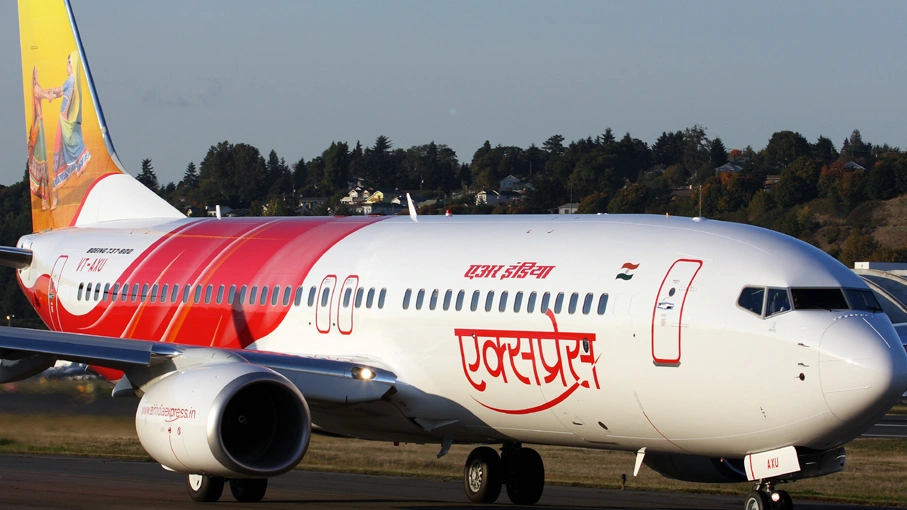
Despite sustained resuscitative efforts by both an onboard medical volunteer and emergency teams on the ground, the child was pronounced dead, adding to the global count of the total in-flight fatalities till date.
Air India Express Overview
| Attribute | Details |
|---|---|
| Airline | Air India Express |
| IATA Code | IX |
| Founded | 2004 (commenced operations April 2005) |
| Headquarters | Mumbai, India |
| Fleet Size | ~112 aircraft (mixed Airbus A320 and Boeing 737 types) |
| Destinations | 62 (44 domestic, 18 international) |
| Parent Company | Air India/Tata Group |
| Primary Hubs | Mumbai, Delhi, Bengaluru |
VN36: Vietnam Airlines’ 787-9 Diverts to Kolkata After Medical Emergency
Flight IX1240: Aircraft Details & Operation
Flight IX1240 was scheduled to connect Jaipur International Airport (JAI) and Kempegowda International Airport (BLR), Bengaluru. According to data from Flight Aware, the aircraft deployed as IX1240 is a Boeing 737MAX8.
According to data from planespooters.net, Air India Express has a total of 51 aircraft of this type and these average 6.1 years. IX 1240, for the past week has been operated between Bengaluru, Kochin, and Jaipur, and its emergency landing in Indore was an aberration.

Let’s look at the Flight IX 1240 since the turn of the new year:
| Date | Departure (Time & Airport) | Arrival (Time & Airport) | Aircraft | Duration |
|---|---|---|---|---|
| Tuesday, 06-Jan-2026 | 20:55 IST — Bengaluru International Airport (BLR) | 22:09 IST — Cochin International Airport (COK) | B38M | 1h 14m |
| Tuesday, 06-Jan-2026 | 18:45 IST — Jaipur (Sanganer) Airport (JAI) | 19:15 IST — Devi Ahilyabai Holkar International Airport (IDR) | B38M | 0h 30m |
| Monday, 05-Jan-2026 | 20:55 IST — Bengaluru International Airport (BLR) | 22:17 IST — Cochin International Airport (COK) | B38M | 1h 22m |
| Monday, 05-Jan-2026 | 18:01 IST — Jaipur (Sanganer) Airport (JAI) | 20:21 IST — Bengaluru International Airport (BLR) | B38M | 2h 20m |
| Sunday, 04-Jan-2026 | 20:55 IST — Bengaluru International Airport (BLR) | 22:42 IST — Cochin International Airport (COK) | B38M | 1h 47m |
| Sunday, 04-Jan-2026 | 17:50 IST — Jaipur (Sanganer) Airport (JAI) | 20:14 IST — Bengaluru International Airport (BLR) | B38M | 2h 24m |
| Saturday, 03-Jan-2026 | 20:55 IST — Bengaluru International Airport (BLR) | 22:13 IST — Cochin International Airport (COK) | B38M | 1h 18m |
| Friday, 02-Jan-2026 | 20:55 IST — Bengaluru International Airport (BLR) | 22:16 IST — Cochin International Airport (COK) | B38M | 1h 21m |
| Friday, 02-Jan-2026 | 17:48 IST — Jaipur (Sanganer) Airport (JAI) | 20:04 IST — Bengaluru International Airport (BLR) | B38M | 2h 16m |
| Thursday, 01-Jan-2026 | 20:55 IST — Bengaluru International Airport (BLR) | 22:28 IST — Cochin International Airport (COK) | B38M | 1h 33m |
| Thursday, 01-Jan-2026 | 17:46 IST — Jaipur (Sanganer) Airport (JAI) | 20:14 IST — Bengaluru International Airport (BLR) | B38M | 2h 28m |
Chronology of the IX1240 emergency
-
17:30 IST – Flight IX1240 departs Jaipur for Bengaluru.
-
~19:20 IST – Crew and cockpit become aware of the infant’s severe breathing difficulties. Medical condition reportedly worsened after boarding and may have involved aspiration of liquid.
-
~19:20–19:50 IST – Pilot requests permission for diversion to Indore from Air Traffic Control. Emergency declared; onboard CPR administered by a doctor volunteer.
-
19:50 IST – Aircraft safely lands at Devi Ahilya Bai Holkar International Airport (DABH).
-
Post-landing – Emergency medical crews continue resuscitation. The child is transported by ambulance but is declared dead before hospital admission.
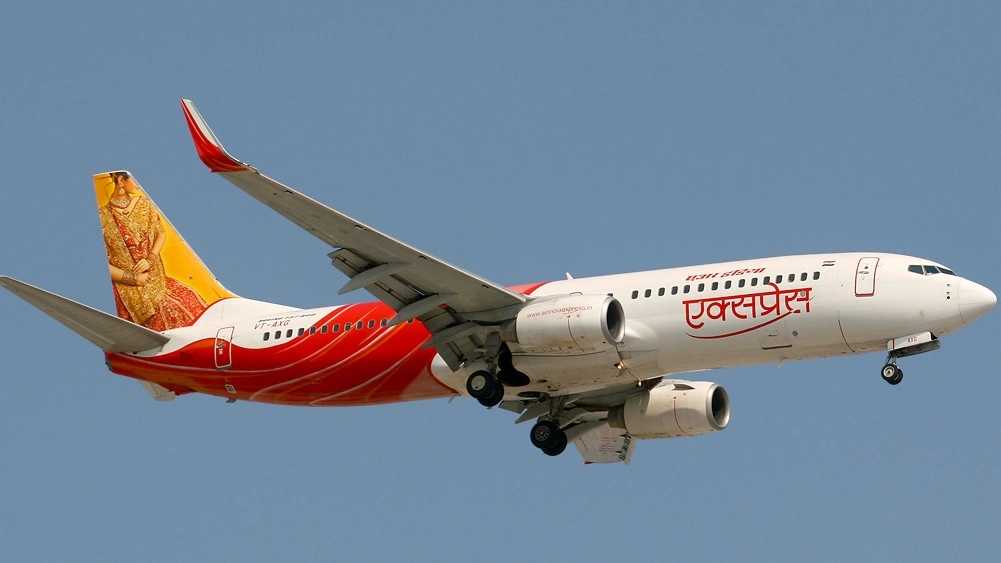
Aviation safety perspectives on passenger health incidents and Recent On-bard Deaths like IX1240
Publicly documented in-flight deaths over the last ten years reveal a narrow and data-consistent pattern shaped more by medical inevitability than by operational failure. Reporting by Reuters, national newspapers, and civil authorities shows that most fatalities involve acute medical collapse—predominantly cardiac arrest or respiratory failure—occurring at cruising altitude, where hypoxia, delayed advanced care, and diversion distance materially affect survivability rather than crew response quality
Empirically observed characteristics across reported cases reveal that fatal outcomes have been attributed to non-traumatic medical events, with cardiac arrest and hypoxia repeatedly cited in official and hospital confirmations. Elderly passengers and infants disproportionately represented in fatal cases reported by Indian and international media.
According to a research published in the national library of Medicine, “One in every 10 000 to 40 000 passengers on commercial aircraft will have a medical incident while on board.” The same publication cites the following statistics:
-
Common in-flight medical issues: Gastrointestinal disorders (nausea, vomiting, diarrhea), circulatory collapse, hypertension, stroke, and headaches, including migraines.
-
Lufthansa registry (2010–2011) findings: Cardiopulmonary resuscitation required in an average of 8 cases per year; fatalities averaged 12 per year; childbirth occurred approximately once per year; psychiatric incidents reported 81 times annually.
-
Incident probability estimation: Assuming one medical event per 10,000 passengers and an average of 400 passengers per flight, there is a 95% chance of at least one medical incident over the course of 24 intercontinental flights.
The following table gives us a hint of the various in-flight deaths in the past decade:
| Year | Airline | Flight / Route | Passenger/Crew profile | Outcome |
|---|---|---|---|---|
| 2024 | Singapore Airlines | London–Singapore (SQ321) | Adult passenger | Died of suspected heart attack after severe turbulence; flight diverted to Bangkok |
| 2025 | Saudia Airlines | Jeddah–London (SV119) | Cabin manager (crew) | Died mid‑flight due to sudden medical emergency; flight diverted to Cairo |
| 2025 | Turkish Airlines | Istanbul–San Francisco (TK79) | 83‑year‑old male passenger | Died mid‑flight from medical emergency; flight diverted to Chicago O’Hare |
| 2025 | KLM / EasyJet (two linked cases) | Netherlands–Los Angeles & Tenerife–Liverpool | Adult female passengers | Two cases where passengers died and flights diverted/landed for medical response (Yellowknife, Santiago) People.com |
| 2026 | Air India Express | Jaipur–Bengaluru (IX1240) | One‑year‑old infant | Infant died after in‑flight medical emergency and diversion to Indore Airport (DABH) |
One of the most terrifying in-flight deaths (if we could classify it that way) was the death of flight attendant CB Lansing who was blown out of the aircraft (as the roof tore off) from Aloha Airlines Flight 243.

Broader Implications & Regulatory Considerations from Death of an Infant on IX1240
This tragic outcome underscores continuing discussions within the aviation sector on:
-
Fitness-to-fly policies—ensuring passengers with known medical vulnerabilities receive appropriate assessments before travel, with ITIJ quoting the argument of Dr Bettina Vadera, Chief Medical Adviser at AMREF Flying Doctors, that” fitness to fly becomes a highly individualised risk-benefit assessment, no longer just a clinical judgement but a ‘complex and multidisciplinary collaboration’ between the patient or their next of kin, assistance and insurance companies, and receiving facilities“.
-
Infant safety measures—raising debate about the intrinsic risks of lap-held infants during in-flight incidents, including turbulence or sudden physiological changes.
The death of Mohammad Abraar aboard Flight IX1240 represents a deeply saddening event for the family and the aviation community.
While Air India Express and emergency responders acted promptly within established procedures, the incident highlights the limitations of in-flight medical intervention and the critical importance of both pre-flight health disclosures and robust medical protocols.