Michael Rousseau’s exit from Air Canada (AC) wasn’t the quiet, multi-year handover the airline originally planned. It was pulled forward by roughly a year after a bilingual-communications controversy following the fatal March 2026 LaGuardia crash — and it’s happening against the backdrop of one of his best-paid years on record. Here’s what the numbers actually show, sourced directly from regulatory filings and financial press coverage, plus how his pay stacks up against CEOs at Delta, United, Air New Zealand, and Cathay Pacific.
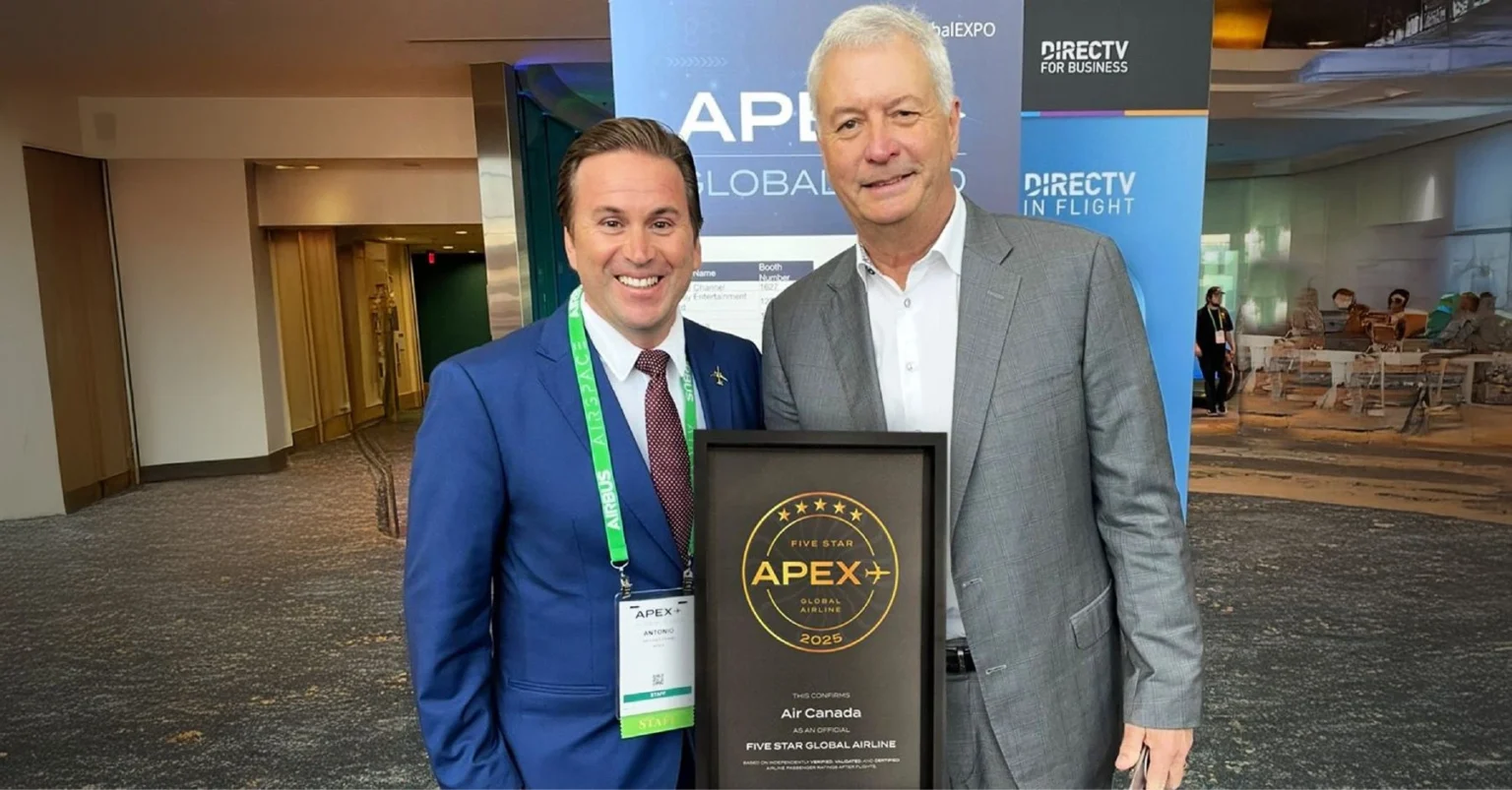
Air Canada CEO Michael Rousseau Estimated Salary
Air Canada disclosed Rousseau’s 2025 total compensation at CA$13.1 million (roughly US$9.6 million) in a regulatory filing, as reported by The Globe and Mail — up from CA$12.4 million in 2024. Simply Wall St’s breakdown of Air Canada’s filings shows salary made up only about 10.7% of that figure, with the remaining 89.3% coming from bonuses, stock, and other incentive awards.
Who Is Michael Rousseau, and Why Is He Leaving Now?
Rousseau took the CEO chair in February 2021 after climbing through Air Canada’s finance ranks — he joined the airline in 2007, became CFO, then Deputy CEO, before being named heir apparent to former CEO Calin Rovinescu.
The board had reportedly been planning for Rousseau, now 68, to announce his departure in 2027. That timeline collapsed after he responded to the fatal AC8646 crash at New York’s LaGuardia Airport with a video statement delivered almost entirely in English. The Globe and Mail’s account of the fallout notes that Quebec’s legislature took the unusual step of formally demanding his resignation, and that Prime Minister Mark Carney publicly criticized the response as lacking compassion. Air Canada announced days later that Rousseau would retire by the end of Q3 2026, staying on through the transition.
The Actual Pay Numbers — Not Estimates
Unlike some of Rousseau’s international peers (more on that below), Air Canada is a publicly traded company subject to Canadian securities disclosure rules, so his pay isn’t a guess — it’s filed.
| Year | Total Compensation (CA$) | Approx. US$ |
|---|---|---|
| 2021 | ~$1.0 million | ~$0.75 million |
| 2022 | $12.38 million | ~$9.1 million |
| 2024 | $12.4 million | ~$9.1 million |
| 2025 | $13.1 million | ~$9.6 million |
The 2022 jump is worth noting on its own: Rousseau’s pay had been capped under COVID-era federal wage restrictions tied to Air Canada’s pandemic bailout. Once those restrictions lifted, his compensation rose roughly twelvefold in a single year, which is what triggered much of the scrutiny that has followed him since.
Who Might Replace Him?
No successor has been formally confirmed as of this writing. Simply Wall St’s leadership tracking, citing Bloomberg reporting, identifies SAS (Scandinavian Airlines) chief executive Anko van der Werff — who led SAS through a bankruptcy restructuring — as the leading external candidate. Air Canada has engaged executive search firms Egon Zehnder and Korn Ferry and is reportedly weighing both internal and external candidates, with the company declining to comment on names. Carney has said publicly that bilingual fluency is now an “essential” requirement for the next CEO.
How Rousseau’s Pay Compares to Other Airline CEOs
Executive pay in aviation varies enormously by market, disclosure regime, and how heavily a carrier leans on equity awards. Here’s the field, ranked by disclosed or estimated total compensation:
| Airline | CEO | 2025/2026 Total Comp | Disclosure Basis |
|---|---|---|---|
| United Airlines | Scott Kirby | US$32.3 million | Reuters via TradingView |
| Delta Air Lines | Ed Bastian | US$19.2 million | Delta 2026 proxy statement, SEC |
| Cathay Pacific | Ronald Lam | HK$17–22 million (~US$2.2–2.8 million) | Estiamted Cathay Pacific CEO pay breakdown |
| Air Canada | Michael Rousseau | CA$13.1 million (~US$9.6 million) | Actual, filed — The Globe and Mail |
| Air New Zealand | Nikhil Ravishankar | NZ$6.5–7.9 million (~US$3.9–4.8 million) | Estimated — Avio Space, Air New Zealand CEO pay breakdown |
A few things stand out when you line these up side by side.
United and Delta operate in a different pay universe. Even after both CEOs saw their compensation decline year-over-year — Kirby’s fell from US$33.9 million in 2024, and Bastian’s dropped from US$27.1 million — they still out-earn Rousseau by two to three times. That gap reflects the scale of the U.S. majors, heavier reliance on stock-based long-term incentive plans, and a more permissive U.S. disclosure and governance environment around executive pay generally.
Air New Zealand doesn’t publish real-time CEO pay figures. Our analysis of Nikhil Ravishankar’s compensation is built from comparable NZX remuneration frameworks rather than a confirmed filing, since Ravishankar only took over the airline in October 2025 and detailed 2026 figures haven’t been published yet. Notably, his tenure has opened against a first-half FY2026 pre-tax loss of NZ$59 million, driven by engine maintenance issues — a very different financial backdrop than the one Rousseau is exiting on.
Cathay Pacific’s structure looks the most different of the group. Avio Space’s breakdown of Ronald Lam’s pay also relies on estimated ranges rather than a single disclosed number, reflecting Hong Kong’s disclosure norms. What is confirmed is Cathay’s underlying performance: Reuters reported the carrier’s net profit rose 9.5% to HK$10.8 billion in 2026 on a 26.5% jump in passenger numbers — a recovery story that, unlike Air Canada’s, isn’t complicated by a leadership shake-up.
Rousseau’s raise happened at the same time his pay-mix shifted almost entirely to incentives. At 89.3% bonus-and-equity, Air Canada’s compensation structure is now weighted even more heavily toward performance pay than Delta’s, where Bastian’s 2025 filing shows a smaller — though still substantial — proportion tied to stock awards, according to Bullfincher’s summary of Delta’s proxy data.
The Bottom Line
Michael Rousseau leaves Air Canada having been paid CA$13.1 million in his final full disclosed year — a record high for him personally, even as the circumstances of his exit were anything but routine. Against U.S. rivals Kirby and Bastian, his pay looks modest; against Pacific-region peers at Air New Zealand and Cathay Pacific, where compensation is harder to pin down publicly, it’s substantially higher and far better documented. Whoever succeeds him inherits an airline with strong 2025 financials but a governance spotlight that isn’t going away soon.
FAQs
What was Michael Rousseau’s actual 2025 salary at Air Canada?
CA$13.1 million in total compensation (base salary, bonus, and equity awards combined).
Why is Rousseau retiring earlier than expected?
His departure was moved up roughly a year after backlash over an English-only video response to the fatal March 2026 LaGuardia crash.
Is Anko van der Werff confirmed as the next Air Canada CEO?
No. As of this writing he is reported to be the leading external candidate, but Air Canada has not named a successor.
How does Rousseau’s pay compare to Delta’s and United’s CEOs?
Both earn substantially more: United’s Scott Kirby made US$32.3 million in 2025, and Delta’s Ed Bastian made US$19.2 million, compared with Rousseau’s roughly US$9.6 million — though both U.S. figures were down from the prior year.
Is Air New Zealand’s or Cathay Pacific’s CEO pay confirmed the same way Air Canada’s is?
No. Both are estimated ranges built from market comparables rather than a single disclosed figure, since neither airline has published exact real-time 2026 compensation for its CEO at the time of writing.