Air New Zealand (NZ), the carrier is set to launch bunker beds on 17-hour-long flights, introduced remains one of the most strategically important airlines in the South Pacific. The carrier has some of the most iconic aircraft painting in the world, and just like all other carriers, it continues its post-pandemic reset.
In 2026, that responsibility sits with Nikhil Ravishankar—a relatively unconventional airline chief whose compensation reflects both performance expectations and regional benchmarks.
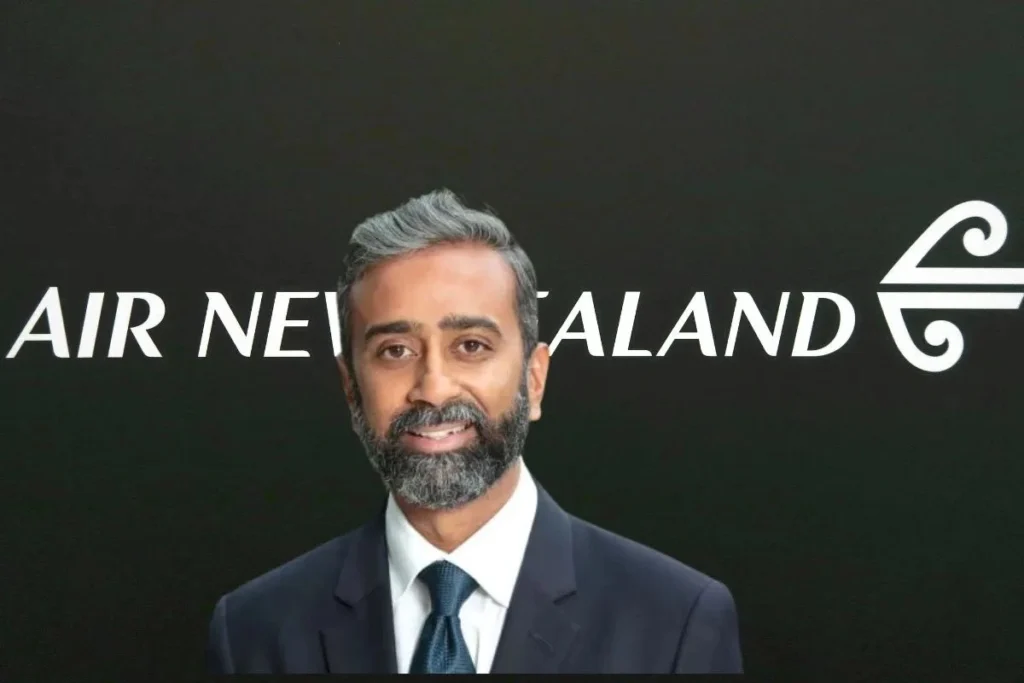
Who is Nikhil Ravishankar?
Ravishankar was appointed CEO of Air New Zealand in July 2025 and formally assumed the role in October, succeeding former chief executive Greg Foran.
Unlike traditional airline leaders, his background is rooted in technology rather than aviation operations. Prior to becoming CEO, he served as the airline’s Chief Digital Officer, where he led major upgrades in customer platforms, loyalty systems, and operational technology.
Before joining Air New Zealand in 2021, Ravishankar held senior roles at Vector and consulting firm Accenture, bringing a strong digital infrastructure and transformation focus into the airline sector.
His appointment was widely seen as a signal of a broader strategic shift—toward data-driven decision-making, digital optimisation, and modernised customer experience. When he was appointed as the CEO, he was “thrilled and humbled” to be given this opportunity to lead Air New Zealand and said that it was a “privilege” to be responsible for NZ’s people, customers, country:
Airlines are complex, and safety underpins every decision we make. I truly believe that New Zealand is one of the most innovative nations in the world and one of the greatest destinations to visit. Our airline is amongst the very best and I get to work with some of the most dedicated people in the country, from our cabin crew, engineers and pilots to our ground teams, corporate and digital teams behind the scenes.

Air New Zealand CEO Salary in 2026
Air New Zealand does not publicly disclose exact real-time compensation figures for its CEO in 2026. However, based on comparable executive pay structures across listed airlines and typical NZX remuneration frameworks, Ravishankar’s compensation is estimated as follows:
- Base salary: NZD 1.6–1.8 million
- Short-term incentives (bonus): NZD 2.0–2.5 million
- Long-term incentives (equity-based): NZD 2.5–3.0 million
- Other benefits: NZD 0.4–0.6 million
Like most airline executives, a substantial portion of this package is performance-linked, tied to profitability, operational reliability, and strategic execution.
This structure is consistent with broader aviation industry norms, where fixed salary represents only a minority of total pay, with incentives heavily weighted toward financial recovery and shareholder returns.

.jpg)
Nikhil is Working at a Time When Air New Zealand Has Losses in 2026
Ravishankar’s compensation must be viewed against a challenging backdrop.
Air New Zealand reported a first-half loss in FY2026, driven by engine maintenance issues, weak demand, and rising costs.
Air New Zealand HY2026 Financial Snapshot
| Metric | Value |
|---|---|
| Half-year result (pre-tax) | NZ$ -59 million |
| Consensus estimate | NZ$ -21 million |
| Previous year (HY2025) | NZ$ +144 million |
| Variance vs estimate | NZ$ -38 million |
| Engine compensation received | NZ$ 55 million |
| Estimated missed earnings | ≥ NZ$ 90 million |
| Share price movement | -2.2% |
| Benchmark index movement | +0.3% |
Data: Reuters
The airline has also launched a strategic review to reshape its network, optimise fleet deployment, and reduce costs as it attempts to restore profitability. This means executive pay is closely tied not just to growth—but to stabilisation and recovery, making performance-linked incentives particularly significant.
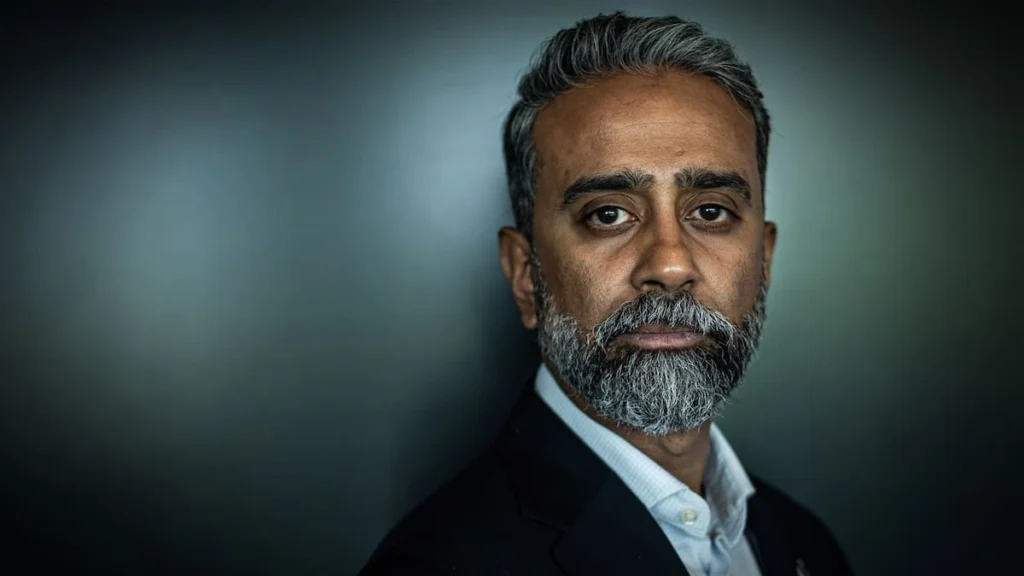
Comparison of Air New Zealand CEO’s Salary with Qantas and Fiji Airways
To understand Ravishankar’s estimated NZD 6.5–7.9 million compensations, it helps to compare it with regional peers:
At Qantas, CEO Vanessa Hudson heads a much larger aviation group spanning both full-service and low-cost segments. Her 2026 compensation is estimated at AUD 11–13 million (US$7.5–8.8 million), underscoring the airline’s scale, global footprint, and diversified operations.
In contrast, Andre Viljoen of Fiji Airways leads a smaller, regionally focused carrier centred on Pacific and Australian routes. His estimated 2026 pay package stands at FJD 2.8–3.2 million (US$1.3–1.5 million).


Air New Zealand’s Strategic Priorities Under Ravishankar
Since taking over, Ravishankar has been tasked with navigating a multi-layered strategy, which is focused on the following things:
- Operational Reset: The airline is working to improve reliability amid ongoing aircraft availability issues and supply chain disruptions.
- Cost Control and Profitability: A renewed focus on cost discipline and network optimization is underway as part of a broader strategic review.
- Digital Transformation: Leveraging his background, Ravishankar is expected to accelerate the airline’s use of data, automation, and customer-facing technology.
- Fleet and Network Strategy: Ongoing adjustments to long-haul routes and fleet utilization remain critical, particularly given engine-related disruptions affecting capacity.

Bottom Line
Nikhil Ravishankar’s estimated NZD 6.5–7.9 million compensation in 2026 reflects more than just executive pay—it reflects the complexity of running a geographically isolated, mid-sized global airline in a volatile market.
While lower than leaders of larger airline groups, his compensation remains firmly aligned with industry norms and is heavily tied to performance.
Ultimately, his tenure—and earnings—will be judged on one key outcome: whether Air New Zealand can successfully transition from post-pandemic recovery to sustained profitability.
FAQs
What is Nikhil Ravishankar’s salary in 2026?
His estimated total compensation is NZD 6.5–7.9 million annually, including bonuses and long-term incentives.
Is his compensation performance-based?
Yes. A large portion depends on financial performance, operational metrics, and strategic targets.
When did he become CEO?
He officially took over as CEO of Air New Zealand in October 2025.