Air New Zealand (NZ) is preparing to introduce lie-flat sleeping pods for economy passengers on ultra-long-haul routes, with the product set to debut on Boeing 787-9 aircraft from Auckland Airport (AKL), Auckland in 2026. The “Skynest” concept will allow passengers to book dedicated sleep periods on flights exceeding 17 hours, including the airline’s Auckland–New York service.
The move aims to address one of long-haul aviation’s most persistent challenges—passenger fatigue—while creating a new ancillary revenue stream without reducing overall seat density in the economy cabin.
Air New Zealand Skynest rollout on Boeing 787-9 aircraft
Air New Zealand first introduced the Skynest concept in 2020, but it has since evolved into a confirmed product tied to its Boeing 787-9 retrofit programme.
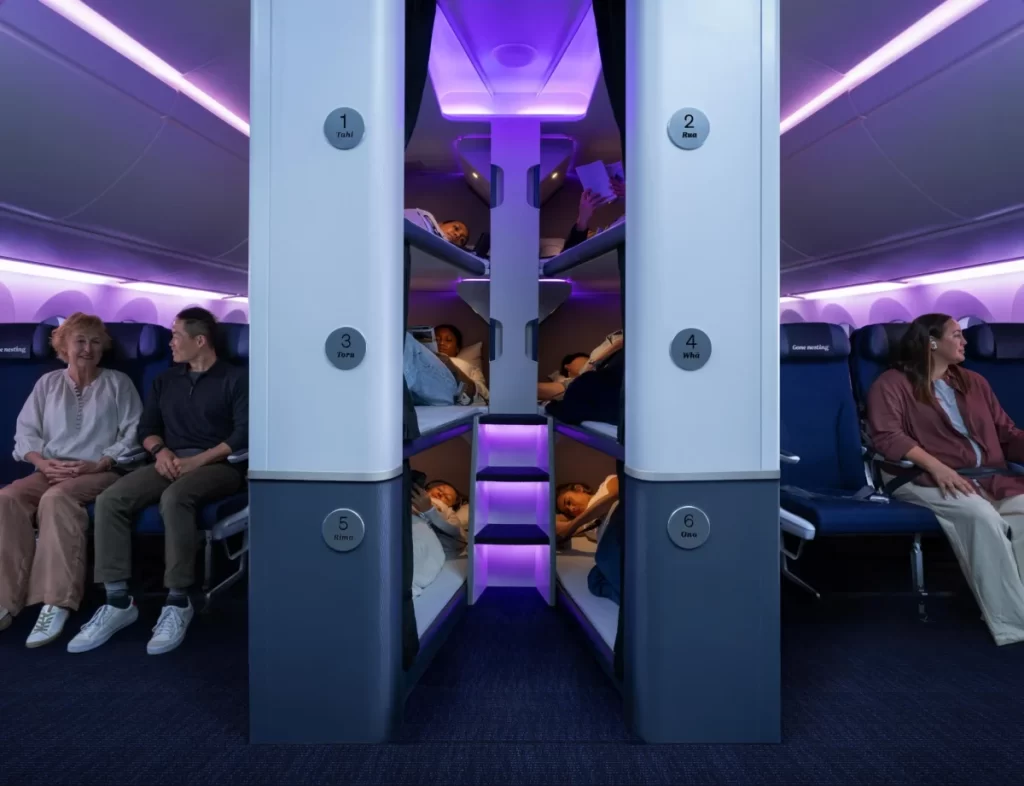
The airline will install six bunk-style sleeping pods in a dedicated section between the premium economy and economy cabins. According to Aerospace Global News, the product is expected to enter service in 2026, initially on ultra-long-haul routes such as Auckland–New York.
The aircraft retrofits are part of a broader cabin redesign that includes upgrades across all classes, reflecting a strategic shift toward improving passenger comfort on long-duration flights.
How the NZ’s Skynest bunk beds will function onboard?
The Skynest introduces a shared sleeping model within economy—an industry first for scheduled commercial flights.
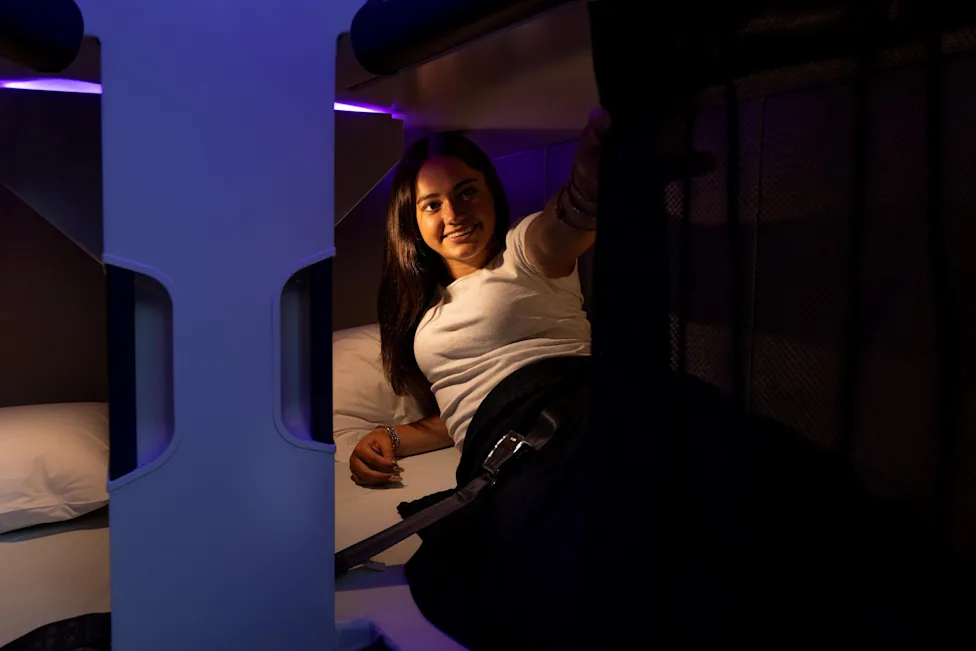
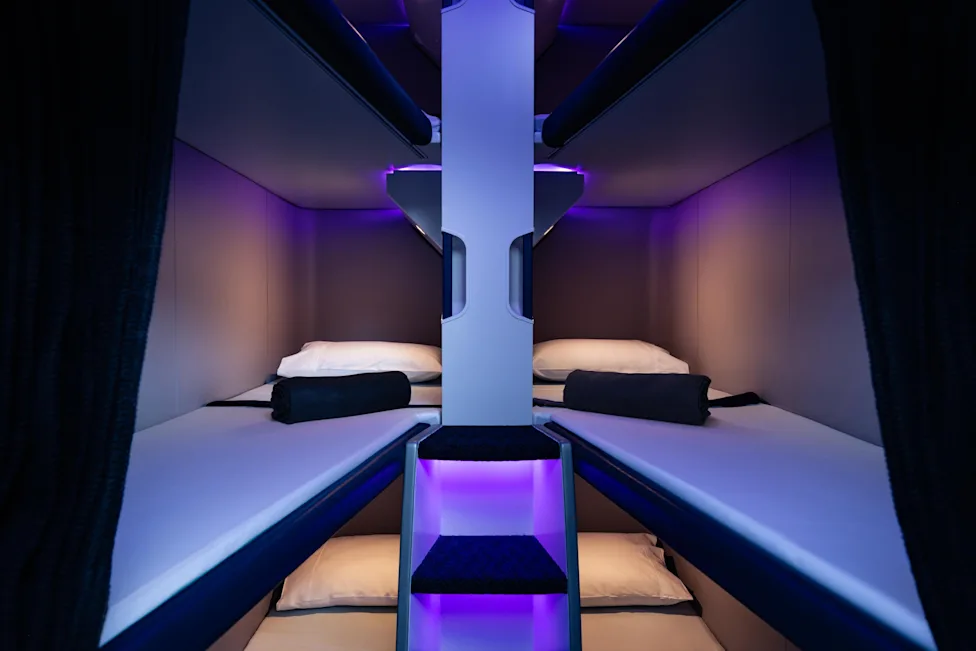
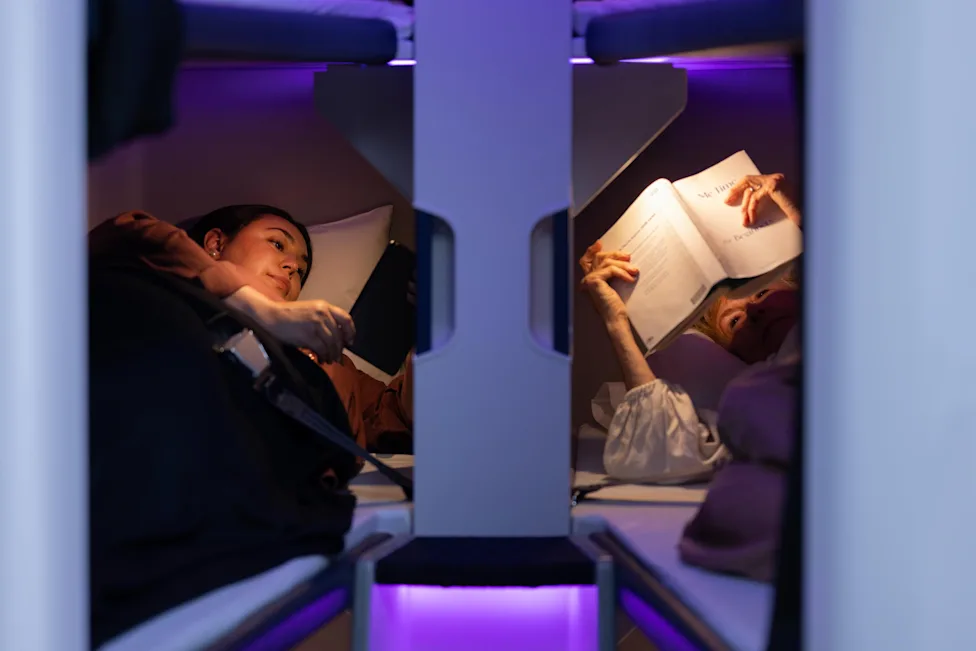
Each pod will include:
- A full-length lie-flat bed
- Pillow, sheets, and blanket
- Privacy curtain
- Reading light and ventilation outlet
- USB charging ports
Passengers will not retain the bed for the entire journey. Instead, they will book time slots of approximately three to four hours, allowing multiple passengers to use the facility during a single flight.
Air New Zealand has confirmed that bedding will be changed between each session, with a transition period built into the schedule for cleaning and reset.
Ultra-long-haul Routes Driving the Skynest concept
The Skynest is specifically designed for flights exceeding 15 hours, where conventional economy seating limits rest and recovery.
Key routes include:
- Auckland (AKL) – New York (JFK)
- Auckland (AKL) – Chicago (ORD)
These flights can exceed 17–18 hours, placing them among the longest commercial services globally.
According to AFAR, the concept is directly linked to the airline’s expansion into ultra-long-haul markets, where sleep quality becomes a critical part of the passenger experience.
Air New Zealand executives have emphasized that the product is intended to help passengers “arrive in a better condition,” addressing the physical toll of extended travel durations.
The words of Chief customer and sales officer, Leanne Geraghty, was quoted in a statement saying that there was research that pointed that
the first night away from home is the hardest to get a good night’s sleep, so everything we do onboard is to help create a sense of calm—from the lighting and sleep ritual including sleepy teas and balms, to the healthier food choices and breathable fabrics…Meditative onscreen content, Zentertainment, will also help customers unwind and get ready for rest.
Pricing Model and Passenger Access Strategy
The Skynest will be sold as an add-on product rather than a separate cabin class.
While final pricing has not been officially fixed, early estimates suggest:
| Feature | Details |
|---|---|
| Session duration | ~3–4 hours |
| Estimated price | $400–$600 |
| Total pods per aircraft | 6 |
| Access model | Pre-booked time slots |
Passengers will typically be limited to one session per flight, ensuring broader access across the cabin.
This pricing structure positions the Skynest between traditional economy seating and premium cabin upgrades, offering a flexible alternative without the cost of business class.
Industry Implications for Economy Class Travel
The introduction of lie-flat sleeping pods in economy represents a structural shift in airline cabin design.
Historically, horizontal rest has been restricted to premium cabins due to space and revenue constraints. Air New Zealand’s approach introduces a hybrid model that:
- Preserves seat density in economy
- Monetizes unused cabin space
- Addresses passenger well-being on ultra-long-haul routes
As noted in earlier Reuters coverage of the concept, the Skynest was designed as a response to growing demand for non-stop ultra-long-haul travel, where comfort becomes a competitive differentiator.
If successful, the model could influence other airlines operating long-haul fleets such as the Boeing 777 and Airbus A350.
Skynest’s Certification and Operational Challenges
Despite its innovation, the Skynest has faced delays due to certification and operational complexity.
Key challenges include:
- Meeting safety regulations for horizontal sleeping positions
- Managing turbulence protocols for passengers in bunks
- Ensuring efficient cleaning and turnover between sessions
Earlier reporting highlighted that regulatory approval for such concepts can be “lengthy and complex,” particularly given safety requirements in emergency scenarios.
Air New Zealand has stated that the product has been developed in compliance with international aviation safety standards. David Flynn, the editor-in-chief of website Executive Traveller, was quoted in NDTV as having expressed his concerns about the certification:
Despite the pretty pictures, this is likely to be a lengthy and arduous certification process…There’s a certain appeal to these railway-style sleeping berths, although it’s highly unlikely that passengers could strap themselves into these bunks for take-off and landing.
All in All
Air New Zealand’s Skynest is transitioning from concept to commercial reality, with a 2026 debut marking a significant milestone in long-haul travel innovation. By introducing time-based lie-flat sleep options in economy, the airline is redefining how passengers experience flights exceeding 17 hours.
If the model proves commercially viable, it could reshape economy travel on ultra-long-haul routes and set a new benchmark for passenger comfort.