Cathay Pacific Airways (CX) confirmed that the tail of an Airbus A330-300 struck the runway at Hong Kong International Airport (HKG) on July 3, 2026, while the aircraft was performing a go-around. Flight CX509 was arriving from Tokyo’s Narita Airport (NRT) when poor weather forced the crew to abort their first landing attempt. The tail made contact with the runway surface during the manoeuvre, and the aircraft landed safely on a second attempt roughly 15 minutes later, South China Morning Post.
No injuries were reported among the crew or the passengers on board, and the aircraft taxied normally to its parking bay. Hong Kong’s Civil Aviation Department (CAD) has ordered Cathay Pacific to submit a report on the incident and is coordinating with the city’s Air Accident Investigation Authority (AAIA) to follow up.

Go-Around In Poor Weather Leads to Tail Strike
Flight CX509 was on approach to runway 07R at 1:08pm local time when the crew initiated a go-around from very low height due to deteriorating conditions. Hong Kong was under an Amber Rainstorm Warning that afternoon as Tropical Storm Maysak brought squally showers and violent gusts to the region. During the go-around, the aircraft’s tail contacted the runway surface.
The Airbus A330-300, registered B-HLQ, climbed to 5,000 feet before repositioning for another approach. It landed safely on runway 07L about 15 minutes after the go-around. A Cathay Pacific spokesman confirmed:
“The aircraft subsequently landed safely at Hong Kong International Airport and was taxied to a parking bay where our passengers disembarked normally.”
The spokesman added that “there were no reports of injury among the operating crew or passengers on board” and that the airline’s engineering team was carrying out a thorough inspection ahead of required maintenance.
Extensive Scraping Visible on Aircraft’s Rear Fuselage
Photographs obtained by the South China Morning Post show extensive scraping along the underside of the aircraft’s rear fuselage. The visible damage extends across a wide section of the lower tail structure, consistent with sustained contact against the runway surface during the aborted landing.
Warren Chim Wing-nin, deputy chairman of the Hong Kong Institution of Engineers’ aircraft division, said the damage appeared significant from the outside. “From the outside, it looks quite serious, but you still have to assess the internal aircraft structure before determining how severe the damage really is,” he said.
The aircraft involved is nearly 25 years old, having been delivered to Cathay Pacific in 2001, according to aircraft tracking site Planespotters.net. Its age makes it one of the older widebodies in the airline’s current fleet, though age alone is not considered a direct factor in tail strikes, which typically result from pitch and approach handling during landing or go-around manoeuvres.
What Is a Go-Around and How Do Tail Strikes Happen
A go-around is a standard aviation procedure in which a pilot aborts a landing approach and climbs back up to attempt another landing. Pilots may call a go-around for many reasons, including poor visibility, unstable approach speed, or a runway that is not yet clear.
A tail strike occurs when the aft underside of an aircraft contacts the runway due to excessive nose-up pitch. Most tail strikes happen during landing rather than takeoff, and go-arounds carry particular risk because pilots must apply Take-Off/Go-Around (TOGA) thrust and pitch-up input simultaneously.
- Pitch-limit protection: Airbus aircraft display pitch-limit cues on the Primary Flight Display below 400 feet and issue an audible “PITCH PITCH” alert if the pitch angle exceeds safe limits.
- Boeing’s system: Boeing’s Tail-Strike Protection system, introduced on the 777-300ER, automatically adjusts elevator inputs during takeoff if it detects an excessive rotation rate.
- Certification testing: Manufacturers deliberately test controlled tail strikes using a protective tail-skid to determine an aircraft’s Minimum Unstick Speed during certification.
Go-arounds require rapid, coordinated handling from flight crews, since autopilot and autothrust systems work together to deliver a sudden burst of climb power. Managing that pitch response precisely is critical to avoiding over-rotation and structural contact with the runway.
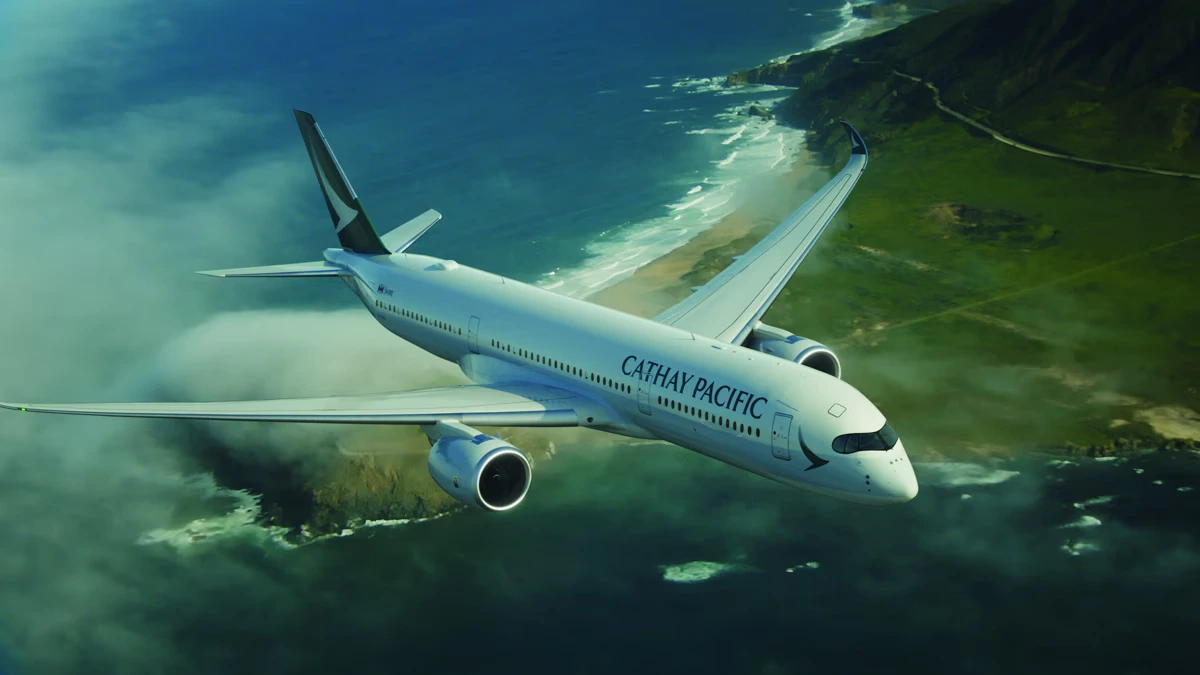
This is not the first time a Cathay Pacific aircraft has suffered a tail strike during a go-around at its home airport. On November 26, 2025, an Airbus A350-1000, registered B-LXO and operating flight CX764 from Ho Chi Minh City (SGN), suffered a nearly identical incident while landing on runway 07C at HKG.
In that case, the aircraft began veering toward the left edge of the runway during its landing roll, prompting the crew to initiate a go-around. During the manoeuvre, the tail of the aircraft made contact with the runway surface, triggering an Electronic Centralized Aircraft Monitor “TAILSTRIKE” message in the cockpit.
What Happens Next for the Investigation
The CAD has requested that Cathay Pacific submit a formal report on the CX509 tail strike and will continue to cooperate with the AAIA as the investigation proceeds. A CAD spokeswoman confirmed the department’s involvement, stating that Cathay had reported the incident through the established notification mechanism.
