The U.S. Air Force and the Defense Advanced Research Projects Agency (DARPA) flew an artificial intelligence agent in control of a modified F-16 Fighting Falcon at Eglin Air Force Base, Florida. DARPA announced the milestone on July 16, 2026. A safety pilot sat in the cockpit throughout the flight and could switch control back to himself at any moment. The test is part of the Viper Experimentation and Next-generation Operations Model program, known as VENOM.
The flight matters because it is the first time the Air Force has converted a standard operational fighter jet, rather than a one-of-a-kind research aircraft, to fly under AI control. Officials say the goal is to build trusted autonomy for future air combat, including missions where a single human pilot commands a team of uncrewed aircraft. DARPA framed the test as an advance in the infrastructure needed for rapid, scalable AI development across the entire force.
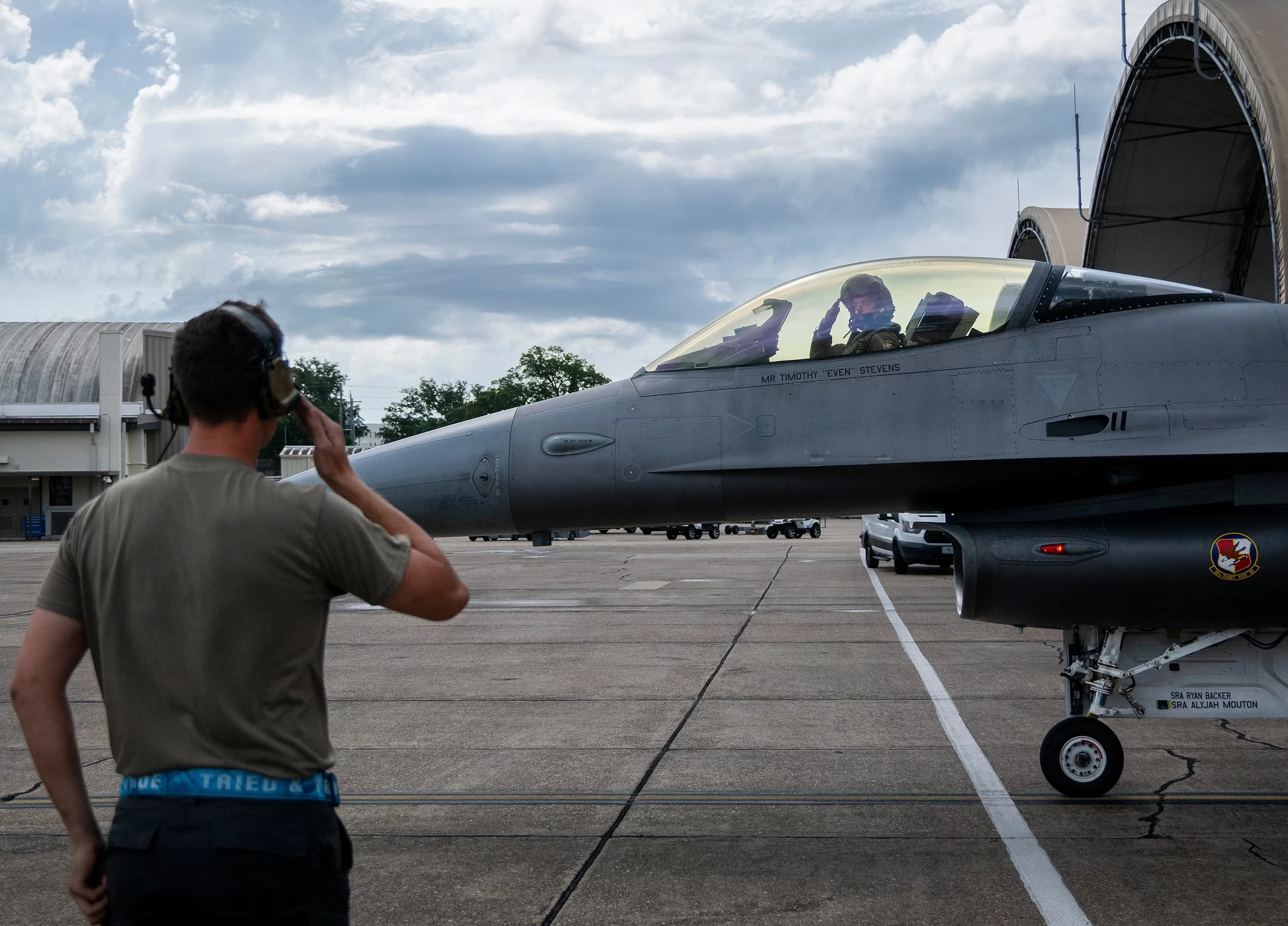
What the VENOM Program is Testing at Eglin Air Force Base
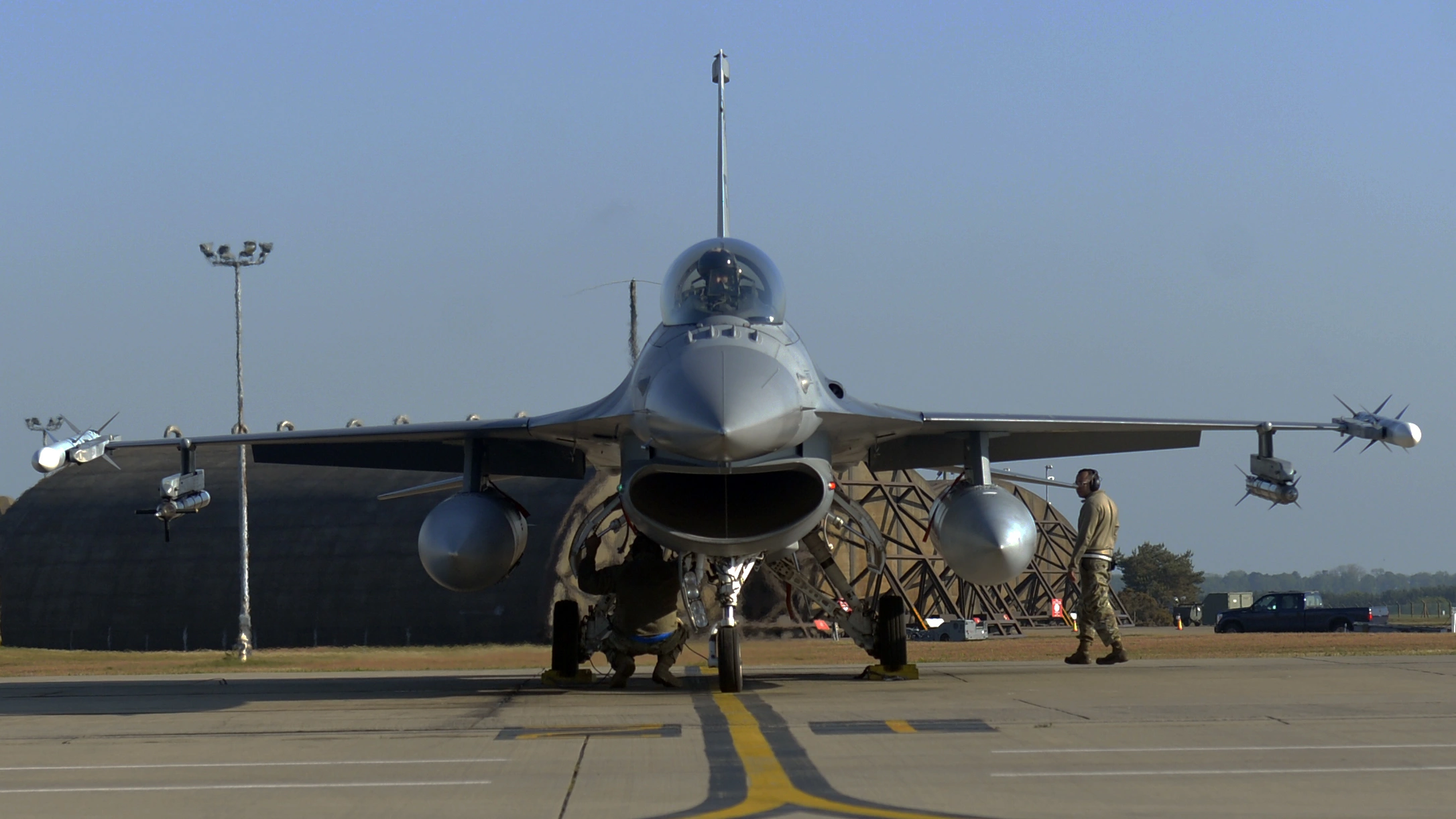
VENOM stands for Viper Experimentation and Next-generation Operations Model, and the flight-test phase carries the callsign VENOM-AFT, short for Autonomy Flying Testbed. The program is a joint effort between the Air Force and DARPA that grew out of DARPA’s Air Combat Evolution program. Engineers fitted six F-16Cs with new hardware, software, and instrumentation so an AI agent can fly the jet in place of a human pilot.
The aircraft also received an auto-throttle upgrade, which lets the autonomous system control engine thrust as well as the flight surfaces. That addition closed a gap in earlier autonomy research, where a human still had to manage engine power even when software flew the rest of the aircraft.
The first three modified jets landed at Eglin in April 2024. According to Army Recognition, the sixth and final F-16 arrived at the base on April 1, 2025, completing the VENOM fleet. Developmental and operational test pilots from the 96th Test Wing and 53rd Wing work from the same location at Eglin, a setup officials say speeds up feedback between test flights and the engineers writing the autonomy software.
How the AI Agent Took Control of the F-16 Fighting Falcon
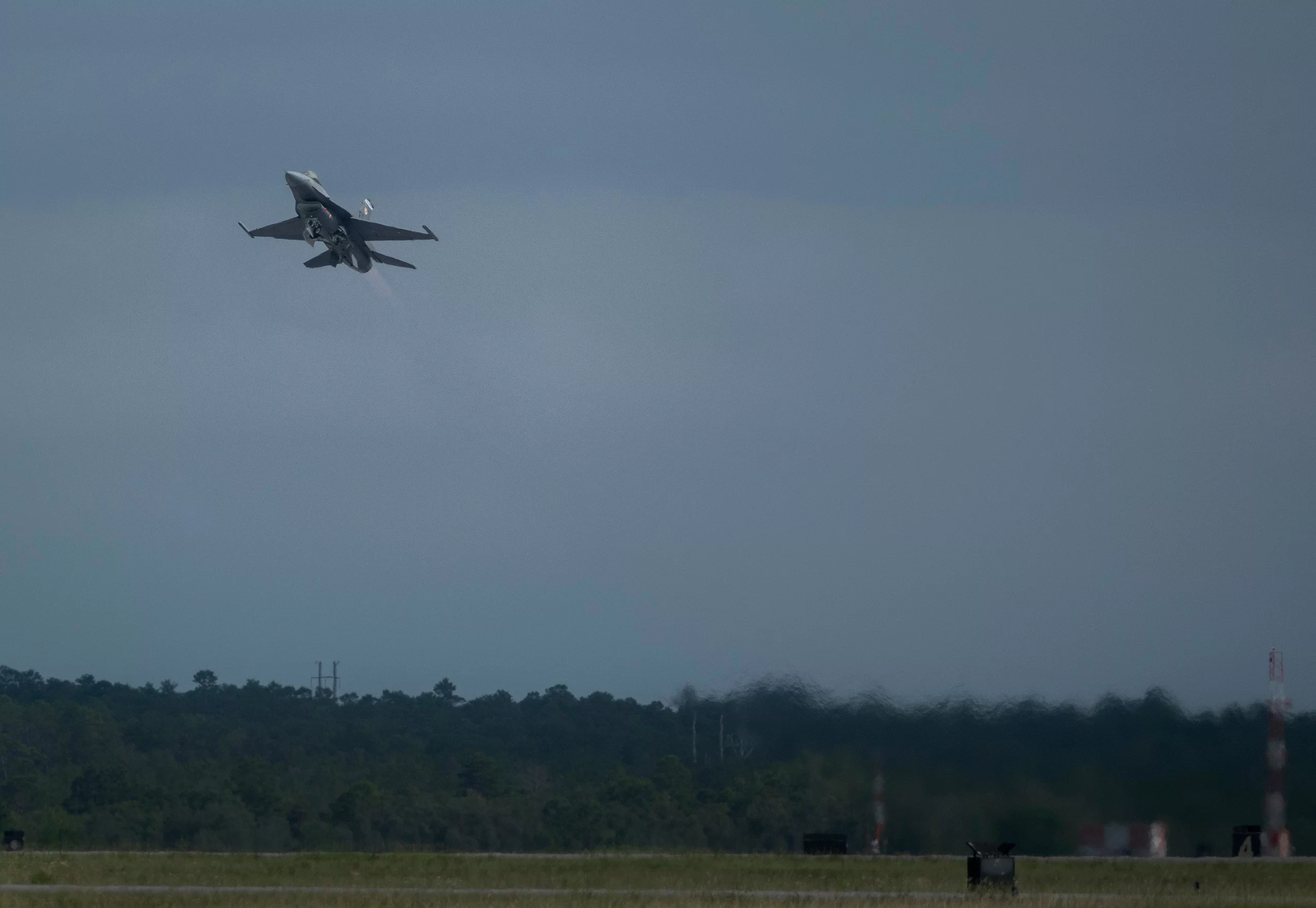
The modification, called the VENOM Autonomy Kit, lets a pilot toggle between traditional human control and AI control with the flip of a switch. This “human-on-the-loop” design keeps a person able to intervene at any moment, which is why a safety pilot remained in the cockpit during the July flights. DARPA said the modification automates the aircraft’s flight controls and sensors without changing the F-16’s underlying core software.
Before any of this reached the runway, engineers put the software through extensive checks on the ground. Software-in-the-loop and hardware-in-the-loop testing confirmed that autonomous commands could not exceed the jet’s structural limits or put unsafe physical strain on the pilot. The service moved from ground checks into flight testing in June 2026, when a safety pilot could hand control to the AI agent through a dedicated switch.
Simulation work had already run for two years before that. In 2024, engineers used faster-than-real-time simulations to train and evaluate the AI in one-on-one and two-on-two combat scenarios, covering both within-visual-range and beyond-visual-range fights. As Maj. Trent McMullen of the 40th Flight Test Squadron explained, a specific scenario can be run “1,000 times” so engineers can study the variations and decisions the AI makes each time.
What Officials are Saying About the Autonomous Flight
Brig. Gen. James “Fangs” Valpiani, the outgoing DARPA program manager, said the flights advance “the infrastructure needed to develop trusted, autonomous air combat capabilities.” He added that the team’s work gives the Air Force an efficient pipeline for developing dominant combat AI, allowing engineers to “rapidly innovate for the warfighter,” according to DARPA’s announcement.
Valpiani also said the threat environment for aerial combat is growing more complex, and that AI has real potential to help manage that complexity in combat fought beyond visual range, though open questions remain about how trustworthy combat AI will prove in the “extreme fog and friction” of real warfare.
Lt. Col. Patrick “Dice” Highland, DARPA’s incoming program manager for the effort, called the flights an early look at how AI could reshape air warfare. Terry Wilson, Ph.D., who leads AI work for the Air Force Research Laboratory’s Autonomy Capability Team, said he was eager to move VENOM’s capabilities out of simulation and into the sky.

How this Compares to the X-62A Vista Dogfight Trials
VENOM builds directly on an earlier and better-known milestone. Under the Air Combat Evolution program, an AI agent flew the one-of-a-kind X-62A VISTA research jet and proved it could pilot a fighter autonomously in a dogfight against a human-flown aircraft. That aircraft remains a specialized platform built purely for research, not a standard combat jet.
VENOM takes a different approach. Unlike the X-62A, VENOM uses a retrofitted, operationally representative F-16 rather than a bespoke research aircraft, which the Air Force says shows autonomy software can scale onto ordinary fleet jets. Coverage of the July test similarly noted that the flight validated the AI agent’s ability to control the aircraft under real-world conditions, after the modifications and extensive ground testing were complete. Where the X-62A proved autonomy was possible in principle, VENOM is testing whether it can be built and repeated across a fleet.
What Comes Next for DARPA’s Air Program
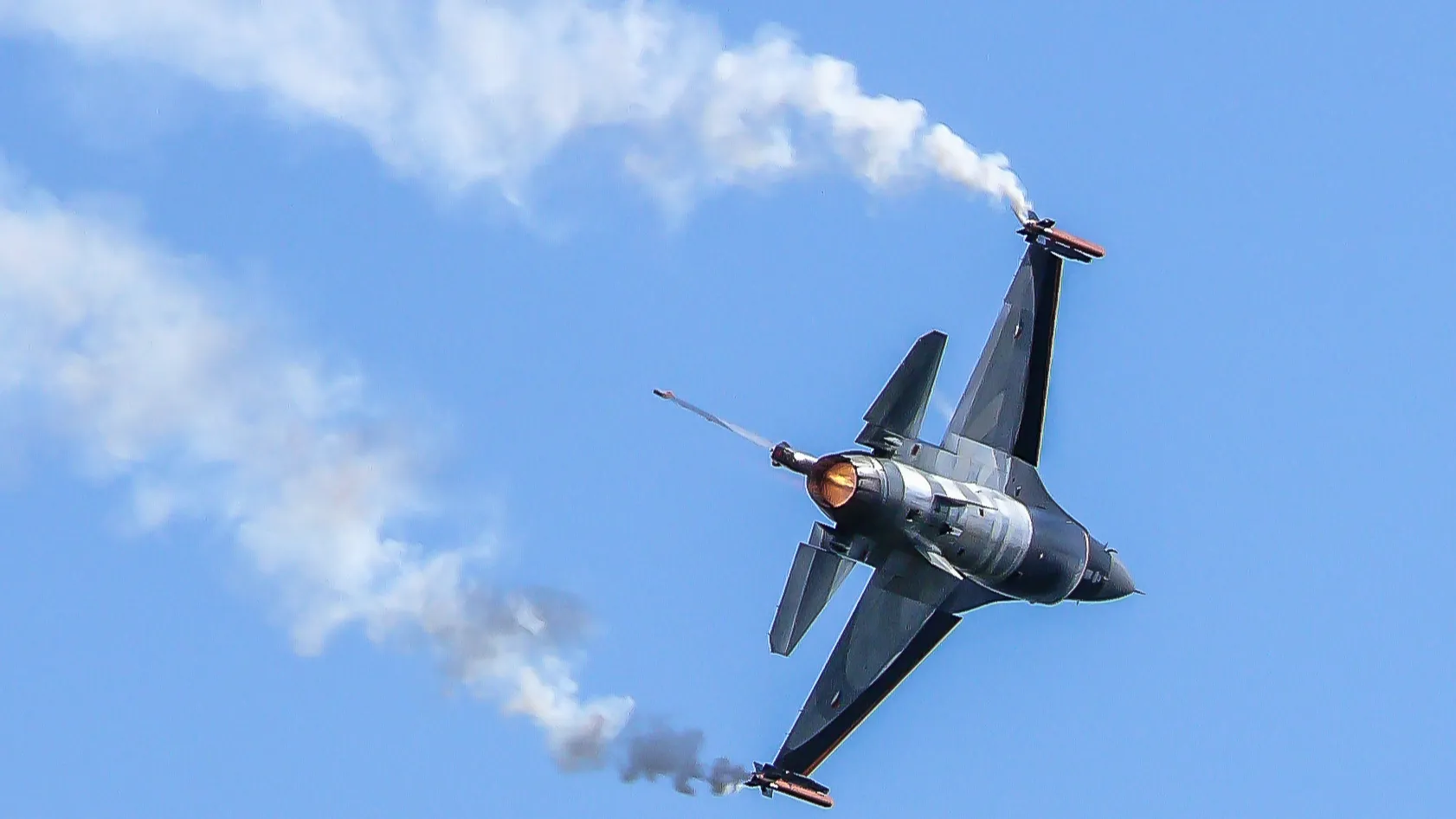
VENOM aircraft will next support the Artificial Intelligence Reinforcements program, which will test multiple AI agents in live-flight scenarios and work toward letting a single human pilot command teams of uncrewed aircraft.
That capability underpins the Air Force’s Collaborative Combat Aircraft effort, which aims to pair crewed fighters with autonomous “wingman” drones.
DARPA plans to test autonomy software first aboard crewed F-16s under VENOM, then transfer proven code to uncrewed combat aircraft.


.jpg)