Aer Lingus (EI) has cancelled a portion of its summer 2026 schedule, removing roughly 2% of planned flights due to what it describes as mandatory aircraft maintenance, primarily affecting routes from Dublin Airport.
The disruption, reported by Irish Independent, to include more than 500 flights, comes amid broader industry strain tied to rising jet fuel costs and operational constraints, although the airline maintains that most passengers are being rebooked on same-day alternatives.
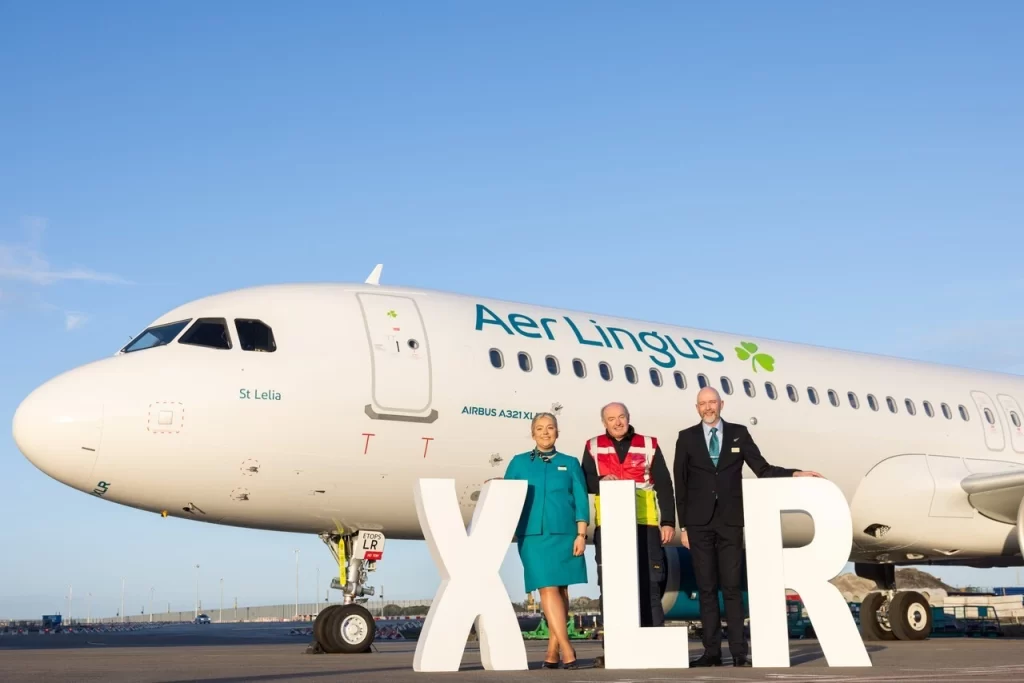
Aer Lingus Summer Schedule Cuts and Affected Routes
The airline confirmed that a “limited number” of services have been withdrawn across its European and UK network, with adjustments spread across multiple dates during the peak summer travel period.
Flights from Dublin Airport to key European destinations—including:
- Amsterdam Airport Schiphol
- Athens International Airport
- Berlin Brandenburg Airport
- Faro Airport
- Zurich Airport
…have been trimmed, alongside UK services to Heathrow Airport, Manchester Airport, Birmingham Airport, and Edinburgh Airport.
The cancellations exceeds 500 flights, although Aer Lingus has not confirmed that exact figure publicly.

Aer Lingus Attributes Cancellations to Aircraft Maintenance
Aer Lingus has consistently maintained that the schedule reductions stem from operational necessity rather than commercial recalibration.
In a statement cited by BBC, the airline said “mandatory maintenance on aircraft” required temporary adjustments, adding that “the vast majority of customers” are being accommodated on alternative same-day services:
Aer Lingus has commenced operating its planned summer schedule. A number of recent cancellations have been required due to mandatory maintenance on aircraft, along with a limited number of schedule adjustments. Where schedule adjustments are being made, the vast majority of customers are being reaccommodated on same-day services.
The airline further emphasized that the changes affect approximately 2% of its overall schedule, positioning the disruption as contained rather than systemic.

Jet Fuel Crisis Adds Pressure Across European Aviation
The timing of the cuts coincides with a significant escalation in global jet fuel prices, driven by geopolitical tensions impacting supply chains.
The International Energy Agency warned that Europe has “maybe six weeks of jet fuel left,” following prolonged disruption in the Strait of Hormuz, a critical artery for fuel exports from the Gulf. Amid the closure, USAF’s F-15 and A-10 were downed in the Iranian airspace.
In its assessment, the IEA stated that the crisis “has thrown a proverbial wrench into the inner workings of the aviation fuel markets,” underscoring the volatility facing airlines.
Fuel typically accounts for 20–40% of airline operating costs, and the recent price surge has materially altered route profitability across the continent. Theoil crisis has led India’s biggest carrier, Indigo (6E) to increase fuel surcharge by $100 on some routes, while its neighboring country Nepal has seen airfares doubled.

Analysts Link Route Cuts to Rising Fuel Costs
While Aer Lingus has not attributed the cancellations to fuel economics, industry observers suggest a broader pattern emerging across Europe. Travel journalist Simon Calder noted that airlines are increasingly trimming marginal routes as operating costs escalate.
“Airlines trimming some of their summer services is becoming widespread across Europe,” he said in remarks reported by BBC, adding that the doubling of fuel costs renders certain routes commercially unviable.
This perspective aligns with wider capacity adjustments seen among European carriers navigating an uncertain cost environment.

Irish Government and Industry Push Back on Fuel Concerns
Irish authorities have sought to reassure markets regarding domestic fuel resilience, distancing Aer Lingus’ decision from supply constraints.
Transport Minister Darragh O’Brien stated on RTÉ’s This Week that Ireland maintains a “robust” aviation fuel supply, with approximately 70 days of reserves.
He added that Ireland sources jet fuel largely from the United States, emphasizing that airline scheduling decisions remain independent of government policy.
Pilot Shortages Emerge as an Alternative Explanation
Labour constraints may also be contributing to operational strain, according to industry representatives.
Irish Airline Pilots’ Association President Mark Tighe suggested that staffing shortages, rather than fuel costs, are the more immediate issue.
He indicated that pilots are frequently contacted on days off to cover schedules, and that the airline has struggled to grant full annual leave entitlements this year due to insufficient crew availability.
Tighe further argued that Aer Lingus’ fuel hedging strategy shields it from short-term price spikes, distinguishing it from some competitors, and was quoted in The Independent as having said:
The situation in Iran is critical to our industry and we are watching carefully to see what happens going forward

All in All
The Aer Lingus schedule reduction illustrates the multi-layered pressures currently facing European aviation, where operational, financial, and geopolitical factors intersect.
Even as the airline frames the cancellations as routine maintenance-driven adjustments, the convergence of fuel volatility, staffing constraints, and network optimization suggests a more complex operating environment.
The coming weeks—particularly amid ongoing instability in global fuel supply chains—are likely to determine whether such “limited adjustments” remain contained or evolve into a wider capacity recalibration across the sector.