Giant airplanes are constructed taking a variety of factors into consideration. Monsters like the whale-ish Airbus Beluga were devised with transporting parts of the Airbus in mind. There are aircraft like the Caspian Sea Monster, which are frightening pieces of engineering built with combat at the helms. Some of the biggest passenger aircraft in the world were made to make way for more efficient travel. But “the biggest aircraft ever made” is a distinction that can be measured by the weight of the aircraft, its payload, the number of people that can be fitted inside it, etc.
In this article, we will dive into the five biggest aircraft ever made in terms of the wingspan. We’ll also take a look into some of the reasons behind their development, and the impact they have had on aviation as a whole.
5. Antonov An-124 (Wingspan: 73.3 meters)
After the Antonov An-225 was destroyed during the Russia-Ukraine War, the Antonov An-124 became the largest cargo plane in operation and the largest military transport in service. It is also the fifth biggest aircraft made. The aircraft first took to the skies on Christmas Eve of 1982. The Paris Air Show of 1985 was when the West had a glimpse of this aircraft that would later become the largest-ever mass-produced aircraft.
It was widely reported by media outlets that Canada would donate the seized An-124 to Ukraine.
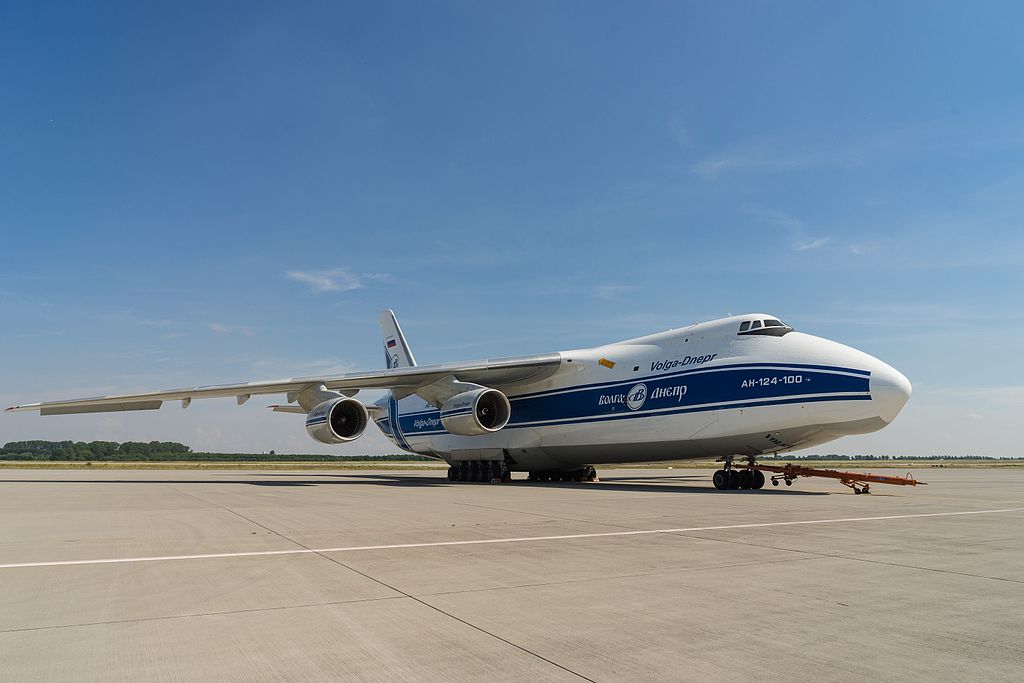
photo: Netspy/Wikimedia commons
Capacity and Features of the An-124
In a standard military configuration, the An-124 is capable of transporting 150 tons of cargo over a distance of 3400 kilometers. An-124 can travel 8400 miles with 80 tons of cargo onboard.
Its a variant An-124-100 is used for commercial purposes, while the An-124-100M-150 variant is equipped with upgraded engines and a higher payload.
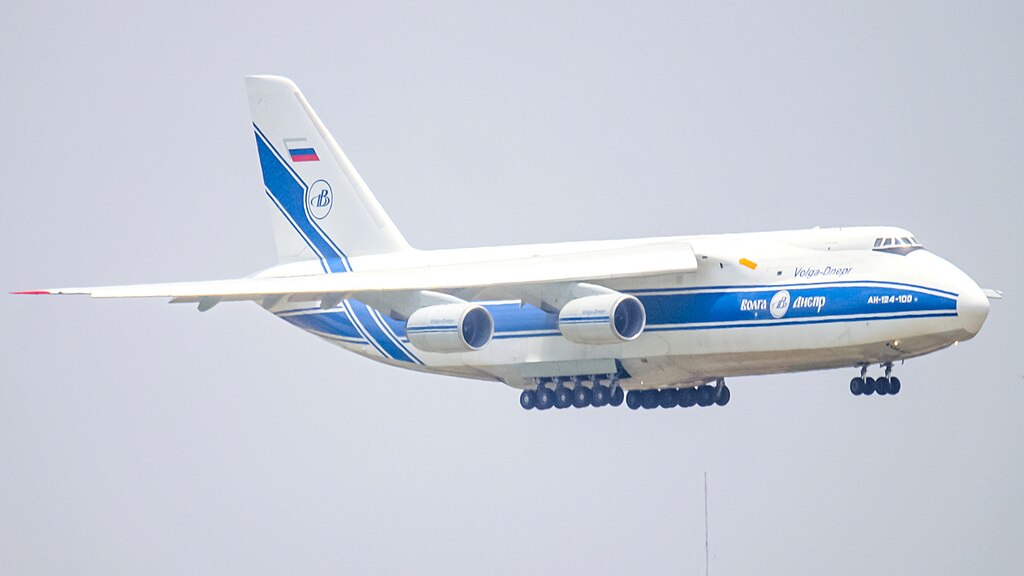
photo : Md Shaifuzzaman Ayon
| Maximum Takeoff weight | 402,000 kg/ 886,258 lb |
| Service Ceiling | 12,000 m/ 39,000 ft |
| Maximum speed | 467 knots / 865 km/h |
| Normal Cruise speed | 430–460 knots / 800–850 km/h at 9,997–12,009 m) at regional pressure setting) |
| Engines Power | 4; 229 kN (51,000 lb) thrust each |
| Engine model | Progress D-18T high-bypass turbofan engines, |
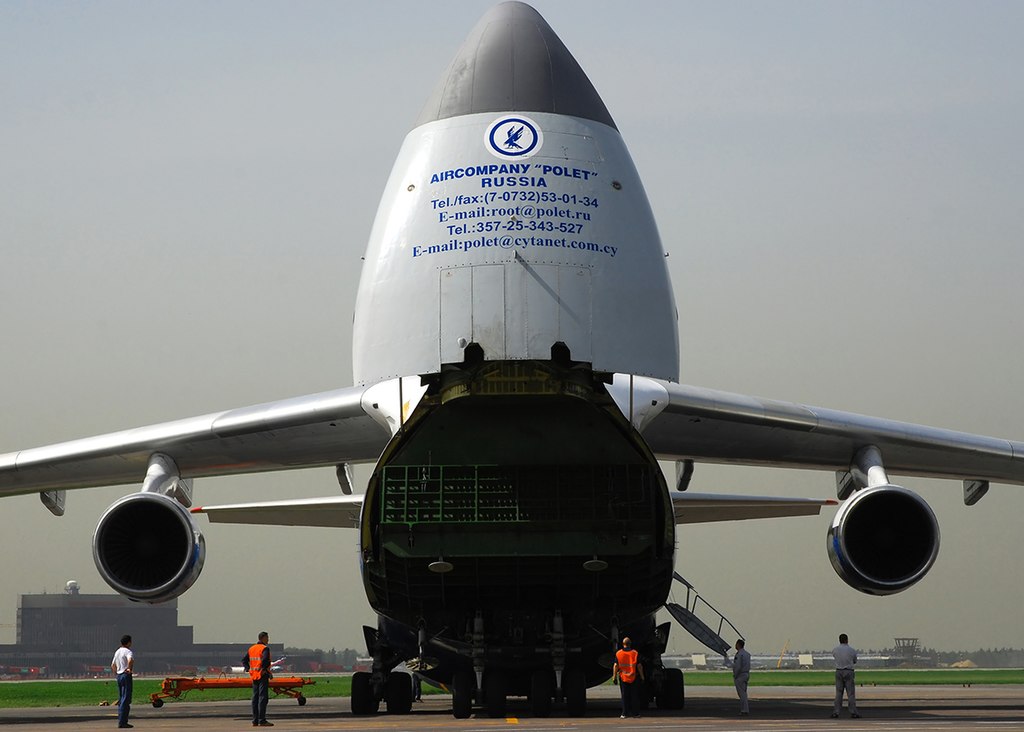
photo: Aleksandr Markin
4. Airbus A380 (Wingspan: 79.75 meters)
Airbus A380 is one of those gigantic aircraft like the Antonov An-225 Mriya that leaves people wondering if it can ever take off. The program, which cost €9.5 billion, was launched during the turn of the millennium, though it was in the 90s that Boeing envisaged a program of launching the world’s biggest passenger aircraft by passenger capacity.
Variants of the A380 include the A380-800, and the A380F- the latter of which is a freighter with a capacity of carrying 150 tons of cargo over 10,400 km. It was proposed that the A380 would even have a stretched version called the A380-900 that could carry 960 passengers in a single-class layout but this never came into fruition.
Despite having a wingspan that stretched almost the length of a football pitch, having the distinction of being the only full-length double-deck airliner in the world, clocking more than 800,000 flights, having no fatal accidents, and carrying more than 300 million passengers, the A380-800 was never popular amongst airlines and its production has completely stopped. It might also come as a surprise that the aircraft was never sold to a United States airline.
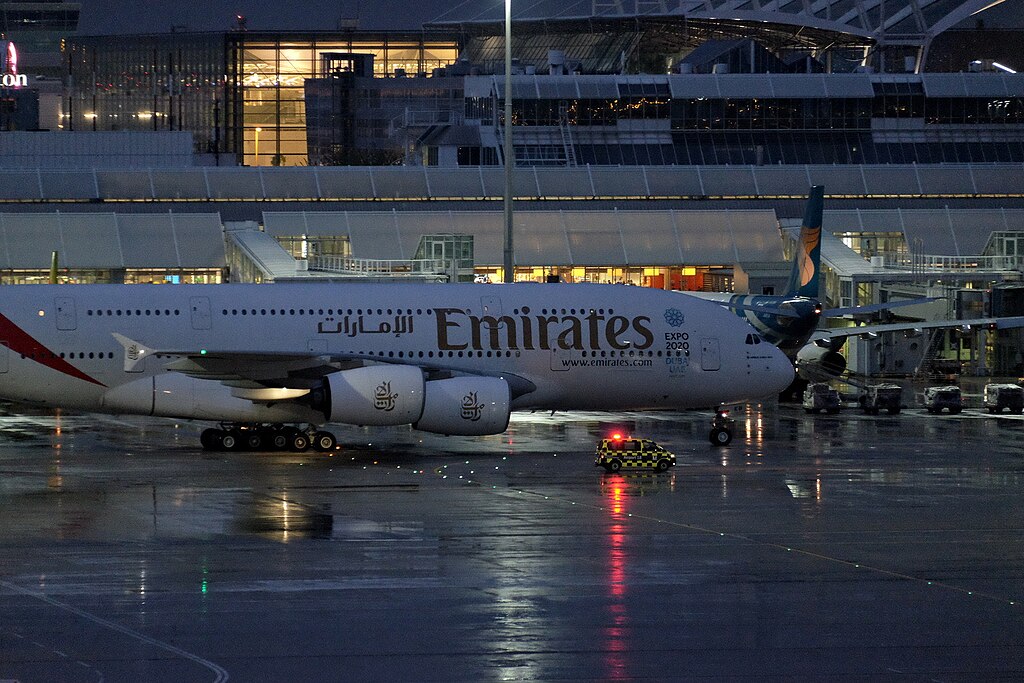
photo: Faldrian/Wikimedia commons
Capacity and features:
This spacious aircraft can accommodate 853 passengers. It is equipped with advanced avionics and state-of-the-art noise reduction technology, making it one of the quietest large flying planes. A few of the features of the A380-800 include a fly-by-wire flight control system and a range of 8000 nautical miles. The fuel capacity of the A380-800 is equal to that of 210 family fuel cars.
There are 22 wheels on the landing gear of the A380-800- a record on its own (for a passenger aircraft). The impressive features of this aircraft come with its downsides, though- it necessitates specific airport facilities, such as wider taxiways, longer runways, and more spacious parking areas. The cockpit of the A380 comes with a camera system that allows pilots to have a 360-degree view of the plane.
Just like its greatest competitor, the Boeing 747-800, ICAO classifies the A380 as a type F aircraft, i.e., one having a wingspan of greater than 65 meters but less than 80 meters. Thus an airport that can accommodate a type E aircraft on’t be able to land the A380, though there have been a few exceptions.
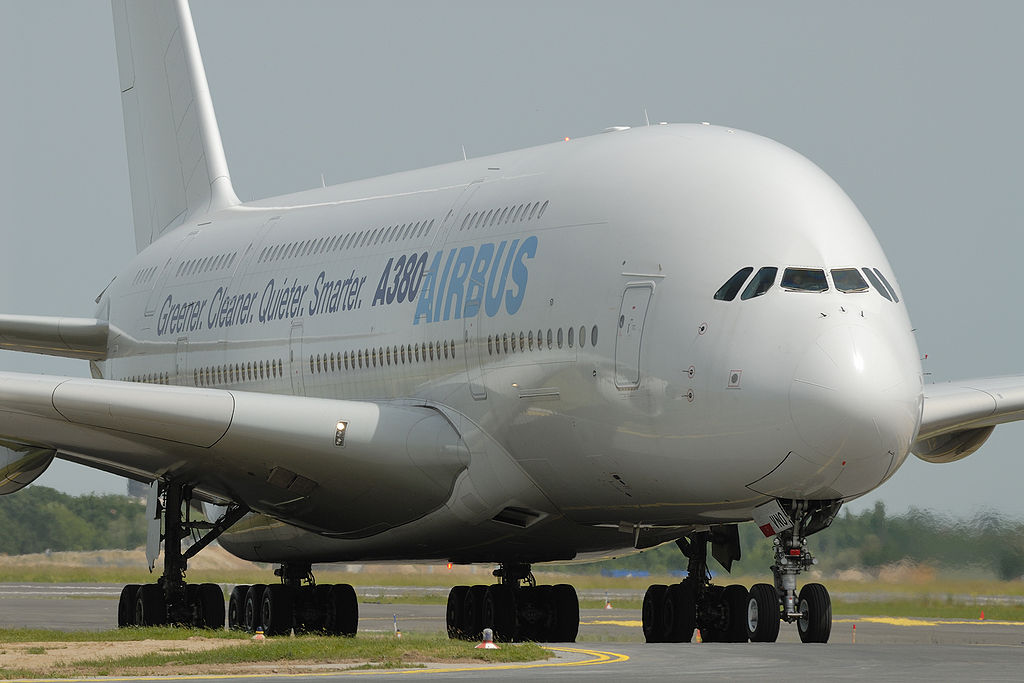
photo: Jochen Teufel/Wikimedia commons
| Maximum Takeoff weight | 560,000 kg/ 1,234,588 lb |
| Maximum landing weight | 394,171 kg/ 869,000 lb |
| Service Ceiling | 13,137 m / 43100 ft |
| Maximum speed | 510 knots/ 944 km/hr |
| Normal Cruise speed | 500 knots/ 900 km/he |
| Engines; Power | 4; 332.44–356.81 kN (74,740–80,210 lbf) |
| Engine model | RR Trent 900 and GP 7200 |
3. Antonov-An-225 Mriya: Wingspan- 88.4 meters
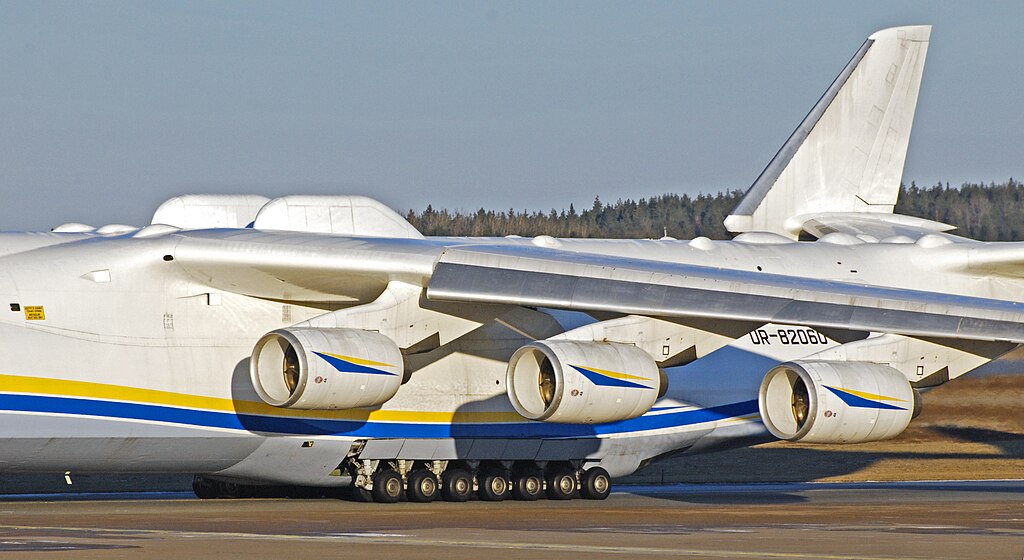
The ship of dreams (Mriya translates as ‘dream’ in Ukranian), the Antonov An-225, was a magnificent giant airlifter, larger than Airbus A380. It was designed by Antonov(USSR) and had six engines, 32 wheels and a maximum speed of 850 km/hr. Anyone who wanted to charter An-225 had to pay $30,000 per hour.
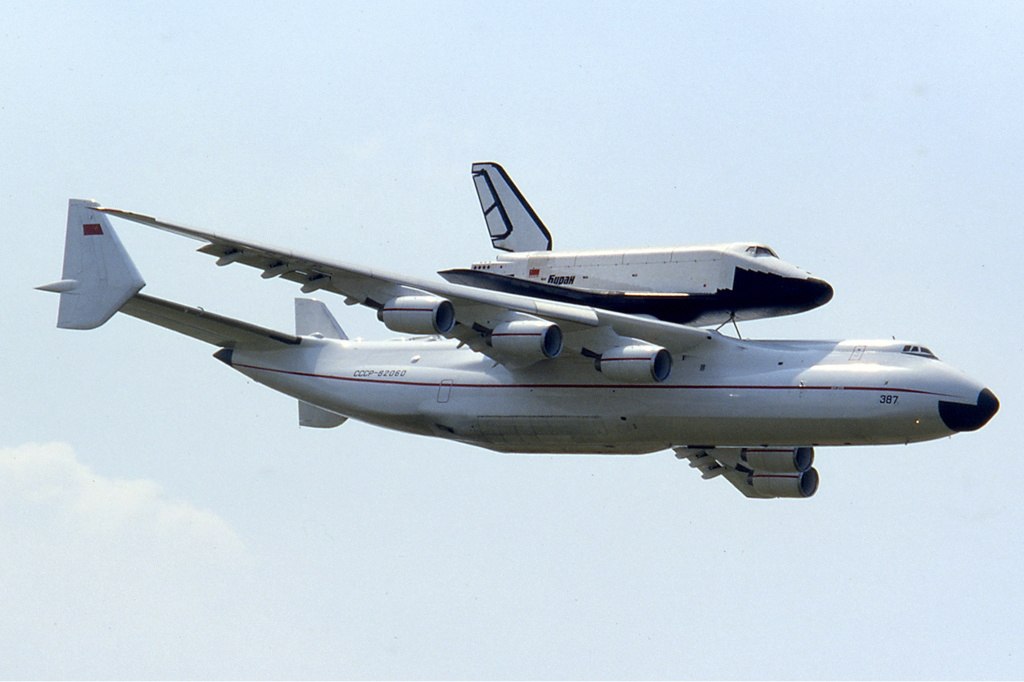
photo : Ralf Manteuffel/Wikimedia commons
The major task of one and only An-225 born in the cold war era was to transport various parts of the Energiya carrier rocket and Buran spaceship. It had its first flight on 21 December 1988. It was named in honor of airplane designer Oleg Antonov who died in 1984 at age 78. Having type code ‘A225’, this pride of Ukraine had set hundreds of world records .
When we watch the landing videos of Mriya on YouTube, it’s hard to imagine how this giant, having such beauty and elegance could fly in the air just like an alien monster bird.
Capacity and features:
The main designer of the An-225 was Viktor Tolmachev. Its maximum takeoff weight was 640 tonnes(1.4 million pounds). Its length was 82m(275 ft 7in), and its volume was 1,200 cubic meters. The compartment had a length of 43.35m, width of 6.4m, and height of 4.4m. The floor area was 280 square meters. It had a wingspan of 88.4m.
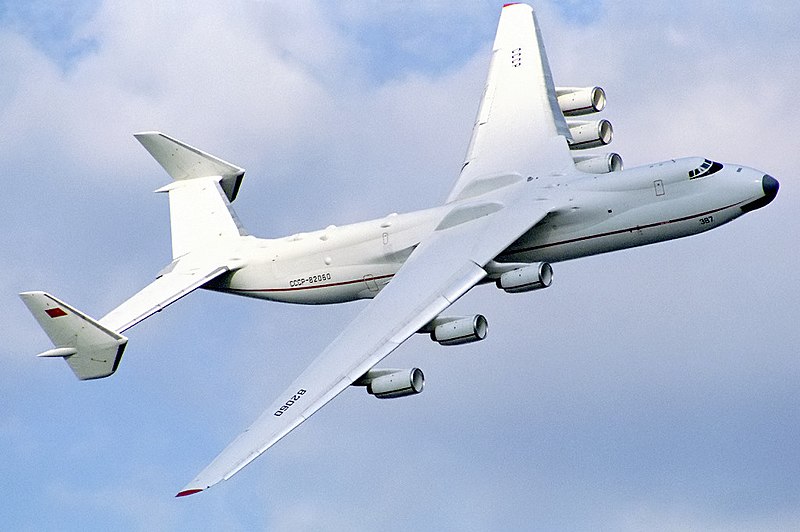
The compartment could carry 250t of cargo internally or 200t up to a height of 70m on the upper fuselage. It had a fuel capacity of more than 300,000 kilograms (660,000 lb). Being a twin-finned derivative of the An-124, it had a longer fuselage and cargo deck due to the addition of fuselage barrel extensions. It used the same nose gear that the AN-124 did, which allowed the aircraft to ‘kneel’ for easier loading and unloading. It had a twin tail arrangement to carry its heavy external loads.
| Maximum Takeoff weight | 640,000kg (1,410,958 lb) |
| Service Ceiling | 11,000m (36,000ft) |
| Maximum speed | 850 km/hr |
| Normal Cruise speed | 800 km/hr |
| Engines Power | Each produces max. Thrust of 229.5 kN |
| Engine model | Ukrainian Ivchenko-Progress D-18T, Lotarev D-18 turbofan engines. |
Interesting facts about the 240 records setting An-225
- The AN-225 has set 214 national and 124 world records, including the transportation of the heaviest payload ever airlifted, at 253,820 kg.
- In November 2004, FAI placed the An-225 in the Guinness Book of Records for its 240 records.
- It had only completed 113 test flights, 253 flying hours, and just 14 flights with the Buran on board.
- It had held the title of the biggest commercially used freighter in the world for over 25 years.
- “In 2012 the AN-225 broke another Guinness World Record for the highest altitude art exhibition, at 10,150 m above sea level. The airborne exhibition included 500 works of art created by 120 artists.”
- It was powered by six Ivchenko Progress Lotarev D-18T, 3 Shaft turbofan engines, each producing thrust of 229.5 kN.
- It was able to carry upto 250 tons of cargo which is average weight of 52 elephants.
- Alexander Galunenko was the first person to fly the outsized An-225.
- In September 2001, carrying a record load of 253.82 tonnes of cargo, it flew at an altitude of two kilometers over a closed circuit of 1000 km at a speed of 763.2 km/h.
- It had a wingspan of 88.4m, which is almost the length of a football field
- It was used in the Covid-19 relief effort to transport 100 tons of protective equipment, medicines and tests from Tianjin(China) to Warsaw(Poland) in April 2020.
- It was able to accommodate up to 950 cubic meters of cargo, compared to 750 for the AN-124 and 650 for a Boeing 747.
- It had transported construction vehicles, maglev trains, light aircraft, nuclear fuel, water turbines, and other electric generators as cargo.
2. H-4 Hercules Supergoose (Wingspan: 97.5m meters)
How do we classify aircraft such as the H-4 Supergoose? Can we really call it an aircraft to begin with? Like the Soviet behemoth, the Caspian Sea Monster, the H-4 Supergoose also used ground effect technology to take to the skies. In its solitary flight, the H-4 was airborne for a mere 26 seconds and traversed a distance of a mile while 70 ft (21 m) off the water. The documented flight also reveals a speed of 135 miles per hour (217 km/h).
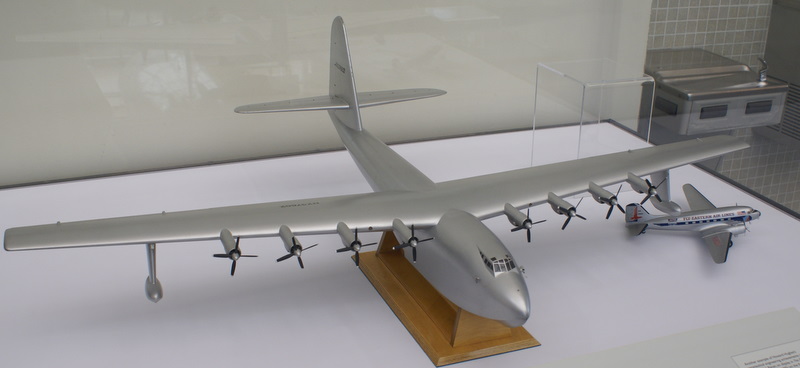
photo: Asiir/Wikimedia commons
Why was the second-largest aircraft – the H-4 Supergoose constructed in the first place?
During the height of the Second World War, the United States wanted a large aircraft that was capable fo transporting military officers across the Atlantic. So, the plans to construct a large aircraft that, along with the military, could carry ammunition and supplies were underway.
The original design and concept of the H-4 were dreamt up by a shipbuilder named Henry J Kaiser. Kaiser, in conjunction with Howard Hughes and his engineers at the Hughes Aircraft Company, began working on an aircraft that was previously called HK-1. The initials H referred to Hughes, and K referred to Kaiser.
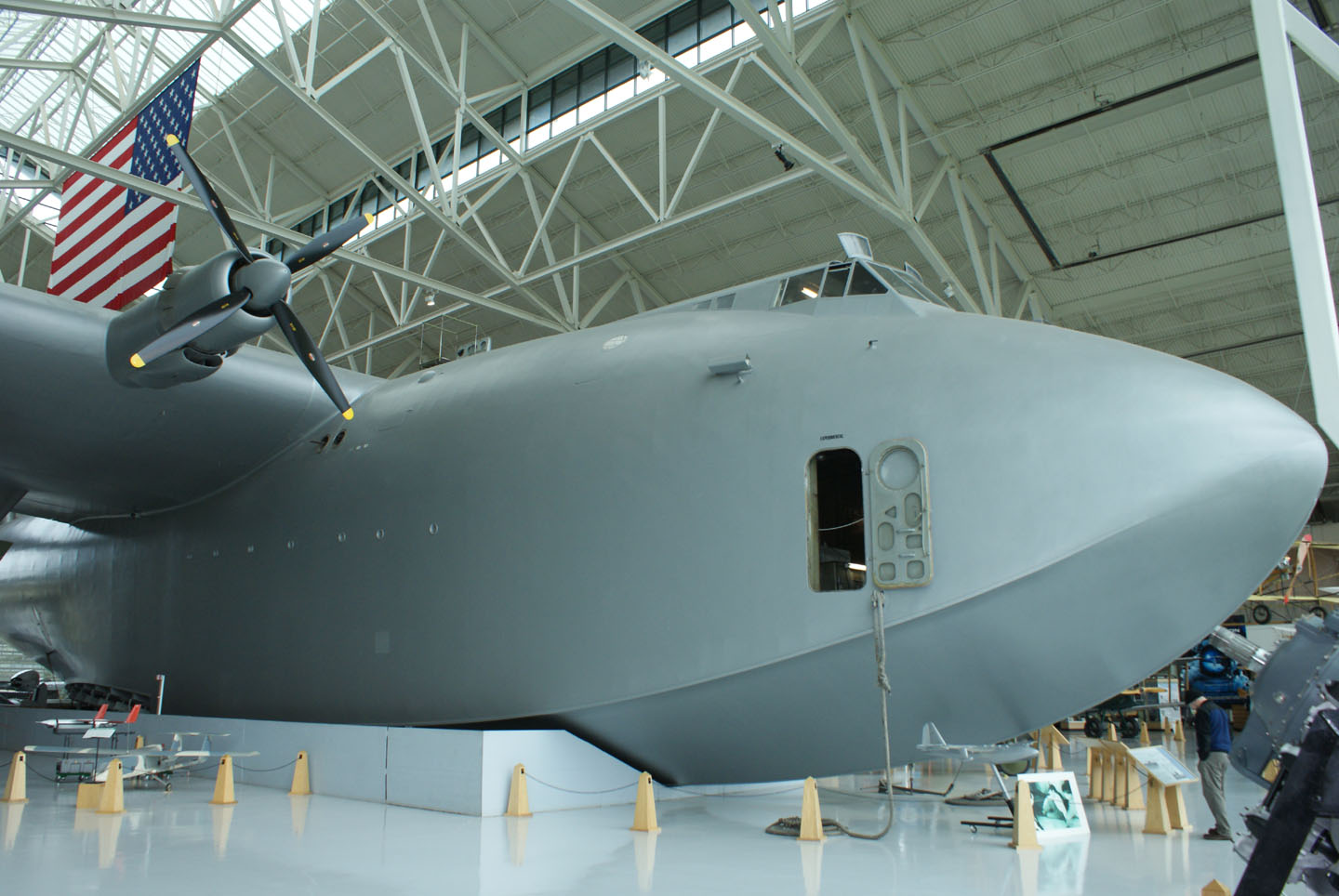
Hughes was a perfectionist and would spend hours deliberating on a particular aspect of the aircraft. Over half a decade, design modifications led to a 400,000-pound wooden flying boat with a spectacular 320-foot wingspan, making it the biggest aircraft ever.
However, there were a few problems. The construction of the aircraft was completed 2 years after the World War had ended. Along the way, whatever interest and input Kaiser had in the project had died down, too. So, after Kaiser backed out of the project in 1944, the initial “K” referring to him had been slashed out from HK-1. The name H-4, instead, was adopted. But there were a few other names the aircraft had garnered.
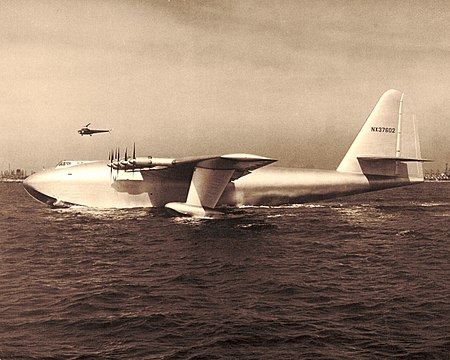
A U.S. Senator had called the aircraft a “flying lumberyard,” while the people who worked on the plane called it, albeit unsocially, “The Birch Bitch”. It was perhaps best known as “Spruce Goose” – a name that was detested by Hughes.
Capacity and features:
During the construction of the H-4, i.e., the World War, steel and aluminum were pivotal to war efforts. So, the aircraft had to be designed using non-strategic materials such as wood. Therefore, it was constructed from a composite material made of birch and resin—Duramold.
| Maximum Takeoff Weight | 400,000 pounds (181,400 kilograms) |
| Empty Weight | 250,000 pounds (113,400 kilograms) |
| Maximum Speed | 250 mph (400 km/h) |
| Power Plant | 8 × Pratt & Whitney R-4360 Wasp Major radial engines |
| Fuel Capacity | 14,000 US gallons (63,645 liters) |
| Engine Power | 3,000 horsepower each |
| Wingspan | 320 feet (97.5 meters) |
| Length | 218 feet (66.5 meters) |
| Height | 79 feet (24 meters) |
The Los Angeles hangar where the H-4 was constructed has become a Hollywood landmark. Scenes from movies such as Howard Hughes’ biopic The Aviator, Titanic, Avatar, and Transformers were filmed in the space, which is now leased by Google.
Currently, the aircraft lies in the Evergreen Aviation & Space Museum in McMinnville, Oregon.
1. Scaled Composites Stratolaunch: Wingspan- 117 meters)
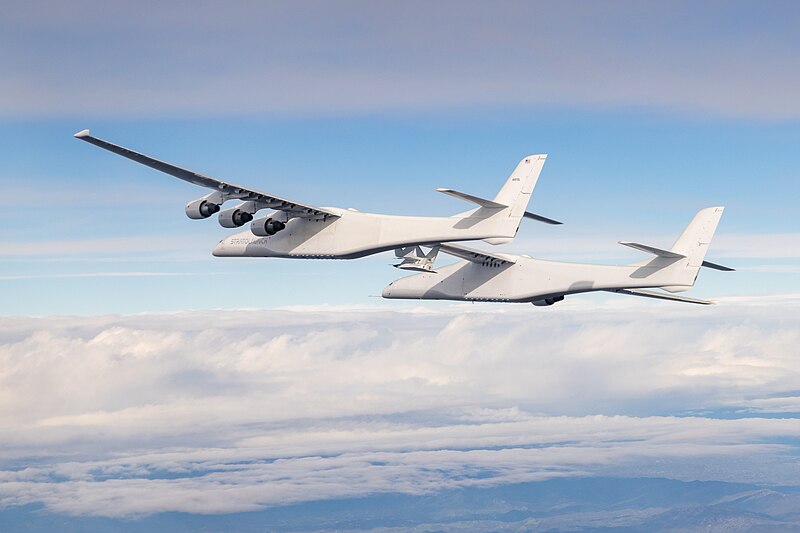
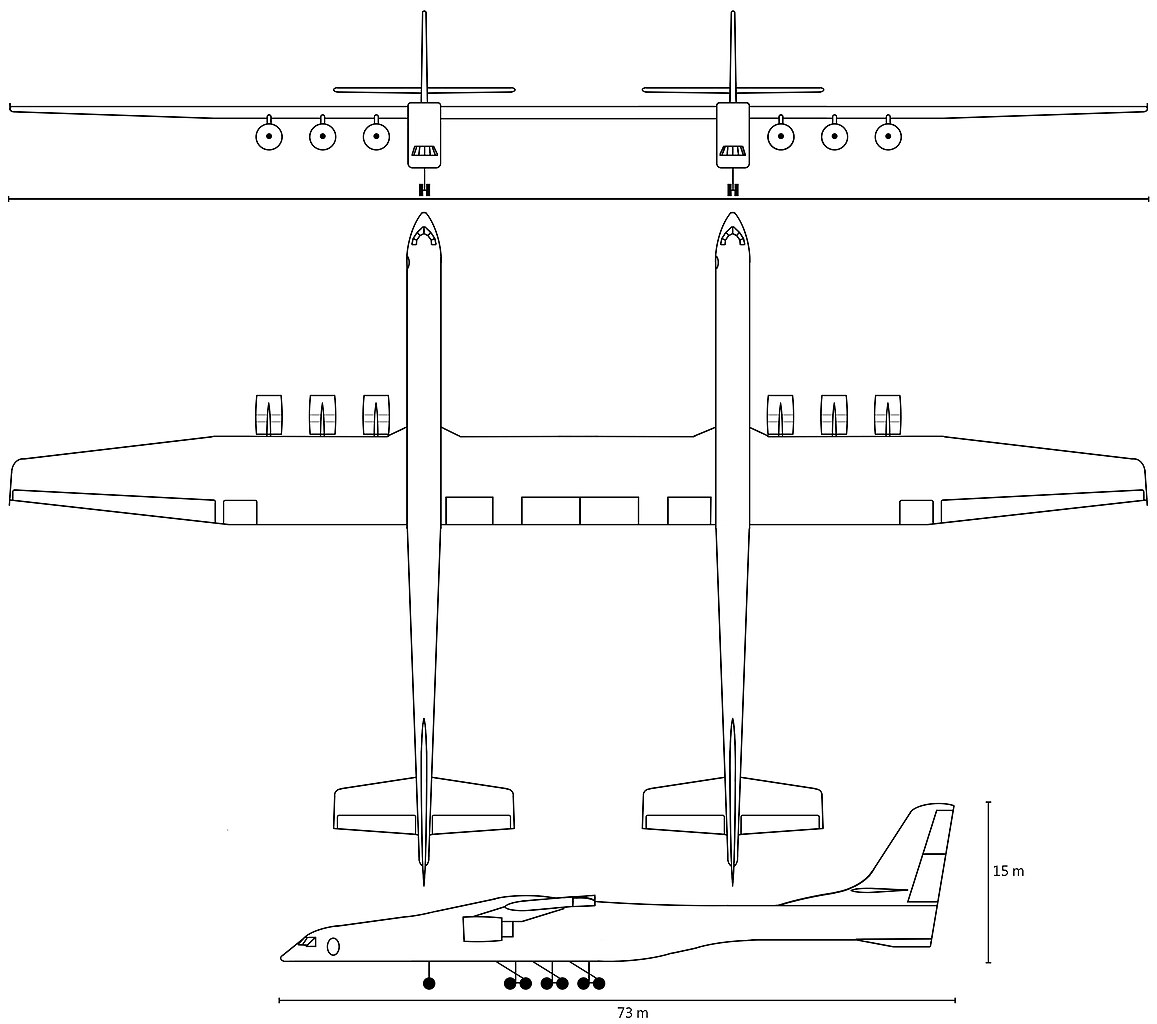
It beggars belief that an aircraft built to launch rockets into space, with not one but two fuselages, a total of 6 engines, and a mindblowing wingspan larger than an American football ground, ended up as a flight testing craft after just one flight. The aircraft was built for novel causes, though. One of the people involved in the inception of this aircraft said:
“Stratolaunch will build an airline system to give us orbital access to space with greater safety, flexibility, and cost-effectiveness, for both cargo and mankind”.
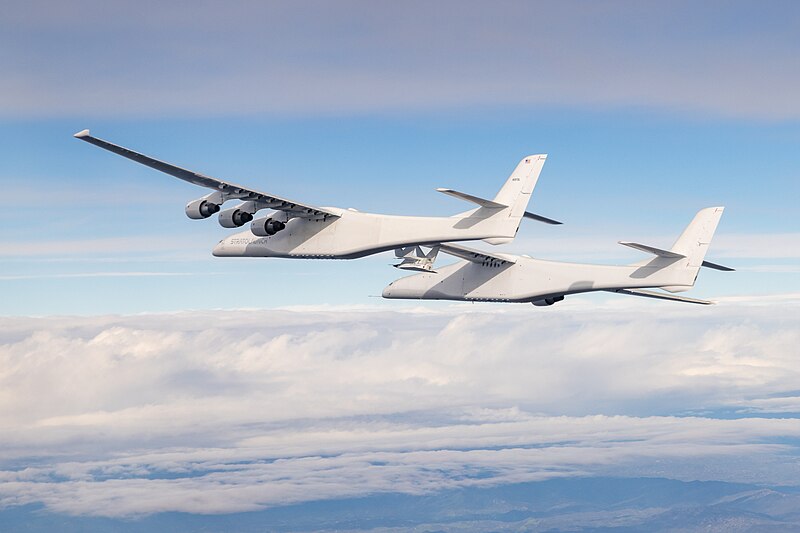
Scaled Composites Model 351 Stratolaunch, Roc
Paul Allen and Burt Rutan announced the Scaled Composites Model 351 Stratolaunch, rolling out a video of its model and structure. They shared their overwhelmingly mind-blowing dream of a cost-effective, operationally flexible, and quick, responsive launchpad for rockets. Unfortunately, Allen couldn’t live to see his dream take flight on 13 April 2019. However, he did live to see the craft roll out of its a hundred thousand sq. foot hangar onto the runway in May 2017.
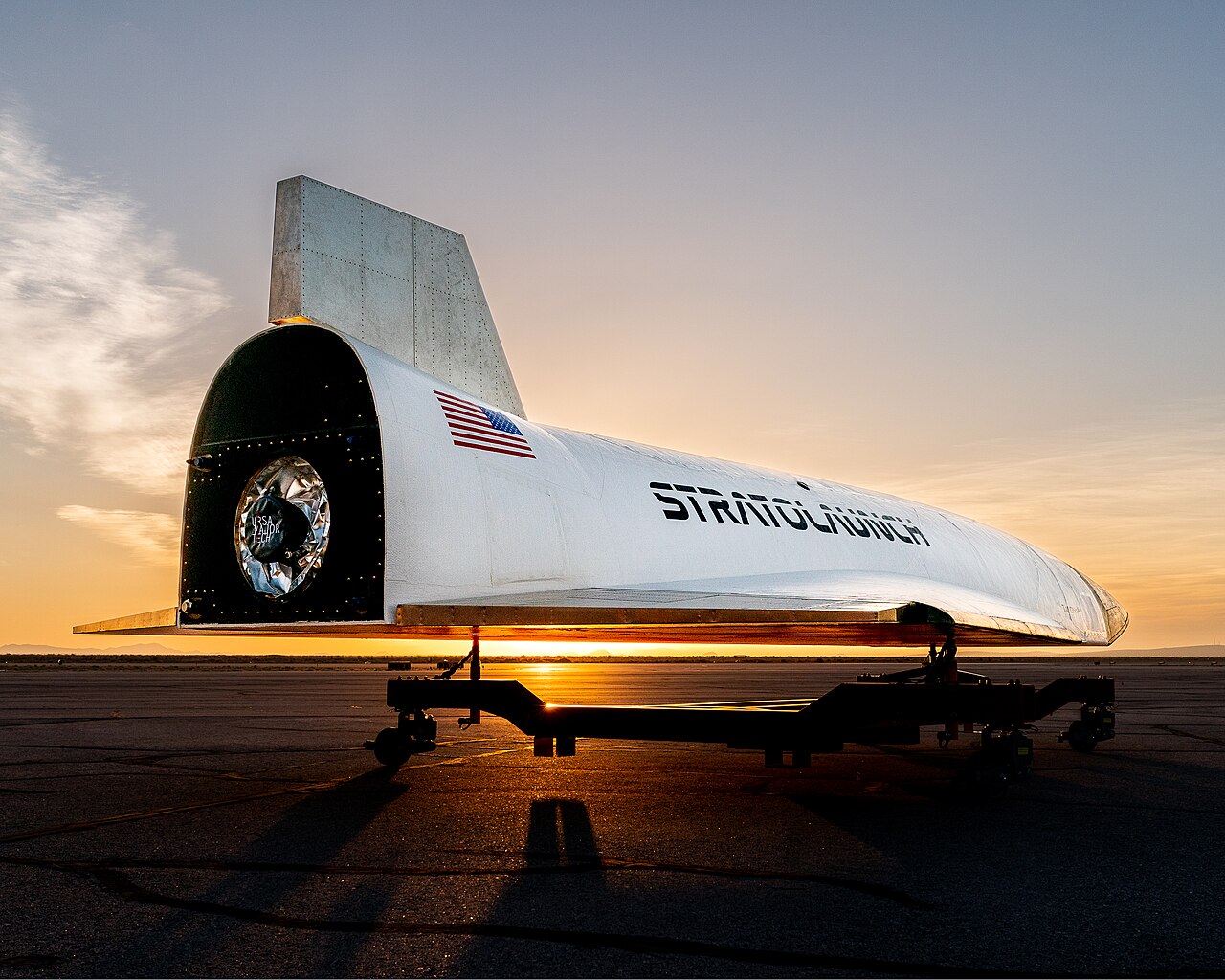
Stratolaunch, also referred to as Roc for its mighty structure, has a nose-to-tail length of 238 feet and a height surpassing the wingspan of WK2 of 50 feet. Likewise, it has a wingspan of 385 feet. This is larger than an American football ground. Stratolaunch also requires a minimum of 12,000-foot-long runway for lift-off.
The crew operates the aircraft from its right fuselage with a storage space on the left fuselage that can hold up to 2,500 lb of mission-specific equipment. This pair is supported by 12 main landing gear wheels in addition to two more nose gear wheels. Stratolaunch was fused into one of the world’s finest AeroTech companies. The carrier aircraft from Scaled Composites interfaces the health and stats of the Multi-Stage Booster by Space X with the help of a Mating and Integration System.
| Maximum Take-off Weight | 580570 kg/ 1.3 Million lb |
| Service Ceiling | 10,668 meters/ 35,000 ft |
| Maximum Speed | 416 knots/ 853km/hr |
| Normal Cruise Speed | 165 knots/ 306 km/hr (in first flight) |
| Engines; Power | 6; 252.4kN per engine |
| Engine Model | PW 4000 |
The fuel tanks are adjacent to SIX Pratt & Whitney 4000 engines, which were borrowed and modified from the Queen of Skies, Boeing 747 herself. The engines are inboard on the wings that join the fuselage. How does the biggest aircraft ever work?
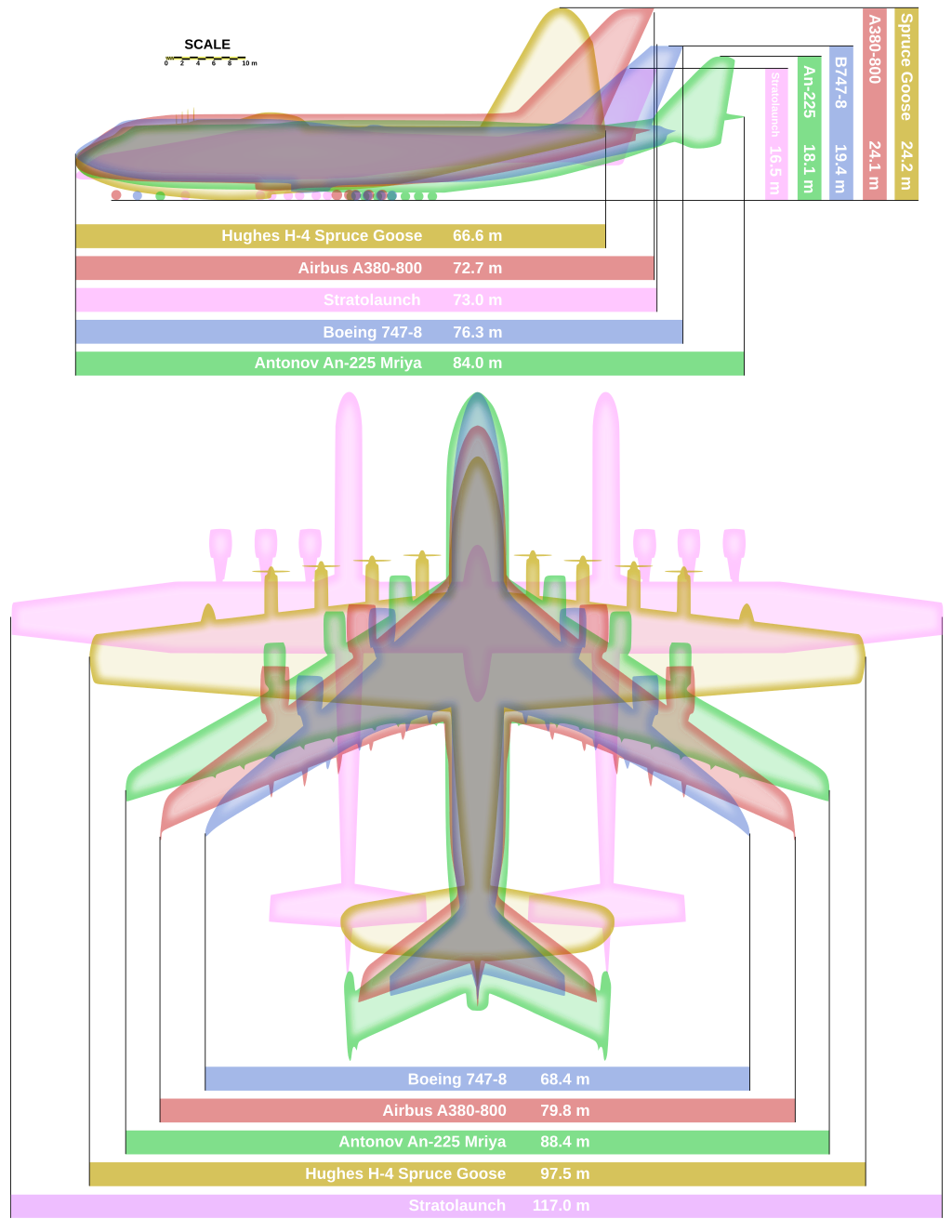
photo : Clem Tellier/Wikimedia commons
At approximately 120 ft, the multi-stage booster lofts the payload into the lower orbit of the Earth. After achieving 30,000 feet, the booster is released, igniting the engine. This starts the spacecraft’s journey toward space. Ending the first stage burn and a short coast period, the stage ignites, and an orbital payload proceeds to its planned mission.
The MIS is located at the center of a high-mounted, high-aspect-ratio wing, which is equipped with all the systems necessary for the booster to interface with carrier aircraft. The MIS’s sole responsibility is to secure the booster to the carrier aircraft from taxiing to the booster’s release.
What happened to the Stratolaunch after the death of Paul Allen?
Stratolaunch was a dream, Paul Allen believed, will expand into the birth of more such crafts , “something to search for in the night sky and dream about”. The aircraft took up to sky shortly after non- Hodgkin Lymphoma took away Allen. Unfortunately with the death of Allen, the plans he had made for his passion project died too.
Vulcan, Allen’s investment conglomerate, tagged the ownership of the aircraft with other intellectual property and facilities at an amount of $400 million. However, despite the failure of the expected future for the aircraft, Stratolaunch has been repurposed for flight testing which still allows it flight and further missions. Gradually testing its own abilities and preparing Talon-A, with test flights for the craft, Stratolaunch has finally released its first successful hypersonic vehicle release on March 5, 2024.