Japan has chosen Mitsubishi Heavy Industries’ Komaki South Plant in Aichi Prefecture as the country’s national assembly center for the Global Combat Air Programme (GCAP), the trilateral sixth-generation fighter jet being built with the United Kingdom and Italy. Japanese outlet 47news first reported the decision on July 26, 2026, and it was confirmed by Militarnyi the same day. The plant, located in the town of Toyoyama, will become Japan’s primary production site for the aircraft, though some assembly stages may still shift to sites in Britain and Italy.
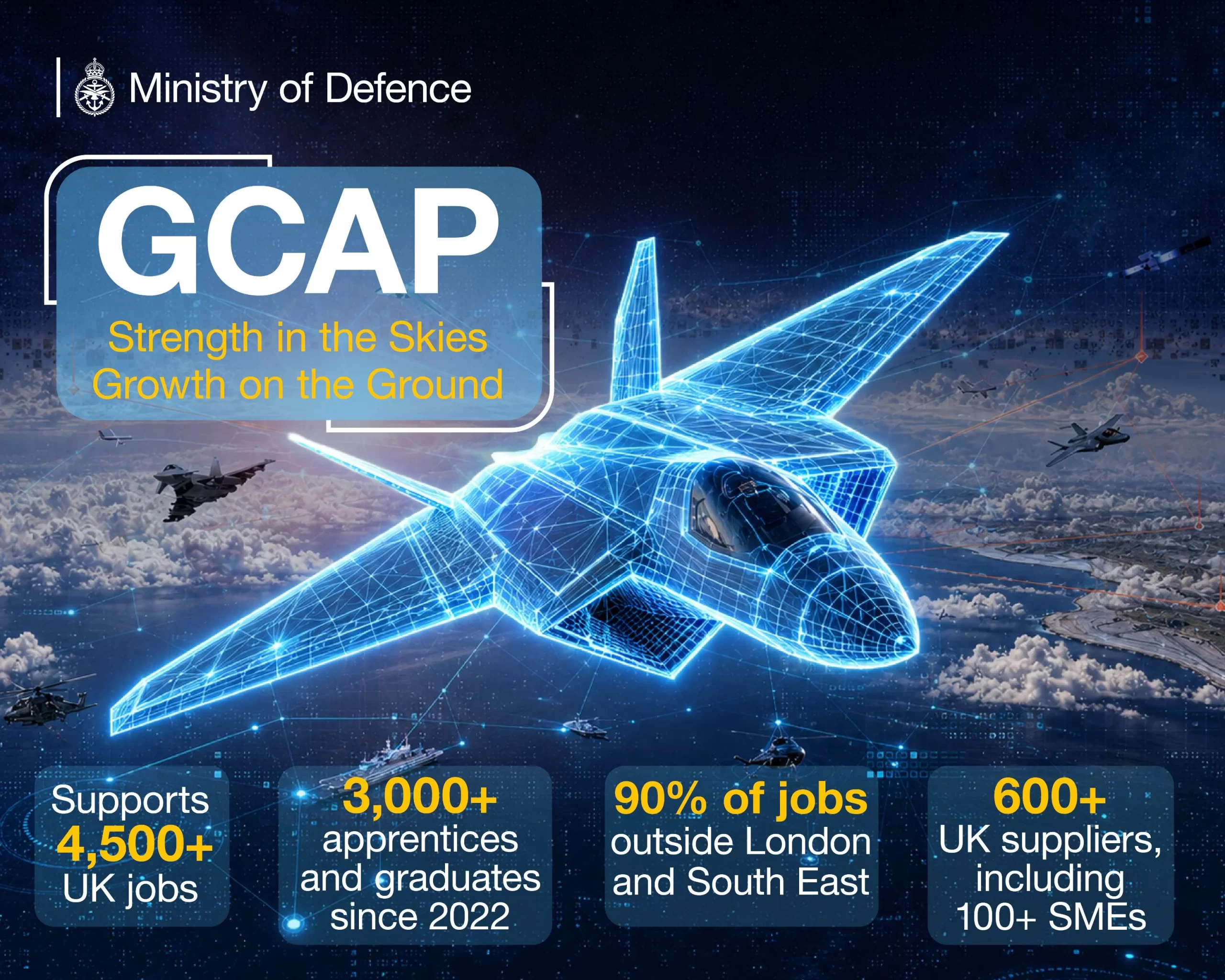
The decision comes three weeks after the three GCAP partner nations signed a £4.6 billion ($6.1 billion) contract with industry consortium Edgewing to fund the program’s next design phase. Japan is targeting the end of 2026 to launch its national development center at the same site, matching parallel centers opening in Warton, England, and Turin, Italy. The GCAP fighter is due to enter service by 2035, replacing the Eurofighter Typhoon in British and Italian service and the Mitsubishi F-2 in Japan. The news comes only a few days after news that Germany could be the fourth nation to join this program.
Komaki South Plant Chosen for its Existing Fighter Jet Production Base
Mitsubishi Heavy Industries already uses Komaki South to carry out final assembly of F-35A fighter jets for the Japan Air Self-Defense Force. That existing infrastructure and trained workforce became the leading factors behind Japan’s decision. British engineers are already based at the plant, working alongside Mitsubishi specialists on individual components of the future aircraft.
The South China Morning Post reported that Mitsubishi Heavy has positioned GCAP as a core business priority after ending development of the Mitsubishi Regional Jet, Japan’s first domestic passenger aircraft. The three GCAP countries agreed to launch the program in 2022, aiming to field the new fighter by 2035 amid rising security tensions in the Indo-Pacific and Europe.
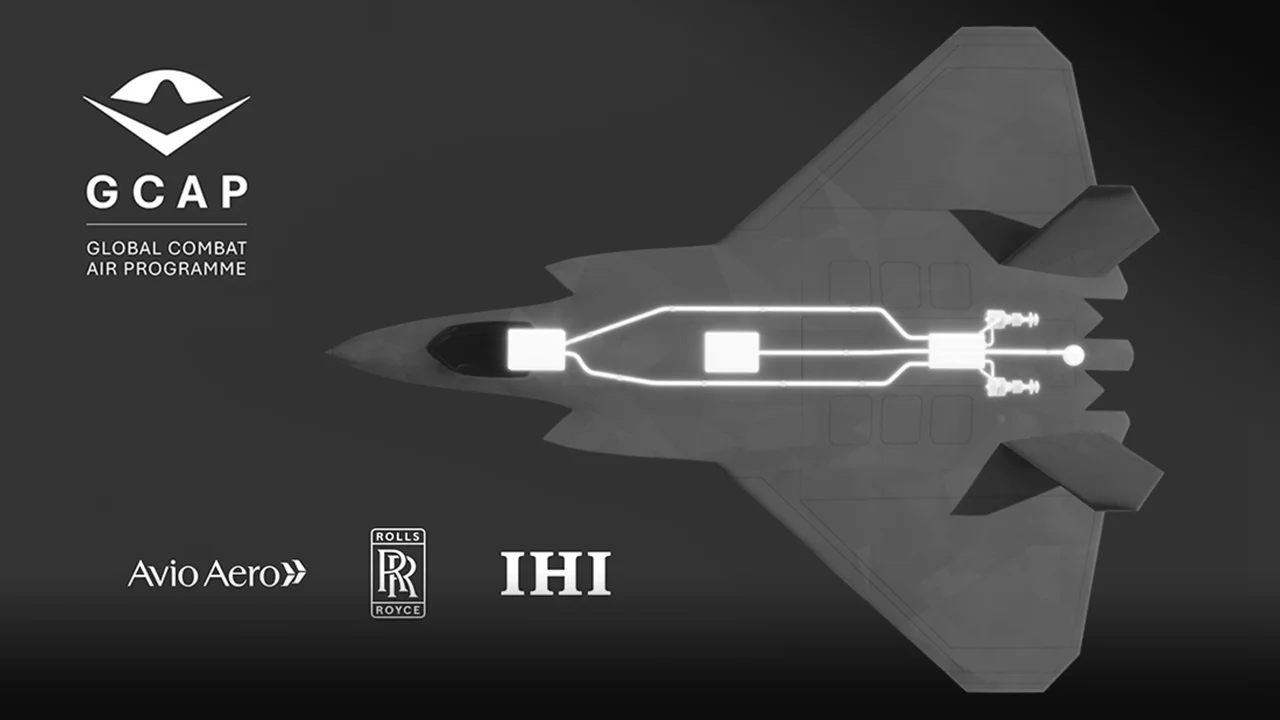
Rolls-Royce
| X (formerly Twitter)
Japan Leads Airframe Design as Work Splits Across Three Countries
Japan holds one of the leading roles in GCAP. The country took responsibility for designing the aircraft’s airframe at the end of December 2024, applying its composite material technologies to reduce structural weight and improve stealth performance, per Militarnyi’s account of Japanese defense ministry statements.
Work on GCAP splits along national lines, though all three countries contribute to some shared systems:
- Japan: airframe design, using advanced composite materials for weight reduction and radar stealth
- United Kingdom: avionics and electronic systems, developed at the Warton center
- Italy: flight control systems, developed at the Turin center
The aircraft is designed to operate alongside existing jets such as the F-35, using advanced autonomy, artificial intelligence, and next-generation sensors. The program is managed under a joint venture called Edgewing, which brings together Britain’s BAE Systems, Italy’s Leonardo, and Japan Aircraft Industrial Enhancement Co.

How the Assembly Site Decision Fits the £4.6 Billion Contract Signed in July
The Komaki South announcement follows directly from a major funding milestone reached earlier in July. On July 3, 2026, the UK, Italy, and Japan signed a £4.6 billion, 18-month contract with Edgewing to complete the program’s advanced concept and assessment phase. That contract followed months of delay tied to the UK’s defense budget, which Japan’s government had pushed back against.
according to the Japan Times, British defense readiness minister Luke Pollard said, “Signing this £4.6 billion contract alongside Italy and Japan is a major step forward towards delivery”. The funding decision came three days after Britain’s delayed Defence Investment Plan committed £8.6 billion to GCAP over four years, more than the roughly £6 billion partners had expected. Where the July 3 contract addressed how the program pays for its next phase, the Komaki South decision addresses where Japan’s share of the work will physically happen, making the two announcements complementary rather than separate developments.
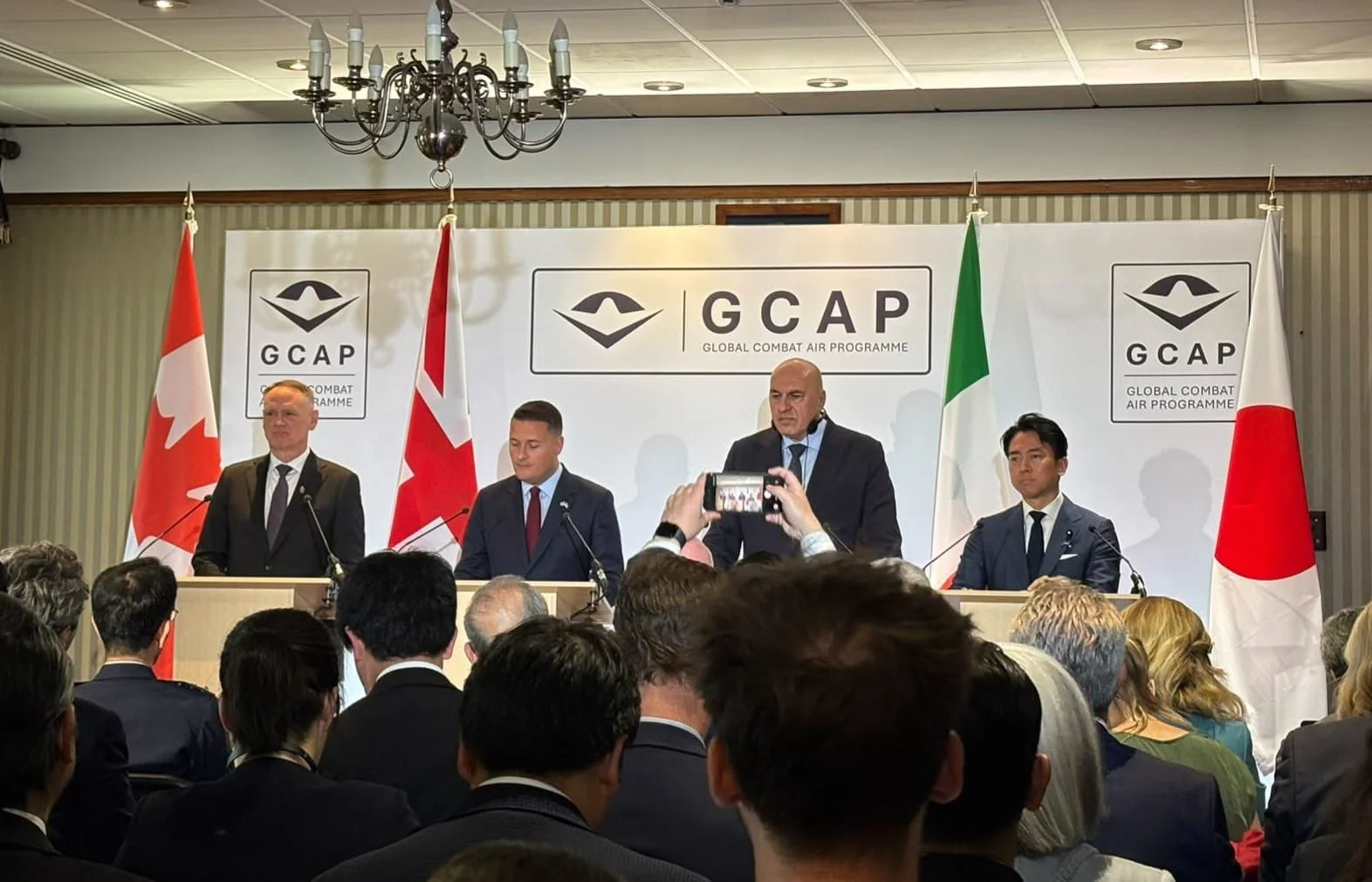
GCAP
@GCAP_int – X (formerly Twitter)
Engine and Radar Work Moves Forward Alongside Assembly Plans
Parallel component development is progressing across all three countries. In the UK, BAE Systems reported that engineers have assembled roughly half of the Tempest demonstrator aircraft, using more than 11,500 components that make up about 90 percent of the future jet’s mass. BAE Systems plans to fit that demonstrator with an Orpheus jet engine, adapted from the EJ200 engine used in Typhoon fighters.
In Japan, engineers are separately evaluating the IHI-built XF-9 engine to assess its performance and potential application to the GCAP aircraft. Toshiba has also presented a new onboard radar system built around an active electronically scanned array, intended for the future fighter. These parallel work streams show each partner nation is simultaneously advancing airframe, propulsion, and sensor technology rather than waiting for one another to finish.
What Happens Next for GCAP
Japan still needs to finalize the division of assembly work among the three countries, since some production stages could move to the British and Italian sites depending on how that split is agreed. Japan’s national development center, based at Komaki South, is due to open by the end of 2026, giving the program a full year to align its three national centers before deeper engineering work accelerates.

The GCAP fighter’s next major milestones will likely center on detailed design work funded by the July 2026 contract, alongside continued engine and radar testing in each partner country. With entry into service targeted for 2035, the coming months will show whether Japan’s Komaki South selection helps keep that timeline on track.
_right_rear_view_in_GCAP_booth_of_JA2024_at_Tokyo_Big_Sight_October_19,_2024.jpg)