How Common And Dangerous Are Bird Strikes in British Aviation?

The UK Civil Aviation Authority (CAA) recorded 1,432 bird strikes across British aviation in 2022, and the agency has tracked a steady rise in reporting since mandatory disclosure began in January 2004. Most of these encounters cause no damage and pass unnoticed by passengers, but a small number each year force diversions, engine shutdowns, or emergency landings. The deadliest confirmed case in recent British history killed four US Air Force airmen when their helicopter struck a flock of geese over the Norfolk coast in January 2014.
Bird strikes affect commercial airliners, military jets, and helicopters alike, and British aviation authorities have built one of the world’s longest-running reporting systems to track them. This guide examines how often bird strikes occur in UK airspace, which species and airports are most affected, the country’s most serious incidents, and the regulatory framework built to reduce the risk.

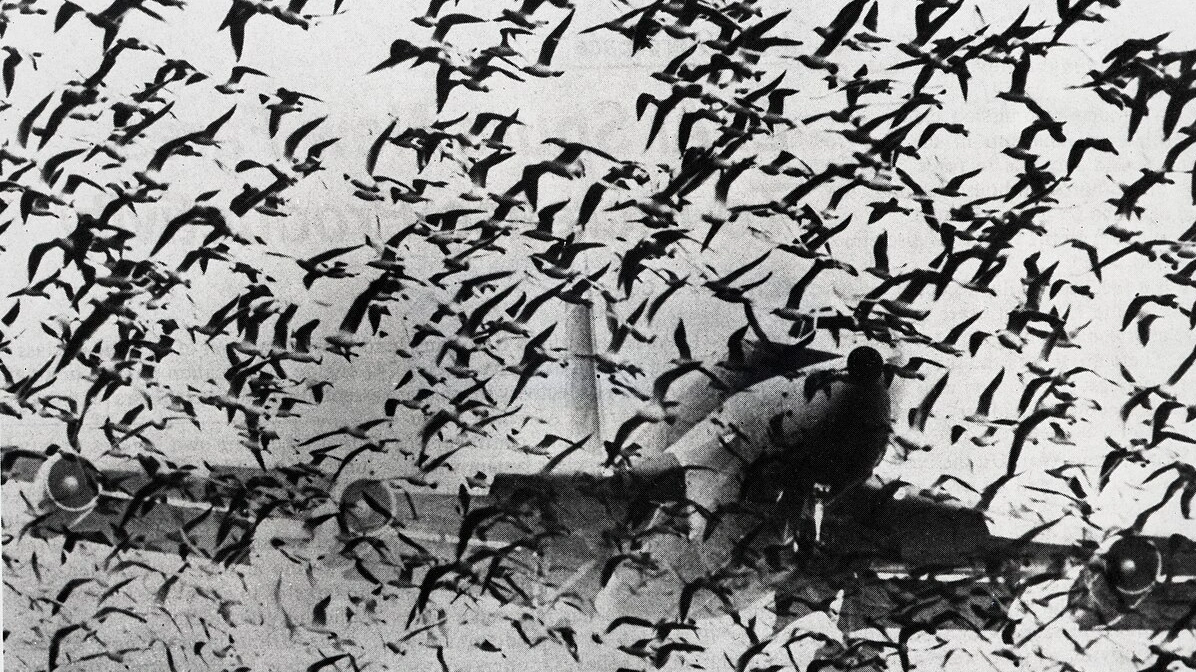
Photo: U.S. National Archives and Records Administration

How Many Bird Strikes Does The UK Record Each Year

The CAA’s Birdstrike Risk Management data shows that approximately 2,000 strikes are reported to the regulator annually, of which around 1,400 are classified as “confirmed” incidents involving physical evidence of a collision. In 2022, the confirmed figure stood at 1,432, with the CAA recording an average rate of 256 bird strikes per 10,000 aircraft movements that July. Of those 2022 incidents, only 45 caused damage to the aircraft, and just 28 resulted in a flight return or diversion.

Reporting volumes rose sharply after January 2004, when the CAA made disclosure of bird strikes mandatory for aircrew. That change alone drove a 60% increase in the number of reports received. By 2016, confirmed strikes had climbed to 1,835 for the year, according to CAA figures cited in contemporary reporting. Serious strike events — those causing damage or measurably affecting a flight — have held relatively steady at 55 to 60 occurrences per year, even as overall traffic volumes have grown.

The most commonly struck species in UK airspace are gulls, wood pigeons, pigeons, and skylarks, alongside swallows, swifts, and kestrels in some seasonal reporting periods. Around 85% of UK bird strikes occur below 800 feet, consistent with the global pattern in which most collisions happen during takeoff or landing rather than at cruising altitude. A bird strike is formally defined as any collision between a bird and an aircraft that is airborne, taking off, or landing.

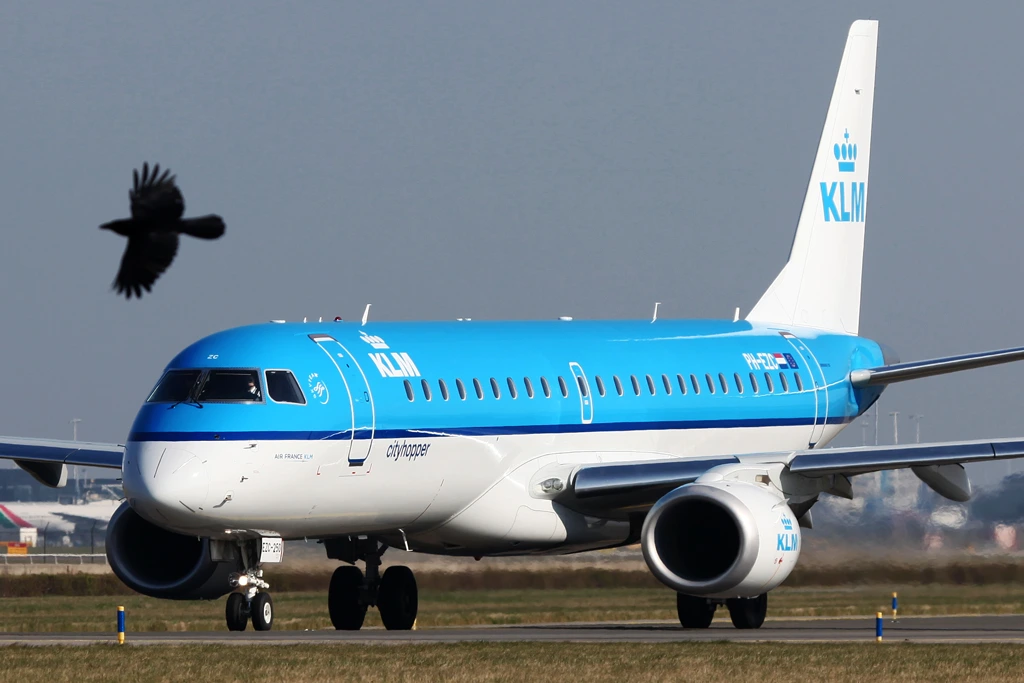
Photo: Maarten Visser | Wikimedia Commons

Which Airports And Aircraft Face The Highest Risk

Heathrow Airport (LHR) operates one of the most intensive bird hazard management programmes of any British airport, given its position as Europe’s busiest hub. The airport runs a bird scaring operation 24 hours a day, 365 days a year, using an electronic system called Digiscare that broadcasts pre-programmed distress calls tailored to different species. Despite this, high-profile strikes still occur at Heathrow: in March 2024, a Saudia Boeing 787-10 suffered wing leading-edge damage from a bird strike while approaching the airport.

Gatwick Airport (LGW) and Luton Airport (LTN) have also recorded serious incidents. A CAA report covering 2011 and 2012 documented 315 bird strike incidents that either damaged aircraft or created a flight safety hazard, including a flight out of Luton that was struck by a flock of birds shortly after takeoff, forcing the pilot to shut down an engine. A separate incident saw a pilot declare an emergency after colliding with greenfinches while approaching Gatwick.

The risk extends beyond passenger aircraft. Airbus operates specialised Beluga transport aircraft between UK and European wing-assembly sites, and any bird strike affecting these flights could disrupt production schedules across the wider Airbus supply chain. Bird strike prevention technologies outlines how airports worldwide, including in the UK, combine habitat management, detection radar, and active deterrence to reduce these risks.

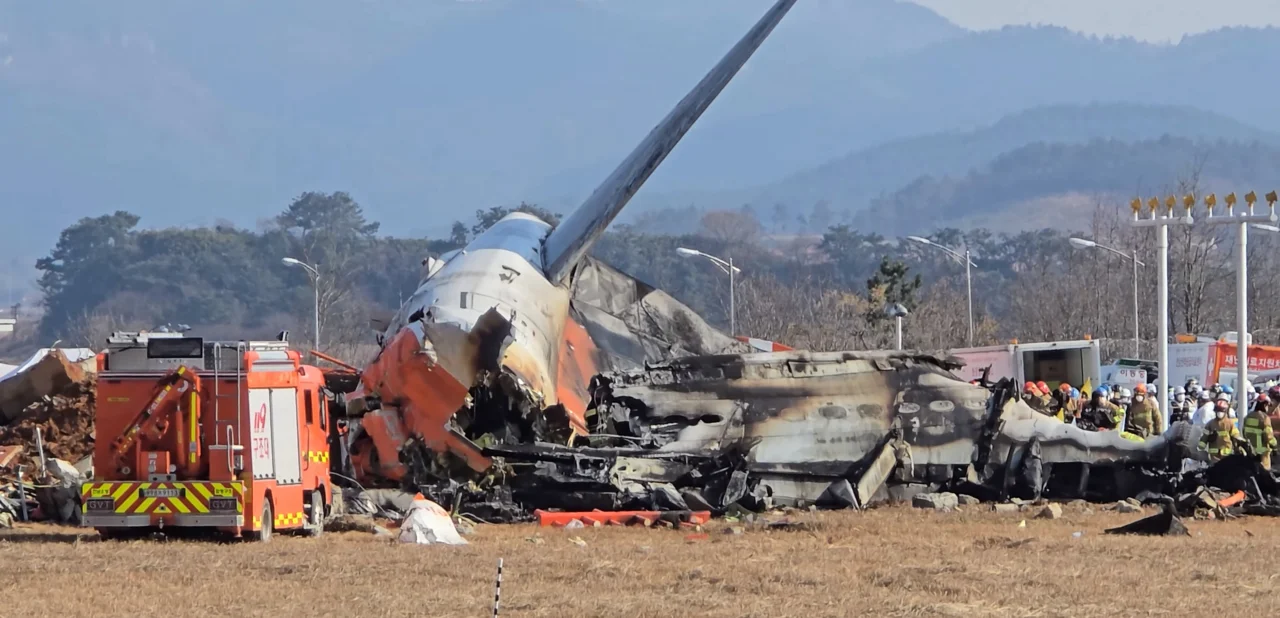
Photo: 자연속으로 into nature | Wikimedia Commons

Which Bird Species Pose The Greatest Risk To UK Aircraft

Not every bird poses the same level of threat. Risk depends on a combination of body mass, flocking behaviour, and how frequently a species is encountered near runways. UK data consistently identifies a small group of species as responsible for the bulk of confirmed strikes:

  • Gulls — the single largest group struck in UK airspace, drawn to airports by open grassland and nearby landfill or waste sites
  • Wood pigeons and pigeons — common around urban and suburban airports, including many regional UK aerodromes
  • Skylarks, swallows, and swifts — smaller species frequently struck during low-altitude flight phases
  • Kestrels and other raptors — less frequent but capable of causing more serious damage due to higher body mass

CAP 772 formalises this distinction through a tiered risk-scoring system, in which a species’ hazard rating rises after repeated multiple-bird strikes are recorded. A single strike involving a small skylark is treated very differently from a multiple-bird encounter with a flock of geese, which can be catastrophic even for a well-engineered aircraft.

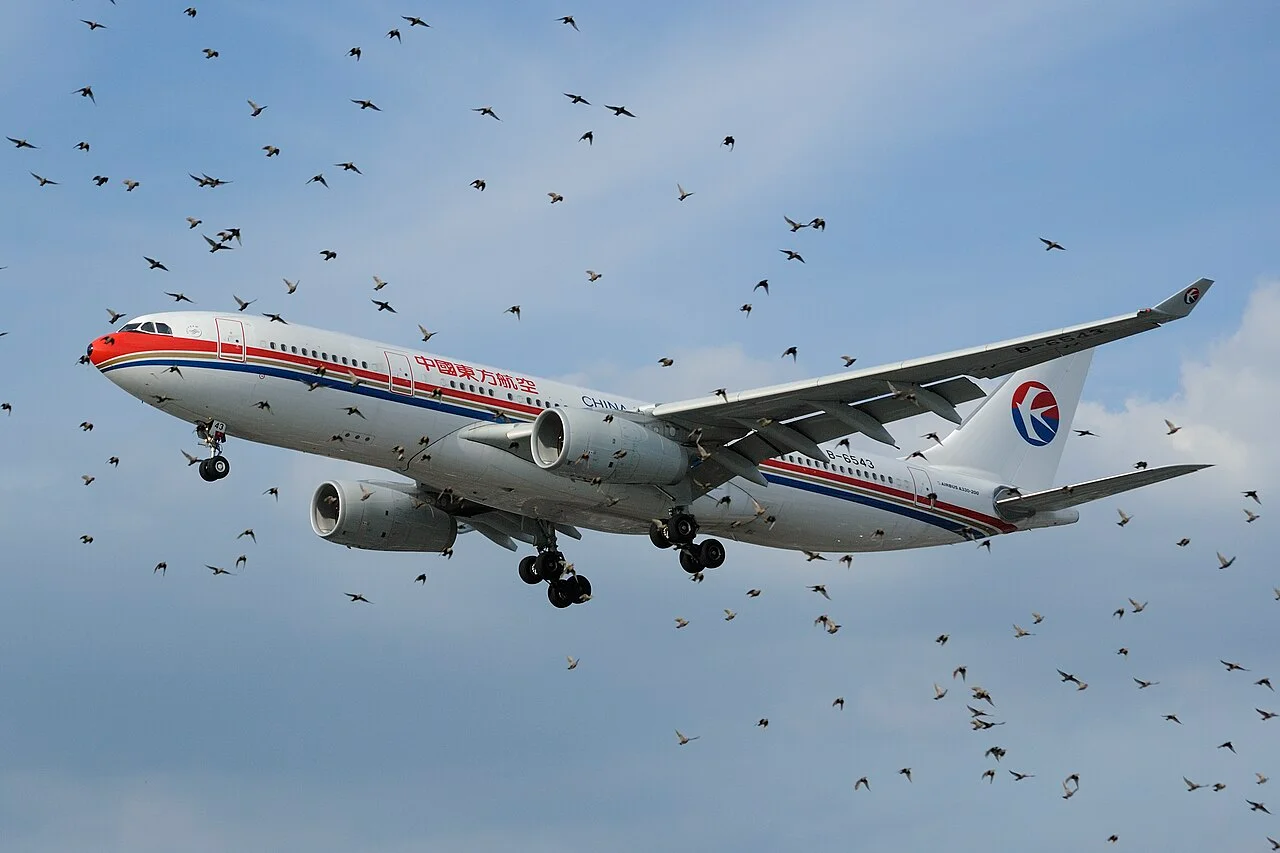
Photo: NMOS332 | Wikimedia Commons

The Economic Cost of Bird Strikes to UK Aviation

Even non-damaging bird strikes carry a cost. The UK’s former Central Science Laboratory estimated that worldwide, bird strikes cost airlines around $1.2 billion annually, a figure consistent with separate European Space Agency estimates. British airports absorb a share of this cost through continuous wildlife hazard management spending, engineering inspections following every reported strike, and occasional flight delays or diversions.

Heathrow’s round-the-clock bird scaring operation illustrates the scale of investment required at a single major hub. The airport’s wildlife management team works in coordination with airline engineering departments, since even a strike that causes no visible damage typically triggers a precautionary inspection before the aircraft returns to service.

A 6.8kg goose striking an aircraft travelling at 200 knots exerts a force equivalent to roughly 16 tonnes, enough to destroy an engine outright, which explains why airlines treat every reported strike involving a large bird as a serious engineering matter regardless of whether visible damage is immediately apparent.

Photo: Sebastian Terfloth User:Sese_Ingolstadt | Wikimedia Commons

RAF Lakenheath: Britain’s Deadliest Confirmed Bird Strike Accident

The most serious bird strike accident in recent British aviation history did not involve a commercial airliner. On the night of January 7, 2014, a US Air Force HH-60G Pave Hawk helicopter from the 56th Rescue Squadron, based at RAF Lakenheath in Suffolk, crashed into marshland near Cley next the Sea in Norfolk. All four crew members were killed.

The helicopter was flying at approximately 110 feet above ground level at around 110 knots during a nighttime training exercise when it passed low over Cley Marshes, a nature reserve known for large resident bird populations. A flock of geese, startled by the noise of two approaching helicopters, took flight directly into the aircraft’s path. At least three geese struck the windscreen, rendering both the pilot and co-pilot unconscious, while a separate strike disabled the trim and flight stabilisation systems.
The US Air Force Accident Investigation Board found “clear” evidence that the geese strikes caused the crash. Brigadier General Jon Norman, who led the investigation, wrote that the four airmen — Captain Christopher Stover, Captain Sean Ruane, Technical Sergeant Dale Mathews, and Staff Sergeant Afton Ponce — were “known to those they loved as brother, son, father, husband, sister, daughter, mother, wife, and friend.” A memorial service marking ten years since the crash was held at RAF Lakenheath in January 2024.

Photo: Air Combat Command

British Airways And Recent UK Airline Bird Strike Incidents

British Airways (BA), the UK’s flag carrier, has recorded several bird strike-related incidents in recent years, most resolved without injury. In 2025, flight BA121, bound for Dubai International Airport (DXB), returned to Heathrow shortly after takeoff after crew reported an engine surge consistent with a suspected bird strike. The aircraft dumped fuel over designated areas before landing safely, with British Airways confirming the return was a precautionary measure following abnormal engine performance.

On April 26, 2025, flight BA216, a Boeing 777-300ER en route from Washington Dulles International Airport (IAD) to Heathrow, diverted to Boston Logan International Airport (BOS) after the crew reported a possible bird strike and fumes in the cabin. The Massachusetts Port Authority confirmed a bird had been struck, and the aircraft resumed its journey after engineers inspected it on the ground.

Not every suspected bird strike is later confirmed as the cause. In May 2013, British Airways flight BA762 from Heathrow to Oslo turned back shortly after takeoff when one engine caught fire, prompting both of Heathrow’s runways to close and an evacuation using emergency chutes. Witnesses and early reports pointed to a bird strike, but the Air Accidents Investigation Branch later found that fan cowl doors on both engines had been left unlatched during maintenance, causing them to detach and rupture a fuel pipe.

Photo: British Airways

How The Military Manages Bird Strikes Across The RAF

The Royal Air Force (RAF) treats bird strikes as a significant and ongoing safety concern across its UK basing network. More than 250 bird strikes or near-misses were recorded at RAF bases in the Southern and Eastern regions between 2017 and October 2021, including 73 incidents in 2020 alone. In response, the Ministry of Defence issued contracts worth more than £7 million in 2021 for dedicated wildlife control services covering stations including RAF Brize Norton, RAF Coningsby, RAF Marham, and RAF Waddington.

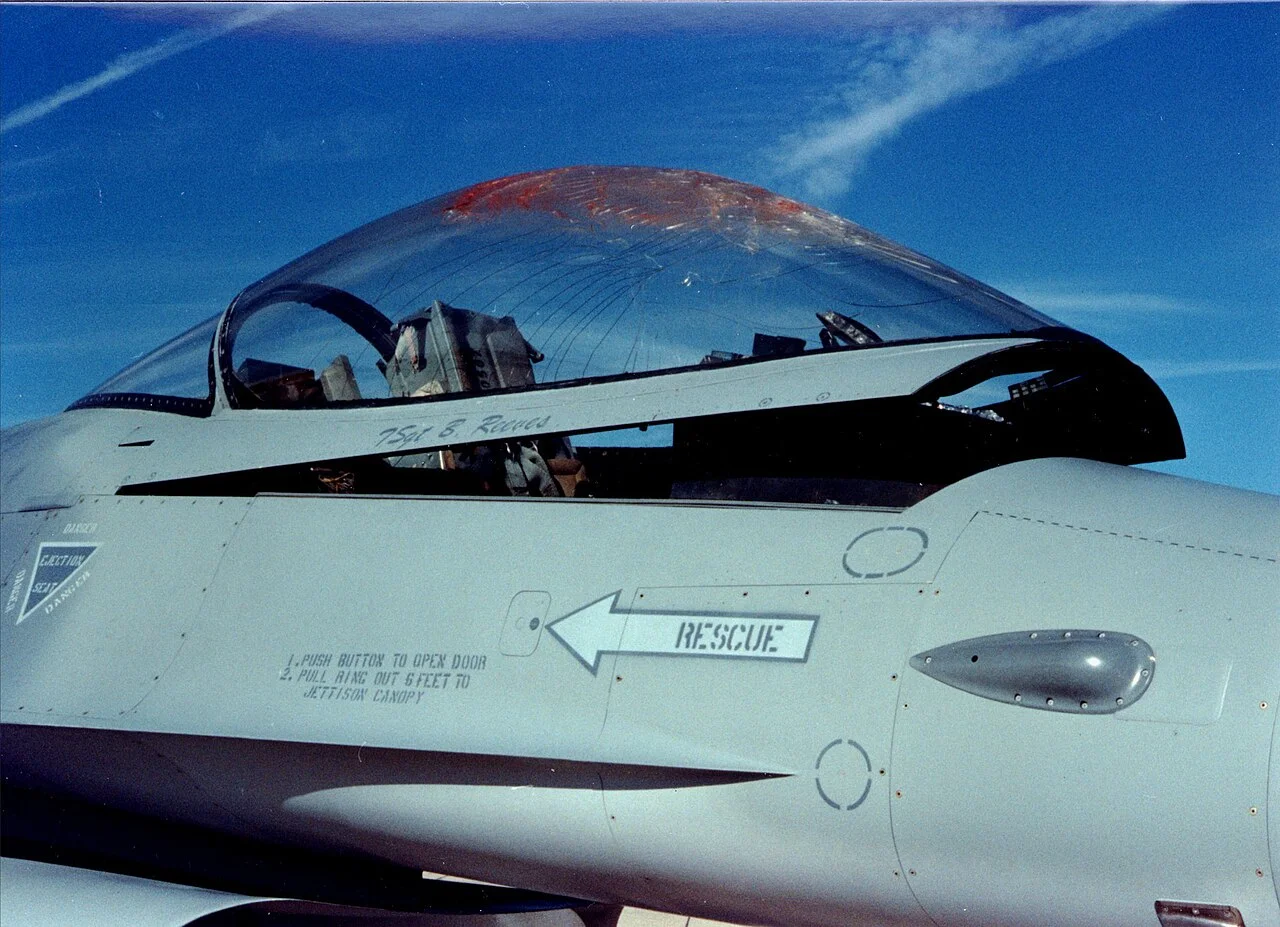
Military aircrew have experienced dramatic incidents in recent years. In August 2022, a Red Arrows pilot, Squadron Leader Gregor Ogston, suffered a bird strike during a display at the Rhyl Air Show that shattered his aircraft’s cockpit canopy, sending glass and bird remains into the cockpit.

He safely landed the damaged jet at Hawarden Airport and was later presented with the RAF’s highest flight safety award, the Green Endorsement. In January 2025, a RAF Eurofighter Typhoon from RAF Coningsby suffered a suspected bird strike over north Wales that led the pilot to jettison the aircraft’s canopy before completing an emergency landing back at base.
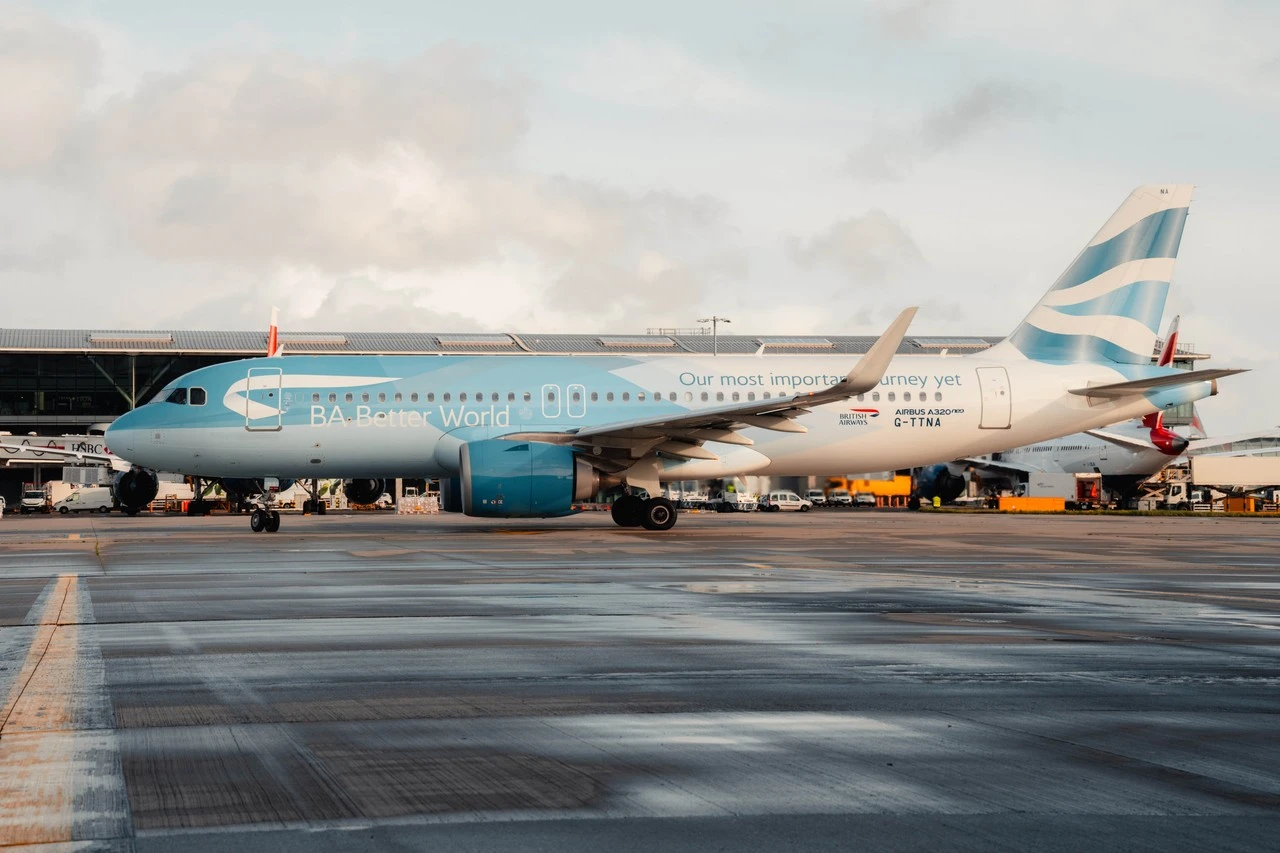
Photo: British Airways

How UK Regulators Manage Bird Strike Risk

British aerodrome operators are required under CAA regulation to establish procedures that minimise the risk of collisions between wildlife and aircraft. The principal guidance document, CAP 772: Wildlife Hazard Management at Aerodromes, sets out how airports should build and maintain a Bird Control Management Plan, covering risk assessment, habitat management, and species-specific mitigation measures.

CAP 772 recommends a structured approach that includes:

  • Habitat modification to reduce food sources and nesting sites near runways
  • Restrictions on agricultural activity, such as ploughing or manure spreading, close to aerodromes
  • Use of lasers, distress calls, and trained personnel for active bird dispersal
  • A tiered risk-scoring system that raises a species’ hazard rating after repeated multiple-bird strikes
Since the introduction of the EU’s mandatory occurrence reporting framework, Regulation (EU) No 376/2014, UK bird strike data has been submitted through a centralised European reporting portal rather than the CAA’s earlier dedicated Birdstrike Reporting Portal, which was withdrawn in August 2017. The CAA continues to publish aggregated birdstrike data covering 2014 to 2024, while cautioning that a high volume of reported strikes at a given airport does not necessarily indicate a greater underlying hazard.

Photo: easyJet

How British Bird Strike Data Compares Globally

The UK’s bird strike experience broadly mirrors patterns recorded elsewhere. In the United States, the Federal Aviation Administration reported roughly 19,400 bird strikes in 2023 across more than 700 airports, a volume driven by a similarly large and busy aviation network. Our guide to bird strikes in US aviation notes that US wildlife strikes have caused an estimated $900 million in annual damages and at least 250 lives lost since 1988.

Fatal bird strike accidents remain extremely rare worldwide relative to the volume of strikes recorded. The most famous case, the January 2009 ditching of US Airways Flight 1549 in New York’s Hudson River. In this case Captain Chesley Sullenberger safely landed the Airbus A320 on the water after Canada geese disabled both engines, saving all 155 people on board.

Nepal, whose mountainous terrain and proximity to ecologically sensitive conservation areas create especially hazardous conditions, lost at least 92 aircraft and helicopters to accidents between 1990 and 2023, with bird strikes representing a persistent contributing factor. The UK’s aviation environment is comparatively low-risk by contrast, since Britain’s airports are largely situated in flat, well-managed terrain rather than the valley approaches and high-altitude aerodromes that compound bird strike risk elsewhere.

Photo: Benjamin Shaw | Wikimedia Commons

What Comes Next for Bird Strike Prevention in Britain

British airports and the RAF are both expanding their use of technology to detect bird activity before aircraft are affected, including radar-based detection systems that feed real-time data to controllers and airfield safety teams. The Ministry of Defence’s continued investment in wildlife control contracts across its Eastern and Southern airfield regions reflects an acknowledgement that reactive dispersal alone has not eliminated the risk, particularly around sites near coastal marshland and nature reserves.

The overall British data suggests bird strikes will remain a routine, largely low-consequence feature of UK aviation rather than a source of frequent serious accidents. Even so, the RAF Lakenheath tragedy and a steady stream of precautionary diversions each year underline why UK regulators continue treating wildlife hazard management as a core safety requirement rather than an optional precaution

Leave a Comment

Your email address will not be published. Required fields are marked *

Scroll to Top