Delta Air Lines (DL) is seven weeks from making aviation history as the first United States carrier to fly nonstop to Saudi Arabia. It should be a moment of celebration. Instead, seat maps for the new Atlanta (ATL) to Riyadh (RUH) service are exposing an uncomfortable reality: almost nobody has booked a seat yet.
An analysis of Delta’s own booking system found that flights operating shortly after the October 23 launch are showing as few as five occupied seats out of 275, with an average of roughly one seat booked per flight across the first days of non-inaugural service, One Mile at a Time flagged. Even allowing for some passengers whose seats have not yet been auto assigned, the gap between capacity and demand looks stark for a widebody long-haul route.
The Aircraft and the Schedule
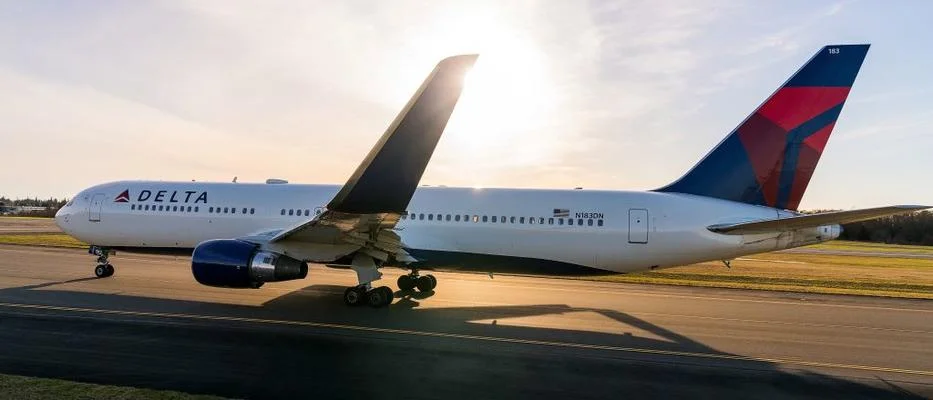
Delta will fly the route with an Airbus A350-900 configured with 275 seats, split across Delta One, Delta Premium Select, Delta Comfort+, and Main Cabin including 40 business class seats, 40 premium economy seats, and 195 economy seats. At 7,283 miles, the sector ranks among the longest in Delta’s network, blocked at 13 hours 5 minutes eastbound and 15 hours 35 minutes on the return leg.
DL318 departs Atlanta at 10:30 PM and lands in Riyadh at 7:35 PM the following day; the return, DL317, leaves Riyadh at 11:30 PM and reaches Atlanta at 7:05 AM. The airline plans one daily flight from the October 23 launch, switching to three times weekly from November 1. Tickets have been on sale since December 2025, with one-way economy fares advertised from $921.
Why the Economics Look Fragile
A 13-to-15-hour widebody rotation is expensive to run regardless of how many seats are filled. Fuel burn, crew costs, maintenance reserves, and aircraft ownership charges accrue whether the cabin is full or empty, and Delta carries some of the highest labour costs of any US carrier.
The underlying market does not obviously support that cost base. One assessment of existing Atlanta–Riyadh traffic found the current one-stop market carries fewer than 5,000 round-trip passengers a year, a very small base for a long-haul nonstop, meaning the route will depend heavily on connecting traffic at both ends rather than local demand. By comparison, Los Angeles, San Francisco, Chicago, Dallas, and Houston were identified as far larger source markets for US-Saudi travel.
The Subsidy Question
That gap between cost and apparent demand is why attention has turned to Saudi Arabia’s Air Connectivity Program (ACP), a state-backed scheme designed to help build the country’s air links. Since its creation in 2021, the programme has added more than 80 routes and brought in 17 foreign carriers, contributing over five million seats to Saudi Arabia’s network.
The programme’s stated purpose is to share the financial risk of launching routes that airlines consider commercially unproven. Saudi officials have said the scheme is designed to compensate carriers for early losses on flights to priority markets, with government funding covering the shortfall while a route builds a customer base. The Kingdom has not published a full breakdown of individual airline agreements; even trade press inquiries into other carriers’ arrangements under the scheme have gone unanswered on the specific value of the support on offer.
Delta has not confirmed that it is drawing on ACP funding for the Riyadh route, and industry commentary has treated the connection as inference rather than confirmed fact, with one analysis describing the subsidy as the most plausible explanation for Delta’s willingness to fly a route it would otherwise avoid. The same commentary noted that a comparable dynamic already applies to Delta’s Atlanta–Brisbane (BNE) service, another long-haul route widely understood to depend on government route-development support.
The Riyadh Air Relationship
The nonstop flight builds on a broader tie-up between Delta and Riyadh Air (RX), the Public Investment Fund-backed carrier that began commercial operations in October 2025. Under a strategic cooperation agreement signed in 2024, Delta became Riyadh Air’s exclusive partner in North America, while Riyadh Air became Delta’s exclusive partner in Saudi Arabia and the wider region, with plans for interline and codeshare connectivity alongside deeper cooperation on loyalty, digital services, and aircraft maintenance. Riyadh Air separately markets the partnership as giving its passengers access to more than 300 cities across North America through Delta’s network.
Delta also holds a codeshare agreement with flag carrier Saudia, giving its passengers access to nine destinations in Saudi Arabia and the Middle East beyond Jeddah and Riyadh, while Saudia customers gain access to 12 US cities beyond Delta’s JFK and LAX hubs. Together, the agreements give Delta a codeshare footprint stretching well beyond the physical reach of a single daily A350 rotation, and Atlanta is positioned as a connecting gateway offering onward links to numerous US cities.
Regional Conditions Complicate the Picture
Instability elsewhere in the Middle East has weighed on regional travel demand and altered routings for several carriers. Geographically, Riyadh sits farther from Iranian airspace than hubs such as Doha (DOH) or Dubai (DXB), placing it under comparatively less direct operational pressure.
In theory, that distance could work in Delta’s favour, giving travellers wary of routing through airports closer to Iran a reason to choose a Riyadh nonstop instead. So far, though, that shift has not shown up in the booking data — the seat maps for the opening weeks of the route remain close to empty.
What Comes Next
Delta has given no indication that it intends to delay the October 23 launch. The aircraft assignment is confirmed, the schedule remains loaded into distribution systems, and tickets remain on sale.
Airlines routinely trim frequencies or push back underperforming long-haul launches when forward bookings disappoint, but a delay this close to the start date, on a flagship, first-of-its-kind route, would carry its own reputational cost for Delta. Whether the carrier holds its nerve may ultimately come down to how much of the route’s operating cost Saudi support is prepared to absorb.
The next several weeks, as the October 23 inaugural approaches, should show whether bookings begin to catch up with the schedule — or whether Delta’s newest long-haul route opens to rows of empty seats.