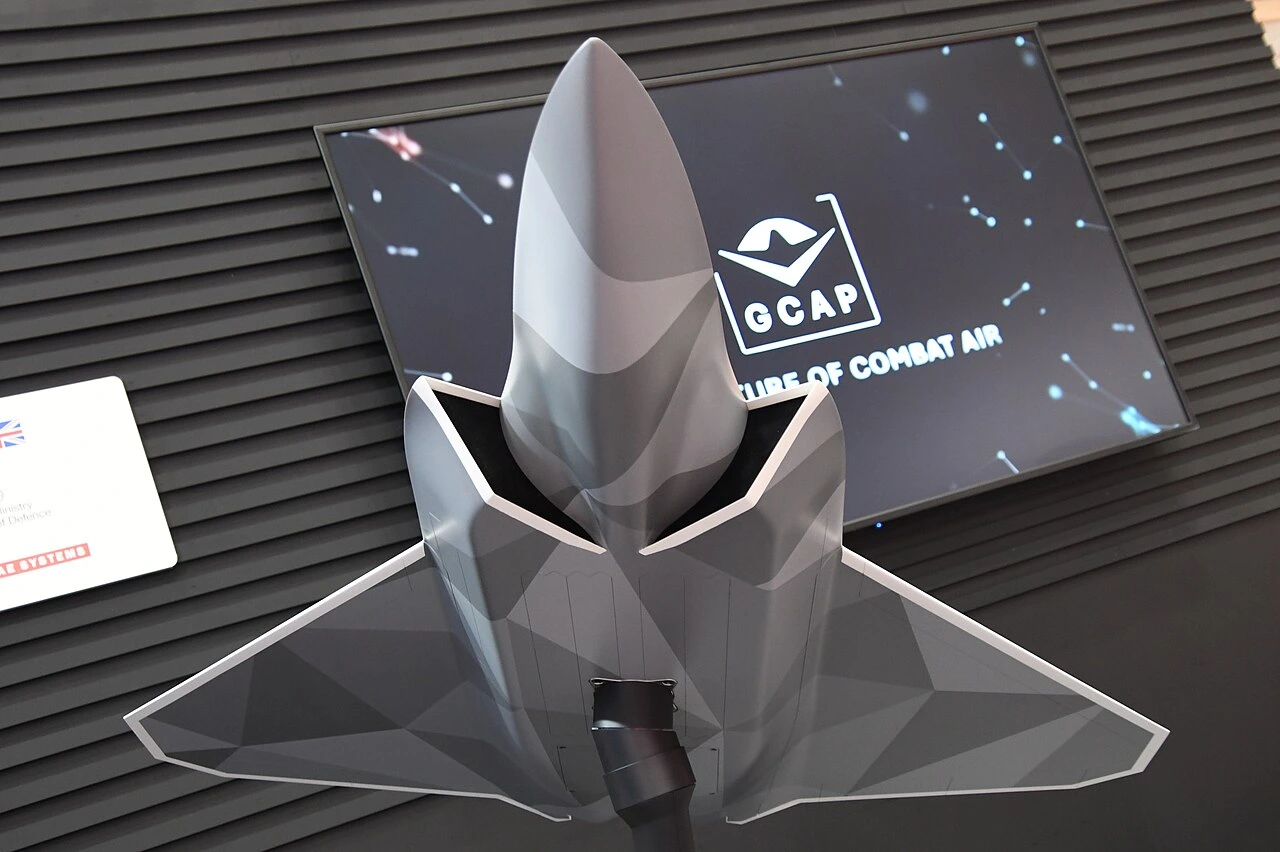
Canada has joined the Global Combat Air Programme (GCAP) as an observer nation. Defence Minister David McGuinty announced the move on July 21 in London, standing alongside his British, Italian, and Japanese counterparts. The four ministers confirmed that Canada becomes the first country to hold observer status in the trilateral programme, which is developing a sixth-generation stealth fighter jet due to enter service by 2035.
The announcement came during the week of the Farnborough International Airshow in England, where GCAP’s industrial partners displayed a full-scale prototype of the aircraft. Observer status gives Canada access to classified programme discussions without requiring any financial contribution or granting Ottawa a vote in decisions. The move forms part of Prime Minister Mark Carney’s broader push to diversify Canada’s military partnerships beyond the United States.
Canada Becomes the First Observer Nation in the UK-Italy-Japan Fighter Programme
The Global Combat Air Programme brings together the United Kingdom, Italy, and Japan to build a next-generation combat aircraft. The three countries formalized their partnership in December 2022, merging the UK’s Tempest effort with Japan’s F-X programme. Italy joined as an equal founding member from the start.
Canada’s admission as an observer marks the programme’s first expansion since its founding. Italian Defence Minister Guido Crosetto, Japanese Defense Minister Shinjiro Koizumi, and the UK’s newly appointed Defence Secretary Wes Streeting joined McGuinty for the London announcement. A joint statement from the four countries said observer status would let Canada “deepen its understanding” of next-generation combat air capabilities.
Lt.-Gen. Jamie Speiser-Blanchet, commander of the Royal Canadian Air Force, told CBC News that the arrangement opens the door to future involvement. She said it was “very feasible to imagine” Canada eventually operating the aircraft. McGuinty, however, said the government is proceeding “step-by-step” and has made no purchase commitment.

What Observer Status Actually Gives Canada
Observer status is a narrow arrangement compared with full GCAP membership. According to reporting on the programme’s structure, it grants a country limited but real access, including:
- Insight into capability development and technical parameters of the aircraft
- Visibility into industrial collaboration plans among BAE Systems, Leonardo, and Mitsubishi Heavy Industries
- Access to long-term delivery and production planning discussions
- The ability to assess a future upgrade to full partner status
Canada takes on no financial contribution, no industrial workshare commitment, and no voting role under the observer arrangement. Full accession to GCAP would require unanimous approval from the UK, Italy, and Japan, along with changes to the programme’s governing treaty.

Aircraft Details: The GCAP Sixth-Generation Fighter
GCAP is governed by the GCAP International Government Organisation (GIGO), a body representing the UK, Italy, and Japan. The programme’s industrial delivery is led by Edgewing, a joint venture formed by BAE Systems, Leonardo, and Japan Aircraft Industrial Enhancement Co. Key programme details include:
- Governing treaty: Signed December 2023, establishing GIGO
- Industrial partners: BAE Systems (UK), Leonardo (Italy), and Mitsubishi Heavy Industries with Japan Aircraft Industrial Enhancement Co. (Japan), operating jointly as Edgewing
- First development contract: A £686 million award to Edgewing for design and engineering work
- Predecessor aircraft replaced: Eurofighter Typhoon (UK, Italy) and Mitsubishi F-2 (Japan)
- Target service entry: 2035
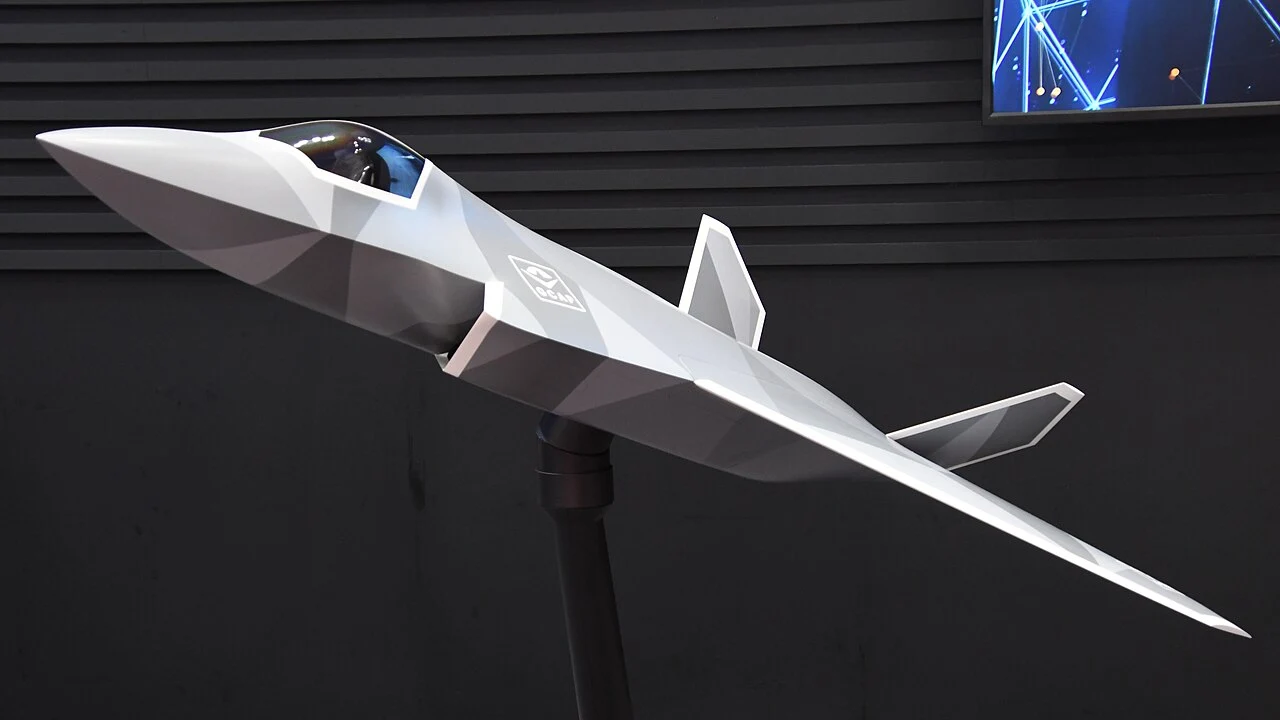
The aircraft is designed as a “system of systems,” connecting uncrewed Collaborative Combat Aircraft, space-based sensors, and cyber capabilities to a crewed fighter platform. A flight-test aircraft is expected in 2026, with a combat air demonstrator targeted for 2027.
Comparing Canada’s GCAP Move with Its Ongoing F-35 Review
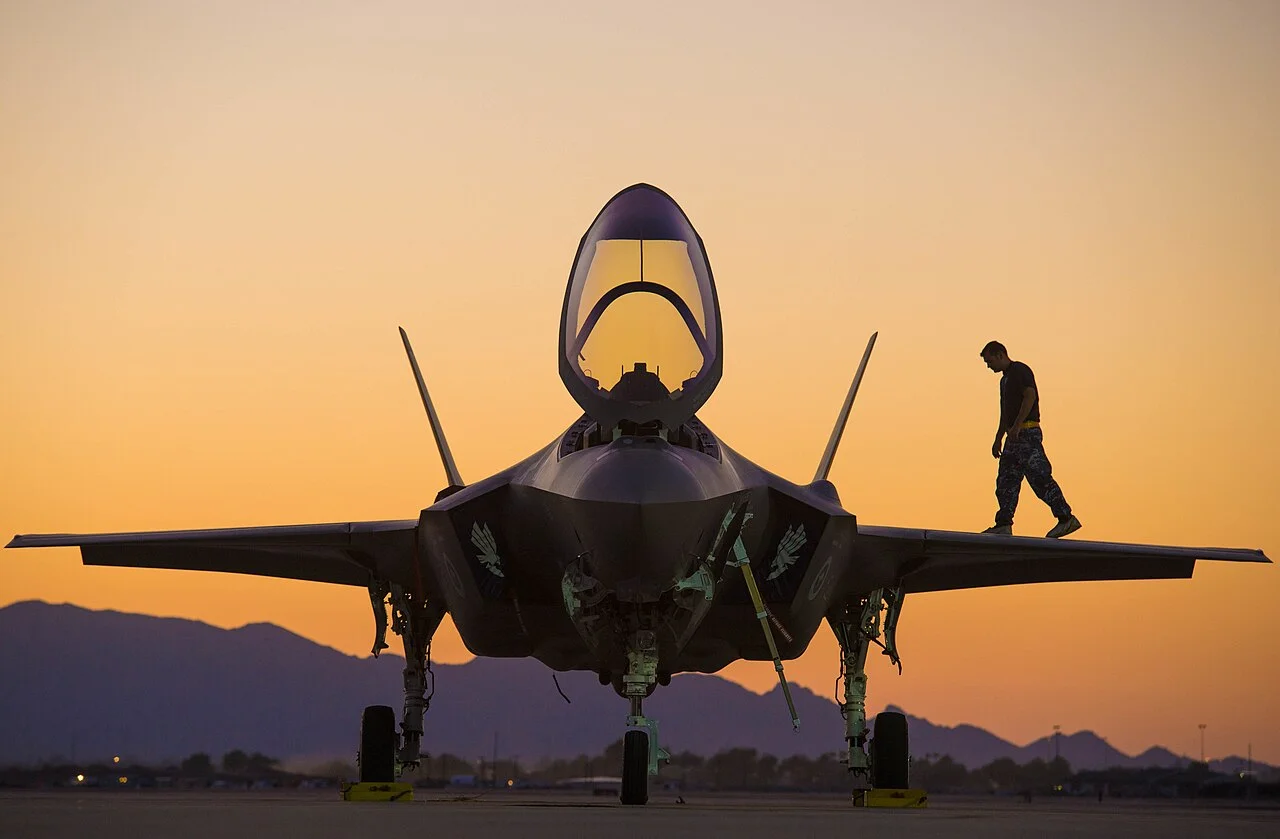
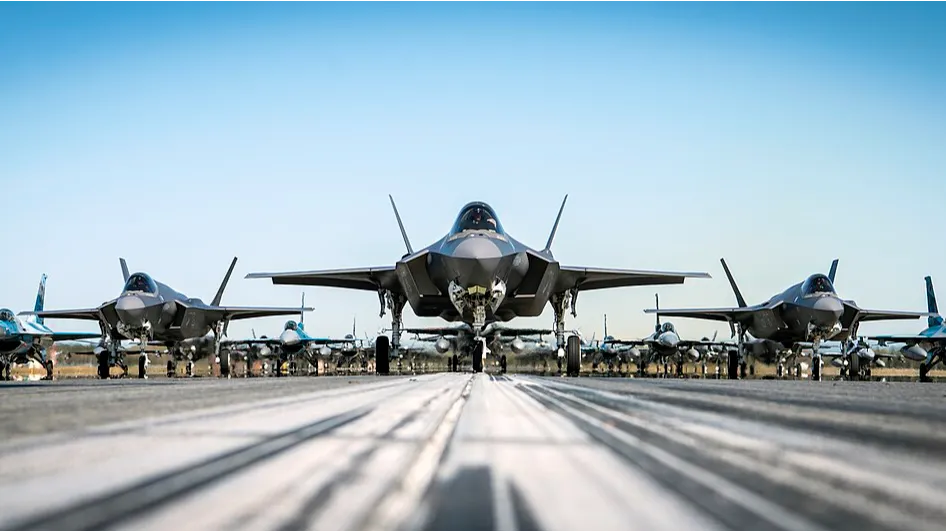
Canada’s move toward GCAP sits alongside a separate and more immediate decision closer to home. Ottawa previously committed to buying 88 Lockheed Martin F-35A jets and has funded an initial 16 aircraft. The remaining 72 jets remain under review as relations between Canada and the United States have grown strained.
Sweden’s Saab has offered to build a Canadian assembly line for its Gripen fighter as an alternative to the remaining F-35 order. Twelve retired senior Royal Canadian Air Force officers have urged Ottawa to proceed with the full F-35 purchase instead. GCAP observer status does not affect the F-35 review directly, since any GCAP aircraft would not enter service until 2035 at the earliest.
Other countries have also expressed early interest in GCAP. India’s defence ministry has explored joining one of the international sixth-generation fighter consortia, though it has not secured observer status. Defence analysts note that international cost-sharing has become increasingly common as next-generation fighter development costs continue to climb.
Political Context: Diversifying Away from the United States
The GCAP announcement followed the United States imposing 50 per cent tariffs on a wide range of Canadian exports. A senior Canadian government official described joining GCAP as a way to “get in on the development of advanced technology early.” The official said Canada is not making financial or policy commitments by becoming an observer.
Prime Minister Carney’s government has separately weighed a Saab GlobalEye surveillance aircraft purchase and reconsidered parts of its F-35 order. Analysts have suggested Canada could also explore joining the U.S. Navy’s F/A-XX programme in the future, depending on how relations with Washington evolve. Canada’s industrial alignment with U.S. suppliers remains close despite the political tension.
What Comes Next for Canada and GCAP
Canada’s next step is not a purchase decision but a period of assessment. Observer status allows Canadian officials to evaluate potential roles in development, production, or eventual procurement before deciding whether to pursue full partnership. Any move to full membership would require unanimous approval from the UK, Italy, and Japan.
The Royal Canadian Air Force will continue receiving its funded F-35A jets in the meantime. McGuinty has said Canada’s aerospace and defence industry is ready to contribute to GCAP if the relationship deepens. The programme’s founding partners are working to lock in the aircraft’s configuration as they push toward the 2035 target.


_front_low-angle_view_in_GCAP_booth_of_JA2024_at_Tokyo_Big_Sight_October_19,_2024_02.jpg)
_left_front_view_in_GCAP_booth_of_JA2024_at_Tokyo_Big_Sight_October_19,_2024_01.jpg)
