Himalaya Airlines (H9), Nepal’s international joint-venture carrier that was formed between Tibetan Civil Aviation Development & Investment Company Ltd. (TCADIC) and Yeti World Investment Pvt. Ltd. with Tibet Airlines holding a 49% stake., will inaugurate a scheduled direct flight service between Tribhuvan International Airport (KTM), Kathmandu, and Shenzhen Bao’an International Airport (SZX), Shenzhen, on June 4, 2026. With this launch, Himalaya Airlines becomes the first and only commercial carrier in the history of civil aviation to operate a scheduled direct service on the Kathmandu–Shenzhen–Kathmandu sector, establishing a strategically significant air corridor between Nepal and one of China’s most consequential economic hubs.
The airline will deploy two weekly round-trip frequencies on the sector, initially operating on Tuesdays and Thursdays from Kathmandu and returning from Shenzhen on Wednesdays and Fridays. The timing is calculated: Himalaya Airlines launches the route during Nepal’s traditionally lean early-summer tourism season, aiming to inject inbound demand precisely when the country’s hospitality sector needs it most.
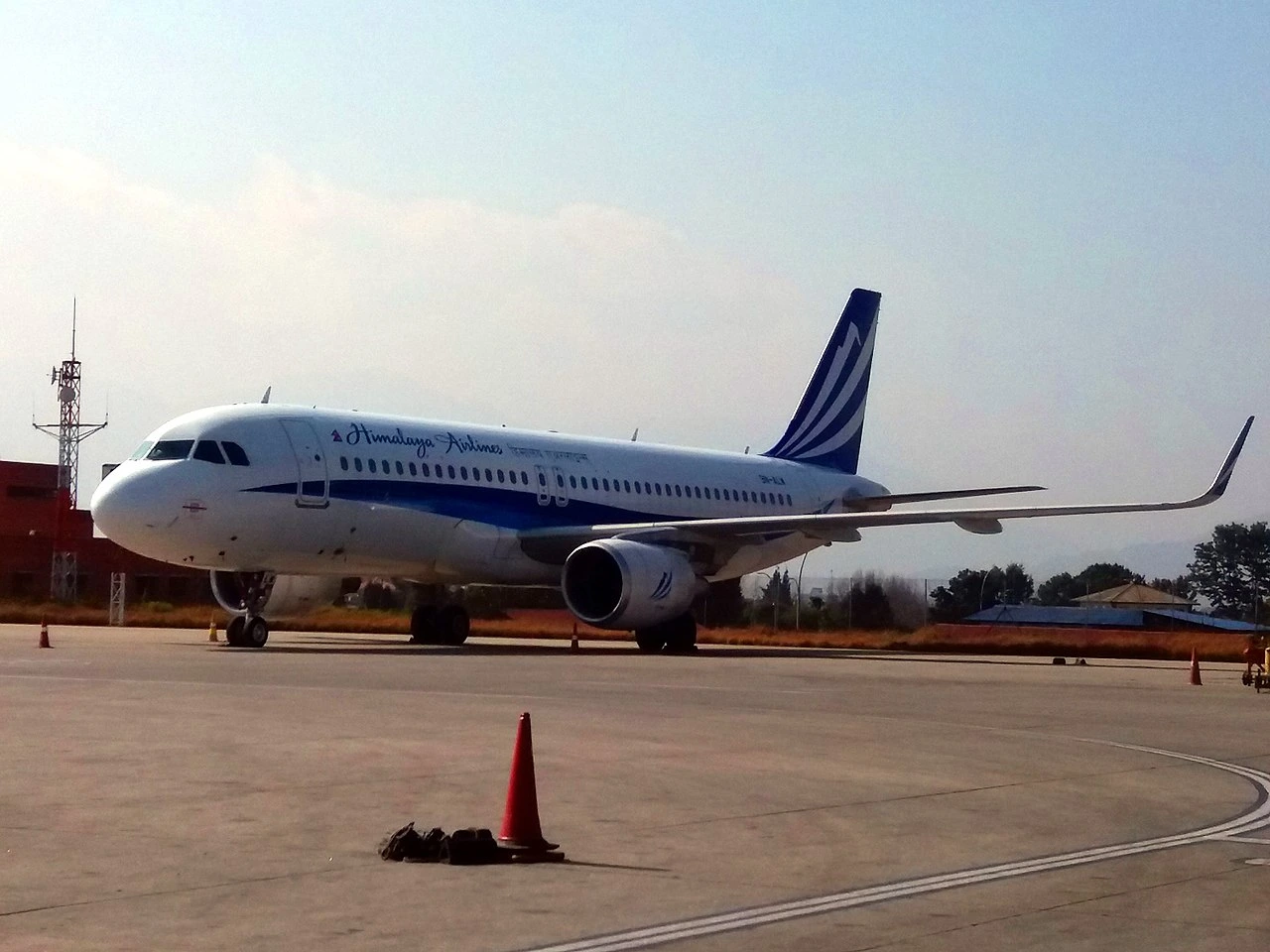

Himalaya Airlines Opens a Route No Airline Has Ever Flown
The Kathmandu–Shenzhen sector is an entirely unclaimed corridor. According to the airline’s official press release, no commercial carrier has previously operated a scheduled direct service between Nepal’s capital and Shenzhen, making this a genuine first in South and East Asian aviation.
AeroRoutes data confirms that Himalaya Airlines initially schedules three weekly frequencies on this sector, increasing to four weekly from June 22, 2026. The carrier’s flight schedule for the outbound service (H9985) shows a departure from Kathmandu (KTM) at 21:50 local time, arriving in Shenzhen (SZX) at 04:30 the following morning. The return service (H9986) departs SZX at 05:55 and lands in Kathmandu at 08:35 local time.
The full inaugural schedule, effective June 4 through June 30, 2026, is as follows:
| Sector | Effective Dates | Days of Operation | Departure | Arrival |
|---|---|---|---|---|
| KTM–SZX | June 4 – June 30, 2026 | Tuesday, Thursday | 21:50 | 04:30 (+1) |
| SZX–KTM | June 5 – July 1, 2026 | Wednesday, Friday | 05:55 | 08:35 |

Why Shenzhen? Understanding The Strategic Logic of the Destination
Shenzhen is not simply another Chinese city on the map. Designated as China’s first Special Economic Zone (SEZ) in 1980, the city transformed from a modest fishing village into one of the world’s most dynamic metropolitan economies within four decades. Its GDP grew at an annual compound rate of approximately 21.6% between 1979 and 2019, eventually surpassing Hong Kong’s GDP for the first time in 2018.
The city is now home to nearly 18 million residents and hosts the global headquarters of technology giants including Huawei, Tencent, DJI, and BYD. Airbus itself opened its China Innovation Centre (ACIC) in Shenzhen, with its Chief Operating Officer Etienne Ravaud noting that “only a few years ago, you would go to Silicon Valley if you wanted the latest technology — today, that place is increasingly Shenzhen.”
Shenzhen Bao’an International Airport (SZX) handled 61.46 million passengers in 2024, cementing its status as a major aviation gateway in China’s Pearl River Delta region. For Himalaya Airlines, the destination represents an opportunity to tap a city with a large base of outbound business travelers and a high-income population increasingly interested in experiential tourism.
Himalaya Airlines Vice-President Vijay Shrestha articulated the strategic intent behind the new service in a statement issued alongside the airline’s press release. Shrestha said:
“Himalaya Airlines has always pioneered trailblazing and new routes to China, leading the way ahead of conventional market trends. The introduction of the Kathmandu–Shenzhen service is a testament to that commitment. With this route, Himalaya Airlines aims to create memorable travel experiences while upholding the highest standards of safety and service quality. We look forward to welcoming passengers on board and facilitating the discovery of the extraordinary beauty and opportunities that both Nepal and China have to offer.”
Himalaya Airlines’ Will Use Airbus Narrowbody to Shenzhen
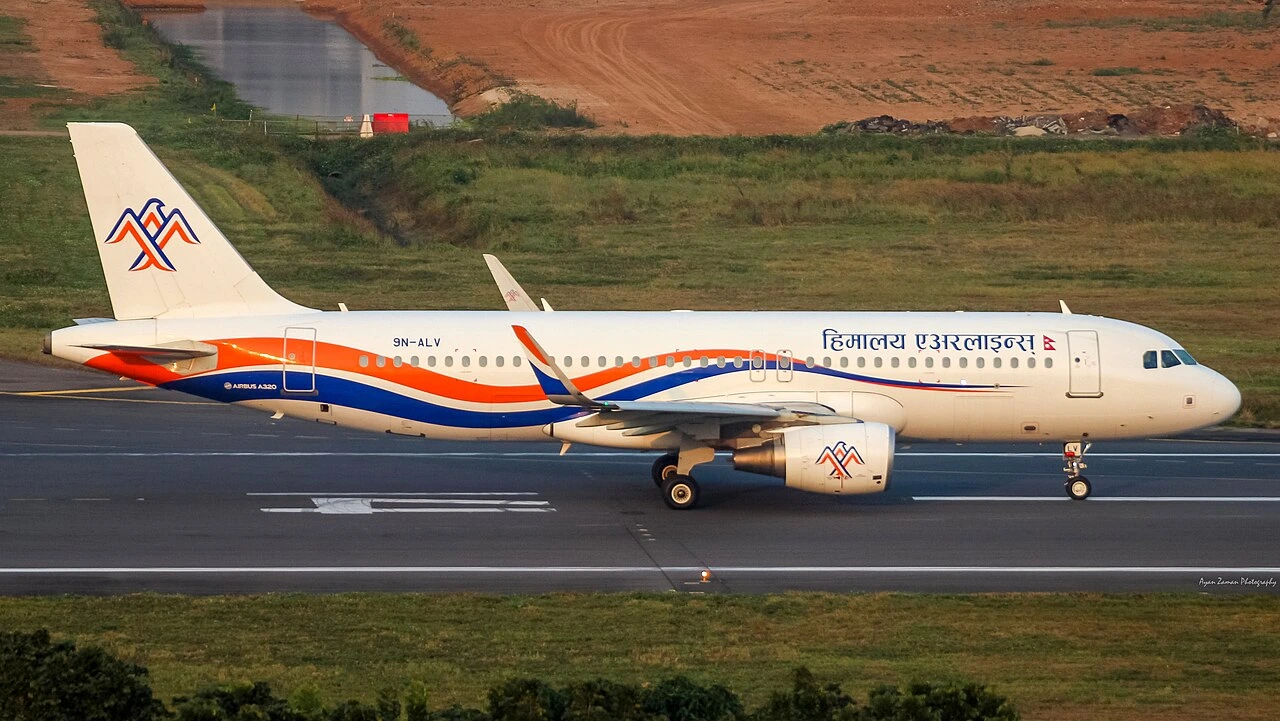
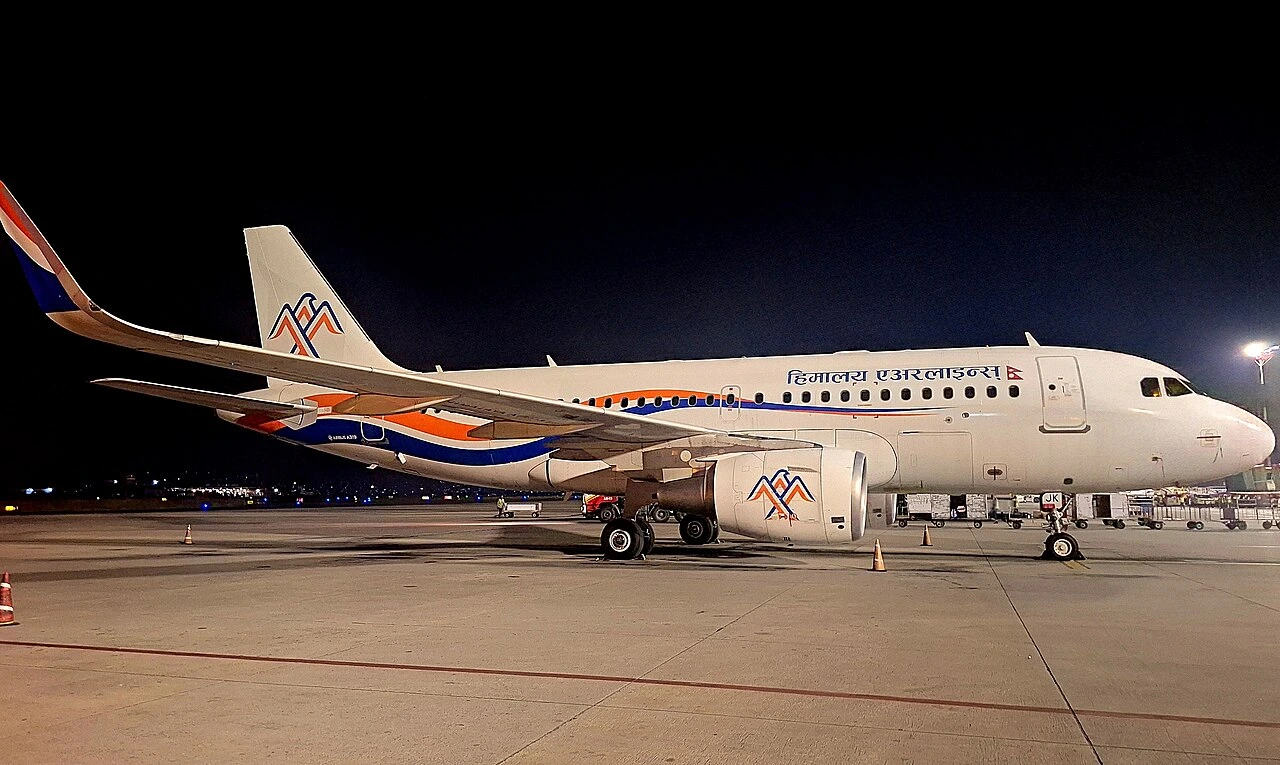
Himalaya Airlines operates the Kathmandu–Shenzhen service with aircraft drawn from its four-strong Airbus narrowbody fleet, which AirlineRatings notes is the youngest jet fleet of any Nepali carrier, with an average age of 8.5 years. The fleet composition, as confirmed by the airline’s official corporate profile, is:
- Three Airbus A320-214 aircraft, each configured in an all-economy layout with 180 seats
- One Airbus A319-115 aircraft, configured in an all-economy layout with 144 seats
| Reg | Aircraft Type | Config | Delivered | Age |
|---|---|---|---|---|
| 9N-AJK | Airbus A319-100 | Y144 | Mar 2020 | 7 Years |
| 9N-ALM | Airbus A320-200 | Y180 | Nov 2019 | 11 Years |
| 9N-ALV | Airbus A320-200 | Y180 | Jan 2017 | 9.4 Years |
| 9N-ALW | Airbus A320-200 | Y180 | Mar 2017 | 9.2 Years |
Data: planespotters.net
The Airbus A320 is the backbone of the family and a globally proven short-to-medium-haul workhorse. Key performance characteristics relevant to the Kathmandu–Shenzhen sector include:
- Maximum cruising speed: 903 km/h (487 knots) at 28,000 feet
- Typical range: approximately 5,278–5,639 km depending on fuel load configuration
- Maximum takeoff weight: up to 77,000 kg in the heaviest variant
- Fly-by-wire flight controls: a pioneering feature first introduced on the A320, reducing pilot workload and enhancing operational safety
- Service ceiling: 39,000 feet
The Airbus A319 is the shortened variant of the A320 family, typically seating 120 to 150 passengers in standard configurations, though Himalaya’s single-class, 144-seat layout maximizes capacity on thinner sectors.
Himalaya Airlines’ Expanding China Network
The Shenzhen route is the latest chapter in what has become a systematic effort by Himalaya Airlines to build a comprehensive China network from Kathmandu. The airline’s Chinese route-building history reflects genuine market ambition:
Himalaya Airlines inaugurated its first scheduled service to China — Beijing — on October 27, 2019, marking the first-ever capital-to-capital direct flight between Nepal and China. This was a watershed moment; Nepal Airlines (RA), the national flag carrier, had applied for access to Chinese cities for over a decade without success, while Himalaya Airlines moved decisively.
The airline subsequently added Qingdao, inaugurated the Kathmandu–Shanghai–Kathmandu route in December 2023, and relaunched the Kathmandu–Chongqing–Kathmandu sector on December 12, 2023, making Shenzhen its fifth distinct Chinese destination point. In May 2026, the carrier also resumed non-stop operations on the Kathmandu–Beijing route, restoring a key trans-Himalayan link that had been suspended during the COVID-19 pandemic.
Across this arc of expansion, Himalaya Airlines has consistently taken positions on Chinese routes ahead of market consensus. Himalaya Airlines ranked as the third-largest international carrier at Tribhuvan International Airport by passenger count in September 2025, transporting 42,119 passengers that month.
Safety and Certification: A Credential-Rich Operator
Himalaya Airlines’ operational credibility is underpinned by a set of certifications that distinguish it from every other Nepali airline. On December 28, 2023, the carrier became the first and only airline in Nepal to be certified as an IOSA Operator and registered as an IATA member airline.
The significance of IOSA certification is not merely procedural. AirlineRatings’ 2025 Safety Report data shows that IOSA-registered airlines recorded an all-accident rate of 0.98 per million sectors, compared to 2.55 for non-IOSA carriers — making IOSA carriers roughly two and a half times safer by that metric. For Nepal, a country whose aviation sector has historically struggled with safety perceptions, Himalaya’s IOSA certification carries outsized importance.
The airline’s certification timeline also includes other industry firsts:
- December 29, 2021: Became the first airline in Nepal to achieve ISO 9001:2015 QMS certification for providing air transport for passengers and freight, including aviation-related training services.
- September 2021: Introduced Automated External Defibrillators (AEDs) across its entire fleet — the first and only Nepalese airline to carry AEDs onboard.
- 2017: Received the “Leading New International Airlines in South Asia” award at the South Asian Travel Awards (SATA) in its first full year of operation.
In 2024, Nabina Karmacharya, Deputy Director General of Aviation Safety & Security Regulation Directorate publicly acknowledged the carrier’s safety trajectory. As quoted by New Spotlight Magazine, she said:
“On behalf of Civil Aviation Authority of Nepal, I commend Himalaya Airlines for their exceptional dedication to safety leading to the prestigious IOSA certification. This accomplishment of Himalaya has definitely helped in reinforcing trust and confidence amongst the passengers, contributing significantly towards the growth and development of air travel in the country.”

What the Route Means for Nepal–China People-to-People Connectivity
The bilateral context for this launch is substantive. In September 2023, during Prime Minister Pushpa Kamal Dahal’s state visit to China, Beijing officially declared 2025 as “Visit Nepal Year in China.” The policy signal translated into measurable arrivals: Chinese visitors to Nepal crossed the six-digit mark in 2024, reaching 101,879 — a 67% increase year-on-year, as reported by The Kathmandu Post. Nepal’s total international tourist arrivals that year reached 1.14 million, a 13% rise from 2023 levels.
With Shenzhen’s population of nearly 18 million — most of them younger urban professionals with high disposable incomes — the potential inbound market for Nepal is substantial. The route gives Shenzhen residents a non-stop option to reach Kathmandu, a gateway to the Himalayas, trekking circuits, and cultural heritage sites, without routing through a third-city hub.