Ritesh Singh, the manager of Mackays Hotel in Wick, Scotland, and his fiancée Arpita Das spent nearly two weeks stranded in New Delhi, India, after British Airways (BA) cancelled their return flight home without notifying them, failed to rebook them for 12 days, and declined to arrange or fund accommodation, meals, or any form of material support during the extended delay, telling the couple instead to arrange everything themselves and seek reimbursement later, John O’Groat Journal reported.
The couple, both in their late twenties and employed in the hospitality sector in Caithness, had travelled from Inverness Airport (INV) to London Heathrow Airport (LHR) and onward to Indira Gandhi International Airport (DEL), New Delhi, for a five-week holiday that was also intended to allow their families to meet for the first time ahead of their planned marriage.
When Ritesh arrived at Indira Gandhi International Airport to check in for the return flight, he discovered the booking had been cancelled. British Airways had sent no call, no text, and no email to notify him. The couple were told they would not be flown home for 12 days, that they had spent all their available money, and that they were hundreds of miles from their family home in India — a distance Ritesh compared to travelling from the very north of Scotland to the English border. British Airways eventually refunded the flight costs and additional hotel bills but declined to compensate either passenger for ten days of lost earnings — a sum the couple estimate at approximately £2,000.
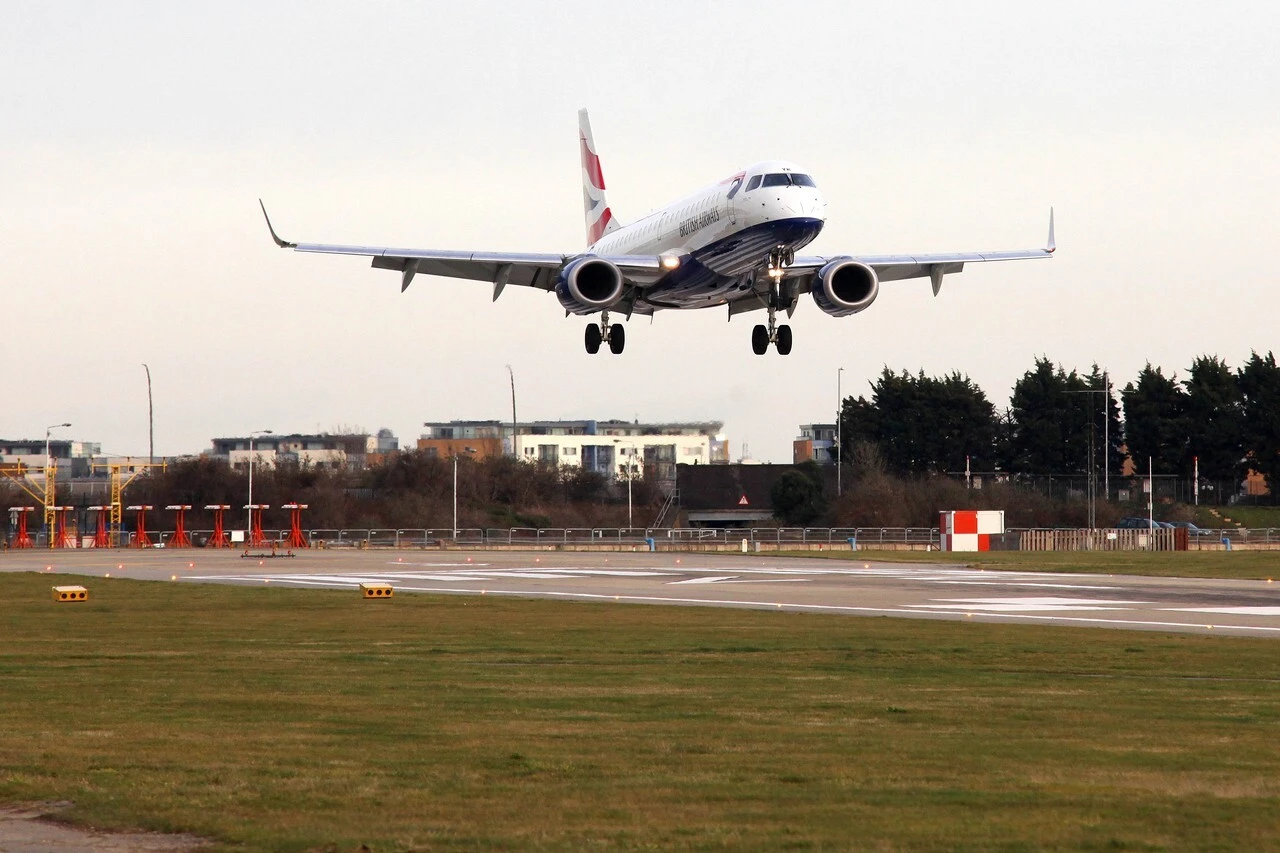
A Day-By-Day Account of Neglect of British Airways
The sequence of events that unfolded in late 2025 or early 2026 illustrates in granular terms what it means to be stranded by an airline without duty-of-care support. Ritesh described calling British Airways immediately upon discovering the cancellation:
“I phoned BA. I said my flight is cancelled, is that correct? They said yes. I told them I never received a call from you, not a text or email, nothing. They said, oh sorry, there must be a problem with notifications.”
He then explained his specific situation to the airline’s team: he was already in New Delhi, far from his Indian hometown, and had a connecting flight back to Wick.
“I told them I’m already in Delhi, I’m far, far away from my hometown… I’ve a connecting flight back to Wick. I explained to them I’ve been living in Wick for the past four or five years. My home is there, my job is there.”
The airline’s response was to offer a rebooking 12 days later.
Ritesh said he tried to persuade airline representatives to arrange an alternative flight within a few days rather than making him wait two weeks. He explained that he had already spent five weeks on holiday, exhausted his budget, and would lose income while stranded, but was told that although staff understood his situation, they were unable to help.
What made the experience significantly worse was the refusal of any material support:
“I said, can you get me a hotel or lunch, dinner… anything? No, you do everything yourselves and we’ll refund it.”
After exhausting his holiday budget, Ritesh said he had to seek financial assistance from relatives in India to cover accommodation costs during the additional 12-day delay. He explained that he initially stayed with friends before borrowing money from family members to book a hotel himself, adding that he received no support from British Airways.
The stress of the situation had measurable physical consequences:
“My whole body went into stiffness and pain with the stress. I told them that, they were like nope, we can’t do anything.”

What UK Law Actually Required British Airways To Do
The manner in which British Airways handled the Singh-Das case sits in uncomfortable proximity to the obligations codified in UK Regulation 261 (UK261), the domestic successor to EU Regulation 261/2004 that governs passenger rights on flights departing from UK airports or arriving in the UK on UK or EU carriers.
Under UK261, the duty-of-care obligations of an airline do not depend on whether the cancellation was caused by circumstances within the airline’s control. The UK Civil Aviation Authority (CAA) sets out clearly that when a flight is cancelled and a passenger faces an overnight wait, the operating carrier is required to provide hotel accommodation and transport between the airport and the place of accommodation. This obligation applies independently of whether financial compensation is also owed, and it applies even in cases of extraordinary circumstances such as conflict-related airspace disruption.
The CAA’s own guidance states this plainly: airlines must provide “food and drink based on how long your delay is, and accommodation if you are delayed overnight.” The key legal point, confirmed by independent passenger rights analysis, is that “the duty of care applies even if the delay or cancellation is due to extraordinary circumstances.”
The CAA has opened a UK261 compliance programme covering the 25 largest UK airlines precisely because this distinction — between cash compensation (which may be withheld for extraordinary circumstances) and duty of care (which cannot) — is routinely misunderstood or misapplied by carriers.
According to British Airways’ own legal page on flight cancellation compensation:
“In addition, the operating carrier will provide hotel accommodation if necessary and provide transport between the airport and place of accommodation. Passengers will be advised of the arrangements for obtaining refreshments, transport and hotel accommodation, by the carrier.”

Did the Middle East Airspace Disruption Change Things?
British Airways told the couple that their flight was cancelled due to a technical problem rather than the Middle East airspace disruption that was causing widespread global travel chaos at the time. That distinction is legally significant.
Under UK261, disruptions caused by extraordinary circumstances — such as geopolitical conflict, airspace closures triggered by military activity, or force majeure events outside the airline’s control — exempt the airline from paying fixed financial compensation. However, technical faults originating within the airline’s own operations are not classified as extraordinary circumstances, and therefore attract both the duty-of-care obligation and the potential for cash compensation of between £220 and £520 per passenger.
In early 2026, the escalation of US and Israeli military operations against Iran triggered one of the most severe episodes of global aviation disruption in recent memory, with over 38,000 flights affected and more than 21,000 cancelled since airspace restrictions were imposed in late February 2026. British Airways suspended and scaled back numerous routes to the Middle East and beyond. Delhi’s Indira Gandhi International Airport alone recorded over 100 international cancellations in a single day at the height of the crisis.
Against that backdrop, British Airways attributed the specific cancellation of Ritesh and Arpita’s flight to a technical fault rather than the regional conflict. If this an attribution is accurate, the cancellation falls squarely within the compensable category under UK261. The practical implication is that the couple may be entitled not only to reimbursement of their accommodation and subsistence expenses but also to financial compensation of up to £520 per person.

British Airways’ Duty-Of-Care Failure
The instruction given to the couple to self-fund and seek later reimbursement deserves specific scrutiny, because it is a pattern that recurs across British Airways incidents and one that has drawn sustained criticism from consumer rights bodies.
One Mile at a Time notes that the duty-of-care provision under UK261 “should be offered proactively in the event of a significant delay or cancellation” and that while no promise governs the speed of delivery, the obligation to provide it remains absolute. The UK’s Air Passenger Rights framework, as explained by Express Law Solutions, confirms that
“once delay thresholds are exceeded, airlines must provide meals, refreshments, accommodation where necessary, and transport. This obligation applies regardless of whether compensation is ultimately payable.”
The case of British Airways 265 passengers stranded in Newfoundland, Canada, in April 2026 after an emergency diversion offers a direct parallel. According to Aviation A2Z, passengers publicly criticised British Airways for poor care and zero communication.
Passenger Mark Mottershead described the experience as a “s**t show” and accused the airline of treating passengers like “cattle,” with families with young children left sitting at the airport without food or drink and with no clarity on next steps. Another passenger, Nadir Assis Symonds, reported via social media that British Airways kept changing its plans without explanation and provided “zero transparency.”

The Couple Missed Work and Functions
The practical consequences for Ritesh and Arpita extended well beyond the financial. Ritesh missed a number of professional functions at Mackays Hotel during the period he remained stranded — functions he had specifically planned his holiday around avoiding
: “I’m the hotel manager and I was not there. I’d planned my holiday in a way that I could be back in the hotel when they needed me.”
Arpita, who works behind the bar at the Norseman Hotel in Wick, returned to find her employers sympathetic but the circumstances no less damaging. She said:
“Another 12 days on top of five weeks? They were shocked. They had to understand because I’d already shared screenshots of our itinerary. They are good people obviously.”
According to Ritesh, the journey was particularly meaningful because it involved marriage planning and the first meeting between the couple’s families. He said the prolonged disruption diminished what should have been a memorable occasion, leaving a lasting emotional impact that persisted well after the trip ended.
The combined loss of earnings for both partners, across ten working days, amounted to approximately £2,000.

British Airways’ Response And What It Acknowledged
A spokesperson for British Airways offered a statement that attributed the wider disruption to the Middle East conflict while simultaneously claiming that its teams had worked hard to support customers — a framing that Ritesh flatly disputed:
“The conflict in the Middle East caused significant disruption to global air travel and increased demand for all our flights. Our teams worked hard to support our customers and contacted them directly to offer them a range of options. We’ve apologised to our customer, reimbursed all their expenses and offered a gesture to help put things right.”
The statement is notable in several respects. It attributes the cancellation to the Middle East conflict — whereas Ritesh was told on the phone that the cancellation was due to a technical fault. The discrepancy matters legally: a conflict-related cancellation may qualify as an extraordinary circumstance exempting British Airways from fixed cash compensation under UK261, while a technical fault would not. It also claims that customers were “contacted directly” — which Ritesh says did not happen in his case.
The reference to a “gesture to help put things right” alongside the reimbursement of expenses suggests British Airways made some form of goodwill payment beyond the refund itself, though neither the airline nor Ritesh disclosed its value.
What is clear is that the couple did not receive compensation for their lost earnings, and that Ritesh considers the response wholly inadequate: “It’s not a big ask but it came down to basic human necessities, to have a roof above your head and to have food.”
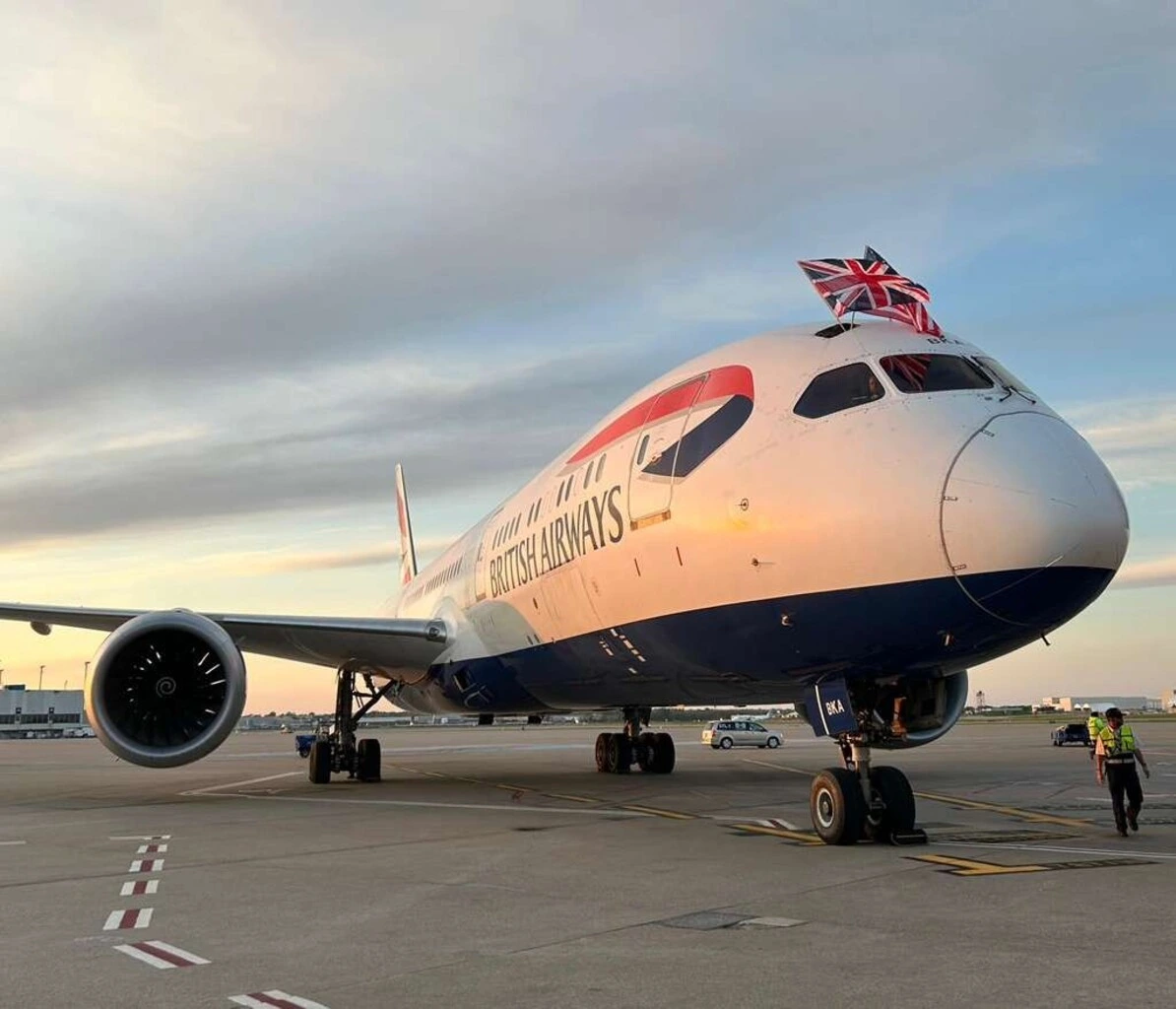
British Airways’ Pattern of Passenger Care Complaints
In April 2026, we reported that a 61-year-old former business executive, Andrew Chesterton, filed a lawsuit seeking more than £50,000 in compensation from British Airways after sustaining serious hand injuries — including an 18mm scar and lasting nerve damage — caused by a hidden sharp object inside his seat on a transatlantic flight. British Airways has accepted liability under the Montreal Convention but is contesting the extent of damages, particularly in respect of psychiatric injury.
In May 2026, a baggage handling system failure at London Heathrow Airport’s Terminal 5 — British Airways’ primary hub — caused mountains of luggage to pile up, disrupting the journeys of hundreds of passengers and prompting fresh criticism of the carrier’s operational reliability.
Between December 2025 and March 2026, British Airways analysed approximately 358,851 flights, of which around 12,000 were either cancelled or delayed by more than three hours — approximately one in every 30 services. The CAA’s UK261 compliance programme, launched in October 2025 and covering the 25 largest UK airlines, is examining precisely whether carriers are meeting their legal obligations to passengers during disruption, with British Airways among the carriers under scrutiny.

What Ritesh And Arpita Were Entitled To Claim
For passengers in analogous situations, the legal framework offers the following entitlements:
- Duty of care (Article 9, UK261): Hotel accommodation for overnight delays, transport to and from the hotel, and meals and refreshments proportionate to the waiting period. These rights apply regardless of the cause of cancellation and cannot be withheld on grounds of extraordinary circumstances.
- Re-routing (Article 8, UK261): The right to be re-routed to the final destination at the earliest possible opportunity. Airlines have a legal obligation to rebook passengers as quickly as possible, not merely at their next available scheduled departure.
- Fixed cash compensation (Article 7, UK261): Between £220 and £520 per passenger for cancellations notified fewer than 14 days before departure and caused by circumstances within the airline’s control — such as technical faults. This does not apply to extraordinary circumstances, but the distinction must be proved by the airline, not assumed by the passenger.
- Reimbursement of reasonable expenses: Documented costs incurred as a direct result of the cancellation — hotel, food, transport — must be refunded even when the passenger is instructed to self-fund. This is legally enforceable regardless of whether British Airways proactively offered the arrangement.
Ritesh and Arpita’s loss of earnings, which are estimated at £2,000, falls outside UK261’s scope, which does not cover consequential economic losses of this kind. However, passengers who believe they have been mis-classified as extraordinary-circumstance cases, or who have not received their full duty-of-care entitlements, may escalate complaints through the CAA’s approved Alternative Dispute Resolution schemes: AviationADR and CEDR. The CAA itself has confirmed that the limitation period for UK261 claims in England and Wales is six years, meaning Ritesh and Arpita retain the right to pursue their claim through the courts if necessary.
Ritesh’s parting observation captures the broader principle at stake:
“At least I had family and friends who helped me out. What if someone was stuck out there with no family or friends to loan some money? They would have had to live on the street for 12 days.”
References
- https://www.johnogroat-journal.co.uk/news/wick-hotel-manager-says-british-airways-left-him-and-his-wif-436311/
- https://www.britishairways.com/content/information/legal/flight-cancellation-compensation
- https://www.caa.co.uk/passengers-and-public/resolving-travel-problems/delays-and-cancellations/delays/
- https://www.caa.co.uk/air-passengers/travel-problems-and-rights/airline-and-travel-company-problems/enforcement-action/uk261-compliance-programme-into-air-passenger-rights/
- https://airadvisor.com/en/airlines/british-airways-refund-compensation
- https://onemileatatime.com/guides/uk261-united-kingdom-flight-compensation/
- https://expresslawsolutions.com/passenger-rights-under-uk-law-delays-cancellations-and-airline-liability-after-brexit/
- https://www.airhelp.co.uk/flight-disruptions/india-flight-cancellations-rerouting-iran-conflict-02032026/
- https://www.travelandtourworld.com/news/article/hundreds-of-passengers-stranded-in-uk-as-british-airways-has-cancelled-hundreds-of-flights-due-to-middle-east-airspace-closures-ongoing-strikes-and-heightened-regional-conflict-disrupting-global-tra/
- https://aviospace.org/businessman-files-lawsuit-british-airways-50000-pound-damages/
- https://aviospace.org/mountains-of-luggage-pile-up-at-heathrows-terminal-5-after-baggage-system-failure/
- https://aviospace.org/the-real-reason-why-british-airways-recently-banned-this-item-in-overhead-lockers-under-new-rules/
- https://aviationa2z.com/index.php/2026/04/03/british-airways-passengers-stranded-in-canada-for-two-days/
- https://www.click2refund.com/en/Blog/Extraordinary-Events-Dont-Erase-Passenger-Rights-A-Case-with-British-Airways-
- https://www.airhelp.co.uk/uk-261/
- https://feeds.bbci.co.uk/news/business-65713903