After LS3110 Incident, Jet2 Calls for National Database to Ban Disruptive Passengers Across Airlines

British budget carrier Jet2 (LS) has formally called for a national database of disruptive passengers that would bar offenders from every UK airline, not merely the carrier on which the incident occurred — a proposal triggered by the diversion of Flight LS3110 from Antalya Airport (AYT) to London Gatwick Airport (LGW) to Sofia Airport (SOF) on 27 April 2026, after an allegedly intoxicated couple subjected crew and fellow passengers to sustained abuse, threats of violence, and racist language, GB News reported. The pair, who were travelling with young children, were removed by Bulgarian military police and have subsequently received lifetime bans from Jet2. The airline has confirmed it will pursue them through the courts to recover the full financial costs of the diversion.

The incident has re-ignited a long-running debate about the structural weakness at the centre of UK aviation’s approach to passenger misconduct: under the current regime, a carrier can impose a lifetime ban, but it cannot legally share that information with another airline, meaning a banned passenger faces nothing more than the inconvenience of booking a different ticket. Jet2 is now lobbying the government to close that gap — and the weight of industry precedent, parliamentary activity, and parallel international moves suggests the moment may finally be approaching when UK aviation can enforce a genuinely unified blacklist.

Photo: Riik@mctr | Wikimedia Commons

The Incident on Flight LS3110 That Reignited the Debate on Lifetime Ban on Passengers

In a formal statement, that was quoted in AOL, Jet2 confirmed that the Flight LS3110 from Antalya to London Gatwick was diverted to Sofia “so that police could offload two disruptive passengers“, stating:

“As a family-friendly airline, we take a zero-tolerance approach to disruptive passenger behaviour, and we can confirm that we have banned these two passengers from flying with us for life. We will vigorously pursue them to recover any losses that we incurred as a result of their behaviour — and we will not hesitate to use the courts. We will fully support the police with any subsequent investigations. This has led to custodial sentences in the past, demonstrating the very serious consequences that this behaviour can result in.”

The male passenger allegedly threatened to fight crew and passengers, used racist and homophobic slurs, and became increasingly aggressive at cruising altitude. The behavior reportedly unfolded in front of the couple’s own children, with witnesses stating that the children were crying as the situation escalated.

The incident involved an allegedly intoxicated passenger who reportedly threatened cabin crew and fellow travelers, prompting concerns for the safety of everyone onboard. Witnesses said the man became increasingly aggressive and was heard shouting,

“I’m ready! I’m ready now! I need this! I’m Irish.”

He then allegedly directed further abuse at crew members, yelling,

“I’ll smash your back door, you p****. F**** c***! Come to me and your pal. Come! D******* c***!”

According to reports, he also threatened to “smash” a crew member’s face and kill him. During the disturbance, a 60-year-old woman was accidentally struck in a scuffle involving the disruptive passenger and another traveler. When the pilot used the aircraft’s public-address system to instruct him to calm down, the passenger reportedly responded:

“What you going to do? What you going to do? Nothing!”

Following the incident, the critical passage of Jet2’s statement related to the incident was pointing:

“In addition, we are lobbying for the creation of a national database so that, as well as being banned from flying with us, disruptive passengers will also be banned from flying with other UK airlines.”

That single sentence encapsulates an enforcement gap that has frustrated the UK aviation industry for over a decade.
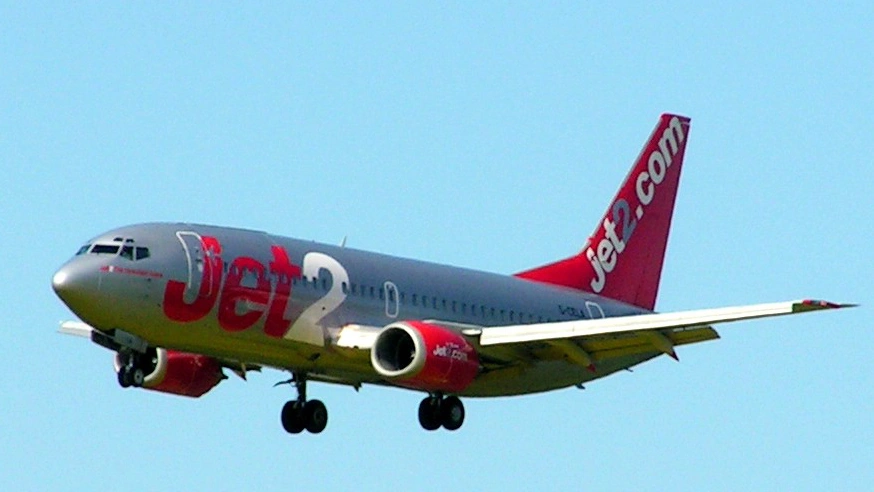
Photo: Colin Angus Mackay | Wikimedia Commons

Why Blacklisted Passengers Keep Flying

The fundamental difficulty, as Dartford MP Gareth Johnson articulated in Parliament, is this:

“The difficulty that we have currently is that someone can be violent on a particular operator’s aeroplane, but that airline cannot pass that information on to another airline, meaning that person can just go and fly with a different operator.”

A petition to Parliament has called on the government to pass legislation mandating a no-fly list that would ban unruly passengers from any airline operating to or from the UK for a minimum of five years, noting that while individual airlines have the power to ban passengers for a period of time, “there is nothing to stop them booking onto another airline and doing it all over again“. The petition remains active and has attracted public support, though the parliamentary process for translating such a proposal into statute has not yet been initiated.

UK Civil Aviation Authority (CAA) Head of Consumer Policy Anna Bowles has acknowledged the issue:

“This type of behaviour is completely unacceptable and can pose a risk to aircraft safety. The aviation industry undertakes a range of measures to tackle this issue and passengers could face criminal charges with severe penalties, even prison.”

However, the CAA itself has stopped short of mandating a cross-carrier data-sharing framework, leaving the matter in a regulatory limbo that benefits repeat offenders.

Existing UK law is not without deterrent power. Passengers can face up to two years in prison for disrupting a flight, a fine of up to £5,000 for delaying a flight’s departure, and a penalty of up to £80,000 for causing a mid-air diversion.

Photo: Riik@mctr | Wikimedia Commons

The Financial Anatomy of a Diversion and Who Ultimately Pays

Flight diversions carry substantial and often underappreciated financial consequences for airlines, passengers, and the wider network. The UK Civil Aviation Authority has noted that costs “typically range from £10,000 – £80,000 depending on the size of the aircraft and where it diverts to.”

The costs associated with a single diversion break down across several categories, as illustrated by a Ryanair (FR) case that proceeded to litigation. According to a report we published earlier, when a Ryanair flight from Dublin Airport (DUB) to Lanzarote Airport (ACE) diverted to Porto Airport (OPO) in April 2024 following a violent intoxication incident, the airline subsequently filed legal proceedings seeking €15,000 in damages, covering:

  • Overnight accommodation and meals for stranded passengers: €7,000
  • Airport landing and handling fees at the unscheduled stop: €2,500
  • Replacement crew costs: €1,800
  • Legal fees: €2,500
  • Excess fuel burn: €800
  • Lost in-flight sales: €750

Beyond the direct costs to the carrier, diversions produce cascading knock-on effects: When a morning flight is delayed by three or four hours, the disruption often cascades through the day’s schedule, affecting multiple later services and the travelers depending on them.

Historical precedent illustrates how far Jet2 has been willing to go to recover these losses: in 2019, the airline billed a disruptive traveler approximately $115,000 after she attempted to open an exit door mid-air, prompting a diversion escorted by military jets. In 2022, two brothers who brawled aboard another Jet2 flight were charged approximately $68,000 and issued lifetime bans.

Photo: Thomas Nugent | Wikimedia Commons

Incident Data Across UK And Global Aviation

The frequency of disruptive passenger incidents has climbed steadily over the past several years, and the data makes a compelling case for systemic rather than purely carrier-level intervention. Reports of intoxicated, violent, or unruly passengers on board UK planes rose from 373 in 2019 to 1,028 by 2022, representing a near-tripling in just three years, according to data compiled by the UK Civil Aviation Authority.

According to the International Air Transport Association (IATA), there was one unruly incident reported for every 480 flights in 2023, based on over 24,500 reported cases, compared to one per 568 flights in 2022 and one per 835 flights in 2021 — a sustained and significant worsening of the trend across successive years.

Ryanair Chief Executive Michael O’Leary, in a separate but directly related strand of industry commentary, disclosed that Ryanair is now forced to divert almost one flight per day because of disruptive passenger behaviour — a figure that represents a tenfold deterioration from approximately one diversion per week recorded a decade ago.

O’Leary’s most pointed observation carries a weight that extends beyond airline economics: he warned publicly that governments would only act with true urgency “until somebody creates an accident that causes a plane to crash and kills hundreds”.

Against this backdrop, the UK aviation industry’s cross-sector “One Too Many” campaign — now in its seventh year and led jointly by the UK Travel Retail Forum (UKTRF), AirportsUK, Airlines UK, and IATA — has been endorsed by the UK Government as an example of industry best practice in self-regulation. The campaign is visible in more than 20 UK airports, including:

  • Heathrow Airport (LHR)
  • London Gatwick (LGW)
  • Manchester Airport (MAN)
  • Newcastle International Airport (NCL)
  • Bristol Airport (BRS)
Photo: Riik@mctr | Wikimedia Commons

How Jet2’s Demand Compares to the Broader Industry Push for Change

The April 2026 statement is not the first time Jet2 has raised this specific demand, but the sustained repetition of its call — and the increasingly severe incidents that have prompted it — suggests the airline is running out of patience with incremental solutions.

Jet2 has previously stated it would “take whatever action necessary to stamp it out,” including lifetime bans, criminal charges, and financial penalties such as legal fines and the recovery of costs associated with the disruption.

EasyJet (U2) and Jet2 have both aligned with Ryanair in calling for alcohol restrictions at UK airports during early morning hours.

Speaking in the House of Commons, Gareth Johnson MP said passengers who engage in serious misconduct on flights should face sanctions similar to those imposed on individuals banned from driving, holding company directorships, or attending football matches.

His private member’s bill, the Aviation Banning Orders (Disruptive Passengers) Bill, sought to empower courts to impose flying bans in addition to existing criminal penalties. This is a mechanism that would have created the legal framework for cross-carrier enforcement without requiring airlines to exchange passenger data directly.

What Other Aviation Systems Have Already Done

The UK’s predicament is not unique, but other jurisdictions have moved further toward systemic solutions. The most directly relevant European precedent comes from the Netherlands. In September 2022, KLM Royal Dutch Airlines (KL) and Transavia became the first airlines in the world to share data on unruly passengers, implementing a joint no-fly list under which both airlines ban disruptive passengers for five years regardless of which carrier operated the affected flight.

KLM has since reported a 100 percent increase in unruly passenger numbers compared to 2019, which has prompted further calls from both airlines for politicians and authorities to create legal options to share no-fly list data beyond the group level.

The KLM-Transavia framework required significant legal and procedural work to implement even within a single airline group: it took considerable time because, although the two airlines share the same parent company, they encountered complex and sometimes confusing regulations. They nonetheless managed to align their policies and processes to share banned-passenger data while respecting existing privacy rules.

In the United States, a congressional bill — the Protection from Abusive Passengers Act, reintroduced in 2023 — proposed a solution described by one of its sponsors as follows:

“Incidents involving abusive passengers increased by nearly 600 percent between 2019 and 2022. Our bill provides a simple solution — if you’re violent in our skies, you can’t fly.”

The bill encountered civil liberties objections related to transparency and due process, but its political momentum illustrates that the UK is not alone in confronting the structural limits of carrier-level enforcement.

A more extreme recent example of escalating personal bans comes from KLM itself: in December 2025, a passenger who had first received a five-year ban in 2020 for striking a ground staff member, then had a further five years added in September 2025 after an unauthorised boarding attempt, was issued a ban extending to the end of 2055 — a period of thirty years — after a third violation. A KLM spokesperson said the airline was “disappointed that the situation escalated to this point.”

The Alcohol Licensing Loophole Adds to the Problem

No analysis of disruptive passenger behaviour in UK aviation is complete without addressing the specific regulatory anomaly that Ryanair CEO O’Leary has placed at the centre of his advocacy. Sales of alcohol at designated international airports in England and Wales have been exempt from the Licensing Act since 1956, originally to ensure airports remained internationally competitive.

The practical consequence is that airside bars, restaurants, lounges, and even unmanned beer-tap kiosks beyond security do not require a premises licence, are not subject to its four licensing objectives, and are not bound by the statutory offence of serving alcohol to a person who is already drunk.

In April 2017, the House of Lords Select Committee on the Licensing Act 2003 recommended that the government revoke this exemption. The government launched a Call for Evidence in November 2018, drawing 97 responses from airlines, airports, police, and hospitality operators — yet the conclusion was that the evidence was insufficient to justify extending the Licensing Act airside. The exemption survived intact.

In evidence submitted to the House of Lords in 2016, Jet2 reported 536 disruptive incidents in a single summer season, with over half attributed to alcohol consumption. The CAA recorded a 36 percent increase in disruptive passenger incidents in the UK between 2014 and 2015 alone, and recent CAA data shows a further 10 percent rise in unruly incidents compared to prior years.

O’Leary has been characteristically direct in attributing responsibility: speaking to The Times, he said that he failed to understand “why anybody in airport bars is serving people at five or six o’clock in the morning”, adding:

“Who needs to be drinking beer at that time? There should be no alcohol served at airports outside [those] licensing hours.”

His proposed remedy included:

  • harmonising airside licensing with high-street hours
  • capping passengers at two alcoholic drinks per airport visit enforced via boarding pass

What A UK National No-Fly Database Would Actually Look Like

The mechanism Jet2 is proposing draws on a relatively straightforward model, but its implementation faces genuine legal and practical complexity. At present, UK airlines maintain their own internal no-fly lists with no statutory obligation or legal permission to share that data with competitors.

A shared database system, if introduced, would close a gap that currently allows banned passengers to move between airlines without restriction, could lead to stricter checks and clearer consequences for behaviour on board, and would result in fewer incidents on flights, especially on busy routes where a single disruption can force a delay or diversion affecting every passenger on board.

The UK Parliament’s petition on the issue has framed the minimum acceptable intervention as a mandatory five-year ban from all airlines for any passenger placed on the list. The specific proposal states that a five-year no-fly list ban “will give the passenger time to reflect on their behaviour” and would address the current situation in which individual airline bans — including lifetime bans — can be rendered meaningless simply by booking an alternative carrier.

The government’s own stated position, as articulated by the Department for Transport, acknowledges the existence of legislation:

“All passengers and crew have the right to feel safe when travelling by air. There is already robust legislation and powers to deal with disruptive passengers, including bans, fines and removal from flights.”

However, this position addresses sanctions rather than the data-sharing architecture that would make cross-carrier bans enforceable — a distinction the industry has consistently sought to press.

The precedent set by the KLM-Transavia model demonstrates that data sharing is technically achievable but legally complex, even between airlines within the same corporate group. A UK-wide system involving competing commercial carriers would require primary legislation or, at minimum, a robust regulatory framework from the CAA, with data protection implications addressed under UK GDPR.

References:

  1. https://www.gbnews.com/news/jet2-national-database-disruptive-passengers-yobs-banned
  2. https://www.aol.com/disruptive-passengers-nuisance-one-airline-114619775.html
  3. https://simpleflying.com/aggressive-passengers-diversion-united-airlines-jet2/
  4. https://www.fodors.com/news/news/an-airline-wants-to-build-a-database-of-bad-passengers
  5. https://hansard.parliament.uk/commons/2020-03-10/debates/35289A08-14A2-4314-958F-187F2F92815C/AviationBanningOrders(DisruptivePassengers)
  6. https://petition.parliament.uk/petitions/751511
  7. https://www.caa.co.uk/passengers-and-public/on-board/disruptive-passengers/
  8. https://aviospace.org/the-real-reason-why-ryanair-ceo-is-demanding-a-ban-on-early-morning-airport-alcohol-sales/
  9. https://news.klm.com/klm-and-transavia-announce-mutual-five-year-ban-for-unruly-passengers/
  10. https://news.klm.com/klm-government-and-airline-industry-join-hands-to-tackle-unacceptable-passenger-behaviour/
  11. https://news.transavia.com/en/flying-ban-of-5-years-at-klm-and-transavia-for-disruptive-behavior-on-board/
  12. https://www.travelwiseway.com/section-news/news-jet2-pushes-for-uk-wide-no-fly-list-after-mid-air-incident-02-05-2026.html
  13. https://www.pressreader.com/uk/daily-express/20230520/281779928485470
  14. https://www.gov.uk/government/calls-for-evidence/airside-alcohol-licensing-at-international-airports-in-england-and-wales-call-for-evidence/airside-alcohol-licensing-at-international-airports-in-england-and-wales-accessible-version
  15. https://uktrf.co.uk/advocacy/disruptive-passengers/
  16. https://www.airportsinternational.com/article/uk-aviation-tackles-disruptive-passengers
  17. https://www.aol.com/articles/airline-barred-2-passengers-flight-022908521.html
  18. https://www.aol.com/serial-offender-plane-passenger-receives-164925501.html
  19. https://simpleflying.com/disruptive-passenger-diversions-costs-compensation-guide/
  20. https://www.irishtimes.com/transport/2026/05/06/ryanairs-michael-oleary-calls-for-ban-on-early-morning-pre-flight-airport-drinking/
  21. https://aerospaceglobalnews.com/news/jet2-lifetime-ban-unruly-passengers/
  22. https://assets.publishing.service.gov.uk/government/uploads/system/uploads/attachment_data/file/763317/international-comparison-of-disruptive-passenger-prevalence.pdf

Meta Description:

A drunk passenger threating to “smash” a crew member’s face while his children looked on in tears — that is the incident that has forced Jet2 to demand a UK-wide no-fly database in April 2026, after diverting Flight LS3110 to Sofia, Bulgaria. UK air rage reports nearly tripled between 2019 and 2022 (from 373 to 1,028 incidents per the CAA), Ryanair is now diverting almost one flight per day due to disruptive behaviour, and a single diversion can cost an airline up to £80,000. Yet under the current regime, a passenger banned for life by one UK carrier can book freely with another the same afternoon. This article examines why that loophole has endured, what KLM and Transavia’s world-first shared no-fly list reveals about the path to a solution, and whether the political will to act finally exists.

Leave a Comment

Your email address will not be published. Required fields are marked *

Scroll to Top