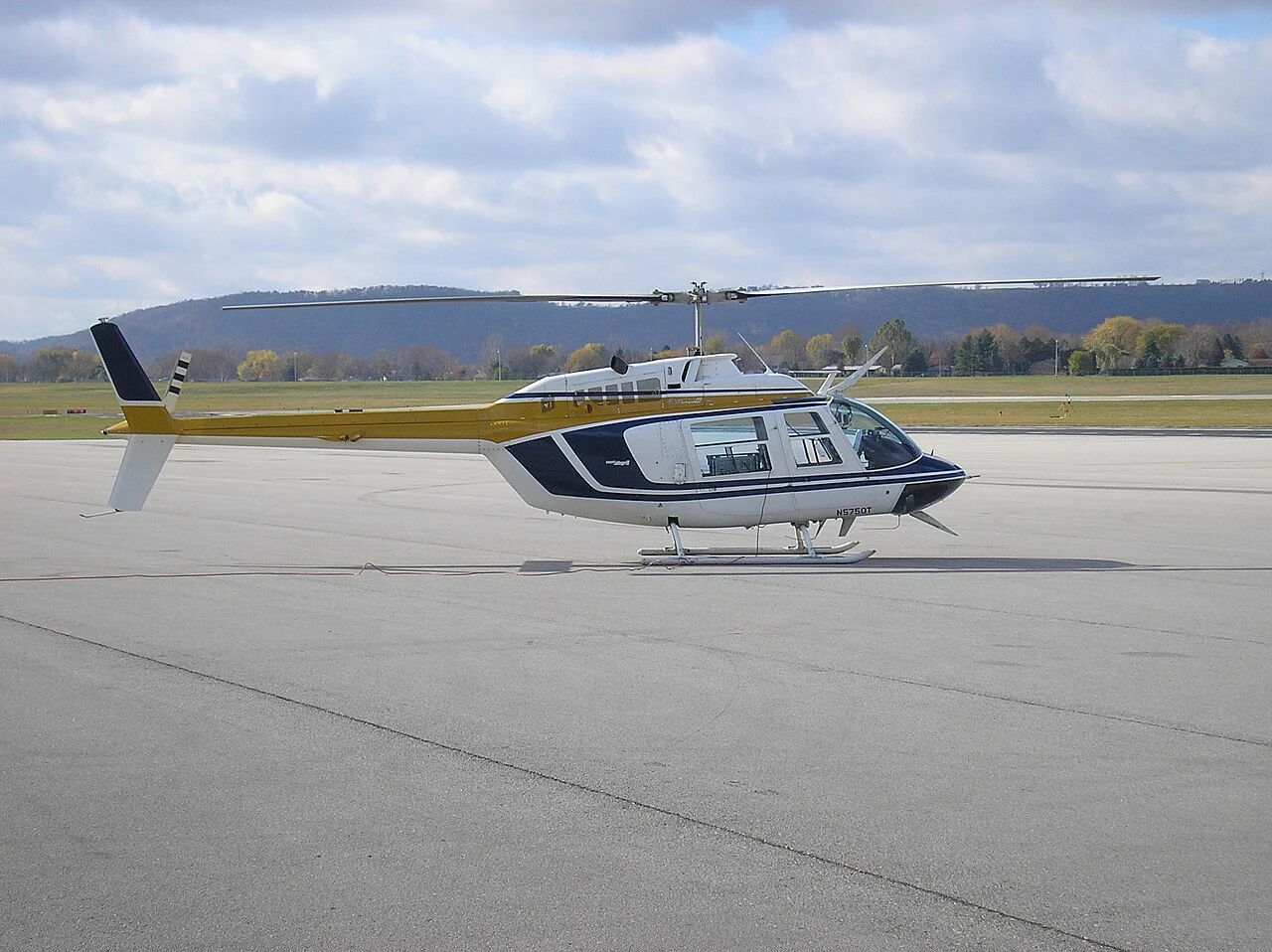
Bell Helicopter manufactured the Bell 206 JetRanger at its plant in Mirabel, Quebec, Canada, and over the course of a production run that spanned from 1967 to 2017, the company delivered more than 7,300 units to operators across more than 60 countries. What makes this figure all the more remarkable is the aircraft’s origins:a military prototype that the United States Army declined before Bell engineers transformed it.
The helicopter entered commercial service on January 13, 1967, when the first production unit was delivered to Harry Holly, CEO of the Hollymatic Corporation. In the decades that followed, the Bell 206 accumulated over 55 million flight hours in more than 60 countries, served as the U.S. Army’s primary scout helicopter, trained generations of naval aviators, circumnavigated the globe twice, starred in seven James Bond films, and earned the distinction of holding the best safety record among all single-engine helicopters in its class.
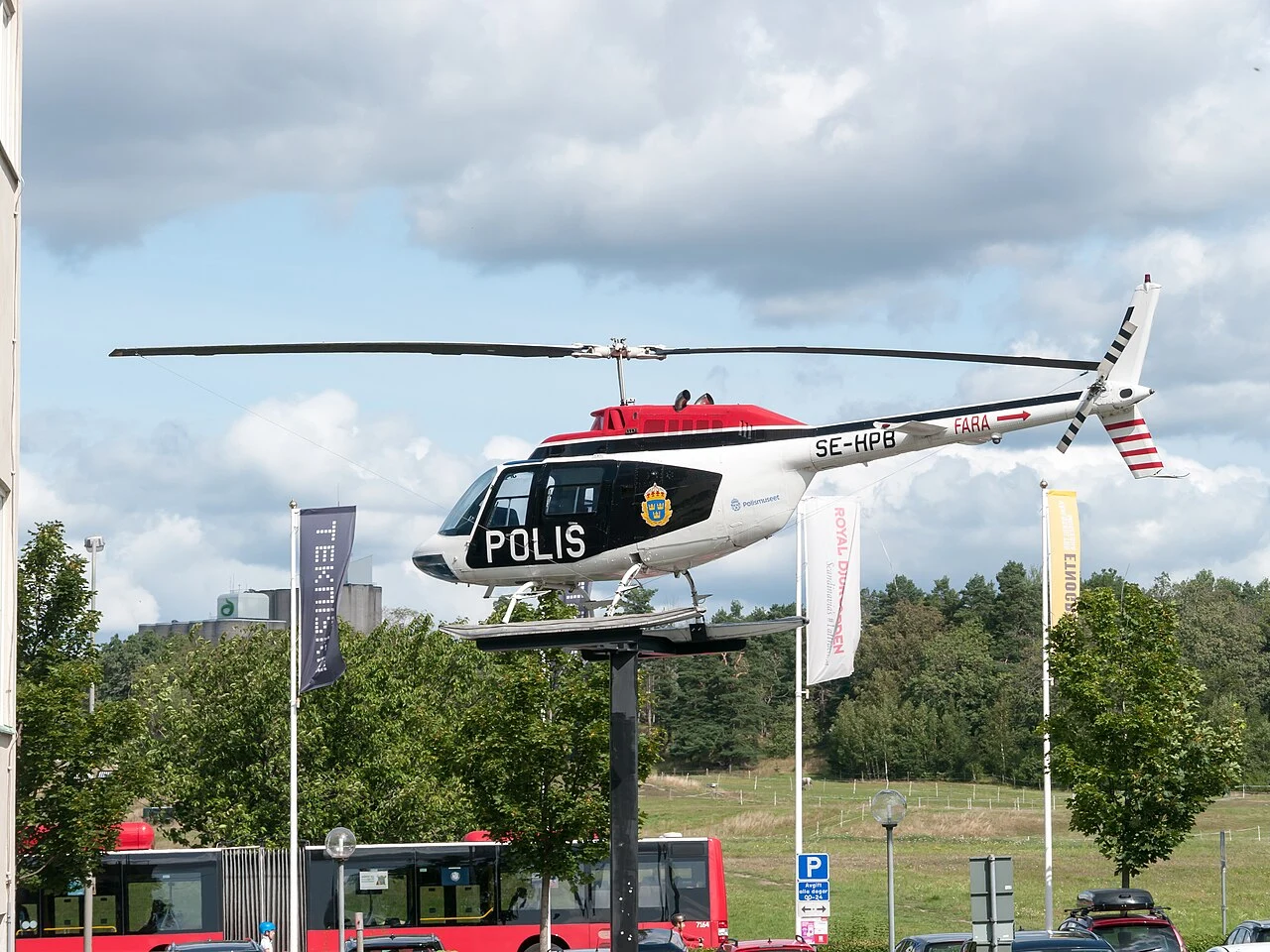
Bell 206 was Initially Called the ‘Ugly Duckling’
The Bell 206’s genesis lies in a U.S. government procurement contest. On October 14, 1960, the U.S. Navy, acting on behalf of the Army, issued a Request for Proposals to 25 aircraft manufacturers for a Light Observation Helicopter (LOH). Bell responded with the D-250 design, which the Army subsequently designated the YOH-4A.
The prototype first flew on December 8, 1962. The helicopter was completed in than 13 months after the contract was signed and two months ahead of schedule. However, the helicopter earned an unflattering sobriquet during competitive evaluations: “The Ugly Duckling.”
Following a fly-off against competing designs from Hughes and Fairchild-Hiller, the Army selected the Hughes OH-6 Cayuse in May 1965. Bell faced a stark commercial predicament: the YOH-4A lacked cargo space, offered cramped seating for only three passengers, and suffered from an aesthetically unappealing fuselage that was wholly unsuited to the civilian market.
The company’s response was decisive. Industrial designer Charles Wilfred Butler — the same designer who worked on the interiors of the Concorde — led a complete redesign of the helicopter’s exterior and interior, applying automotive design techniques to the airframe. The result added 16 cubic feet of cargo space and produced a sleek, visually refined fuselage that bore little resemblance to its predecessor.
Bell President Edwin J. Ducayet named the redesigned aircraft the JetRanger, deliberately evoking the company’s successful piston-powered Model 47J Ranger. The Bell 206A first flew on January 10, 1966, received FAA certification on October 20 of the same year, and entered commercial service in January 1967. Within less than nine months of its introduction, approximately 100 units had already been sold.
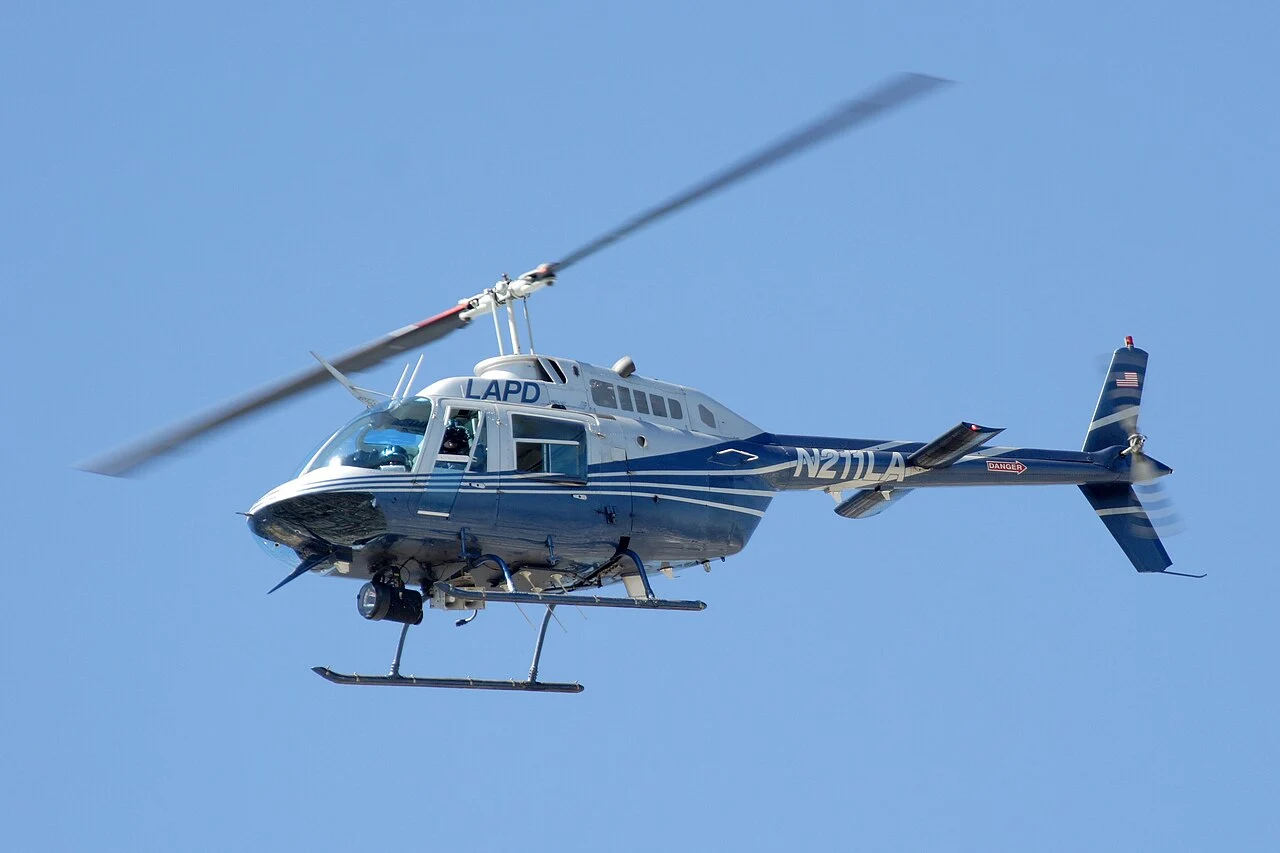
U.S. Navy selected the 206A As its Primary Helicopter and Facts About OH-58 Kiowa, TH-57 Sea Ranger, And TH-67 Creek
The U.S. Army’s initial rejection of Bell’s design proved, with the benefit of hindsight, to be a temporary judgment. In 1968, the U.S. Navy selected the 206A as its primary helicopter trainer, designating it the TH-57 Sea Ranger — the first significant military adoption of the type.
The Army followed, selecting the 206A as the OH-58 Kiowa for light observation duties when the original LOH competition was reopened after the Hughes Tool Company encountered contractual difficulties. The Army ordered 2,200 aircraft under a contract valued at $123 million, formally designating the type the OH-58A Kiowa. It entered U.S. Army service in May 1969 and served continuously until 2017.
Military derivatives of the 206 proliferated substantially over subsequent decades. The OH-58 series encompassed the OH-58A through the OH-58D Kiowa Warrior, with successive variants receiving more powerful engines, enhanced protection systems, and expanded mission-specific equipment. The OH-58D Kiowa Warrior evolved into a formidable armed reconnaissance platform, fielding mast-mounted sighting systems and a range of precision weapons.
In 1993, the U.S. Army selected the Bell 206B-3 as the winner of the New Training Helicopter competition, designating it the TH-67 Creek and acquiring 137 aircraft — 35 in VFR configuration and 102 equipped for instrument flight — to replace the Bell UH-1 Huey in the primary training role.
Beyond U.S. military service, the Bell 206 found widespread adoption across allied and partner nations. Australia assembled the OH-58A locally under designation CA-32, while Austria, Israel, Turkey, Canada, Saudi Arabia, and the Dominican Republic all operated military variants.
Italy’s Agusta produced the type under license from 1967 as the AB 206, extending the aircraft’s operational footprint across European militaries. Iran produced an unlicensed domestic version designated the PANHA Shabaviz 2061, which entered service with the Iranian Air Force in 1998, underscoring the enduring influence of the Bell 206’s fundamental design.
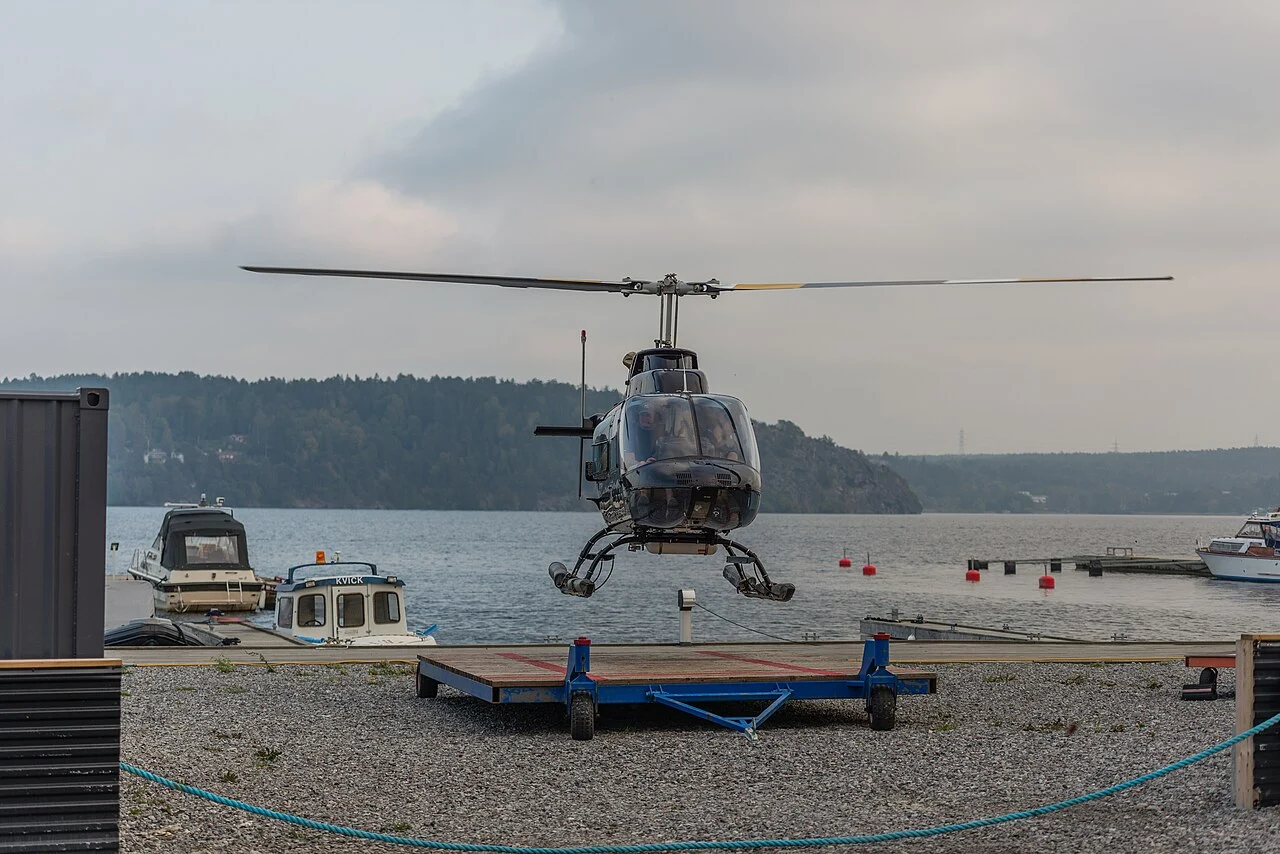
Record-Breaking Flights as the 206 Raced Around the World
Among the Bell 206’s most extraordinary chapters are the back-to-back circumnavigations of the globe that two separate pilots attempted in 1982 — both using the type. On August 5, 1982, Australian businessman and aviator Dick Smith departed from Bell’s heliport in Fort Worth, Texas, in a Bell 206B JetRanger III he called the “Australian Explorer.” Smith covered 32,258 miles (51,914 kilometers) over 260 hours of flight time, setting the Guinness World Record for the first solo global circumnavigation by helicopter and also achieving the first solo helicopter crossing of the Atlantic Ocean. He chose the Bell 206 specifically for its range, durability, and reliability in extreme conditions.
In a parallel and competitive bid to claim the first non-solo circumnavigation, H. Ross Perot Jr. and co-pilot Jay Coburn departed Dallas, Texas, on September 1, 1982, in a modified Bell 206L-1 LongRanger II christened the “Spirit of Texas.” Perot had purchased the LongRanger II for $750,000 and immediately commissioned modifications including an additional 151-gallon fuel tank, deployable pop-out flotation devices, and advanced navigation and communications equipment.
The pair completed their flight in 29 days, 3 hours, and 8 minutes, crossing 26 countries and covering 26,000 miles while making 56 refueling stops. One stop required landing on a container ship in 15-foot seas and 40 mph winds in the Pacific Ocean, as Russia had denied the team overflight and landing rights. Perot and Coburn established a Fédération Aéronautique Internationale (FAI) record for helicopter speed around the world eastbound, averaging 56.97 kilometers per hour. The “Spirit of Texas” now resides in the collection of the Smithsonian National Air and Space Museum in Washington, D.C.
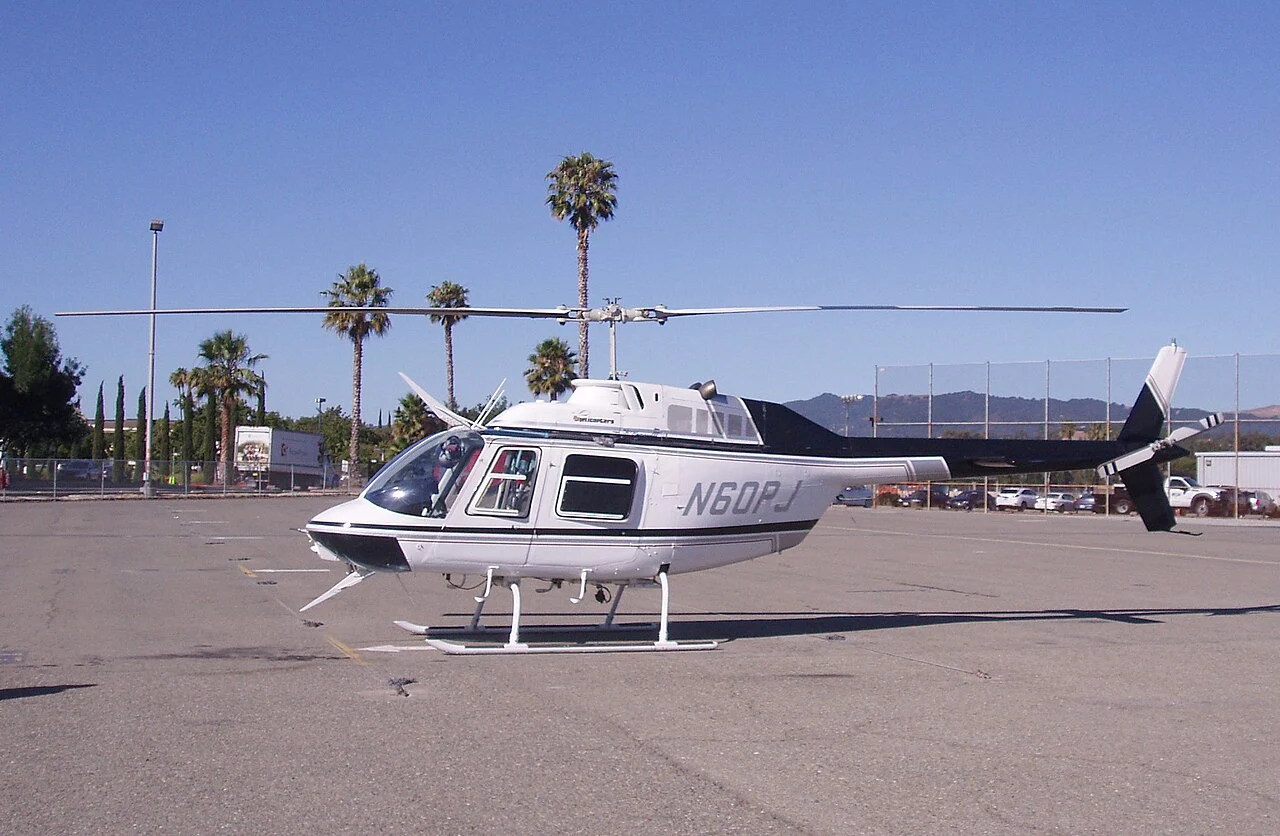
The Bell Has Appeared in the James Bond Franchise
Few aircraft have penetrated popular culture as pervasively as the Bell 206. The helicopter’s elegant silhouette and distinctive sound became so ubiquitous in American media during the 1970s and 1980s that it effectively defined the public’s mental image of what a helicopter looked like. The Bell 206B JetRanger III starred in the 1983 film Scarface, where it featured in pivotal escape sequences. The type also appeared in the early scenes of the 1987 action classic Predator, and featured prominently in the 1982 science fiction horror film The Thing.
The Bell 206’s relationship with the James Bond franchise is particularly notable in its longevity. The JetRanger appears in seven James Bond films, beginning with On Her Majesty’s Secret Service in 1969, where an Agusta-Bell 206B transported Bond to Blofeld’s mountain headquarters at Piz Gloria. The helicopter subsequently appeared in:
- Diamonds Are Forever (1971)
- Live and Let Die (1973)
- The Spy Who Loved Me (1977)
- Moonraker (1979)
- For Your Eyes Only (1981)
- the unofficial production Never Say Never Again (1983).
In The Spy Who Loved Me, a weaponized JetRanger pursues Bond and Anya’s Lotus Esprit across Sardinia before being destroyed — a scene that encapsulates the aircraft’s recurring cinematic role as both instrument of villainy and visual shorthand for airborne menace.
The National Air and Space Museum in Washington, D.C., notes that during the 1970s and 1980s, the JetRanger and LongRanger became the de facto vehicle of choice for law enforcement, VIP transport, natural resource exploitation, and film and television production across North America. The helicopter’s pervasive media presence during those decades fundamentally altered public perception of rotorcraft, normalizing the helicopter as a versatile vehicle of everyday use rather than purely military hardware.
The Bell 206 Averages $930 per Flight
The Bell 206’s endurance in operational service rests on a convergence of factors that no single successor has yet replicated in full. Direct operating costs average approximately $930 per flight hour, a figure that fluctuates based on maintenance approach and regional labor costs but that remains competitive against newer alternatives.
The airframe’s relative mechanical simplicity, combined with an extensive global network of third-party maintenance providers and parts suppliers, gives operators in resource-constrained environments a degree of logistical confidence that newer, more technologically complex platforms cannot readily match.
The type holds the best safety record among all single-engine helicopters in its class. American law enforcement agencies deploy JetRangers for observation, traffic control, and border patrol duties, while the LongRanger’s cabin dimensions and door configuration made it the preferred air ambulance platform across multiple continents for decades. Air Center Helicopters, a U.S. military aviation contractor, notes that the 206B-3 possesses “the best autorotational characteristics of any helicopter flying today” — a technically significant property for any single-engine aircraft operating in environments where engine failure is a non-trivial risk.
Pre-owned Bell 206 helicopters continue to command strong resale values. Well-maintained, low-time airframes typically fetch between $650,000 and $1.4 million on the secondary market, depending on configuration, avionics fit, and remaining component life. Meridian Helicopters — a specialist Bell 206 refurbishment firm — completed its 29th comprehensive overhaul of a Bell 206L-4, delivering it to FlyNYON following a six-month project that included a Garmin avionics suite installation and emergency pop-out float system — demonstrating that operators continue to invest substantially in fleet modernization for a type that ceased factory production in 2017.
.jpg)


.jpg)
.jpg)