The Federation of Indian Pilots (FIP), an organization representing more than 5,000 aviators across India, has formally submitted a technical hypothesis to the Ministry of Civil Aviation (MoCA) and the Aircraft Accident Investigation Bureau (AAIB), asserting that a pre-lift-off electrical disturbance — rather than any deliberate cockpit action — may have triggered the catastrophic dual-engine fuel cut-off aboard Air India (AI) Flight AI171 on 12 June 2025, Telegraph India reported.
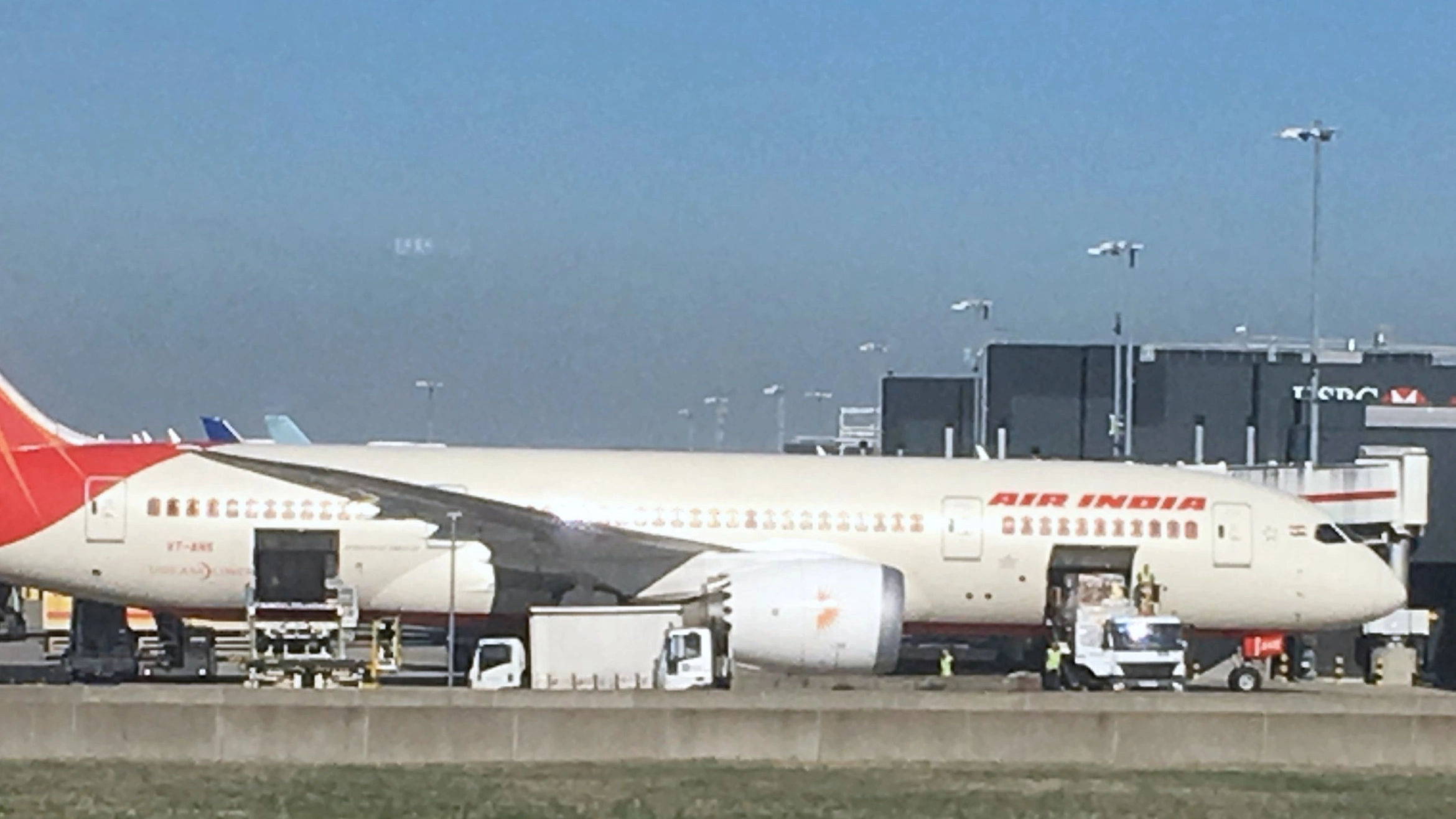
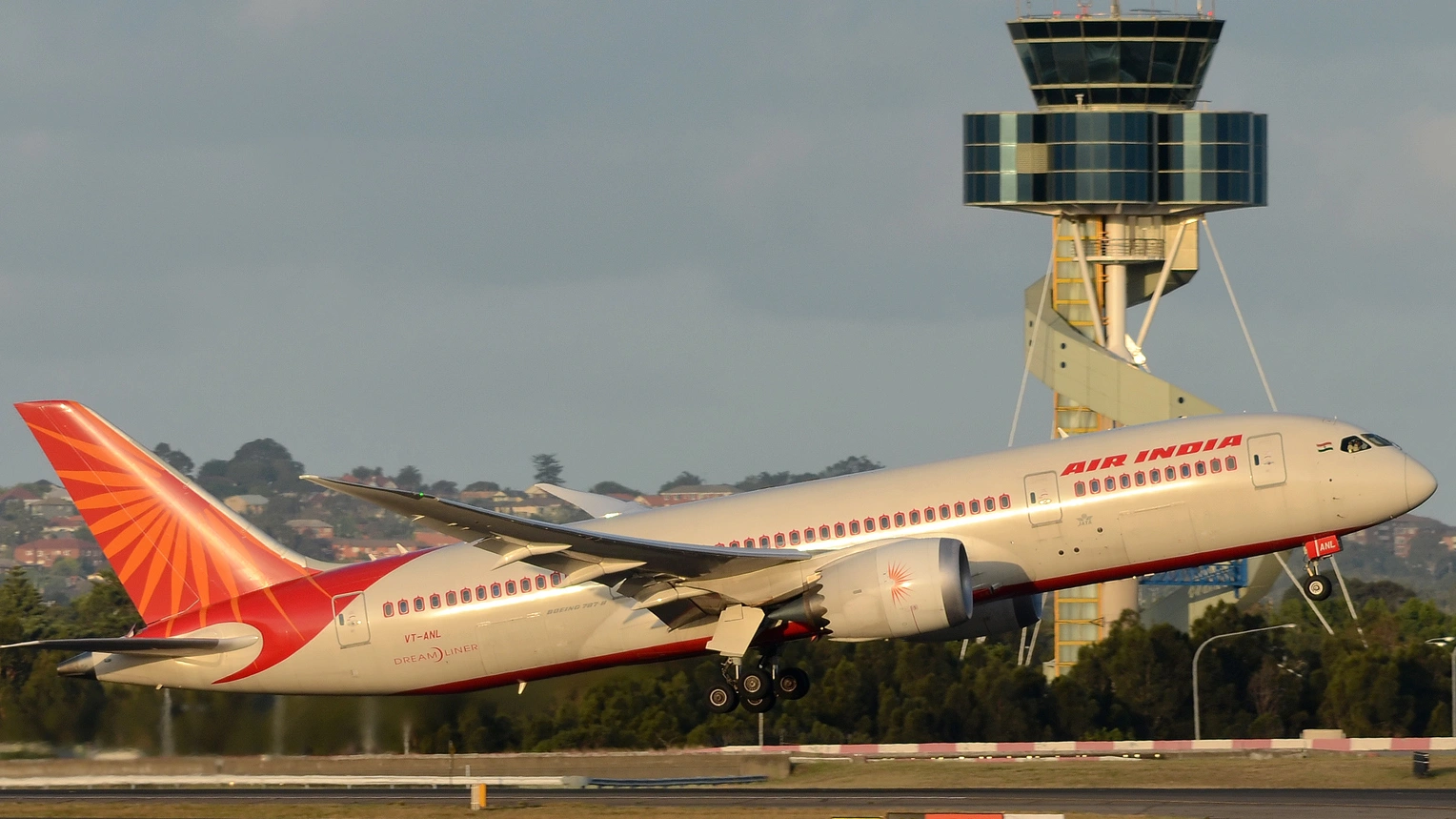
The Boeing 787-8 Dreamliner registered VT-ANB, operating from Sardar Vallabhbhai Patel International Airport (AMD), Ahmedabad, to London Gatwick Airport (LGW), crashed into the hostel block of B.J. Medical College just 32 seconds after liftoff, claiming 260 lives — 241 aboard and 19 on the ground — in what became the deadliest aviation disaster in India since the 1996 Charkhi Dadri mid-air collision and the first-ever fatal hull loss involving the Boeing 787 family since the type entered service in 2011.
In a letter dated 1 May 2026, the FIP informed the civil aviation ministry that, based on documented lithium-ion battery failure behaviour, relay response under abnormal voltage, and the intrinsic electrical architecture of the Boeing 787 Dreamliner, a pre-lift-off electrical anomaly could have caused unintended relay operation, driving both engine fuel control switches from ‘RUN’ to ‘CUTOFF’ without any pilot input.
The body urged the AAIB to treat this proposition as a testable hypothesis subject to rigorous technical analysis by premier Indian institutions — specifically IIT Bombay, the Aeronautical Development Agency (ADA), and Hindustan Aeronautics Limited (HAL) — before the investigation’s final report is published, with investigators working against a 12-month deadline set by the International Civil Aviation Organisation (ICAO).
The AAIB Preliminary Report and What It Established
India’s Aircraft Accident Investigation Bureau released its 15-page preliminary report on 12 July 2025, documenting the factual evidence gathered in the immediate aftermath of the crash. The report confirmed that the fuel control switches on both engines transitioned from ‘RUN’ to ‘CUTOFF’ within a one-second interval, occurring mere seconds after the aircraft became airborne, resulting in the loss of thrust from both General Electric GEnx-1B70 engines.
Crucially, the report recorded a cockpit voice exchange in which one pilot asked the other, “Why did you cut off?” — to which the other responded that he had not done so.”:
“As per the EAFR data both engines N2 values passed below minimum idle speed, and the RAT hydraulic pump began supplying hydraulic power at about 08:08:47 UTC. RAT in extended position. As per the EAFR, the Engine 1 fuel cutoff switch transitioned from CUTOFF to RUN at about 08:08:52 UTC. The APU Inlet Door began opening at about 08:08:54 UTC, consistent with the APU Auto Start logic. Thereafter at 08:08:56 UTC the Engine 2 fuel cutoff switch also transitions from CUTOFF to RUN. When fuel control switches are moved from CUTOFF to RUN while the aircraft is inflight, each engines full authority dual engine control (FADEC) automatically manages a relight and thrust recovery sequence of ignition and fuel introduction.”
The preliminary findings stopped well short of assigning a definitive cause, and no airworthiness directives were issued against the Boeing 787-8 or its engines. The AAIB, supported by investigative teams from the United States National Transportation Safety Board (NTSB), the Federal Aviation Administration (FAA), Boeing, General Electric, and representatives from the United Kingdom, Portugal, and Canada, continues to conduct forensic analysis of pilot actions, system behaviour, and human factors. The UK’s Air Accidents Investigation Branch, which holds ‘Expert’ status in the Indian inquiry, welcomed publication of the preliminary report and confirmed it remains in active communication with the AAIB India.
The FIP’s Technical Hypothesis: A Battery-Triggered Electrical Chain Reaction
The FIP’s submission presents a mechanistic chain of events rooted in documented electrical failure modes specific to the Boeing 787’s direct-current architecture. According to the federation, the sequence begins with an internal short circuit within the aircraft’s lithium-ion battery system, analogous to the battery fires that grounded the entire global 787 fleet in 2013 following incidents aboard an All Nippon Airways (ANA) aircraft in Boston and a Japan Airlines (JAL) aircraft in Takamatsu. A high-current surge produced by such a failure raises the voltage of what should be a stable zero-volt ground reference, generating a reverse voltage pathway throughout interconnected systems.
The FIP argues that, under these conditions, the Ram Air Turbine (RAT) — an emergency power device that deploys when both engine-driven generators fail — would have been activated, bridging the captain’s and co-pilot’s instrument buses and creating a shared return path. This bridge then allows the ground-voltage disturbance to reach the dual-coil latching relays that govern fuel valve positions on both engines; a voltage reversal, the FIP contends, would cause these relays to flip from ‘RUN’ to ‘CUTOFF’, simultaneously starving both engines of fuel without any human intervention.
One of the more seminal statements in the letter read:
“Technical causes cannot be ruled out until this analysis is made.”
Reinforcing this position, the FIP highlighted a critical discrepancy in the AAIB’s preliminary report: the report notes that RAT hydraulic power became available just four seconds after fuel cut-off, yet the RAT requires a minimum of six seconds to fully deploy and generate usable power. The federation therefore contends that the RAT must have been triggered at least two seconds before the engines lost fuel supply, making the electrical disturbance antecedent to — not consequent upon — the fuel switch event. This timeline, the FIP argues, is inconsistent with a narrative of deliberate pilot action and instead points toward a systemic malfunction preceding the cockpit confusion.

Competing Theories and the Wider Investigative Landscape of AI 171
The FIP’s intervention arrives in a charged investigative environment, where the primary fault lines run between a pilot-action theory — advanced by certain American officials and amplified by sections of the international press — and an electrical or mechanical systems failure theory championed by Indian pilot associations, safety campaigners, and some technical experts.
In late November 2025, The Wall Street Journal reported that American government and industry officials believed the evidence pointed toward the captain, Sumeet Sabharwal, having deliberately crashed the airliner, a claim that prompted sharp rebuttals from Indian aviation bodies and the AAIB itself, which rejected media narratives it characterized as premature and irresponsible.
The investigation has also been complicated by documented friction between the AAIB and the NTSB; according to Simple Flying, NTSB specialists were initially prevented from accompanying Indian investigators to examine the flight data recorders, reflecting mutual suspicion that has dogged the inquiry since its earliest days.
Adding further technical weight to the electrical failure theory, the Safety Matters Foundation of India (SMF) independently analysed footage from Flight AI171 and determined that the Ram Air Turbine had deployed 2.5 seconds before the fuel switches moved to ‘CUTOFF’ — a finding that, if corroborated by the AAIB’s own data, would significantly undermine the hypothesis that pilot action initiated the chain of events.
Separately, a whistleblower submission to the United States Senate Permanent Subcommittee on Investigations, drawing on maintenance records for the specific aircraft involved — a Boeing 787-8 registered VT-ANB, delivered to Air India in January 2014 — documented a history of electrical anomalies including repeated circuit breaker trips, short circuits, overheating events, and a fire in the P100 Primary Power Panel in January 2022 that necessitated a full component replacement.



.jpg)