The North American X-15 has been one of the most seminal aircraft in the history of aviation. After all, the aircraft was able to touch hypersonic speeds of over six times the speed of sound. However, this powerful aircraft wasn’t a fighter jet, but the first plane to touch the boundary of space. NASA’s another aircraft, the North American X-43, was able to whizz at the speed of Mach 9.6, making it the fastest aircraft ever.
While the most powerful fighter jets in 2026 can’t compete with the two aircraft mentioned above, some these military planes have been used in the US Iran conflict (which has already led to the destruction of A-10 and an F-15, destruction of twenty Iranian planes, among others). In this article, we are going to have a look at the five most powerful jets, as highlighted by Simple Flying.
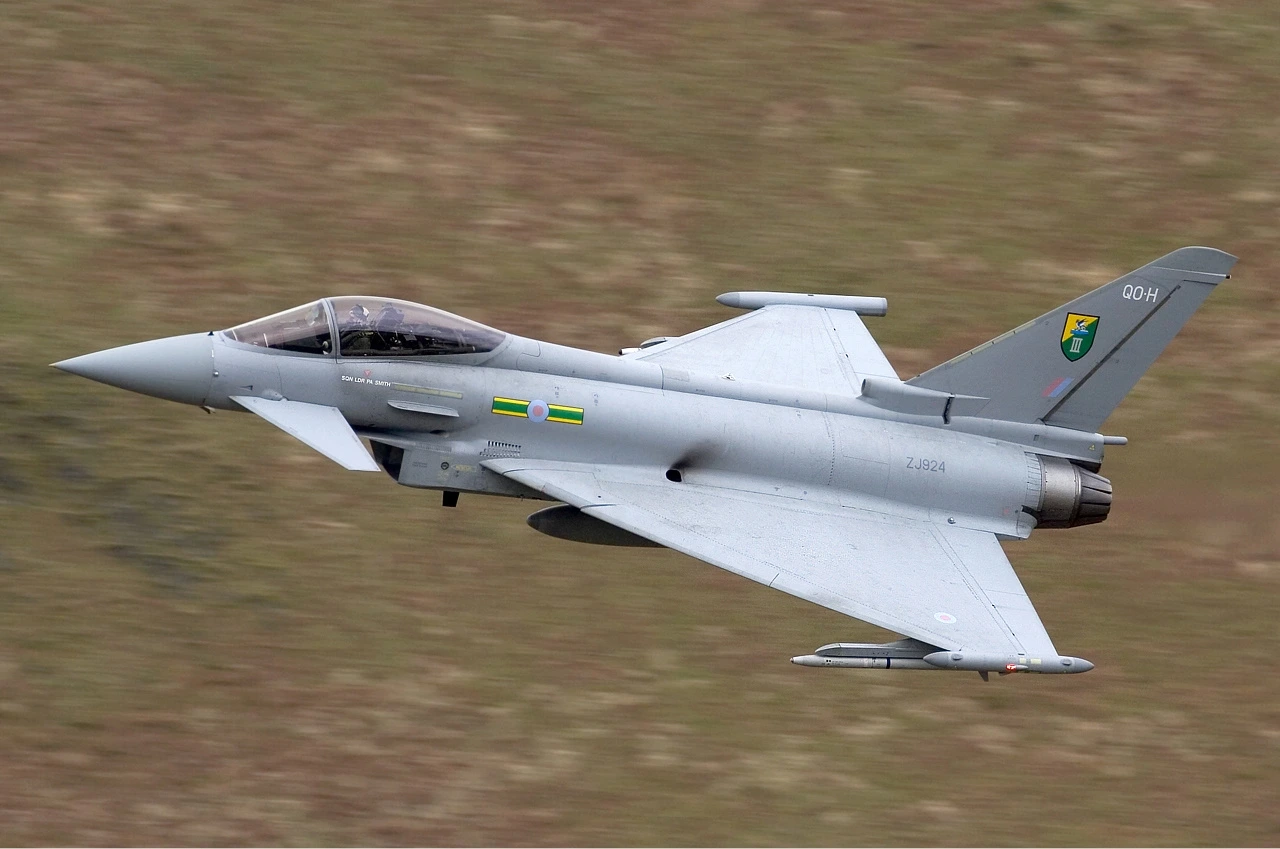
5. Eurofighter Typhoon
The Eurofighter Typhoon entered service in 2003 and was conceived primarily as a Cold War interceptor. The aircraft carries the Captor-E AESA (Active Electronically Scanned Array) radar, the Meteor ramjet-powered beyond-visual-range missile, and the Praetorian Defensive Aids Sub-System.
- leading-edge root extensions
- enlarged flaperons
- flight control software upgrades that deliver approximately a 25 percent increase in maximum wing lift and angle-of-attack limits up to 45 percent higher.
The Eurofighter programme surpassed one million flying hours in January this year. As of late 2025, just over 600 Typhoons are in operational service, and the order book continues to grow, with Germany placing an order for 20 additional jets in October 2025, Turkey announcing procurement of 12 aircraft, and Spain holding requirements for a further 45 Typhoons under two phased contracts. The aircraft’s operational record spans Libya, Iraq, Syria, Saudi Arabia’s campaign in Yemen, and continuous Baltic Air Policing rotations.
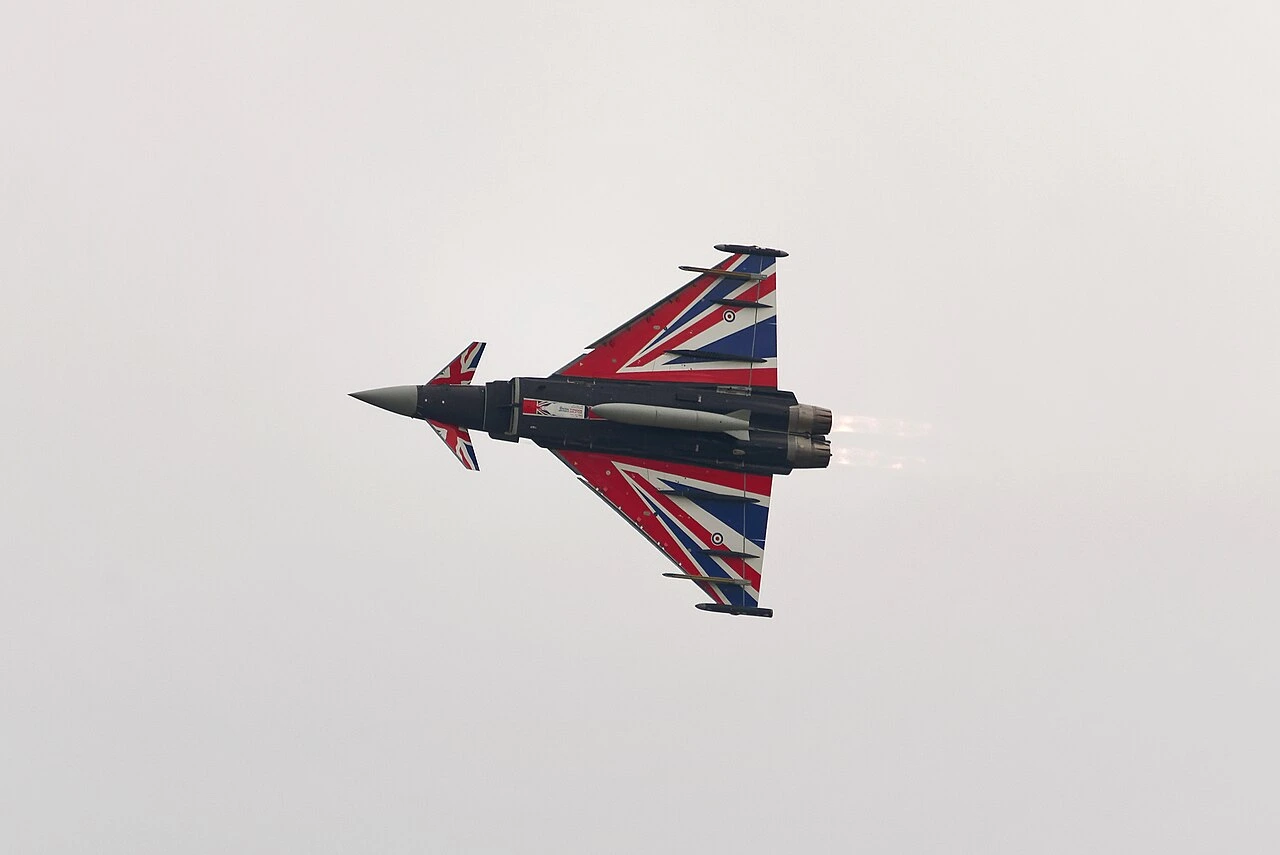
Eurofighter Typhoon — Key Specifications
| Category | Specification |
|---|---|
| Manufacturer | BAE Systems, Airbus, Leonardo |
| Generation | 4.5+ Generation Multirole Fighter |
| Top Speed | Mach 2.0 (2,495 km/h) |
| Combat Radius | ~750 nautical miles (1,389 km) |
| Engines | 2× Eurojet EJ200 turbofan |
| Hardpoints | 13 (5 under each wing, 3 under fuselage) |
| Key Weapons | Meteor BVRAAM, IRIS-T, AIM-120 AMRAAM, Storm Shadow, Paveway IV |
| Radar | Captor-E AESA (ECRS Mk2 for UK) |
| Operators | UK, Germany, Italy, Spain, Saudi Arabia, Austria, Oman, Kuwait, Qatar, Turkey |
| Fleet Size | ~600+ operational aircraft (2025) |
What the Typhoon lacks is low-observable stealth. Only 15% of the aircraft’s surface is metal, and composite materials reduce its radar cross-section, but it is not a stealth aircraft by fifth-generation standards and remains vulnerable in heavily defended airspace where adversaries field long-range surface-to-air missile systems.
Nevertheless, the coming Super Typhoon upgrade package — which reportedly delivers a 200-fold increase in avionics computing power —might make it a formidable fighter jet for a few more decades.
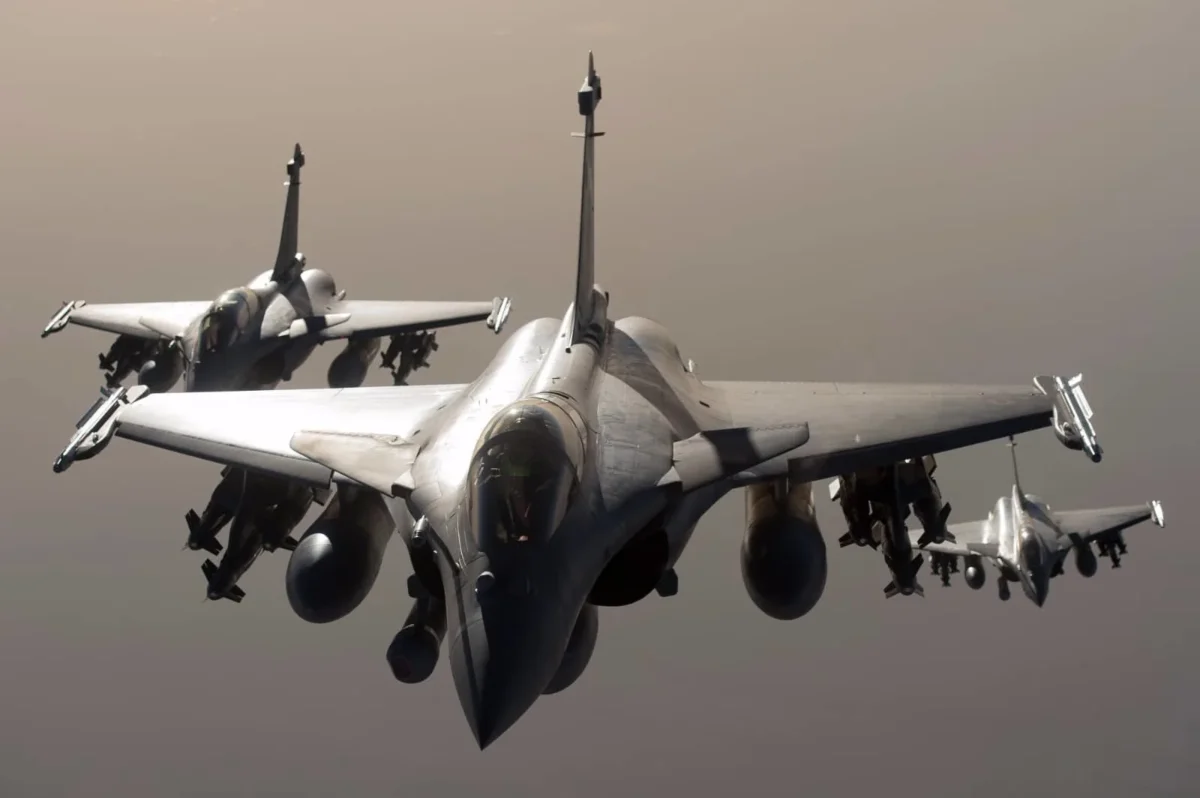
4. Dassault Rafale
The Dassault Rafale sits at number four because it achieves something that eluded European fighter programmes for a generation: genuine omnirole capability from a single airframe. France’s Air and Space Force uses it simultaneously for air superiority, nuclear deterrence, expeditionary strike, close air support, reconnaissance, and anti-ship warfare.
The range of suctions it is able to carry out was engineered from the outset through the following:
- RBE2-AA AESA radar
- SPECTRA electronic warfare suite
- SCALP cruise missile
- MBDA MICA active-homing missile.
The Rafale is also the sole delivery platform for France’s airborne nuclear deterrent, carrying the ASMP-A air-to-surface missile.
The Rafale’s combat record has accumulated quietly but substantively across multiple theatres. In May 2025, Indian Air Force Rafales were deployed during Operation Sindoor against targets in Pakistan, armed with SCALP missiles and AASM Hammer precision munitions.
More recently, during the 2026 Iran conflict, after a French base in the UAE was struck by an Iranian drone, France deployed Rafales to the Middle East — and French aircraft subsequently intercepted Iranian drones over the UAE, reportedly bringing down at least 60 using MICA missiles by 20 March 2026, Global Miltary reported.
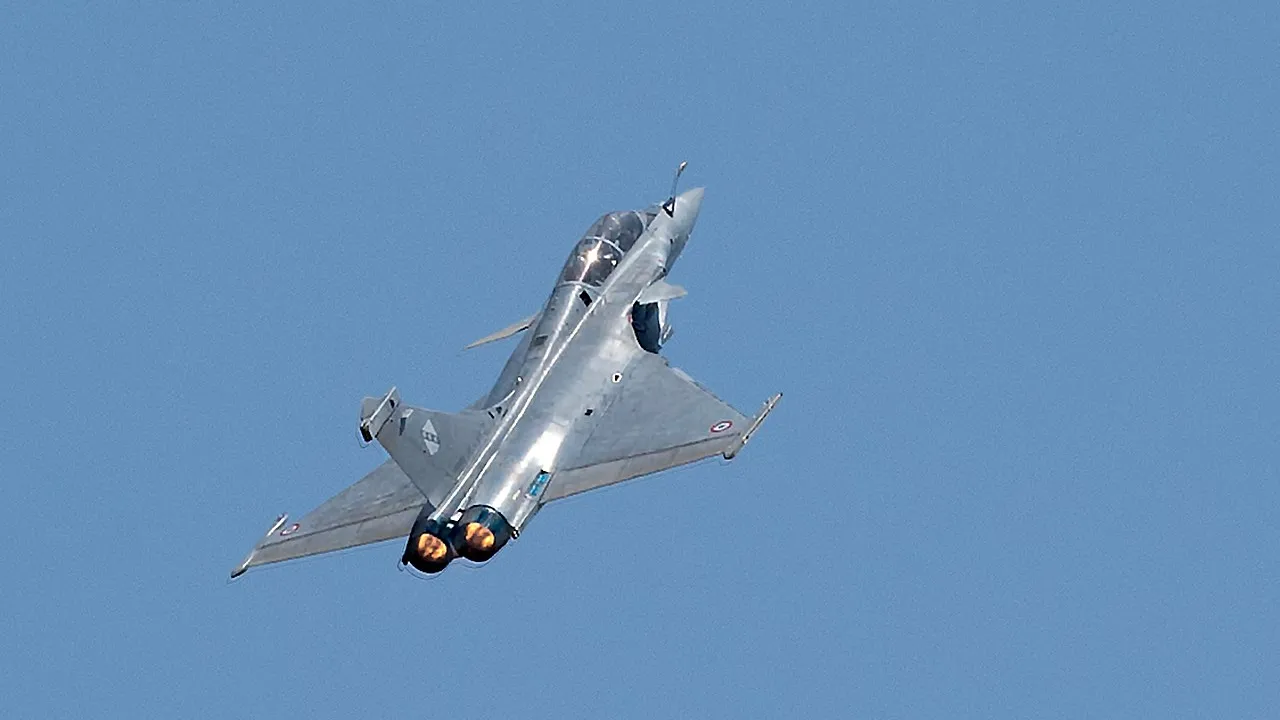
Dassault Rafale — Key Specifications
| Category | Specification |
|---|---|
| Manufacturer | Dassault Aviation |
| Generation | 4.5 Generation Omnirole Fighter |
| Top Speed | Mach 1.8 (2,223 km/h) |
| Combat Radius | ~1,000 nautical miles (1,852 km) |
| Engines | 2× Snecma M88-2 turbofan |
| Variants | Rafale C (single-seat), Rafale B (twin-seat), Rafale M (carrier-capable) |
| Key Weapons | Meteor, MICA EM/IR, SCALP-EG, ASMP-A, AASM Hammer |
| Radar | Thales RBE2-AA AESA |
| Operators | France, India, Egypt, Qatar, UAE, Greece, Croatia, Indonesia |
| 2025 Deliveries | 26 aircraft (15 export, 11 France); backlog of 220 units |
Dassault closed 2025 with a firm backlog of 220 Rafale aircraft — 175 for export customers and 45 for France — representing approximately 8.5 years of production at current output rates. Dassault delivered 26 Rafales in 2025, up from 21 in 2024, and the company targets a ramp-up toward three aircraft per month, supported by a new production facility inaugurated in Cergy in September 2025. The Indian Navy’s April 2025 order for 26 Rafale M carrier-based fighters, and ongoing discussions for a further 114 aircraft for the Indian Air Force.
What the Rafale ultimately cannot claim is the persistent low-observability of a true stealth platform, and its radar cross-section — though reduced through composite materials covering 70 percent of its airframe surface — does not approach that of a fifth-generation fighter. That single limitation is the primary reason it ranks below the J-20.
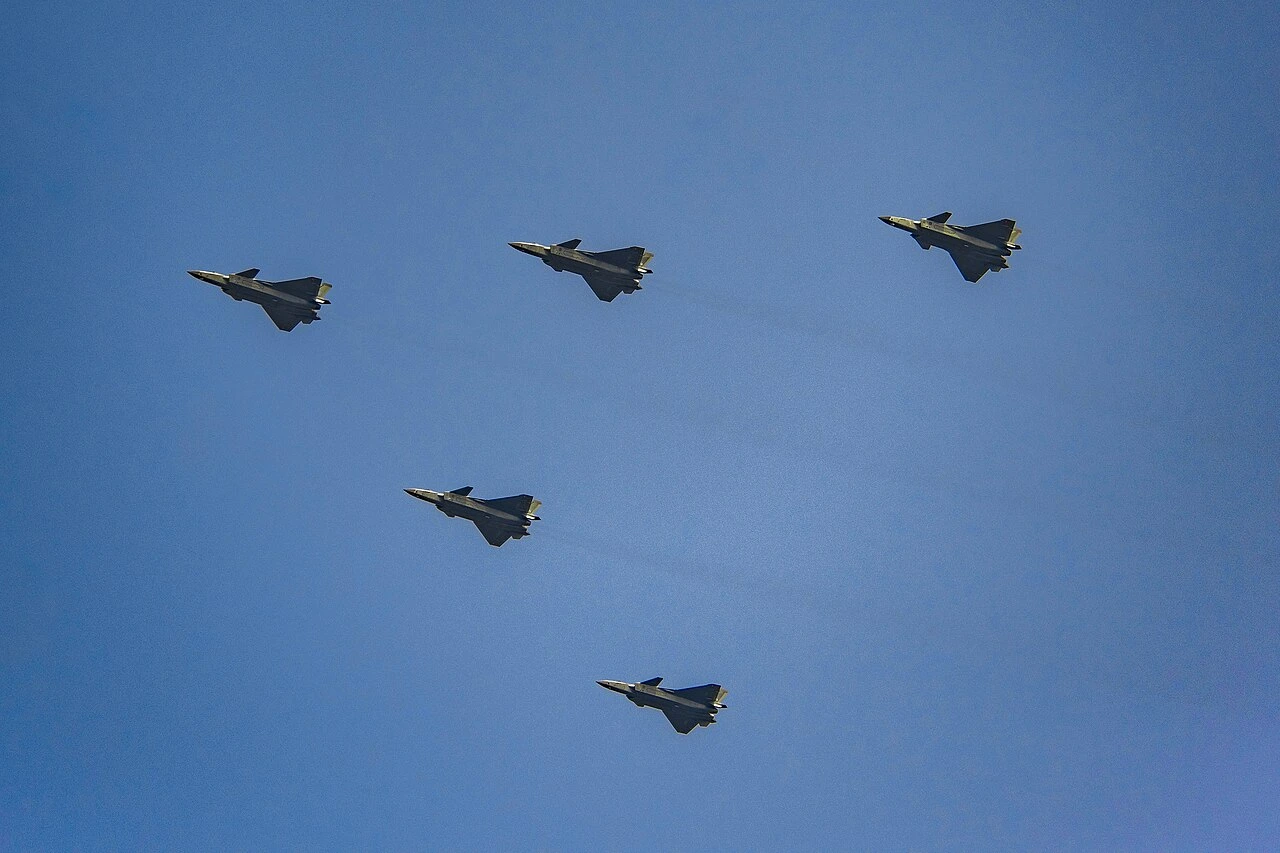
3. Chengdu J-20 ‘Mighty Dragon’
The Chengdu J-20 earned its place at number three by achieving something no non-American fifth-generation programme has managed at scale: actual mass production of a low-observable stealth fighter with long-range engagement capacity and internal weapons carriage. The aircraft is optimised for:
- the penetration of defended airspace
- the destruction of high-value targets — tankers, airborne early warning platforms, and strike packages
- the execution of beyond-visual-range engagements before adversaries can form a coherent response.
In September 2025, Chinese state media officially announced the J-20A and the twin-seat J-20S as part of the PLAAF’s active arsenal, with the J-20A incorporating the indigenously developed WS-15 engine — a powerplant that delivers greater thrust than any current Western fighter engine and enables sustained supercruise across extended Pacific distances. The J-20A also features a redesigned rear canopy spine that reduces supersonic aerodynamic drag and accommodates additional avionics and fuel volume.
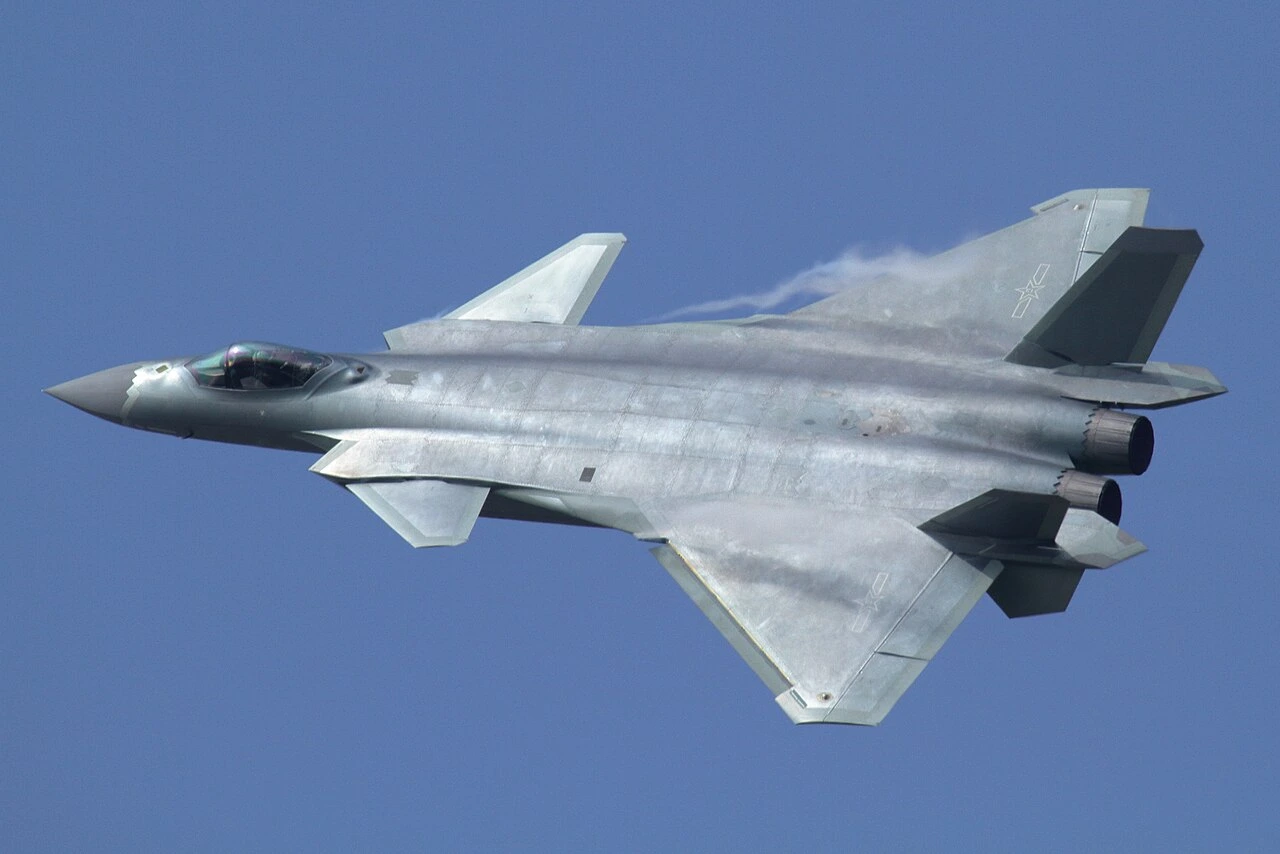
By September 2025, the PLAAF J-20 fleet had exceeded 300 aircraft, making it the largest fifth-generation fighter fleet outside the United States. Annual production runs between 100 and 120 aircraft per year, with the AVIC manufacturing complex in Chengdu having undergone significant expansion confirmed through commercial satellite imagery.
Chengdu J-20 — Key Specifications
| Category | Specification |
|---|---|
| Manufacturer | Chengdu Aircraft Corporation (AVIC) |
| Generation | 5th Generation Stealth Fighter |
| Top Speed | Mach 2.0+ (officially claimed Mach 2.55 by Chinese sources) |
| Combat Radius | ~700 nautical miles internal fuel (~1,100 nm with internal tanks) |
| Engines | 2× WS-10C (operational fleet); WS-15 (J-20A variant) |
| Variants | J-20 (baseline), J-20A (WS-15, upgraded), J-20S (twin-seat) |
| Key Weapons | PL-15 BVRAAM, PL-10 IR missile (internal carriage) |
| Radar | AESA (classified; analysts assess Chinese-designed LRIP system) |
| Operators | People’s Liberation Army Air Force (PLAAF) only |
| Fleet Size | 300+ aircraft (September 2025); targeting 1,000 by 2030 |
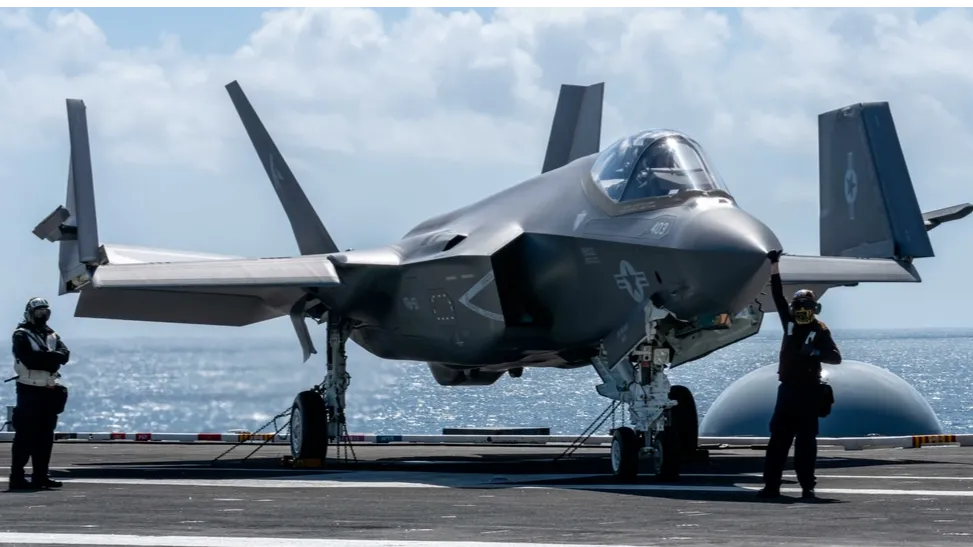
2. Lockheed Martin F-35 Lightning II
The F-35 carries its own low-observable stealth, advanced inertial navigation, electronic warfare suite, and a distributed aperture system that gives the pilot full spherical situational awareness — simultaneously synthesising radar, infrared, communications, and threat data into a single coherent picture. Lockheed Martin describes the jet as the most advanced node in a 21st-century network-centric architecture, and the operational record supports that framing.
In 2025, Lockheed Martin delivered a record 191 F-35s, pushing the global fleet past 1,300 aircraft and surpassing one million cumulative flight hours — milestones that no other fifth-generation programme comes close to matching.
The F-35 played a central role in Operation Midnight Hammer in June 2025, suppressing Iranian air defences to enable B-2 bomber strikes on nuclear sites. In September 2025, NATO-operated F-35s conducted the alliance’s first airborne engagement of Russian drones over Poland. A British F-35B shot down a hostile drone over Jordan on 3 March 2026, marking the first operational weapons employment by a UK F-35 in history.
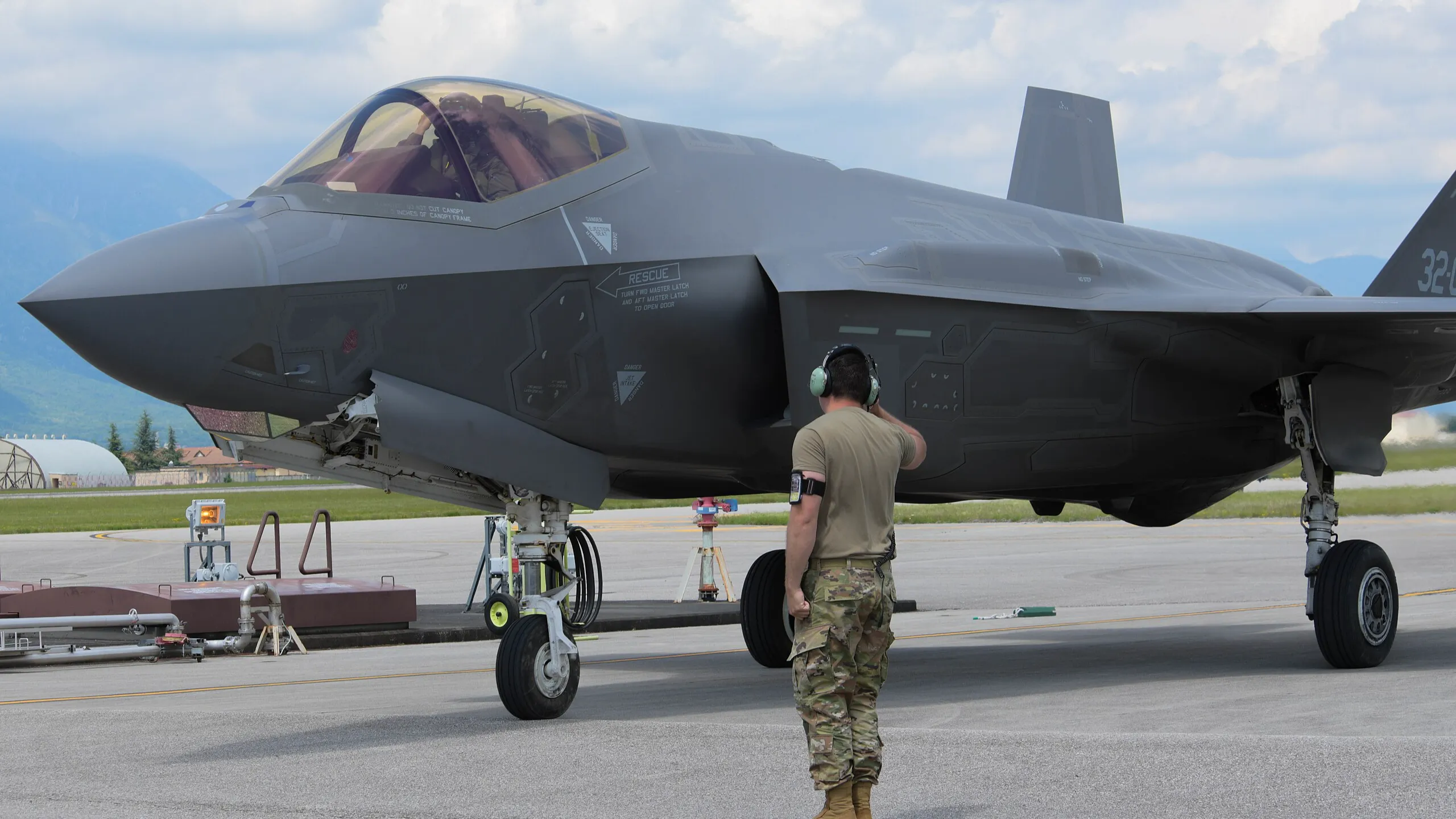
Lockheed Martin F-35 Lightning II — Key Specifications
| Category | Specification |
|---|---|
| Manufacturer | Lockheed Martin |
| Generation | 5th Generation Multirole Stealth Fighter |
| Top Speed | Mach 1.6 (1,931 km/h) |
| Combat Radius | ~590 nautical miles (1,093 km) |
| Engines | 1× Pratt & Whitney F135 turbofan |
| Variants | F-35A (CTOL), F-35B (STOVL), F-35C (carrier) |
| Key Weapons | AIM-120D AMRAAM, AIM-9X, GBU-53/B SDB II, B61-12 nuclear bomb (A variant) |
| Radar | AN/APG-81 AESA |
| Global Fleet | ~1,300 aircraft (end of 2025); operated by 12+ nations |
| Annual Production | 191 deliveries in 2025 (record); ~156 annual capacity |
Italy added 25 aircraft to its programme in 2025, Denmark added 16, Finland received its first jet, and Belgium welcomed its first in-country aircraft — all part of a coordinated Western airpower alignment that gives the F-35 a network effect unmatched by any rival. The one capability the F-35 cannot claim over the F-22 is specialization: it was built to do everything well, while the Raptor was built to do one thing — air superiority.

1. Lockheed Martin F-22 Raptor
Twenty years after entering service, and with its replacement — the Boeing F-47 — not expected in meaningful numbers until the mid-2030s, the Lockheed Martin F-22 Raptor remains the definitive benchmark for pure air superiority.
No other aircraft in service combines its specific quartet of attributes: all-aspect stealth, supercruise capability without an afterburner, thrust-vectoring agility at high alpha, and the sensor fusion architecture that allows a Raptor pilot to build a complete tactical picture while remaining functionally invisible to the adversary. In January 2026, F-22s participated in the US operation in Venezuela, helping disable air defence systems to ensure safe passage for helicopters into the target area.
Lockheed Martin F-22 Raptor — Key Specifications
| Category | Specification |
|---|---|
| Manufacturer | Lockheed Martin / Boeing |
| Generation | 5th Generation Air Superiority Stealth Fighter |
| Top Speed | Mach 2.25+ (supercruise: Mach 1.5+ without afterburner) |
| Combat Radius | ~530 nautical miles (981 km) |
| Engines | 2× Pratt & Whitney F119-PW-100 (with 2D thrust vectoring) |
| Hardpoints | 4 internal (AIM-120), 2 internal (AIM-9), plus 2–4 external (reduces stealth) |
| Key Weapons | AIM-120D AMRAAM, AIM-9X Sidewinder, AIM-260 JATM (integrating) |
| Radar | AN/APG-77 AESA (upgrading to v2) |
| Operators | United States Air Force only |
| Fleet Size | ~185 airframes; 142 combat-coded (potential upgrade to 174–178) |
The F-22 fleet in 2026 consists of approximately 185 airframes, significantly below the 750 originally planned — a truncation that US military leaders have since openly regretted. An active $8 billion modernisation programme is adding the TacIRST infrared search-and-track pod, stealthy drop tanks to extend Pacific range without compromising low-observable signature, and tablet-based systems to enable F-22s to command autonomous Collaborative Combat Aircraft as loyal wingmen.
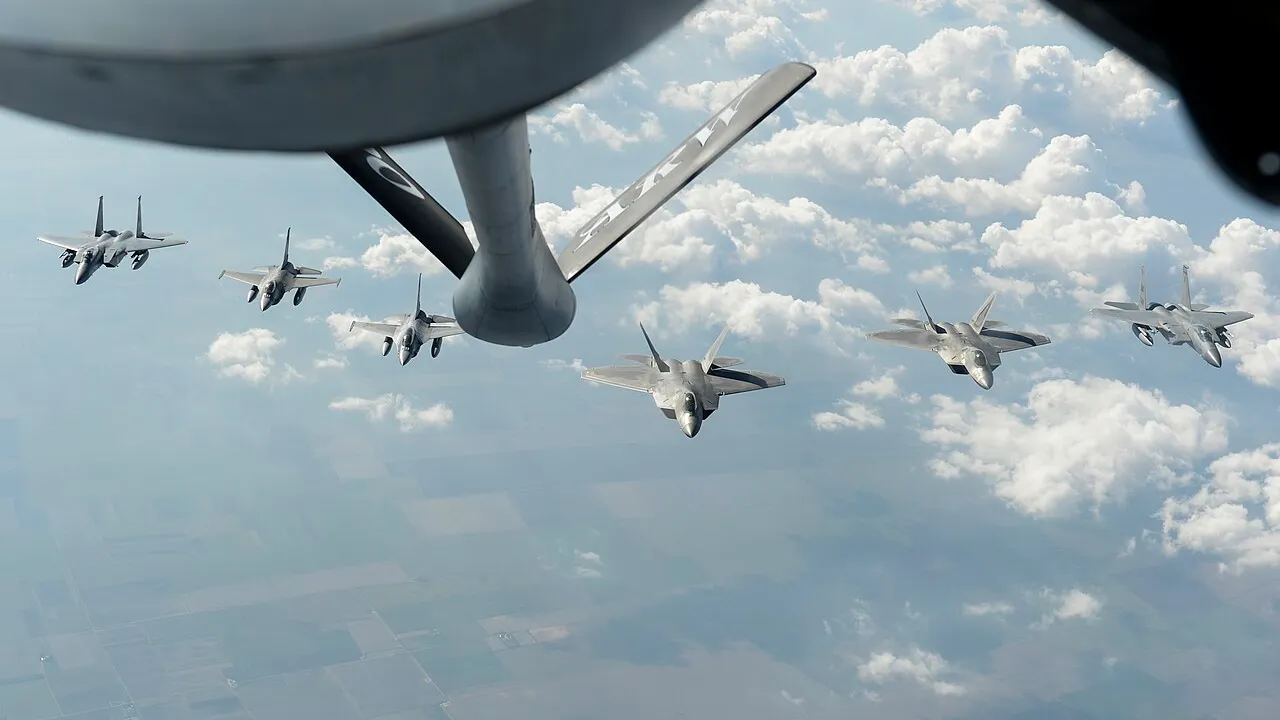
Congress has backed $90.34 million in F-22 modernisation in the FY2026 budget, and discussions are underway to upgrade the 32–35 Block 20 training aircraft to combat-coded standard, which would increase the combat-ready fleet by more than 20 percent.
The aircraft’s weakness is well documented: at $85,325 per flight hour and a mission-capable rate of approximately 40 percent, it is one of the most expensive and maintenance-intensive aircraft ever operated. Its fleet is also the smallest of any fighter on this list by a wide margin.



,_Radom_Air_Show,_20230826_1659_9951.jpg)
.jpg)
.jpg)

.webp)
.jpg)