The Government of Nepal has dismissed more than 30 office bearers from key tourism and aviation-linked institutions under the Ministry of Culture, Tourism and Civil Aviation, invoking a newly enforced ordinance aimed at restructuring public bodies.
The decision, announced through an official press release on Tuesday, affects entities including Nepal Airlines Corporation, Civil Aviation Authority of Nepal (CAAN), and Nepal Tourism Board, with the government citing legal provisions to justify the sweeping removals. The news comes only day after the Nepal government announced that it was accepting applications for the post of a new Directorate General of CAAN and for the board of directors of Nepal Airlines Corporation.

Government Order Details and Legal Basis for the Dismissal
The Ministry confirmed that the removals were executed under Section (2), Sub-section (1) of the Special Provision Ordinance on Removal of Public Office Holders, 2026. Officials appointed by the Council of Ministers across multiple boards were relieved of their duties with immediate effect, marking one of the most extensive administrative reshuffles in recent years.

Photo: Ajendra Rai | aviospace.org
According to the ministry’s statement, the ordinance provides the legal framework to dissolve or reconstitute public bodies deemed misaligned with current policy priorities. The move signals a broader attempt by authorities to recalibrate governance structures across tourism and aviation-linked institutions.
The following table details the people who been removed:
| S.No. | Organization / Institution | Position | Name |
|---|---|---|---|
| 1 | Pashupati Area Development Trust | Member Secretary | Prakash Mani Sharma |
| 2 | Pashupati Area Development Trust | Treasurer | Dhirendra Sapkota |
| 3 | Pashupati Area Development Trust | Member | Harihar Dhakal |
| 4 | Pashupati Area Development Trust | Member | Shishir Parajuli |
| 5 | Pashupati Area Development Trust | Member | Babu Sharan Subedi |
| 6 | Pashupati Area Development Trust | Member | Dr. Bharat Prasad Badal |
| 7 | Pashupati Area Development Trust | Member | Rameshwar Sangraula |
| 8 | Pashupati Area Development Trust | Member | Sushma Poudel |
| 9 | Pashupati Area Development Trust | Member | Raj Kumar Khati |
| 10 | Nepal Airlines Corporation | Executive Director | Amritman Shrestha |
| 11 | Nepal Airlines Corporation | Board Member | Ram Prasad Khatiwada |
| 12 | Cultural Institution | Chairperson | Chandra Kumar Rai |
| 13 | Cultural Institution | Member | Pooja Shrestha |
| 14 | Cultural Institution | Vice-Chairperson | Shankar Prasad Lama |
| 15 | Cultural Institution | Treasurer | Buddhi Raj Bhattarai |
| 16 | Cultural Institution | Member Secretary | Dipak Shrestha |
| 17 | Cultural Institution | Member | Shyam Bahadur Mijar |
| 18 | Cultural Institution | Member | Gopi Krishna Sharma |
| 19 | Cultural Institution | Member | Bidyut Poudel |
| 20 | Cultural Institution | Member | Ram Naresh Koirala |
| 21 | Cultural Institution | Member | Shriram Yadav |
| 22 | Cultural Institution | Member | Rajesh Shakya |
| 23 | Cultural Institution | Member | Prakash Bhandari |
| 24 | Cultural Institution | Member | Dharananda Kattel |
| 25 | Nepal Tourism Board | Chief Executive Officer | Deepak Joshi |
| 26 | Nepal Tourism Board | Member | Narendra Kumar Dev |
| 27 | Nepal Tourism Board | Member | Kumar Mani Thapaliya |
| 28 | Nepal Tourism Board | Member | Khadga Ram Bhandari |
| 29 | Nepal Tourism Board | Member | Rajendra Bahadur Lama |
| 30 | Nepal Tourism Board | Member | Ram Prasad Sapkota |
| 31 | Civil Aviation Authority of Nepal | Member | Rabindra Silwal |
| 32 | Civil Aviation Authority of Nepal | Member | Shri Mitra Prasad Pant (Tourism Sector) |
| 33 | Greater Janakpur Area Development Council | Chairperson | Shital Sah |
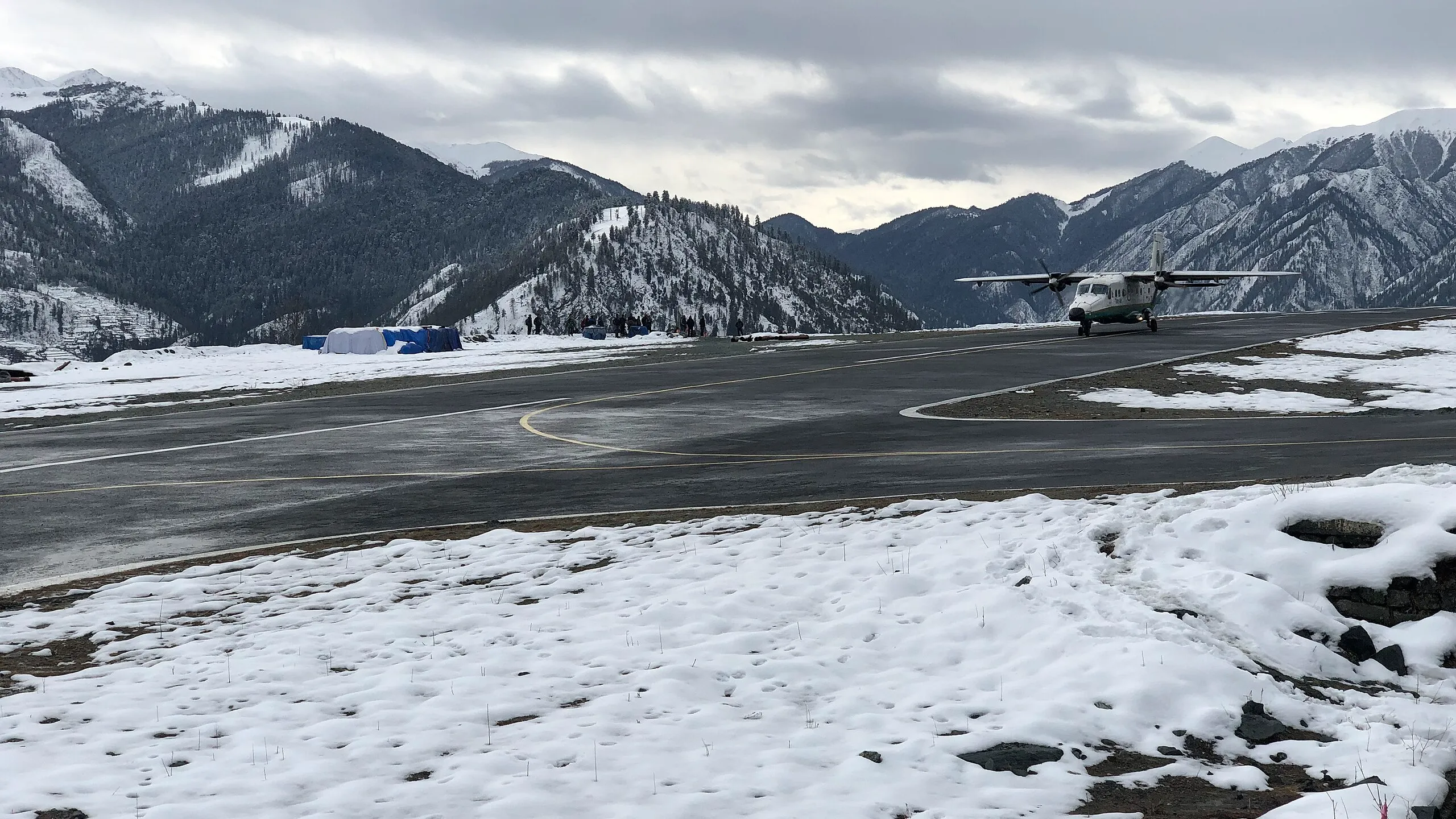
Photo: Tannu 01 | Wikimedia Commons
Impact On Nepalese Aviation and Tourism Bodies
The restructuring directly affects institutions central to Nepal’s aviation ecosystem, including Nepal Airlines Corporation and the Civil Aviation Authority of Nepal. These organizations play a critical role in regulating operations at Tribhuvan International Airport (KTM), the country’s primary international gateway. In fact, it was CAAN, which deemed Mingbo Airport, the most dangerous airport prior to Lukla, was unsafe for operations. The airport was instrumental in transporting relief goods to the Everest region when Tibetans had fled the Chinese during the cultural revolution.
Industry observers note that administrative changes at the regulatory and airline level can influence operational continuity, fleet planning, and international compliance. The inclusion of the Nepal Tourism Board and Lumbini Development Trust also indicates that the government is aligning tourism promotion with aviation strategy. The plans come at a time when the international airport in Lumbini [Gautam Buddha International Airport (BWA)] is looking for fifth-freedom flights. and the government has brought forth plans to increase the inflow of tourists by 11% in Nepal.
Officials from multiple bodies were removed simultaneously, including board members, executives, and committee representatives. Such a coordinated overhaul suggests a centralized policy shift rather than isolated governance issues.
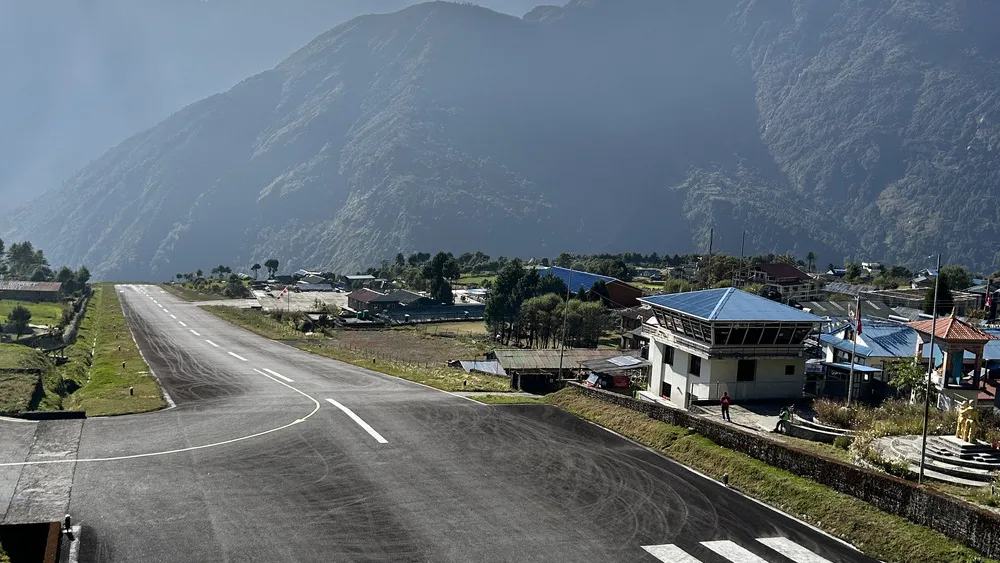
Photo: Karan Bhatta | aviospace.org
All in All
The government’s intervention comes at a time when Nepal is attempting to strengthen its tourism recovery and aviation capacity. Only a few weeks ago, Nepal ordered its airports to have a breastfeeding room, sent out measures (to CAAN) for safety to prevent accidents such as the crash of a helicopter in Lobuche, Everest region, among other measures.
By removing existing office bearers, the government has created space for new appointments that may align more closely with its strategic priorities. However, the transition phase could introduce short-term uncertainty, particularly if leadership gaps persist.
The ministry has not yet disclosed timelines for new appointments, but industry stakeholders will closely monitor how quickly replacements are installed. The effectiveness of this overhaul will ultimately depend on whether it translates into improved governance and operational outcomes, given that Iran War might increase jet fuel prices and drive some domestic airlines to stop operating in Nepal, given that fuel expenses for airlines in Nepal have gone over 60%.


.jpg)
