The Government of Nepal has initiated an open recruitment process to fill key vacancies at Nepal Airlines Corporation and the Civil Aviation Authority of Nepal (CAAN), inviting applications through a public notice published on May 12.
The move, led by the Ministry of Culture, Tourism and Civil Aviation, aims to strengthen governance through a transparent and competitive selection process, attracting 48 applicants for senior leadership roles across both institutions.

Nepal Government Invites Applications for Key Aviation Leadership Roles
The recruitment process marks a rare instance of open competition for top-tier aviation positions in Nepal, reflecting growing pressure to improve institutional accountability. According to the official notice published in Gorkhapatra National Daily, 27 candidates have applied for five vacant Board of Directors positions at Nepal Airlines Corporation.
Simultaneously, 21 applicants have submitted their candidacy for the Director General role at the Civil Aviation Authority of Nepal, one of the most influential regulatory posts in the country’s aviation ecosystem. Pokhara International Airport is one Nepali project that has been rife with corruption. The other notable corruption occurred in the purchase of the Airbus A330 widebody.
The Ministry stated that the process is designed to ensure merit-based selection, with further evaluations to follow after an initial screening of applications. It has been reported that 21 people have applied for the post of the Director General at CAAN.

Transparent Selection Process Aims to Address Governance Concerns
Nepal’s aviation sector has long faced scrutiny over governance inefficiencies, political interference, and delayed decision-making, particularly at Nepal Airlines. Officials have emphasized that the current recruitment drive is structured to introduce greater transparency and professionalism into leadership appointments.
A report published in The Rising Nepal Daily, “a total of 1,594 officials who received political appointments under various acts and structures will be relieved of their posts“. Thes officials range from the ones at the Civil Aviation Authority of Nepal, Nepal Airlines Corportation, Nepal Academy of Science and Technology, and various other ministries and departments:
“Ten office-bearers appointed under the Labor Act, 2074 BS* and seven officials appointed under the Contribution-Based Social Security Act, 2074 BS, Four officials appointed under the Disaster Risk Reduction and Management Act, 2074 BS and 17 officials appointed under the Rights of Persons with Disabilities Act, 2074 BS will be relieved of their posts. Similarly, four officials appointed under the Land Use Act, 2076 BS, three officials appointed under the Radioactive Substances (Use and Regulation) Act, 2077 BS and 27 officials appointed under the National Sports Development Act, 2077 BS will be relieved of their posts”.
*2074 BS = 2017 / 2018 AD
The evaluation process of the people vying to work in either CAAN or Nepal Airlines Corporation will include background checks, experience assessment, and leadership capability reviews before final appointments are made.
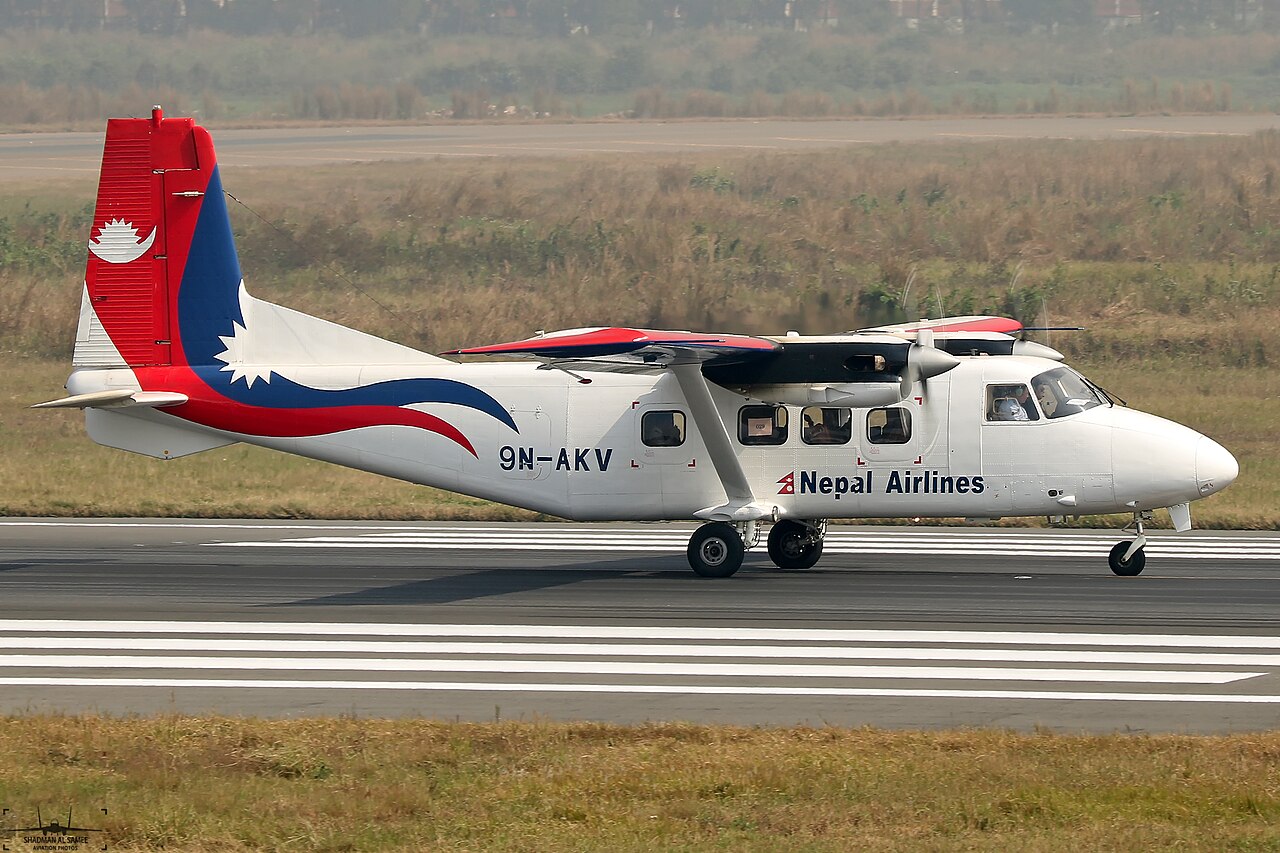
Nepal Airlines Leadership Vacuum and Strategic Challenges
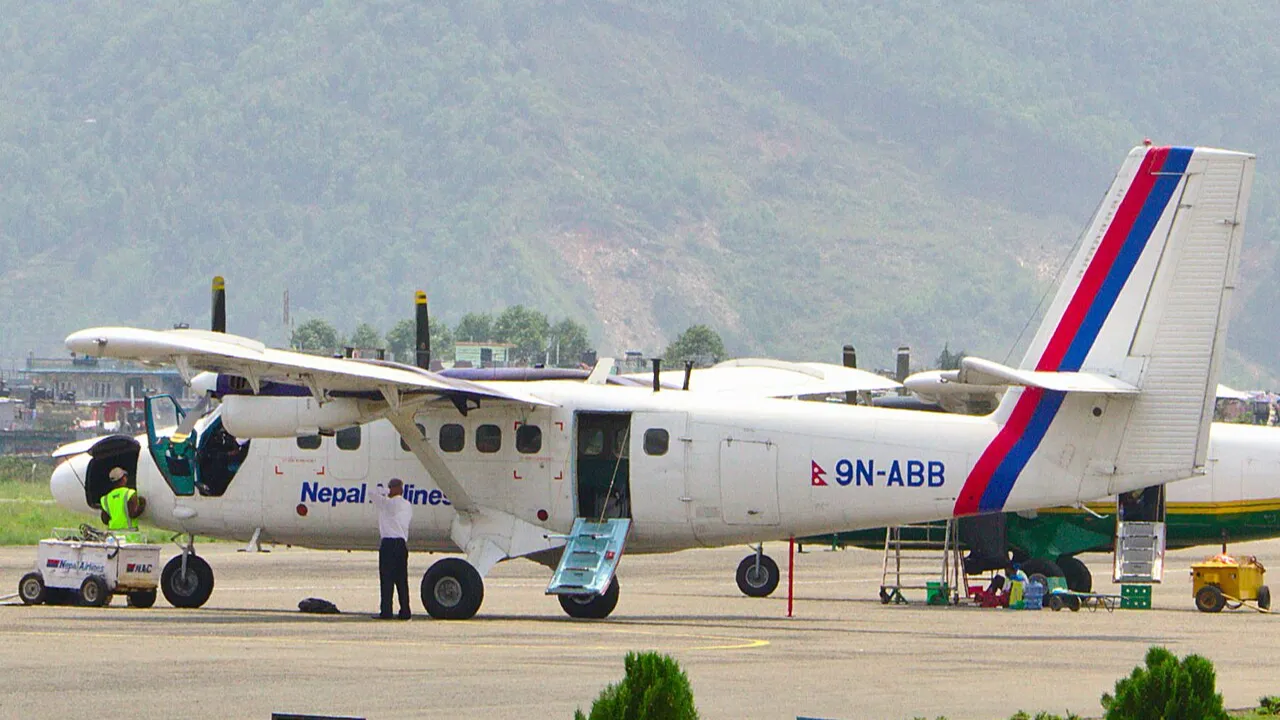
Nepal Airlines Corporation has struggled with operational inefficiencies, aging fleet management issues, and inconsistent strategic direction in recent years. To put this into perspective, one has to note that the wo De-Haviland aircraft operated by the Nepali flag carriers are more than 4o years old:
| Reg | Aircraft Type | Config | Delivered | Age |
|---|---|---|---|---|
| 9N-ABT | De Havilland Canada DHC-6 Twin Otter | Y19 | Jan 2007 | 41.9 Years |
| 9N-ABU | De Havilland Canada DHC-6 Twin Otter | Y19 | Jan 2007 | 41.6 Years |
The strategic blunders of the Nepal Airlines is documented by the fact that despite signing bilateral agreements with more than 40 nations, Nepal doesn’t have flights to many of these nations.
The absence of a stable and professionally driven board has often been cited as a key factor behind delayed reforms and underutilized assets. Industry observers argue that appointing competent board members could significantly influence decisions related to fleet expansion, route optimization, and financial restructuring.
CAAN Director General Role Critical for Regulatory Oversight
The Director General of CAAN plays a pivotal role in overseeing aviation safety, infrastructure development, and regulatory compliance in Nepal. CAAN plays dual role in Nepal – it simultaneously functions as both a regulator and a service provider—a structure that has long been debated within Nepal’s aviation sector. In its regulatory capacity, CAAN is responsible for:
- Ensuring compliance with international aviation safety standards set by the International Civil Aviation Organization (ICAO)
- Licensing airlines, pilots, and aviation personnel
- Conducting safety audits and inspections
- Managing airworthiness certification and operational approvals
At the same time, CAAN operates as a service provider by:
- Managing airports, including Tribhuvan International Airport (KTM)
- Providing air navigation services (ANS), including air traffic control
- Overseeing airport infrastructure development and maintenance
- Collecting airport and navigation fees
This dual operational functionality is something that the European Union Aviation Safety Agency has urged CAAN to give up improving the safety stands of Nepal – though we do not know if CAAN will function as only a service provider or regulator after a new DG is elected.
A Defining Moment for Nepal’s Aviation Governance
A week or so ago, Nepal was pondering whether introducing fifth-freedom flights to Gautam Buddha International Airport (BWA) would make help the paucity of international flights observed in this airport.
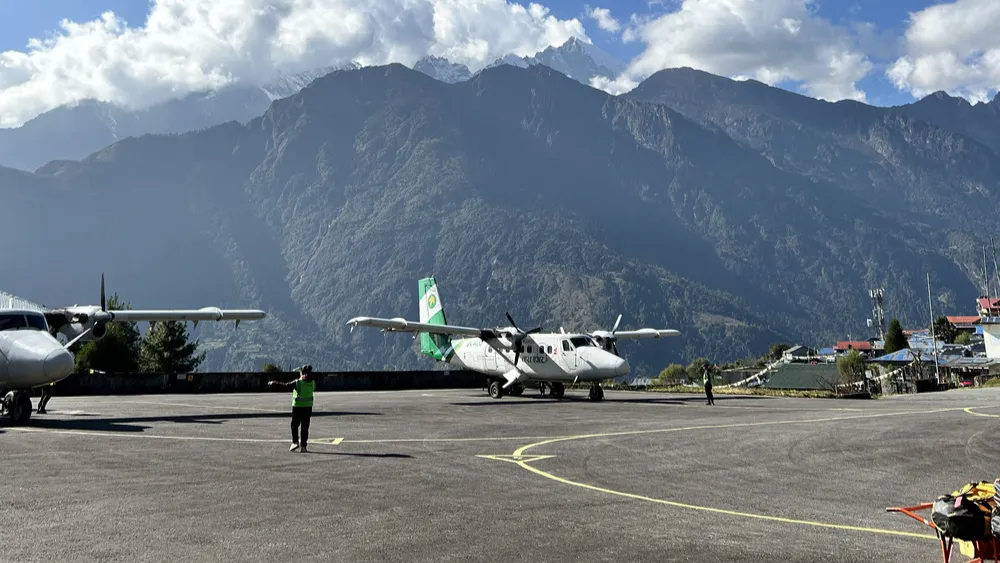
After the accident report of crash of an Altitude Air’s Airbus AS350B3e registered 9N-AMS came out, there were various directives for CAAN. Nepal has a bad track record of aviation safety and the history of crashes at Lukla, which is known as the most dangerous airport in the world, and the nation has to look at ways to better its aviation safety record. And new appointees at CAAN will certainly help.



_@_HKG,_March_2019.jpg)
.jpg)
