Air India (AI) is preparing to introduce a “lite fare” structure that could reduce ticket prices by up to ₹250 by unbundling complimentary meals on select routes. The move will apply to domestic and short-haul international flights and is expected to roll out in the coming months, according to a report by The Times of India.
The initiative reflects the airline’s attempt to recalibrate its cost structure amid rising fuel prices and intensifying competition, while simultaneously aligning certain offerings with low-cost carrier practices without fully abandoning its full-service positioning. The carrier has already slashed almost a tenth of its flights due to the jet fuel hikes and the lite fare structure might be one of the things that attracts travelers to this carrier, which is likely to have a hub and spoke model between Indira Gandhi International Airport (DEL), Delhi and Lal Bahadur Shastri International Airport (VNS).
Air India’s Lite Fares Strategy Targets Cost-Sensitive Passengers
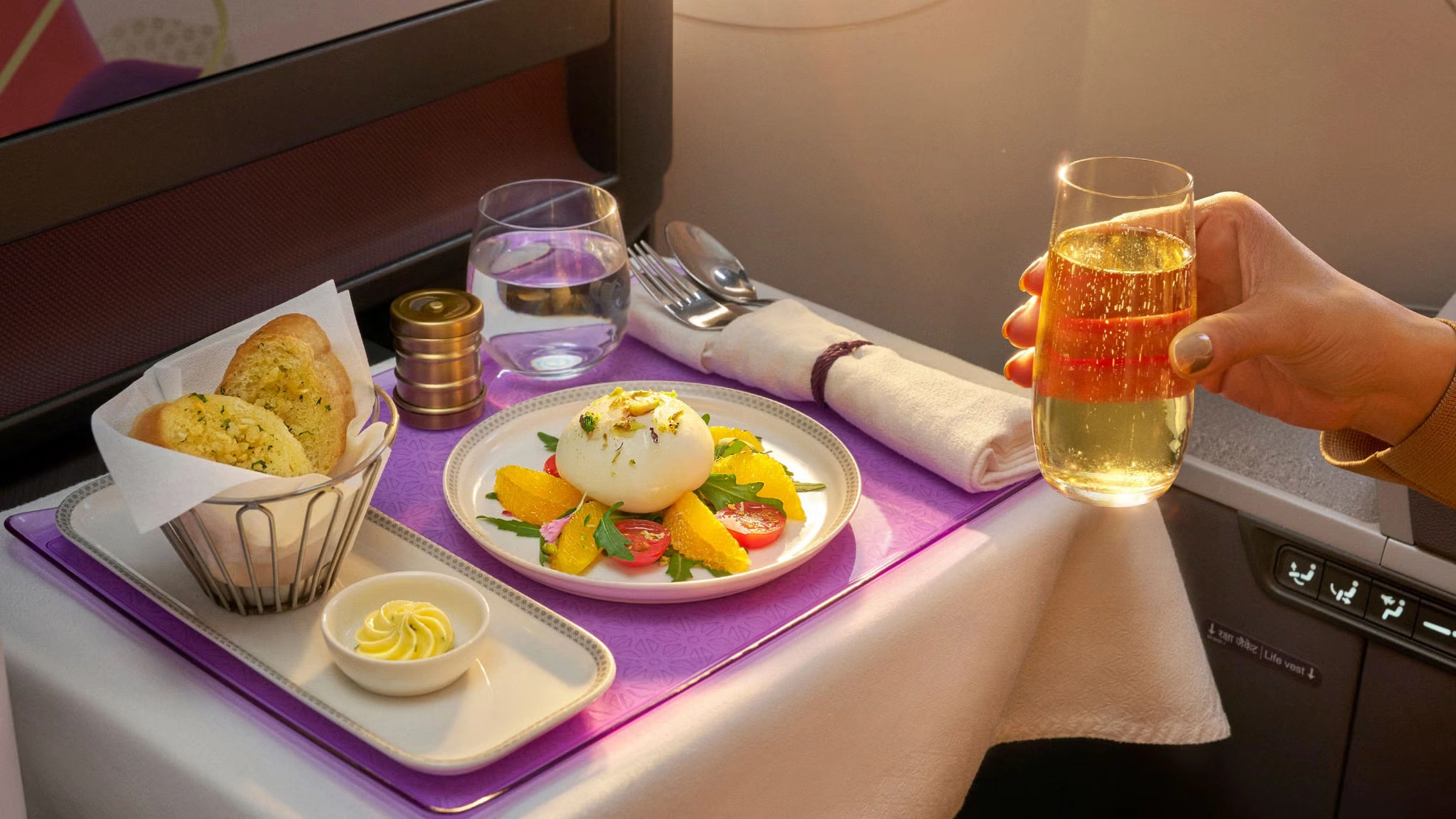
Air India plans to decouple meal services from base fares on flights typically under two hours in duration. Passengers who opt out of onboard meals will be eligible for fare reductions of approximately ₹250 or more, depending on route dynamics.
The proposal introduces a modular pricing framework that allows customers to customize their travel experience. This approach mirrors ancillary revenue models widely adopted by low-cost carriers, while still retaining premium options for passengers willing to pay for bundled services.
The airline has not yet issued a formal press release, but the development was first reported by The Times of India, citing internal discussions and upcoming rollout timelines.
Rising Operational Costs Push Air India Toward Hybrid Pricing
The timing of this move is closely linked to sustained pressure on airline economics, particularly due to volatile aviation turbine fuel (ATF) prices. Fuel remains the largest cost component for Indian carriers, often accounting for over 35–40% of operating expenses. The rise in jet fuel has also forced Indigo to increase surcharges on a lot of its domestic and international routes.
Additionally, geopolitical tensions in West Asia have contributed to elevated fuel prices and disrupted supply chains, further straining airline margins. These macroeconomic conditions have forced even legacy carriers to reassess long-standing service inclusions.
By unbundling meals, Air India can reduce per-passenger costs while maintaining fare competitiveness against carriers such as IndiGo and SpiceJet. The strategy also allows the airline to better segment its customer base based on willingness to pay.
AI’s Move Aligns with the Global Trend Toward Service Unbundling
Last year, Air India Express introduced its “Xpress Lite Fares” – a fare category that removed the standard checked baggage allowance in exchange for a lower base ticket price. Passengers opting for the Lite fare are permitted to carry up to 10 kg of cabin baggage, compared to the usual 7 kg limit. Any additional allowance must be added either at the time of booking or later through the “manage booking” option.
These travellers are also entitled to use the Xpress Check-In counter, helping them bypass standard queues at airport counters and baggage drop points. If passengers later decide to add checked baggage of up to 15 kg, it can be purchased at a fixed rate of ₹1,000.
Air India’s move aligns with a broader global trend where full-service airlines increasingly unbundle services to remain competitive. Carriers in Europe and North America have already introduced “basic economy” fares that exclude meals, seat selection, and baggage.

A week ago, Lufthansa Group introduced a new “Economy Basic” fare (scheduled to be available from May 2026), further unbundling its short- and medium-haul ticket structure across Europe. The new fare allowed only a small personal item such as a laptop bag or compact backpack, with larger cabin baggage requiring an additional fee.
Lufthansa stated the move is intended to offer “clear, transparent selection tailored to individual needs,” and will roll out gradually across its airline brands. The shift reflects a broader industry trend, already seen in U.S. carriers like United Airlines, toward stricter carry-on limits (with the carrier also increasing checked bag fees by $10 due to the Iran War) and highly segmented fare structures amid rising operational costs and fuel price pressures.
However, the shift also raises questions about the evolving definition of a “full-service airline” in a market where differentiation is becoming increasingly blurred.