The United States Air Force (USAF) has, for the first time, publicly released imagery showing a Boeing B-1B Lancer carrying the AGM-183 Air-launched Rapid Response Weapon (ARRW) hypersonic missile. The visual confirmation emerged via Edwards Air Force Base’s official social media channel in April 2026.
The development comes as the B-1B is officially slated to remain in service for at least another decade, with a redefined role as a hypersonic weapons test and deployment platform. It also coincides with renewed momentum for the ARRW program, which has oscillated between cancellation and revival in recent budget cycles.
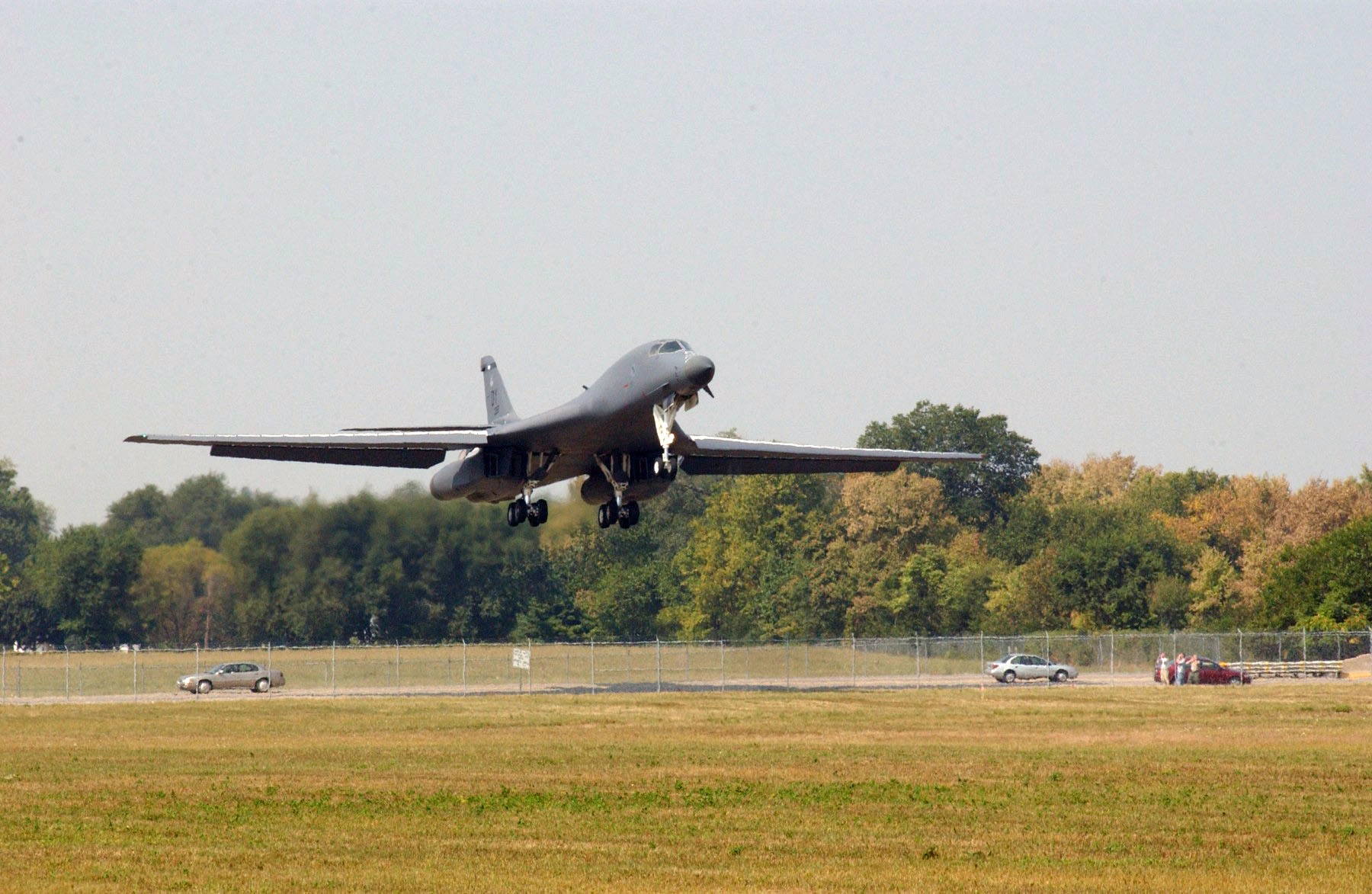
First Public Imagery Confirms B-1B–ARRW Integration
The newly released footage, first circulated via Edwards Air Force Base’s Instagram account, depicts a B-1B Lancer configured with an ARRW missile mounted on an external hardpoint. The imagery was initially highlighted by aviation analyst coverage from The Aviationist, which brought wider attention to the development.
While the Air Force has not confirmed the exact timing of the flight, the video appears embedded within broader content showcasing maintenance and operational activity at Edwards AFB. The lack of contextual metadata has left the specific test parameters undisclosed.
The U.S. Air Force has not issued a dedicated press release accompanying the imagery. However, the visual confirmation itself represents the most explicit demonstration to date of ARRW carriage on the B-1B platform.
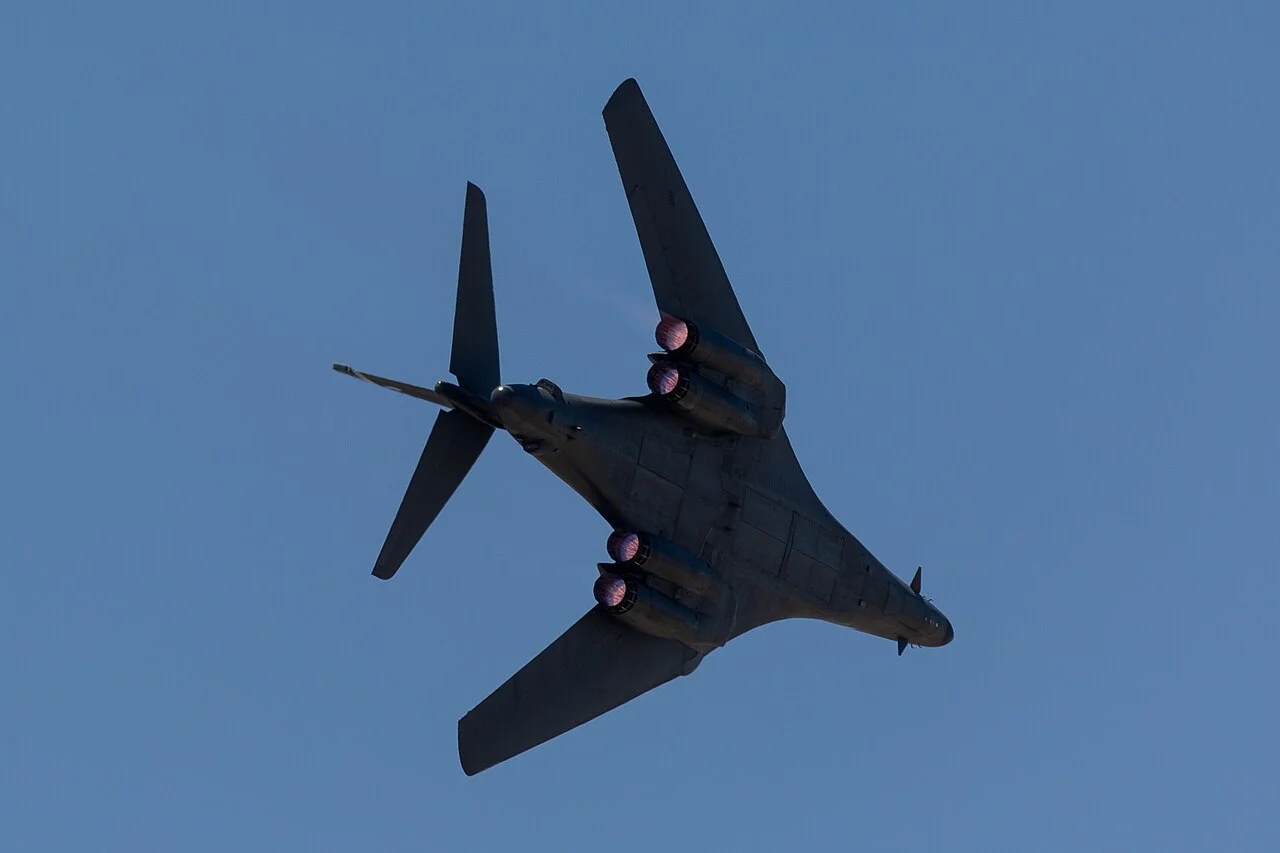
B-1B: External Hardpoints and Revived Hypersonic role
The B-1B Lancer was originally engineered with eight external hardpoints designed for carriage of heavy ordnance, including nuclear-configured AGM-86B cruise missiles during the Cold War era. Those pylons were largely deactivated following the aircraft’s transition to a conventional-only mission set.
Recent modernization efforts have revived interest in external carriage options, particularly for oversized payloads such as hypersonic weapons. The Air Force has explored reinstating external load configurations to expand the bomber’s strike flexibility beyond its internal weapons bays.
In 2020, senior Air Force Global Strike Command leadership publicly indicated intent to modify a subset of B-1Bs with external pylons specifically to support ARRW integration. According to Air Data News, the missile has thus far been predominantly linked with the Boeing B-52H Stratofortress, which has functioned as its primary test aircraft.
“The ARRW is designed as a high-speed, air-launched weapon intended to strike time-sensitive targets at long range. The program faced multiple test setbacks in earlier phases, and the Air Force had indicated it would not proceed with procurement, although testing continued to gather data on hypersonic technologies.”
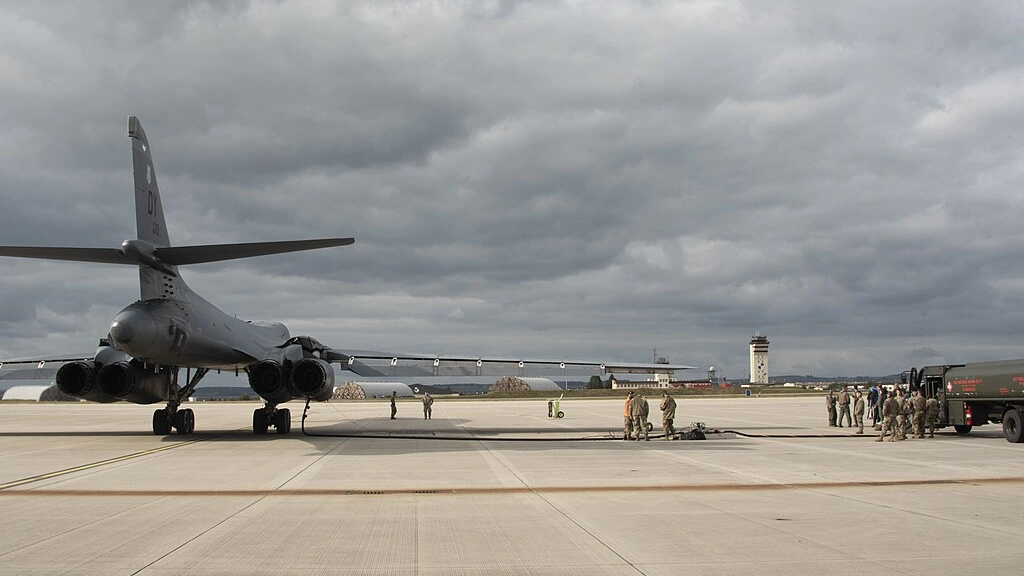
Hypersonic Integration Program and LAM Pylon Development
The ARRW integration effort aligns with the Air Force’s broader Hypersonic Integration Program, which evaluates aircraft compatibility with next-generation strike systems. The FY2026 budget documents confirmed successful captive-carry testing of a 5,000-pound-class payload using the Load Adaptable Modular (LAM) pylon system. But before we dive into the details of the ARRW integration, let’s have a look at the armament capabilities of the B-1B, which the USAF calls “the backbone of America’s long-range bomber force“:
| Category | Weapon systems |
|---|---|
| General purpose bombs | Up to 84 × 500 lb Mk-82 or 24 × 2,000 lb Mk-84 bombs |
| Naval mines | Up to 84 × Mk-62 (500 lb) or 8 × Mk-65 (2,000 lb) Quick Strike mines |
| Cluster munitions | 30 × CBU-87/89/97 or Wind-Corrected CBU-103/104/105 |
| Precision-guided bombs | Up to 24 × GBU-31 JDAM or 15 × GBU-38 JDAM |
| Standoff missiles | Up to 24 × AGM-158A JASSM |
| Laser-guided bombs | Up to 15 × GBU-54 LJDAM |
The LAM architecture allows the B-1B to carry multiple heavy external weapons, including hypersonic glide vehicles and large precision-guided munitions. Each pylon can support either two 2,000-pound-class weapons or a single weapon exceeding 5,000 pounds in weight class.
Officials have also noted that the same external stations have been used for testing JDAM configurations, JASSM cruise missiles, and sensor pods, underscoring the B-1B’s evolving multi-role adaptability.
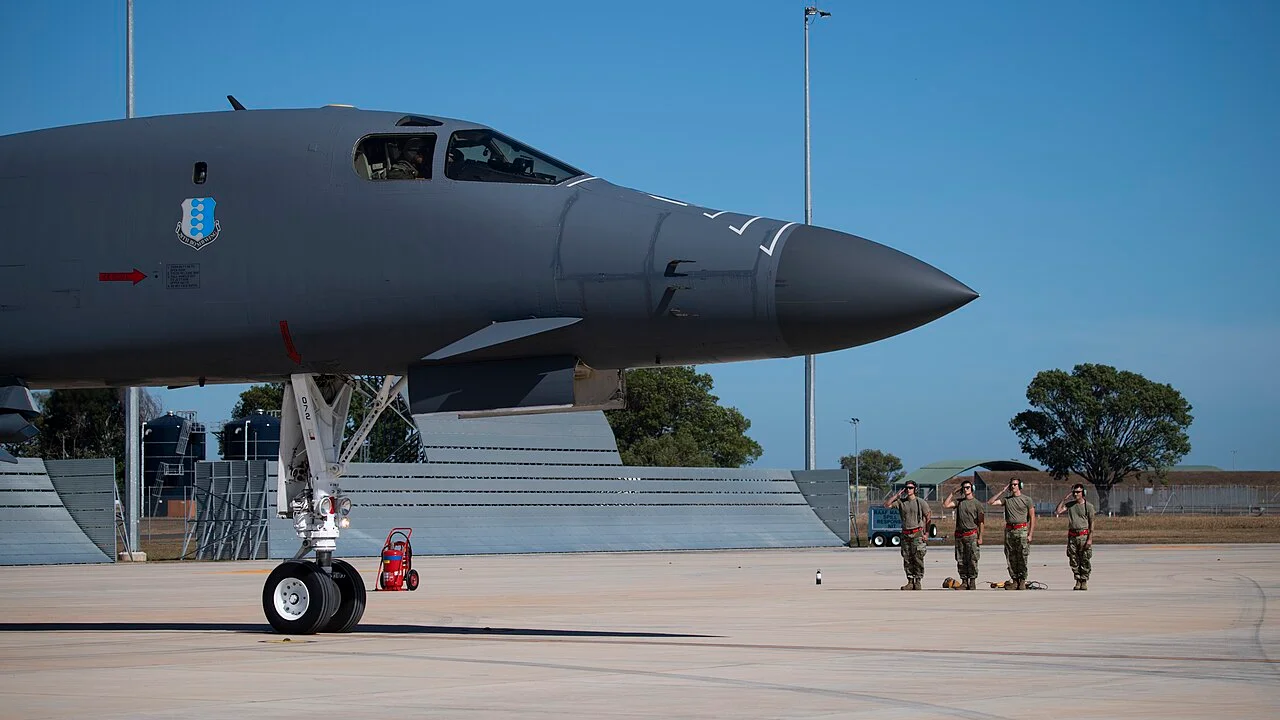
What the ARRW Hypersonic Missile Brings to the Platform
The AGM-183 ARRW is designed as a boost-glide hypersonic weapon system. A rocket booster accelerates the payload to extreme speed and altitude before releasing a maneuverable glide vehicle toward its target to “provide future, nonnuclear strike against time-sensitive, heavily defended, high-value targets from standoff range”, Air and Space Forces Magazine reports.
Once separated, the glide vehicle travels at hypersonic velocities while following a low, unpredictable trajectory profile. This flight behaviour significantly reduces reaction time for adversary air-defense systems and complicates interception efforts.
The program has experienced multiple reversals, including cancellation proposals in 2023 and renewed funding interest in subsequent budget cycles, reflecting ongoing debate over its operational maturity and strategic necessity. Here’s a look at the evolution of the AGM-183 ARRW:
- 2020: The USAF completed seven captive-carry flight tests using an instrumented ARRW test article on a B-52H at Edwards Air Force Base, concluding with an aborted boost test in December 2020.
- April 2021: A boost test attempt over the Point Mugu Sea Range failed when the missile did not safely separate from the aircraft.
- July 2021: A follow-on test achieved safe separation and target acquisition, but the booster failed to ignite, limiting performance validation.
- Early FY2022: The Air Force conducted six ground-based detonations to evaluate and characterise the weapon’s warhead performance.
- May 2022: ARRW achieved its first successful boost phase, separating from a B-52H and reaching Mach 5 after ignition.
- July 2022: A second successful flight completed booster testing, advancing the program toward operational evaluation.
- December 2022: The first full end-to-end live-fire test was conducted, with the AGM-183 following its planned trajectory before striking a designated target.
- 2023: Three all-up round tests were conducted; one suffered a failure in shroud separation, while the remaining two demonstrated successful launch, boost, glide phase, and warhead detonation.
- March 2024: A final all-up round test validated land-target engagement capability at Kwajalein Atoll, with assessments indicating survivability against advanced air-defence systems, despite earlier developmental inconsistencies.