Adverse weather conditions disrupted flight operations at Tribhuvan International Airport (KTM) on Sunday, forcing multiple international diversions and widespread domestic delays. Reduced visibility over Kathmandu Valley constrained landing operations, prompting pilots to abandon approaches and seek alternate airports. This adds to the woes of aviation sector in Nepal which already has seen airlines cutting almost half of their flights due to the surge in fuel prices.
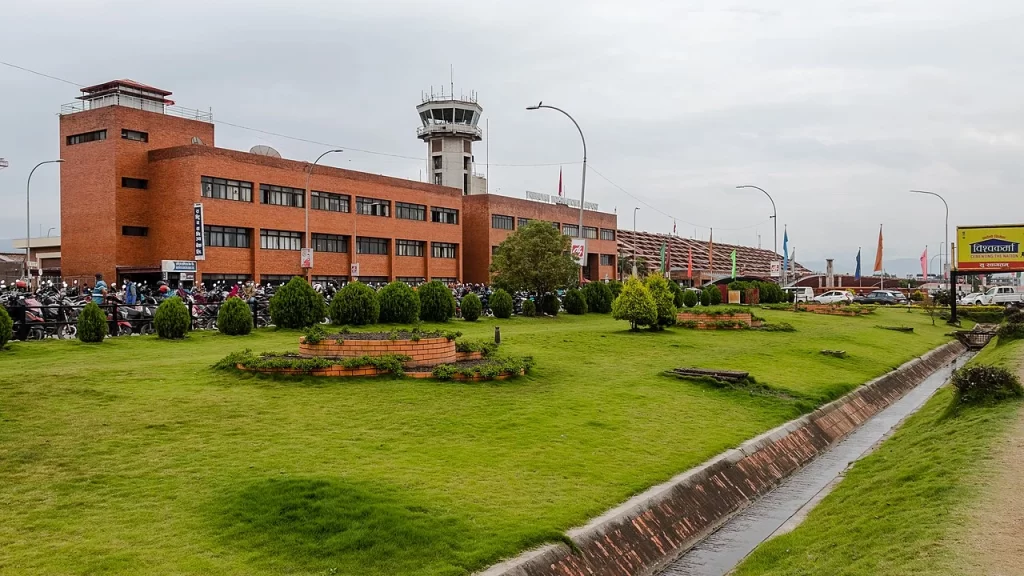
A long-haul flight operated by Turkish Airlines from Istanbul was among the affected services, diverting to Indira Gandhi International Airport (DEL) after failing to secure safe landing conditions at KTM. Airport authorities confirmed that at least two other international flights were also unable to land during the same period.
Turkish Airlines Istanbul–Kathmandu flight diverted to Delhi (DEL)
The Turkish Airlines aircraft encountered deteriorating visibility during its descent into Kathmandu, with conditions falling below the minimum threshold required for a safe landing approach.
According to The Kathmandu Post, the crew initiated a diversion to Delhi after aborting the landing attempt, in line with international safety protocols. The aircraft subsequently landed without incident at DEL, which serves as a primary alternate airport for Kathmandu-bound long-haul operations.
Diversions from Kathmandu are not uncommon during periods of low visibility, particularly during transitional weather phases when cloud density and precipitation fluctuate rapidly.

Three International Flights Diverted as Visibility drops over Kathmandu
Reporting from Ekantipur, indicates that these disruptions collectively affected around 600 passengers, underscoring the scale of operational impact within a relatively short time window.
The same weather system disrupted at least two other international flights, forcing an Air China aircraft back to Lhasa and compelling a Sichuan Airlines service to turn around mid-route. Airport officials stated that visibility deteriorated sharply during the early morning hours, leaving limited opportunity for inbound aircraft to complete safe approaches into KTM.

Photo:Ramesh NG |Wikimedia commons|
Domestic Flights Delayed Amid Unstable Conditions Across Nepal
Domestic air services also experienced significant delays as unstable weather conditions extended beyond Kathmandu into surrounding regions. Intermittent rainfall, cloud buildup, and reduced visibility affected multiple short-haul sectors.
Kathmandu is the primary airport from where flights take off to Lukla – which is regarded as the most dangerous airport. As the flights take off to Lukla only in the morning/afternoon, any weather related issues in Tribhuvan International Airport affects flights domestically as well.
Therefore, flights operating to hilly and mountainous destinations faced heightened disruption, as these routes are particularly sensitive to rapidly changing weather conditions.
Air traffic controllers implemented flow management measures to regulate departures and arrivals, but recovery remained gradual due to accumulated delays. Airlines adjusted schedules dynamically, although passenger congestion increased temporarily within airport terminals.
Department of Hydrology and Meteorology warns of Continued Instability
Kathmandu employs two landing systems during low-visibility conditions:
- the conventional VOR/DME
- satellite-based RNP-AR approach.
Shrestha explained that VOR/DME operations require a minimum visibility of 1,600 metres, while RNP-AR procedures can be conducted with visibility as low as 1,100 metres.
Airport authorities added that visibility improved to roughly 2,500 metres after 11:30 a.m., allowing conditions to gradually stabilise and become operationally favourable.
Nepal’s Department of Hydrology and Meteorology issued a forecast indicating continued weather instability across the country. The agency reported the likelihood of light rainfall in hilly and mountainous areas over the next 24 to 48 hours.
It also warned of localized moderate to heavy rainfall accompanied by thunder and lightning in parts of the Terai, particularly within Lumbini Province. Such conditions are known to reduce visibility and increase operational uncertainty for aviation services.
Meteorologists emphasized that fluctuating weather patterns during this period can significantly affect visibility corridors into Kathmandu Valley, directly impacting landing feasibility.

Structural Constraints Amplify Weather impact at Kathmandu Airport
Tribhuvan International Airport operates under inherent geographical and infrastructural constraints that amplify the impact of adverse weather. Surrounded by mountainous terrain and operating with a single runway, the airport relies on strict visibility minima for safe aircraft operations.
Even marginal deviations in weather conditions can trigger holding patterns, delays, or diversions. Airlines operating into Kathmandu routinely designate alternate airports such as Delhi or Kolkata to mitigate such risks. Such is also the case for remote airports in Nepal. And was the case for Mingbo Airport, which was so remotely located that it had to be shut down only a few months of its operation.
Aviation analysts highlight that while safety compliance remains robust, recurring disruptions during periods of meteorological instability continue to expose structural limitations within Nepal’s aviation network.
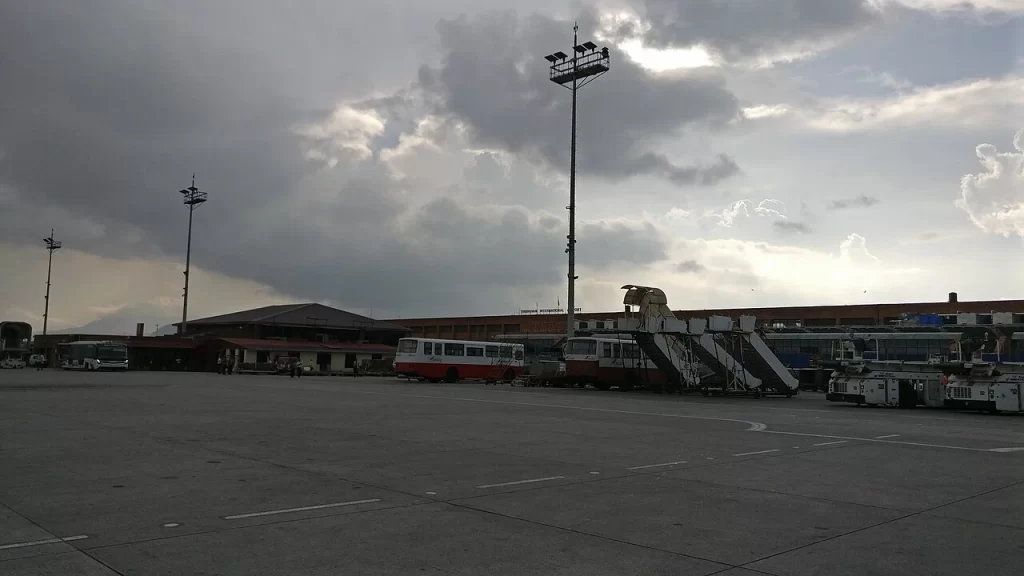
All in All
Weather-related disruptions remain a persistent operational challenge for Nepal’s aviation sector, particularly during pre-monsoon and transitional seasonal periods. The concentration of international traffic at a single airport further compounds the impact of such events.
Though it was recently proposed that the nation was looking to increase operations at Gautam Buddha Airport, the airport has scanty operations. And the corruption laden Pokhara International Airport, which has yet to see regular international operations. So the only solution out for disruptions like these would be a decentralization of Nepalese aviation.