A senior Air India (AI) pilot was denied entry into the United States at San Francisco International Airport (SFO), following a customs inspection that reportedly flagged a violation involving cannabis possession. The incident occurred during a crew layover or positioning movement, rather than while operating a scheduled commercial flight.
According to multiple aviation media reports, US Customs and Border Protection (CBP) deemed the pilot inadmissible under federal law and returned him to India on the next available service. The decision underscores the strict enforcement of US federal narcotics regulations, which apply uniformly at all ports of entry irrespective of state-level legalization frameworks.
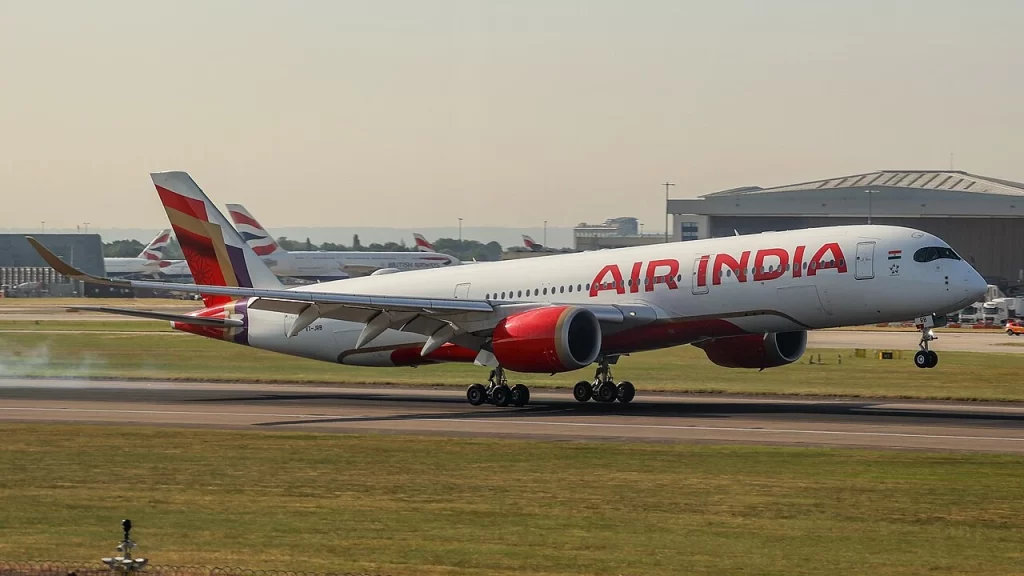
Air India’s Deadhead Pilot Possessed Marijuana
The co-pilot was not part of the operating crew on the Delhi (DEL) to San Francisco (SFO) sector, instead travelling as a passenger under a standard crew positioning arrangement.
Air India (AI) had been repositioning flight crew on this route following the temporary suspension of its San Francisco–Kolkata (CCU) service, which required personnel to be deployed in advance for the return leg.
Upon arrival at San Francisco International Airport (SFO), US Customs and Border Protection (CBP) officers carried out a routine inspection and reportedly found marijuana in the co-pilot’s baggage. The pilot was not cleared to enter the United States.
Air India was subsequently informed, and arrangements were made to return the co-pilot to India on the next available flight.
The incident also draws attention to airline crew vulnerability to immigration enforcement actions during layovers, particularly in jurisdictions with strict federal narcotics laws such as the United States.
Air India has not disclosed the identity or other particulars of the pilot accused of carrying cannabis aboard the aircraft but a spokesperson for the airline was quoted as having said that the carrier had no tolerance for violation of the law:
“One of our crew members travelling from Delhi to San Francisco on April 14, for positioning to operate a subsequent flight, was found to be inadmissible as per local laws and has been sent back to India. Air India maintains zero-tolerance towards any violation of the law and upholds the highest standards of safety, compliance, and professional conduct. Appropriate strict disciplinary action will be taken as per laid down company policies. Ensuring safety, as always, remains Air India’s number one priority.”
US CBP Enforcement at San Francisco International Airport (SFO)
The action was taken under US federal immigration and customs statutes, which classify cannabis as a prohibited substance. Although California permits recreational cannabis under state law, CBP maintains exclusive jurisdiction at international ports of entry, including SFO.
According to One Mile at a Time, reports indicate that the pilot was travelling in a non-operating capacity, commonly referred to as deadheading or positioning. In such cases, crew members remain subject to the same admissibility screening standards as general passengers, including baggage inspection and visa compliance checks
This Case Might Just Be Operationally Sensitivity for Air India
US CBP maintains that admissibility determinations are grounded in federal law, and airline affiliation does not exempt crew from standard scrutiny.
This creates operational sensitivity for international carriers, which must ensure strict compliance training for flight and positioning crew.
For carriers like Air India, such incidents can also trigger internal compliance audits and reinforce the importance of pre-departure briefing protocols for international layovers.
Air India doesn’t want any bad press, particularly as this is a very sensitive time for the carrier- its CEO just exited, there are talks with Singapore Airlines over the carrier’s financial strife, and the sword of the crash of AI 171 hangs over the carrier like Damocles- no carrier would want to be embroiled in anything.

Previous Simialr Cases
This is not the first case of disciplinary action involving an Air India pilot on an international sector. On December 23 last year, Canadian authorities found an Air India captain assigned to a Vancouver–Delhi service on December 23 to be under the influence of alcohol.
The long-haul flight was operating with a technical refuelling halt necessitated by Pakistan airspace restrictions. Flight AI186 was scheduled to operate from Vancouver to Vienna with one crew complement, with a separate set of pilots rostered to take over for the onward Vienna–Delhi sector.
All in All
Key elements of the incident remain unresolved. Airline pilots operate under rigorous drug-testing regimes, and the possession of a prohibited substance carries severe professional consequences, raising immediate concerns over both judgment and intent.
The rationale behind transporting marijuana on an international sector is particularly questionable. Even in jurisdictions such as California, where recreational use is permitted at the state level, it would be far less risky to procure such substances after lawful entry rather than carrying them across borders from a country where they are also illegal.
It is not yet established whether the substance was deliberately packed or inadvertently included in the baggage. India’s aviation regulator, the Directorate General of Civil Aviation (DGCA), is expected to scrutinize these aspects as part of its inquiry, which will determine any regulatory action in addition to the airline’s internal proceedings.

_Air_India_Airbus_A350-941_VT-JRB_@_EGLL_2025-06-18.jpg)

.jpg)

