Nine Chinese nationals were arrested at Bandaranaike International Airport (CMB), Colombo, Sri Lanka, on Thursday after customs officers detected 383 mobile phones, 101 tablets, and six Wi-Fi routers concealed on their bodies and in luggage. Authorities suspect the equipment was intended for use in telecom fraud operations.
In a separate but concurrent enforcement action at the same airport, Sri Lanka Customs also detained six additional Chinese nationals attempting to smuggle tens of thousands of cigarettes into the country. The incidents occurred shortly after arrivals from multiple inbound international flights, including services originating from Kunming, China.
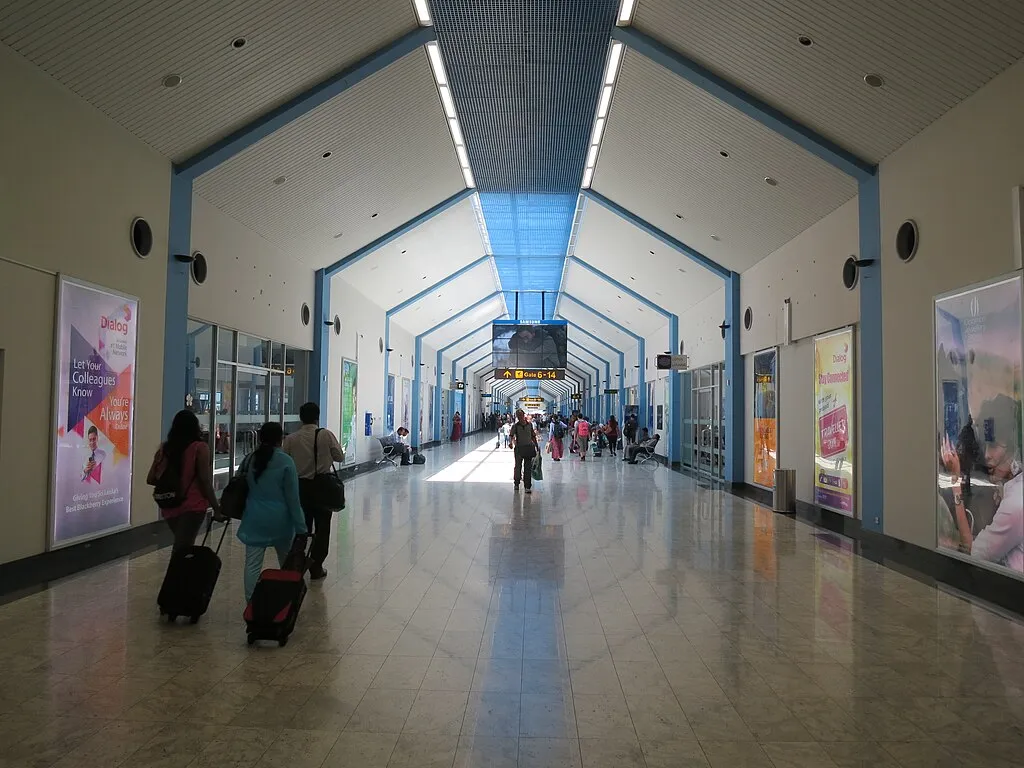
Large-Scale Electronic Concealment Intercepted at Colombo Airport
Sri Lanka Customs officials stated that the nine passengers had arrived at Bandaranaike International Airport (CMB), which is merely 150 miles away from the emptiest airport in the world (Matala Rajapaksha Airport in Sri Lanka), on a flight from Kunming before being selected for inspection. Officers reportedly discovered the devices tightly wrapped in tape and strapped beneath clothing, indicating deliberate concealment.
The seized consignment included:
- 383 mobile phones
- 101 tablet computers
- six Wi-Fi routers,
……collectively valued at approximately 24.02 million Sri Lankan rupees (about HK$570,000). Investigators believe the configuration of devices aligns with telecom fraud or coordinated digital scam operations, although formal charges remain pending.
According to a customs spokesperson that was quoted in The Strait Times:
The equipment was taped to the bodies of the suspects…The haul was valued at 24 million rupees (S$97,000) and was confiscated.
Authorities have not confirmed whether the group was operating independently or as part of a wider transnational network. The investigation is ongoing under Sri Lanka’s customs and border enforcement framework.
The UN Office on Drugs and Crime (UNODC) has reported that organised criminal networks have been operating from casinos, hotels, and heavily secured compounds across Southeast Asia, using these locations as hubs to run advanced online fraud schemes, including cryptocurrency investment scams and fabricated romantic relationships
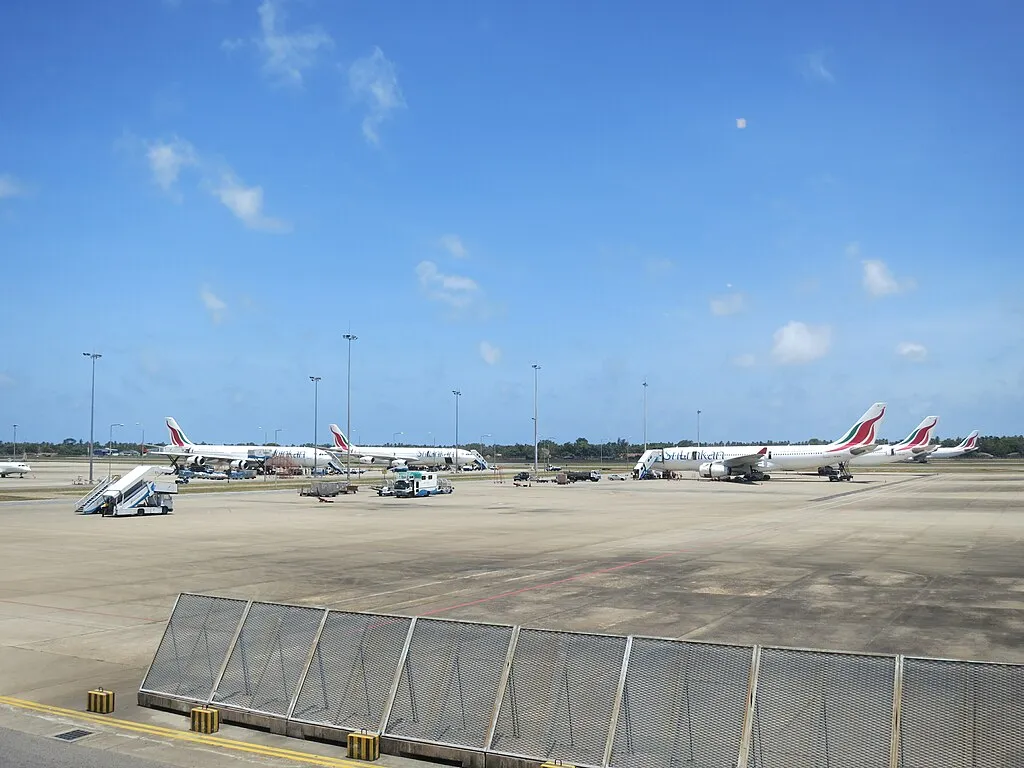
Separate Cigarette Smuggling Case at the Same Airport
On the same day, Sri Lanka Customs intercepted six additional Chinese nationals at CMB who allegedly attempted to smuggle 75,900 China-made cigarettes into the country. The contraband was concealed in backpacks and travel bags across passengers arriving on three separate flights.
The estimated value of the seized tobacco products was placed at around 11.38 million Sri Lankan rupees (approximately HK$270,000). Officials said the coordinated nature of concealment across multiple passengers suggested pre-planned distribution logistics.
The Chinese Foreign Ministry, when asked about the arrests during a regular press briefing, stated that it was not aware of the specific circumstances. A spokesperson reiterated that Chinese citizens abroad are expected to comply with local laws and that Beijing remains willing to cooperate internationally on combating fraud-related crimes.
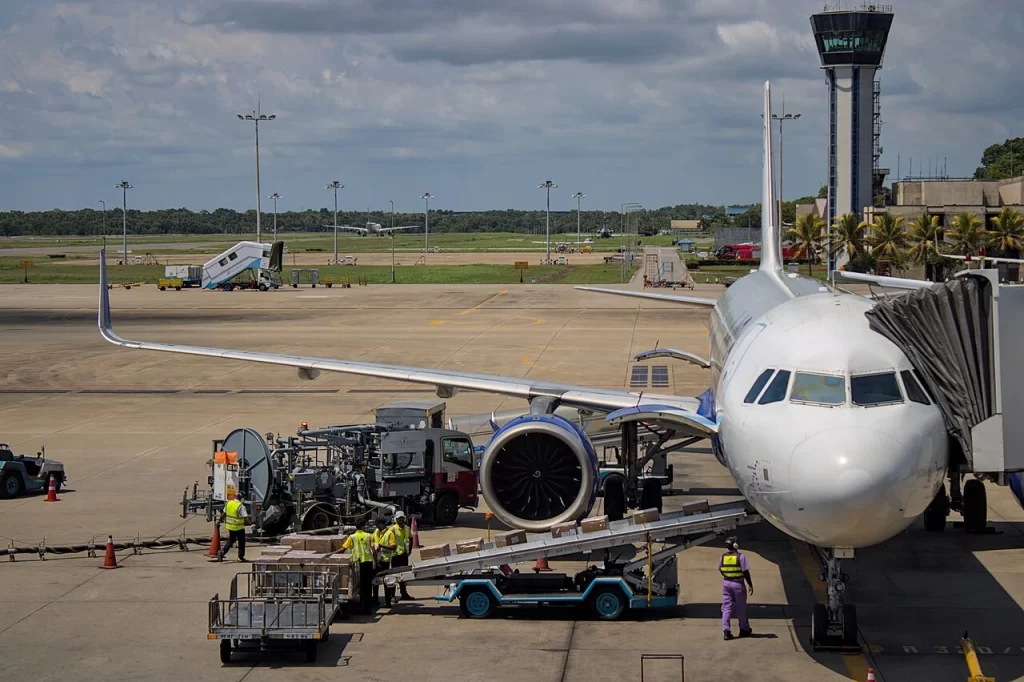
https://commons.wikimedia.org/wiki/File:IndiGo_A321_VT-IMG_at_Colombo.jpg
Previous Customs Enforcement Cases Involving Airport Smuggling at CMB
Sri Lanka Customs has previously reported multiple interceptions of concealed goods at Bandaranaike International Airport, including electronic devices and commercial contraband hidden on passengers or in baggage. These operations typically involve inbound flights from East and Southeast Asia.
According to statement of the Chinese Embassy in Colombo quoted in Channel News Asia:
Due to Sri Lanka’s well-developed telecommunications infrastructure, favourable geographical location and relatively lenient visa policies, some telecom fraud gangs have moved to Sri Lanka….That is why such cases have been increasing in Sri Lanka recently…
Last year, a former flight attendant, a 21-year-old British national, Charlotte May Lee, was detained at Bandaranaike Airport in Colombo after she was found with suitcases containing “kush,” a potent synthetic drug that originated in West Africa and has been linked to significant fatalities in Sierra Leone. The drugs were estimated to be worth around $3.3 million on the street.
The following table gives us an idea of the different smuggling cases in the airport in recent times:
| Attribute | 3 Indians arrested with ganja worth Rs 14.5 crore at Colombo airport | CBS News – Cocaine hidden in plush toys at Sri Lanka airport | 6 Indians arrested in Sri Lanka gold smuggling case |
|---|---|---|---|
| Date of incident | Jan 2026 | Reported 2023–2024 timeframe | Reported 2019 |
| Nationality of suspects | 3 Indian nationals | Female suspect (foreign national; not clearly Indian) | 6 Indian nationals |
| Location | Bandaranaike International Airport (Colombo) | Bandaranaike International Airport (Colombo) | Bandaranaike International Airport (Colombo) |
| Contraband involved | 50 kg cannabis (“Kush”) | Cocaine hidden in plush toys | Gold worth over Rs 1 crore |
| Method of concealment | Luggage, green channel attempt | Hidden inside stuffed toys | Concealed in baggage (details vary by suspect) |
| Estimated value | ~Rs 14.5 crore | Multi-million dollar cocaine shipment (exact value not specified) | Over Rs 1 crore worth gold |
| Origin / route | Flight from Bangkok | Not clearly specified in article | Not clearly specified |
| Arrest details | Arrested at green channel while attempting to exit | Detected by airport security during screening | Arrested by Sri Lankan authorities/customs |
| Key note | One of largest cannabis seizures at BIA | Unusual concealment method (toys used for cocaine) | Large-scale gold trafficking involving multiple suspects |
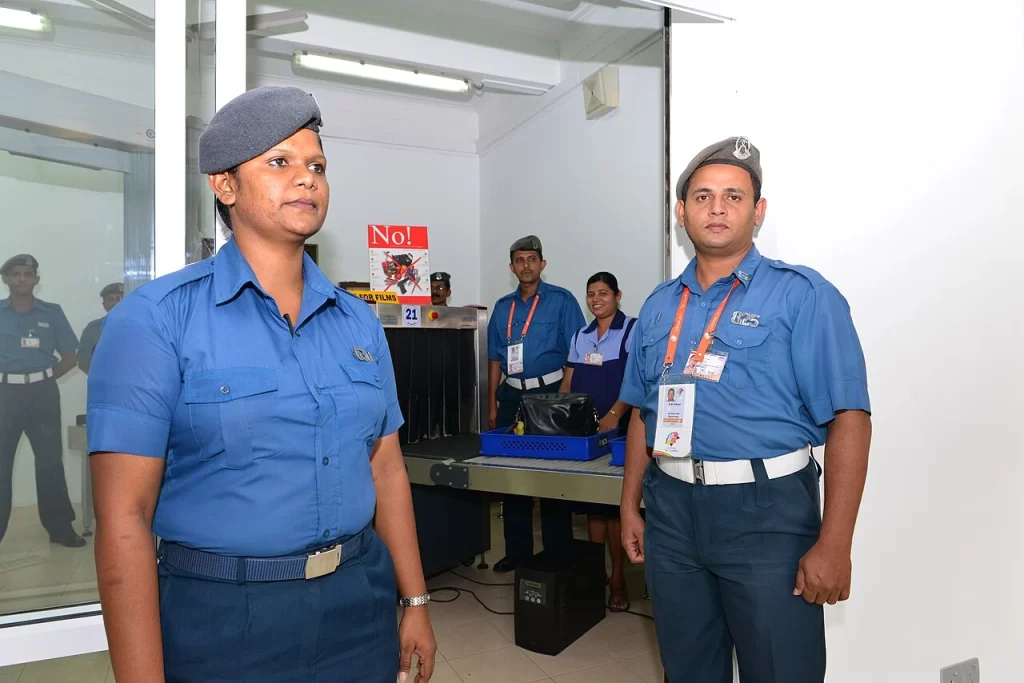
Regional Context Fraud-linked Smuggling in South East Asia
Aviation security analysts have increasingly flagged the convergence of electronics smuggling and telecom-enabled fraud operations across South Asian transit hubs. Airports such as CMB have periodically reported seizures involving bulk mobile devices, often suspected of supporting scam networks operating across borders.
According to UN’s report, there are many individuals in Southeast Asia that are compelled to work in online scam compounds meet the legal definition of trafficked persons, and it might be the case that the arrested nationals were perpetrators of such crimes.
Under international law, trafficking in adults consists of three core elements: the act, means, and purpose, all of which must be established for a case to qualify. Importantly, consent is legally irrelevant in determining trafficking. In the case of children, the “means” element is not required; trafficking is defined simply by the recruitment, transport, transfer, harbouring, or receipt of a child for exploitation.
The act refers to recruitment, transportation, transfer, harbouring, or receipt of persons. The means involves coercion, abduction, fraud, deception, abuse of power or vulnerability, or the exchange of payments or benefits to obtain control over a person. The purpose is exploitation.
Comparison table: Three core elements of human trafficking (as applied to online scam operations)
| Core element | Legal definition (simplified) | How it appears in scam operations | Key indicators in practice |
|---|---|---|---|
| Act | Recruitment, transportation, transfer, harbouring, or receipt of persons | Individuals are recruited via fake job offers, transported across borders, received at airports, and confined in scam compounds | Fake recruitment ads (IT, HR, marketing roles); arranged travel; border crossing under misleading terms; confiscation of passports on arrival |
| Means | Threat or use of force, coercion, abduction, fraud, deception, abuse of power/vulnerability, or inducements | Victims are misled about job nature and conditions, then controlled through violence, debt, and confinement once inside compounds | Deceptive job ads; contract manipulation; physical abuse; restricted movement; passport confiscation; debt bondage; threats against family |
| Purpose | Exploitation (labour, sexual exploitation, forced criminality, etc.) | Victims are forced to carry out online fraud schemes targeting global users (investment scams, romance scams, fake gambling platforms) | Compulsory scam work targets; scripted fraud operations; quotas for financial gain; “pig-butchering” romance scams; structured criminal revenue generation |