Google is apparently a misspelling of the word “Googol”, a word which means the number 1 followed by 100 zeros. While there aren’t as many flight numbers in the world (even flight numbers that have greater than 4 digits is a problem for the aviation community), Google has come up with an online flight search engine that guarantees some of the cheapest flight tickets there is.
This product launched by Google in September 2011 and designed to aggregate airfares from airlines and Online Travel Agencies (OTAs) worldwide without directly selling tickets (and one which redirects users to airline or agency websites for ticket purchases while providing advanced search tools, pricing insights, and travel data.), is in contrast with Skyscanner – an independent global travel search platform that also collates flight prices from airlines and OTAs but emphasizes extensive coverage of budget carriers and flexible search features like “Everywhere” and full-month pricing calendars.
Both of these differ in search breadth, pricing transparency, and travel-planning utility. If one were to compare the addresses recent developments, regulatory background, and user-experience differences, which of these two would come out on top? Let’s find out.
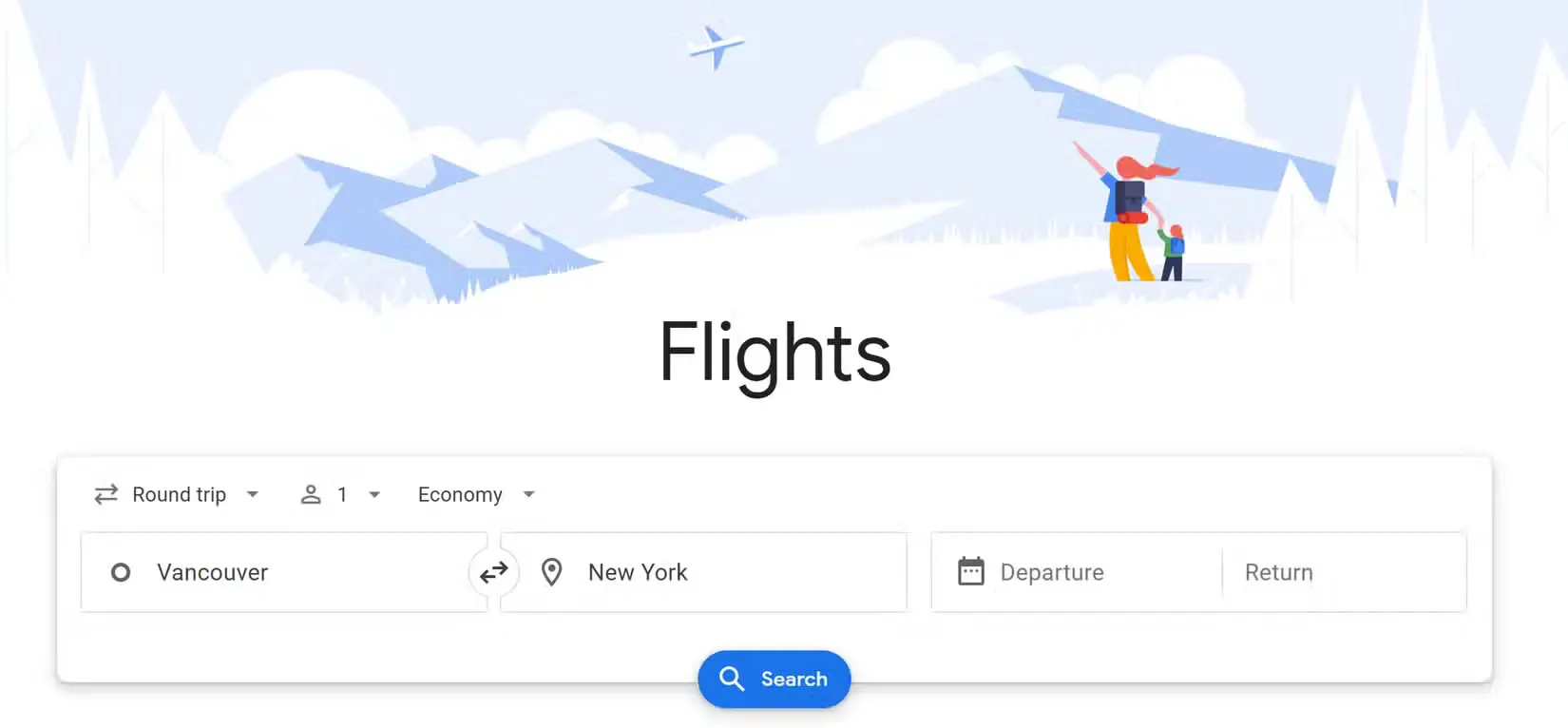
Google Flights Overview and Key Functionality
Google Flights is a flight search aggregator embedded within Google Travel that scans airfares from more than 300 airlines and selected OTAs, displaying results ranked by price, duration, and user preferences. It does not act as a booking agent but redirects users to carrier or OTA sites to complete purchases. The Times of India+1
primary features
-
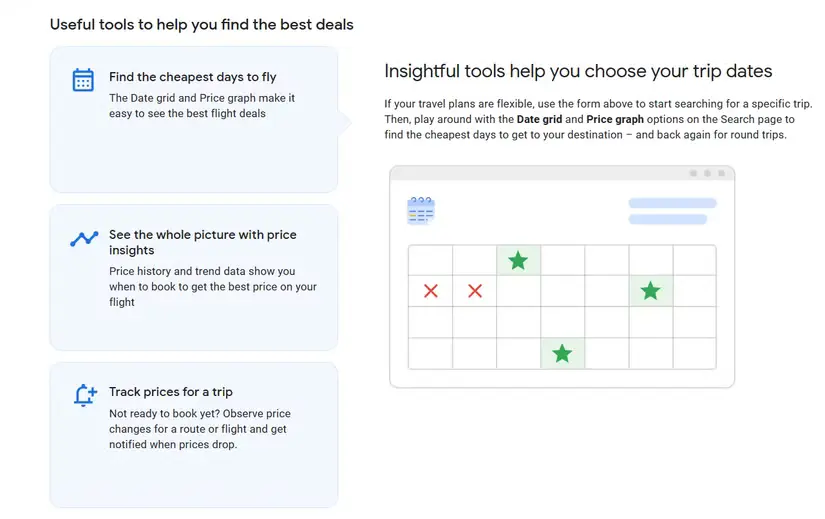
Price tracking alerts – users can monitor fare changes for specific routes and receive automated notifications.
-
Interactive calendar and price insights – provides cheapest date grid over a multi-month period.
-
Fare transparency – displays baggage allowances, seat legroom, and even carbon emissions for each flight itinerary. Direct airline comparison – users see prices straight from airlines, avoiding some OTAs’ service fees. The Times of India
-
AI “Flight Deals” – in beta, leverages Gemini AI to interpret flexible queries for tailored travel suggestions.
And according to TechRadar, one can, “Instead of fiddling with destination drop-down menus and departure time sliders“, you can:
“simply write out the type of trip you want to take and whatever else might be important to you when traveling. Instead of an airport code and a date, you can pick a season, the vibe of the location, and how you feel about very early flights. Gemini will then scan real-time pricing from hundreds of airlines and deliver up-to-date options tailored to your request”.

Primary advantages
-
Rapid search response and clean interface
-
Historical price guidance and flight forecasting
-
Integrated travel planning features
Challenges & limitations
-
According to dev.ratepunk.com, Google Flights does not include some smaller or regional airlines like Southwest or others.
-
It does not manage bookings or loyalty program integration. Carlos Barraza
Skyscanner Overview and Key Functionality
Skyscanner is a standalone flight, hotel, and rental search engine that aggregates airfares from global airlines and an extensive roster of third-party OTAs, offering broad visibility into low-cost and niche routes, reports The Times of India:
“While Skyscanner displays a wide range of fares, it is essential to note that final pricing may vary based on the third-party booking site’s fees or policies. The platform provides transparency by listing the source of each fare, enabling travelers to choose whether to book directly with the airline or through an agency.”
core features
-
Everywhere search – identifies cheapest destinations from any departure point.
-
Flexible date search – includes cheapest month and whole-month tools.
-
Multi-city itinerary planning – builds complex routes with multiple legs.
-
Price alerts – email notifications for monitored routes.
According to inews.co.uk, Skyscanner shows lower fares in the UK:
“…carried out a snapshot comparison of 11 different routes on five popular travel comparison websites, including Google Flights, Skyscanner found the cheapest fare on more than half the routes. Skyscanner too is trying to take on airline algorithms. Like Google, it has mountains of data, which it’s used to predict exactly when travellers should book for the cheapest fare to popular destinations.”

Strengths
-
Wider carrier inclusion, especially low-cost airlines
-
Flexible exploratory tools for price discovery
Limitations
-
Some listed fares originate from lesser-known OTAs with reputational risk
-
UI and filtering may lag in sophistication compared with Google Flights
Direct Comparison: Google Flights vs Skyscanner
| Feature | Google Flights | Skyscanner |
|---|---|---|
| Price tracking & alerts | ✔️ | ✔️ |
| Price guarantee/refund | ✔️ (up to ≈ $500) | ❌ |
| Low-cost carrier visibility | Limited | Extensive |
| Flexible exploratory search tools | ✔️ | ✔️ |
| Direct airline redirection | ✔️ | ✔️ |
| Carbon emissions & fare insights | ✔️ | ❌ |
| Multi-city planning | ✔️ | ✔️ |

Which of the Two is Better?
An analysis done by Slash Gear suggests that there is no objective way of saying if one of the two (Skyscanner vs Google) is better than the other at all times. The same publication did an analysis of a trip from Las Vegas → Cabo San Lucas for a booking made 18 days from search date and a Trip length of 5 days. Here’s what the publication found.
| Criteria | Google Flights | Skyscanner |
|---|---|---|
| Departure flight | Same flight on both platforms | |
| Departure duration | 2 hours 35 minutes | 2 hours 35 minutes |
| Return flight duration (cheapest option) | 30 hours 35 minutes | |
| Return stops (cheapest option) | 1 stop | 2 stops |
| Return flight duration (cheapest option) | — | 26 hours 10 minutes |
| Total price (cheapest option) | $282 | $324 |
| Faster return alternative | 19 hours 31 minutes | 19 hours 31 minutes |
| Price of faster return | $364 | $375 |
| Time saved vs cheapest | ~11 hours sooner | ~11 hours sooner |
| Price difference vs cheapest | +$82 | +$51 |
For an advanced booking for a route between New York → Manila, with a trip length of 33 days, and a departure of 6 months in advance, the best flight combination in both the platforms was identical, but the listed price in Google Flights was $1,440, while $1,562 in Skyscanner.

pros comparison: Google flights vs Skyscanner
| Category | Skyscanner – key advantages | Google Flights – key advantages |
|---|---|---|
| Search coverage | Aggregates data from a wide range of airlines, including low-cost carriers and smaller regional airlines, increasing the likelihood of finding competitive fares. | Focuses on major airlines and select partners, prioritizing speed, accuracy, and reliability over breadth. |
| Price alerts | Allows users to set up email price alerts for specific routes, helping travelers book when fares drop. | Provides price tracking with notifications, combined with historical fare analysis to contextualize changes. |
| Itinerary flexibility | Offers a robust multi-city search, enabling users to plan complex itineraries with multiple destinations and optimized routing. | Supports multi-city searches but emphasizes optimized routing and travel time efficiency rather than complexity alone. |
| Booking options | Compares prices across airlines and multiple online travel agencies (OTAs), giving users more choice in booking providers and price points. | Redirects primarily to airlines or trusted partners, reducing exposure to unreliable third-party OTAs. |
| User interface | Functional and information-dense, prioritizing breadth of results and booking flexibility. | Fast, clean, and intuitive interface, delivering near-instant results with minimal friction. |
| Filtering capabilities | Standard filters covering price, duration, and stops. | Advanced filtering system, allowing refinement by layover duration, number of stops, airline alliances, total travel time, and more. |
| Pricing intelligence | Displays current prices without forward-looking analysis. | Uses historical data for price predictions, indicating whether fares are likely to rise or fall. |
| Discovery & inspiration | Relies primarily on user-defined destinations. | Features an “Explore” map, visually displaying flight prices to multiple destinations for travelers with flexible plans. |

cons comparison: google flights vs skyscanner
| Category | Skyscanner – key limitations | Google Flights – key limitations |
|---|---|---|
| Pricing accuracy | May occasionally display outdated or inaccurate fares, leading to price changes when users click through to complete a booking. | Displays generally accurate pricing but limits fare sourcing to direct airline channels. |
| User experience impact | Price discrepancies can cause friction and user frustration, especially during high-demand or last-minute searches. | Fewer pricing sources can result in missed lower fares that appear elsewhere. |
| Filtering capabilities | Offers basic filters but lacks advanced filtering, such as selection by aircraft type or in-flight amenities. | Provides advanced filters but cannot compensate for missing carrier coverage. |
| Carrier coverage | Broad overall, but accuracy varies depending on OTA data feeds. | Limited inclusion of low-cost and smaller regional airlines, reducing fare diversity. |
| Booking flexibility | Allows booking through multiple OTAs, which may introduce variable service quality and pricing reliability. | No third-party OTA booking options, restricting users to airline-direct purchases only. |
| Deal discovery | Users may encounter lower prices initially that cannot be locked in at checkout. | Users may miss OTA-exclusive promotions or bundled deals. |

All in All
In a world of big tech and big data, both the tools use data to come up with the cheapest fares. But there are subtle differences, though.
| Feature | Google Flights (Gemini AI) | Skyscanner (Savvy Search) |
|---|---|---|
| AI tool availability | Web-based via Gemini | Mobile app only |
| Prompt flexibility | Multiple follow-up prompts allowed | Single prompt |
| Destinations suggested | Multiple international and domestic | Three destinations |
| International focus | Mixed domestic & international | Mostly limited |
| Destination descriptions | Yes | Limited |
| Cheapest flight pricing shown | Yes, for every destination | Yes |
| Airline carrier highlighted | Yes | Yes |
| Layover and duration flags | Yes | Limited |
| Direct link to flight results | Google Flights table per destination | Direct booking links |
| Need for second prompt | Yes (to fetch cheapest flights) | No |
But one of the feature that makes Google stand out is its price guarantee that “pays you the difference between the flight price when you book and the lowest ticket price between then and departure.” According to Google, in order to get a payout:
“the price difference must be greater than 5 USD. You can receive up to 500 USD total per Google account across all eligible itineraries in a given calendar year. You can have up to 3 open Price guaranteed bookings at any one time. This means that the first flight in the itinerary hasn’t departed yet. If eligible, you’ll receive a payout after the first flight in the booked itinerary takes off.”
In order to apply for the price guarantee (which is Google’s free service) on Google Flights, you must:
- set your country/region to the US
- be signed in to your Google account, and the following conditions apply:
- your currency must be in USD.
- “You must use a US billing address and US phone number on the Book on Google page”


_taking-off_from_CGO_02.jpg)
.jpg)

_17.jpg)