British Airways (BA) launched Starlink-powered Wi-Fi on its first Boeing 787-8 Dreamliner on 19 March 2026, becoming the first UK airline to offer the service and promising passengers free, ultra-fast connectivity across its entire fleet of more than 300 aircraft within two years. The inaugural Starlink flight — BA197 — departed London Heathrow Airport (LHR), bound for Houston, Texas, marking a watershed moment in the carrier’s £7 billion transformation programme. As British Airways’ own press release confirmed, the service delivers download speeds of up to 500 Mbps, powered by more than 10,000 low-Earth orbit satellites, and is available to every passenger in every cabin, free of charge, from the moment they board to the moment they disembark.
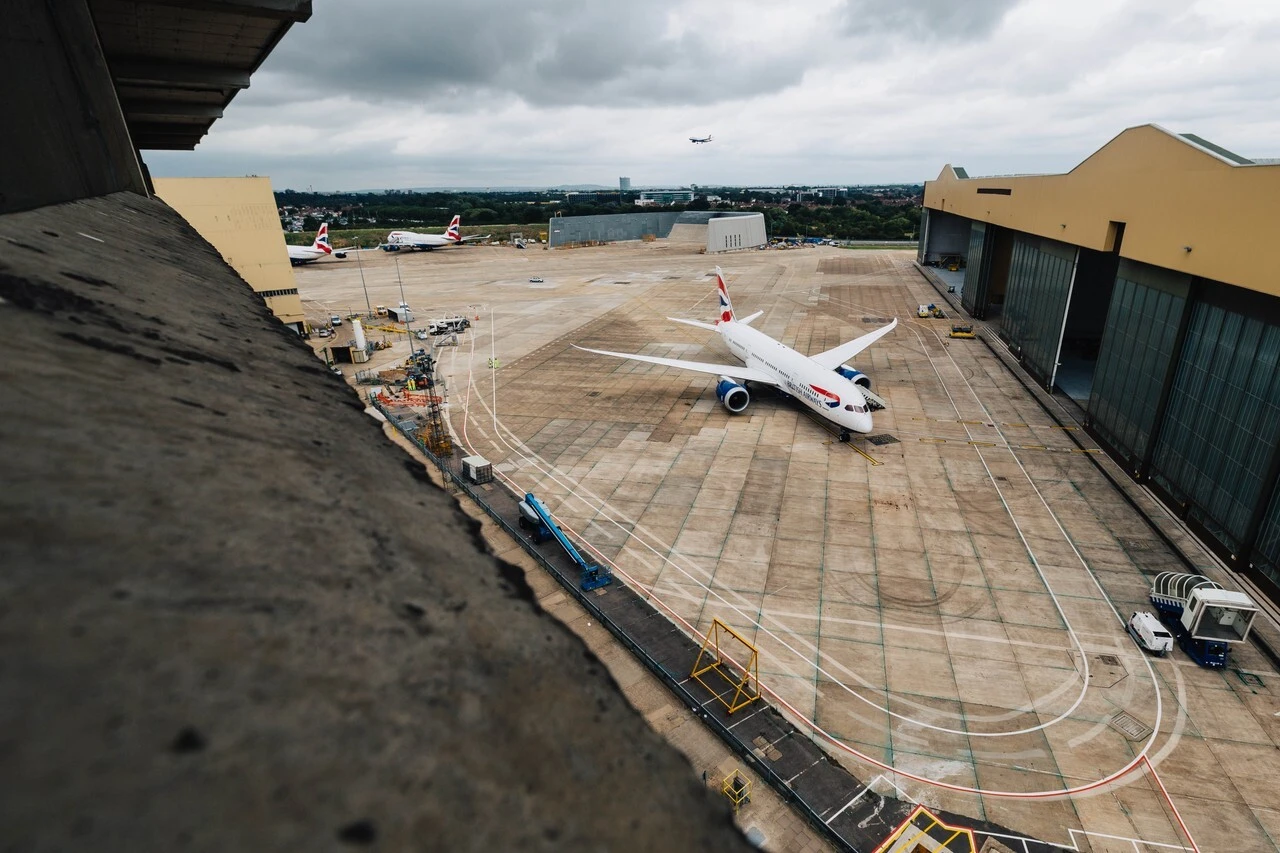
Yet two months on, the rollout has barely moved. In the nine weeks since that landmark first flight, Paddle Your Own Kanoo reported on 22 May 2026 that BA has managed to retrofit Starlink on just five of its twelve Boeing 787-8 aircraft — registrations G-ZBJA, G-ZBJI, G-ZBJJ, G-ZBJK, and G-ZBJM. This means a passenger boarding a British Airways widebody today faces roughly a 1-in-55 chance of flying on a Starlink-equipped aircraft, a sobering ratio for an airline that publicly championed this technology as a game-changer. The culprit, according to industry observers, is not a shortage of hardware but rather a deeply structural problem: BA simply cannot find adequate hangar time to perform the installations, a symptom of the chronic fleet reliability crisis that has dogged the airline for several years.
British Airways’ Starlink Ambitions and the IAG Group Deal Behind Them
The Starlink rollout at British Airways sits within a far broader group-level commitment made by International Airlines Group (IAG) in November 2025, when the conglomerate announced a landmark deal with SpaceX’s Starlink to equip more than 500 aircraft across British Airways, Iberia, Aer Lingus, Vueling, and LEVEL. IAG Chief Executive Luis Gallego described the initiative as a means to make the group “the most extensively Wi-Fi-equipped airline group in Europe,” with the rollout beginning in early 2026. At British Airways specifically, CEO Sean Doyle called the move “game-changing,” adding that Starlink would “really differentiate us from our competitors,” particularly on short-haul European routes where low-cost carriers (LCCs) have long held a structural advantage.
Within the framework of the broader investment programme into the customer experience in IAG’s low-cost carriers — Vueling and LEVEL — retain the option to charge passengers for Wi-Fi access, a carve-out that Aerospace Global News noted reflects the group’s intent to ensure the cost does not erode thin LCC margins. For British Airways, Iberia, and Aer Lingus, however, the connectivity is entirely free, a commitment built into the terms of the Starlink agreement itself.
The target British Airways set was unambiguous. Its official Starlink information page states that the airline hopes to have its entire fleet of more than 300 aircraft equipped within two years of the March 2026 launch — placing the completion deadline around March 2028. At the current pace of five aircraft in nine weeks, however, Paddle Your Own Kanoo’s analysis calculates that BA would equip only approximately 58 aircraft by that deadline — a mere 20% of its fleet.
Why the Boeing 787-8 Fleet Was the Logical Starting Point
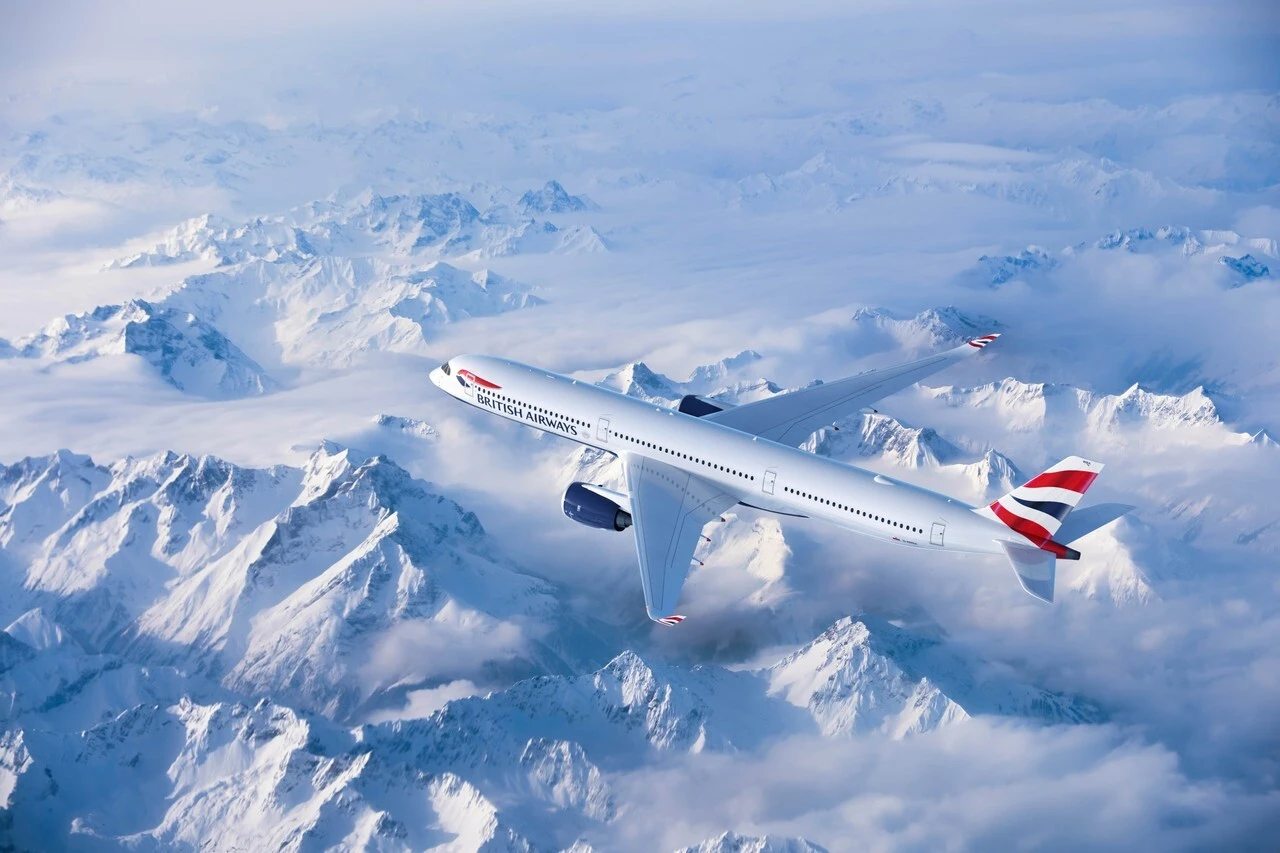
British Airways’ decision to begin Starlink installations on its Boeing 787-8 Dreamliners was not arbitrary. All twelve of BA’s 787-8s had operated for years — some for up to 12 years — without any onboard Wi-Fi whatsoever.
Head for Points reported that initial plans to install an older-generation Wi-Fi system across BA’s entire long-haul fleet by 2019 never materialized, with the 787-8s specifically excluded from that program in a cost-saving measure. This made the 787-8 fleet the most logical entry point for the Starlink rollout: these aircraft required a full installation rather than a swap-out of legacy equipment, which, as PaxEx.Aero observed, actually simplifies the technical process compared to retrofitting aircraft that already carry competing legacy systems.
The first aircraft to receive the technology was G-ZBJJ, a Boeing 787-8 delivered in June 2018. The Head for Points analysis confirmed that this aircraft went out of service for approximately two weeks — from 28 February to 14 March 2026 — at BA’s Heathrow engineering base to complete the installation.
Once it returned to service, it operated routes to Houston, Mumbai (Chhatrapati Shivaji Maharaj International Airport, BOM), Montreal (Montréal–Pierre Elliott Trudeau International Airport, YUL), and Cincinnati (Cincinnati/Northern Kentucky International Airport, CVG), serving as a live testbed for the technology before the wider rollout commenced. The initial results were evidently promising enough for BA to proceed with further installations on the remaining 787-8s.
Following the 787-8 programme, British Airways planned to expand Starlink to its Boeing 787-9 fleet — some variants of which also lack Wi-Fi — before eventually covering its Airbus A380 superjumbos and the short-haul Airbus A320 family. The sequential logic is sound; the execution, however, has proved far more tortured.

How Starlink’s Installation Speed Compares Across Airlines
One of Starlink’s most frequently cited commercial advantages is the speed with which engineers can complete an installation. One Mile at a Time reported that the average Starlink installation time across United Airlines’ (UA) programme is approximately eight hours per aircraft — roughly ten times faster than installing traditional in-flight connectivity (IFC) equipment.
Even accounting for pre- and post-installation testing and the removal of legacy systems, the full turnaround at United Airlines typically spans no more than four days. For an airline with hundreds of aircraft, this speed differential is commercially decisive.
United Airlines has leveraged that advantage aggressively. Simple Flying confirmed that UA had completed Starlink installations on over 300 aircraft by early 2026, with a stated target of equipping more than 800 aircraft by the end of the year — a fleet-wide installation rate that exceeds one aircraft per day. More than seven million United passengers had already used Starlink across 129,000 flights by the time BA was still equipping its second aircraft.
Qatar Airways (QR) presents an even more instructive comparison. The Qatar Airways press release confirmed that the Doha-based carrier equipped its entire Airbus A350 fleet in just eight months, concluding that programme in December 2025. Within 14 months of commencing its Starlink rollout in October 2024, Qatar Airways had completed installations on its Boeing 777 and A350 fleets and had begun work on its 787 Dreamliners — bringing its total to nearly 120 widebody aircraft equipped with Starlink, representing over 58% of its widebody fleet.
The Peninsula Qatar noted that more than 10 million QR passengers had already experienced complimentary Starlink Wi-Fi. Against this backdrop, British Airways’ five aircraft in nine weeks is not merely a slow rollout; it is an outlier. Notably, Paddle Your Own Kanoo observed that there is no discernible supply-side constraint at play. Starlink has the hardware available.

The Fleet Reliability Crisis Strangling BA’s Maintenance Windows
The core of BA’s technical difficulties lies with the Rolls-Royce Trent 1000 engines that power its Boeing 787 Dreamliner fleet. Simple Flying documented as far back as 2024 that BA had grounded at least four 787s due to accelerated wear on these powerplants, with affected aircraft spanning the 787-8, 787-9, and 787-10 variants.
The issues stem from a combination of excessive mechanical wear and an acute shortage of replacement parts caused by supply chain disruptions. Aeronews Journal reported that as a direct consequence, BA cut frequencies to several US destinations including New Orleans, San Diego, and Houston in early 2025. Rolls-Royce itself acknowledged the durability problems but indicated that part shortages due to supply chain constraints would continue to persist.
DJ’s Aviation noted that British Airways’ Chief of Planning and Strategy publicly addressed the severity of the situation at the Routes Americas 2025 conference, acknowledging that four 787s remained persistently out of service and that the airline faced considerable uncertainty about when engine inspections, parts deliveries, and maintenance periods would conclude.
This uncertainty is corrosive to planning. Without a predictable schedule for when each 787 will be available and for how long, BA cannot commit hangar slots to Starlink retrofits with any degree of reliability.
FlyMag reported that the grounding of five Dreamliners at a given point represented approximately 15% of BA’s Dreamliner fleet — a proportionally significant reduction in available lift that has forced the airline to make difficult choices about how to allocate its remaining aircraft. In a network operating at near-capacity, every available airframe is urgently required for revenue-generating flights.
Taking an aircraft offline for even a four-day Starlink retrofit becomes a commercially painful decision when the airline is already struggling to meet its published schedule. Meon Travel’s analysis of the industry-wide Trent 1000 crisis affirmed this point: faults combined with parts shortages have forced airlines worldwide to cancel flights and postpone routes, with British Airways among the most acutely affected carriers.

A380 Refurbishments Add a New Pressure on BA’s Hangar Resources
The Rolls-Royce engine problem is not the only claim on British Airways’ already-strained maintenance infrastructure. As the airline heads into summer 2026, it must simultaneously contend with the commencement of an extensive nose-to-tail refurbishment of its twelve Airbus A380 superjumbos — a programme that will sequester these enormous aircraft in maintenance facilities for months at a time, further tightening the availability of both aircraft and hangar capacity.
Simple Flying reported in April 2026 that BA’s A380 refurbishment will introduce the world’s largest business class cabin, featuring 110 Club Suite seats — an increase from the current 97 — alongside a brand-new, enclosed First Class suite and an expanded premium economy section. The first refurbished A380 is expected to re-enter service around mid-2026, with the programme continuing through 2027 and into 2028.
British Airways outsources this heavy maintenance work to Lufthansa Technik’s facility at Ninoy Aquino International Airport (MNL) in Manila, Philippines — a logistical reality that means multiple superjumbos will be absent from the active fleet for extended periods simultaneously.
Head for Points’ analysis of the A380 refurbishment programme revealed that at one point, three of BA’s twelve A380s were simultaneously stationed at the Manila facility — representing a full quarter of the superjumbo fleet removed from service. Once these refurbished aircraft return to service, they will also be equipped with Starlink, adding yet another category of installation work to BA’s already burdened engineering operation. The confluence of engine-related groundings, A380 refurbishments, and now Starlink retrofit requirements is placing an extraordinary burden on BA’s maintenance planning teams.

Broader Operational Turbulence
The Starlink slowdown does not occur in isolation from a broader pattern of operational difficulties that have beset British Airways in recent months. We recently documented public criticism of the airline’s response to the baggage breakdown, with passengers sharing images of mountains of unclaimed suitcases piling up at Terminal 5. The resulting backlog was severe.
BA subsequently notified some passengers by email that their luggage had not travelled on the same aircraft as its owner, and that many customers received neither realistic delivery schedules nor adequate status updates.
These challenges extend beyond infrastructure. Separately, the airline has extended its suspension of flights to certain Middle East destinations alongside Air France and Lufthansa, a decision that reflects continued uncertainty about the operational environment in that region. Each of these disruptions draws on the same finite pool of managerial attention, engineering resources, and aircraft availability.
Against this backdrop, the Starlink rollout delay is perhaps better understood not as a discrete failure of Wi-Fi installation planning, but as a symptom of some systemic operational strain.

What Competitors Are Doing
The competitive landscape into which British Airways is stumbling makes the pace of its rollout all the more consequential. Across the Atlantic, United Airlines is equipping more than one aircraft per day with Starlink, with The Points Guy reporting that the carrier expects more than a quarter of all its daily departures to feature Starlink as of early 2026, surging to over 800 aircraft by year-end.
In Europe, Lufthansa Group has announced a commitment to equip 850 aircraft across its entire group portfolio — Lufthansa, SWISS, Brussels Airlines, Austrian Airlines, Edelweiss Air, and Discover Airlines — with Starlink by 2029, as we reported, a programme that dwarfs BA’s in scope and ambition.
Closer to home, Virgin Atlantic accelerated its own Starlink launch to May 2026 — partly in response to seeing BA move first, as Simple Flying confirmed. On the IAG Group side, Aer Lingus is also introducing Starlink across its fleet in 2026, including on its transatlantic Pittsburgh–Dublin route. BA thus finds itself in the peculiar position of having pioneered Starlink among UK carriers while simultaneously being overtaken in execution velocity by airlines that announced the technology later.
The hard arithmetic of BA’s predicament is this: at five aircraft in nine weeks, the airline needs to increase its installation rate roughly fivefold to meet its March 2028 deadline of 300-plus aircraft. That requires not merely a faster pace of work once aircraft enter the hangar, but a fundamental change in how frequently BA can pull aircraft out of service long enough to carry out the retrofit.
Paddle Your Own Kanoo noted that this is categorically not a supply chain problem — Starlink’s hardware is readily available — but a maintenance scheduling problem that sits squarely within BA’s operational domain and will not resolve itself as summer flying demand intensifies.