
It is apparently ironical that despite the formualtor of the theory of infinity claiming that the essence of mathematics lay in its freedom, we’re in a world where airlines might run out of flight numbers. Infinity was supposed to be the gift that kept on giving, a mathematical oddity that was to immortalize Black Holes by giving their singularity a power that we couldn’t comprehend, something that would make us chuckle when we think about the pronouncement that infinity was long, especially towards the end.
James Joyce, that unrivalled champion of words, left us agape when he said that we were “Each imagining himself to be the first last and only alone, whereas he is neither first last nor last nor only not alone in a series originating in and repeated to infinity.” In more modern times, John Greene, in his sachharine story gave us a glimpse into the nature of love, which itself contains particles of infinitude:
“There are infinite numbers between 0 and 1. There’s .1 and .12 and .112 and an infinite collection of others. Of course, there is a bigger infinite set of numbers between 0 and 2, or between 0 and a million. Some infinities are bigger than other infinities… I cannot tell you how grateful I am for our little infinity. You gave me forever within the numbered days, and I’m grateful.”
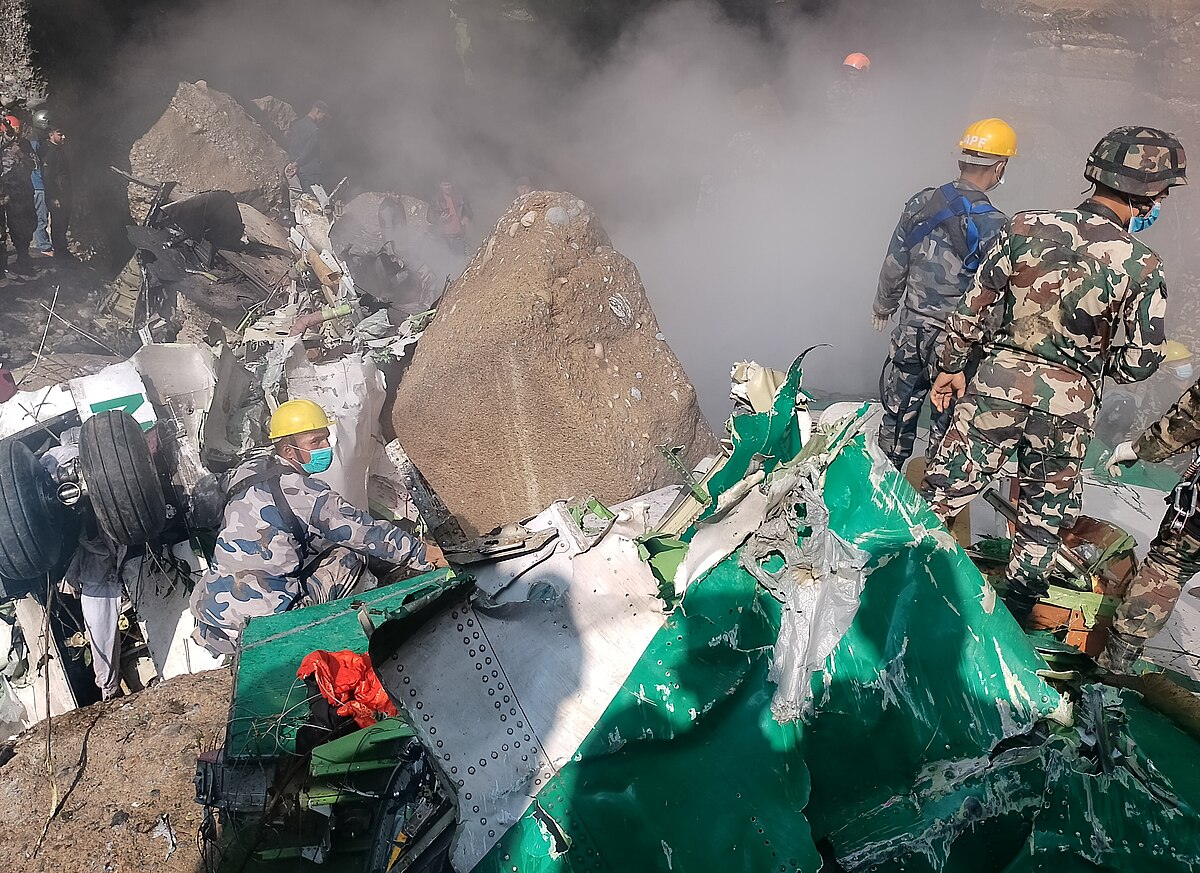
Photo: Bhupendra Shrestha | Wikimedia Commons
Yet despite all the hopes and promises of the freedom to name as many numbers as we can, the aviation community is fretting over the possibility of running out of flight numbers. We started the supersonic Concorde with the iconic flight number 001; we lost out 370 to an incomprehensible disaster that was the Malaysian Airlines Flight that vanished, possibly into the oceans, possibly not; Air India retired 171 following the deadliest accident in India in the recent times, United Airlines retired “93” and “175” after September eleventh, and American Airlines followed suit with dropping flight numbers “11” and “77” too.
An Unlikely Hobby: Did You Know Multiple Avgeeks Have Collected Several Thousand Airsickness Bags?
But it only seems that we’ve taken the tiniest of finitude out of the ocean that is the set of all theoretically possible flight numbers. Yes one might add that the numbers such as 13 and 666 are not a part of flight numbers (mainly down to religious connotations), but that still leaves us a wealth of numbers to pick from. Or does it?
Airlines are actually close to running out of flight numbers
In 2017, Indian aviation was seriously deliberating over a dearth of flight numbers. India has seen a massive boom in aviation in the last few decades as carriers such as Air India and IndiGo have placed historical aircraft orders. This growth, however, has also highlighted safety issues, which arise largely due to the fact that only three digit codes used in flights in India:
“The existing three-digit codes are increasingly leading to confusion and there has been a spate of safety scares when similar sounding flight numbers operate to or from the same airport around the same time — something that’s happening with increasing frequency due to the volume of traffic.”
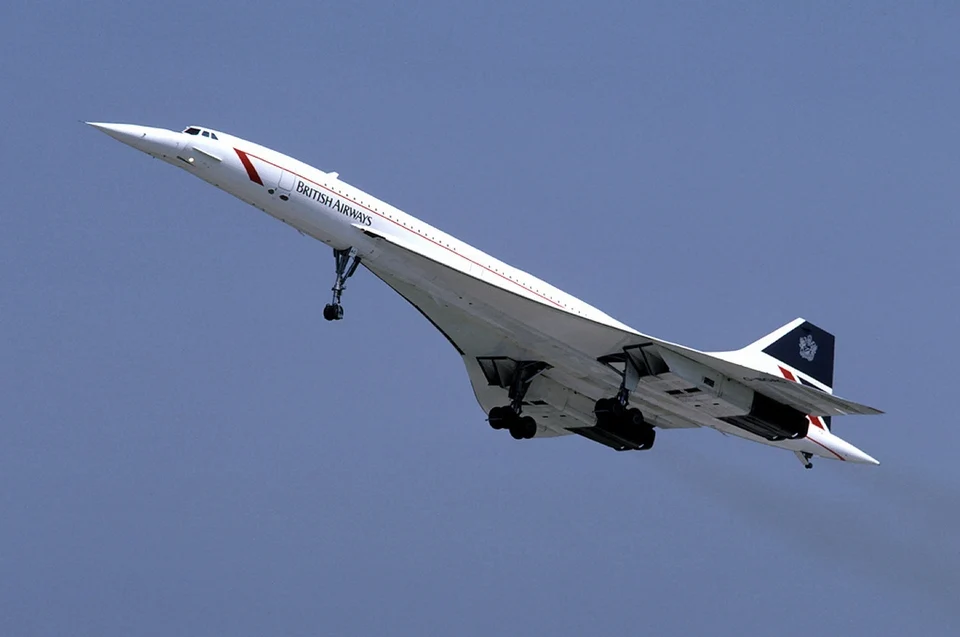
Photo: Eduard Marmet | Wikimedia Commons

To put this into perspective, the neighboring country of India- Nepal – has three digit codes for flights as well A glaring example of this would be the Yeti Airlines Flight 691 that crashed a few years ago in Pokhara. Nepal, which is home to the supposed most dangerous airport in the world, has around fifty commercial aircraft in operation.
Compare this to IndiGo, the most popular budget carrier in India that operates 414 aircraft. Air India operates 191 planes. Also, India has a far more extensive domestic coverage through air transport compared to Nepal, where almost half of the airports are defunct.
Claire Lee uses more digits to enunciate the things in various aspects of her life than India does in its flight numbers
Number of times I’ve woken up after
oversleeping and sprung out of bed like a ninja: 959
Number of broken bones: 3
Number of scars, physical: 4; emotional: 947…
Number of times I’ve laughed so hard my sides would bruise: 2,972
Number of times I’ve wanted to bawl my eyes out: 320
Number of things I regret: 11
Number of things I know: 918,394
Some of these digits Claire has used also dwarfs the flight numbers used in the US, where aviation shines with promises of benefits for disabled passenger, and we’d expect the state of flight numbers to be far better. American Airlines, one of the big three airlines of the US, has a fleet that is more than double of Indigo, operates 6,700 daily flights. But one can only use four digits for flight numbers, bringing down the number of flight numbers we can have to 9999. American Airlines Flight 100 always flies between JFK and London Heathrow, while AA 101 refers to the same route in reverse. The carrier operates flight 1492 to Columbus, flight 1776 between Philadelphia and Boston, and AAA777 to Las Vegas.

Photo: RyanZ225 PC (aka ZhangerAviation) | Wikimedia Commons
.jpg)
Here’s a breakdown of other flight numbers:
| Flight Number | Where it is used |
| 1 to 2949 | mainline fleet |
| 2950 to 6099 | Reserved for regional partners such as Skywest or Envoy |
But there are more limitations to follow: numbers generally above 9000 are reserved for ferry flights. Some flight numbers are reserved for codeshare flights.
Exceptions: Extensions to the limitations on flight numbers
Last year, View From the Wings reported that American Airlines had extended their mainland flight numbers, a synopsis of which is in the following table:
| Flight Number | Aircraft type | Route |
| AA3006 | Boeing 737 | Raleigh–Durham (RDU) – Phoenix Sky Harbor (PHX) |
| AA3009 | Airbus A319s | Eagle County (EGE) to Dallas-Fort Worth (DFW) |
| AA3001 | Airbus A321 | Los Angeles (LAX) to Louisville (SDG) |
It could plausibly be argued that people saw the extension of the flight numbers coming, American Airlines has more than 9,999 flights. In addition, codesharing has brought out some of the issues in flight numbers, too. The carrier has also thought about ways to work around this problem:
“ so ways to save flight numbers, we actually have a model that goes and conserves flight numbers so that we can continue to add where we want to. Our regional partners…we have to add flight number ranges for that… the actual answer to the question is we run through-flights and we also do something called an ‘out and back flight number’ where a flight going to a station will have the same flight number as the return flight back to the hub, and that’s also so we can conserve flight numbers.”


But extending numbers to flights isn’t as simple
A worker in the IT department of American Airlines raised the question regarding airlines running out of fight numbers: “We’re running out of flight numbers. Are we looking at 5-digit or some other solution?”
But running into a 5-digit flight number isn’t easy. Airlines use the computer systems “built on top of systems that are built on top of systems that date back sixty years”, making it difficult for getting around this problem. A parallel to this problem would be the Y2K problem in computers.
Y2k problem: in brief
Computers used to store dates using the last two digits of the years, much in the same way we refer to the 1960s as merely 60s. When the year 2000 kicked in, the old system of storing dates wasn’t viable. After all, if we were to represent the year 1900 with the final two digits: 00, how could computer program(er)s distinguish it from the year 2000? Date were shortened that way because storing data storage in the 1970s (the time when computers were at their first flush) was costly and took up a lot of space.
Working around the problem wasn’t easy either, or so was initially believed, said the National Museum of American History:
“ Research firm Gartner estimated the cost of Y2K remediation to be $300 – $600 billion. Businesses and government organizations created special technology teams to ensure that all hardware and software was Y2K compliant (Y2KC). The goal was to check every system that relied on dates, before midnight December 31, 1999. In some cases, the fix was to replace outdated hardware and/or software. Other cases required time-consuming analysis of program code, replacing or rewriting code as needed, and the testing of hardware reliant on computer chips.”
So what are the solutions?
The problem of running out of four-digit flight numbers doesn’t quite exist except for the three big carriers of the US: American Airlines, Delta Air Lines, and United Airlines. Much like how the year 2000 can be written as Y2K, perhaps we could find a way to shorten the flight numbers in some creative, ingenious ways? After all, United Airlines 1K elite status was an abbreviation of 1000 miles. An internal tag like that was not set with the intention of making it public, but coming up with a memorable phrase like that sticks.


Though American Airlines deliberated over the possibility of assigning the same flight number to more than one daily flight, this can have its own problems, as was evidenced in India, where the joint DG and head of Safety at DGCA had to raise the concerns associated with this solution:
“Even after detailed deliberations on call sign conflicts during last season, airline operators are filing new flights in the same route within a 15-minute gap, with similar call signs. They were advised to take cognizance of guidelines on the call sign conflict issue”
American Airlines thinks that this is a problem for the future, and an interesting one at that. We shouldn’t quite forget how the Y2K error panned out: some dubbed the effort to curb the problem an overall success, while others thought it was a hoax, with people saying that it “had caused no epidemic of failures”. Perhaps something similar will be true of the flight numbers, too.